In short, similes for grade 5 help students compare two different things using the words “like” or “as” to make writing more colorful and interesting. In this guide, you’ll discover easy-to-understand examples, practical tips, and fun activities that will help you write with more confidence and creativity.
[IMAGE: Grade 5 student writing creative similes in a notebook]
What Are Similes for Grade 5? (And Why They Matter)
Have you ever looked at a writing assignment and wondered how to make your story sound more exciting? Maybe your teacher asked you to add similes, but you weren’t sure where to begin. If that sounds familiar, you’re in the right place.
Similes for grade 5 are simple comparisons that use the words “like” or “as” to describe something in a more vivid way. Instead of saying, “The dog was fast,” you could write, “The dog was as fast as a cheetah.”
These comparisons help your reader create clear pictures in their mind. Whether you’re writing a story, a poem, or a classroom assignment, similes make your ideas more interesting and easier to imagine.
Language arts researchers and literacy educators encourage students to practice similes because they strengthen descriptive writing, improve reading comprehension, and build creative thinking. Once you understand how they work, you’ll notice them everywhere—from books to songs and even everyday conversations.
Now let’s explore some of the best examples you can use in your own writing.
The Best Examples of Similes for Grade 5
Here are 25 engaging and age-appropriate similes that work well for Grade 5 students.
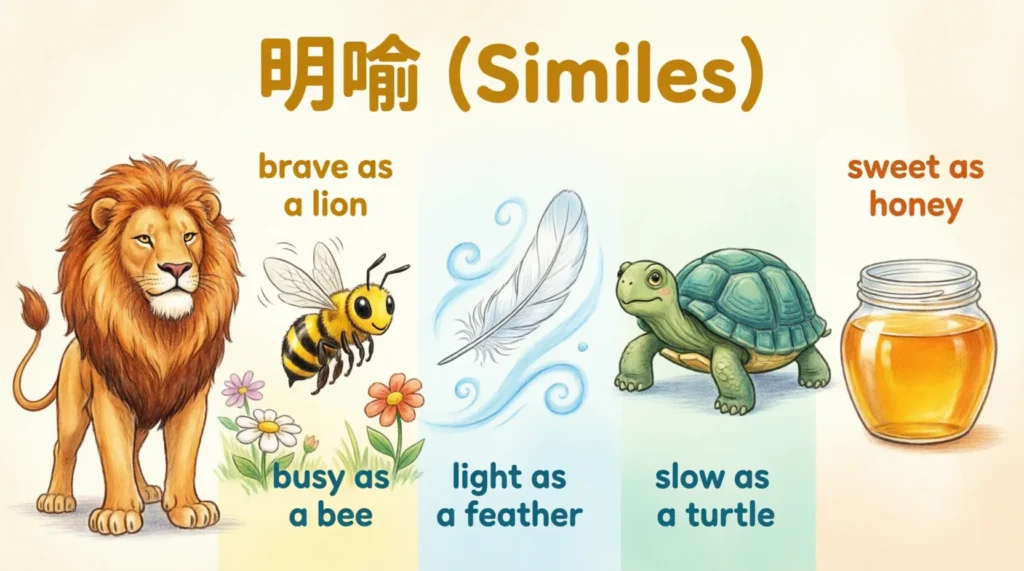
As brave as a lion.
As busy as a bee.
As quiet as a mouse.
As bright as the sun.
As soft as a pillow.
As cold as ice.
As light as a feather.
As quick as lightning.
As slow as a turtle.
As happy as a child on the last day of school.
As gentle as a spring breeze.
As strong as an ox.
As colorful as a rainbow.
As shiny as a new coin.
As sweet as honey.
As playful as a puppy.
As calm as a peaceful lake.
As loud as thunder.
As tall as a tree.
As smooth as silk.
The leaves danced like tiny butterflies.
The clouds floated like fluffy cotton balls.
Her laughter rang like cheerful bells.
The classroom buzzed like a busy beehive.
His backpack felt as heavy as a mountain.
These examples work well because they create strong mental pictures. They also use familiar objects and experiences that make it easier for you to understand and remember the comparison. As you practice, you’ll discover that the best similes connect everyday experiences with creative ideas.
[IMAGE: Colorful classroom poster showing common similes]
How to Use Similes for Grade 5 in Your Writing
Writing better similes becomes much easier when you follow a few simple steps.
Think about what you want to describe. Ask yourself whether you’re describing a person, place, object, feeling, or action. Knowing your subject helps you choose the right comparison.
Find something with a similar quality. If your character is very fast, think about things known for speed, such as lightning, a race car, or a cheetah.
Use “like” or “as.” Remember that similes almost always include one of these words. They tell your reader you’re making a comparison.
Read your sentence aloud. If it sounds natural and helps your reader imagine the scene, you’ve probably written a good simile.
For example:
“The soccer ball flew across the field like a shooting star.”
This sentence helps your reader picture both the speed and excitement of the moment. As you keep practicing similes for grade 5, you’ll become more confident in choosing creative comparisons.
Next, let’s see how similes bring poems and stories to life.
Similes for Grade 5 in Poems and Stories
Poets and story writers use similes because they add emotion, rhythm, and vivid imagery. They help readers feel like they are part of the scene instead of just reading about it.
Aisha wrote in her poem:
“The stars sparkled like tiny diamonds, Lighting the quiet night sky.”
Miguel began his story with:
“The old house stood as silent as a sleeping giant while the wind whispered through the trees.”
Priya described her classroom:
“Everyone laughed like cheerful birds when the funny joke was shared.”
These examples show how similes can make even simple writing feel memorable. Creative writing teachers often encourage students to experiment with different comparisons because they help every story sound more unique.
Now that you’ve seen good examples, it’s helpful to learn what mistakes to avoid.
Common Mistakes Students Make With Similes for Grade 5
Forgetting to use “like” or “as.” Without these words, your comparison may become a metaphor instead of a simile. Double-check your sentence before you finish.
Using comparisons that don’t make sense. Saying, “As hot as a refrigerator” will probably confuse your reader unless you’re trying to be funny.
Repeating the same simile too often. If every sentence says “as fast as lightning,” your writing can become repetitive. Challenge yourself to think of fresh comparisons.
Choosing comparisons your readers won’t understand. Grade 5 writing works best when you compare things to familiar objects, animals, or experiences.
Adding similes where they aren’t needed. Too many similes can distract your reader. Use them to highlight important moments instead of every single sentence.
Everyone makes these mistakes at first, and that’s completely normal. With practice, you’ll learn when and how to use similes naturally.
Let’s make learning even more fun with some creative activities.
Fun Activities to Practice Similes for Grade 5
Simile Match Game Grab a pencil and match adjectives like “soft,” “bright,” or “strong” with objects that share those qualities. Then write complete similes.
Finish the Sentence Challenge Complete prompts like “The moon was as…” or “My backpack felt like…” using your own imagination.
Picture-to-Simile Worksheet Look at photos of animals, weather, or nature. Write one original simile for each picture.
Draw and Describe Draw your favorite animal or place, then write five similes that describe it. This combines art with creative writing.
Story Builder Game Play with classmates or family members by taking turns adding one sentence to a story. Each new sentence must include a simile.
Book Detective As you read your favorite novel, challenge yourself to find five similes. Write them down and explain why each one makes the story more interesting.
Practicing in different ways helps you remember what you’ve learned and makes writing feel more enjoyable.
What NOT to Do With Similes for Grade 5
Don’t think every sentence needs a simile. Good writers use similes carefully. A few strong comparisons are much better than dozens of weak ones.
Don’t copy examples without understanding them. Try to create your own comparisons whenever possible. Your original ideas make your writing more interesting.
Don’t confuse similes with metaphors. Similes use “like” or “as.” Metaphors compare things directly without those words.
Don’t assume longer similes are always better. Sometimes a short, clear comparison creates the strongest image for your reader.
Once you avoid these habits, your writing will become clearer and more engaging.
Frequently Asked Questions About Similes for Grade 5
What are good similes for Grade 5 students?
Good similes for Grade 5 students are easy to understand, creative, and based on familiar experiences. Examples include “as busy as a bee,” “as quiet as a mouse,” and “like a rainbow after the rain.”
How do you teach similes for Grade 5?
Start with simple examples that use “like” or “as.” Then encourage students to describe everyday objects, people, or events using their own comparisons. Practice through games, reading, and creative writing.
How many similes should Grade 5 students use in a story?
There isn’t a fixed number. You should use enough similes to make your writing interesting without making every sentence sound the same. Two to five thoughtful similes often work well in a short story.
What is the difference between similes and metaphors for Grade 5?
A simile compares two things using “like” or “as.” A metaphor says one thing is another without those comparison words. Learning this difference helps you recognize figurative language more easily.
Why are similes important in Grade 5 writing?
Similes help you describe people, places, and events in a way that readers can easily imagine. They also improve creative writing, reading comprehension, and descriptive vocabulary, which literacy researchers and language arts educators consider important skills for young writers.
Final Thoughts on Similes for Grade 5
Learning similes for grade 5 is one of the easiest ways to make your writing more exciting. Whether you’re working on a story, a poem, or a classroom assignment, similes help your ideas stand out.
You’ve explored what similes are, read dozens of examples, learned how to write your own, discovered common mistakes, and practiced through fun activities. These skills will help you become a stronger and more creative writer.
Remember that every great writer started by practicing simple comparisons. The more you observe the world around you, the easier it becomes to think of fresh and meaningful similes.
Keep writing, keep imagining, and keep experimenting—your creativity grows every time you put your ideas on the page.
Sara Liu holds a Master’s degree in English Education from the University of Washington and has been an educator for over 15 years. She specializes in curriculum development for elementary and middle school students, with a particular focus on figurative language. Sara’s love for similes and metaphors blossomed when she discovered their power to spark imagination and convey emotion. At SimilePedia, Sara creates engaging worksheets and reference guides that help young learners grasp the nuances of figurative language. Her favorite part of writing content is developing resources that make complex concepts accessible to children. She is passionate about nurturing a love for words and creativity in her students, and her contributions are shaped by this commitment.