In short, similes for 2nd grade are simple comparison sentences that help you describe something by saying it is “like” or “as” something else. They make your writing more fun, colorful, and easy to understand. In this article, you will learn how to use them, see many examples, and discover how they can make your stories shine brighter than ever.
Keep reading, because you’ll soon be able to create your own amazing similes with confidence and creativity.
What Are Similes for 2nd Grade? (And Why They Matter)
Imagine you are in class, and your teacher says, “Describe a hot day.” You know it is hot, but you can’t find the right words. Or maybe you are writing a story about a happy puppy, but “happy” feels too simple. This is where similes for 2nd grade become your best friend.
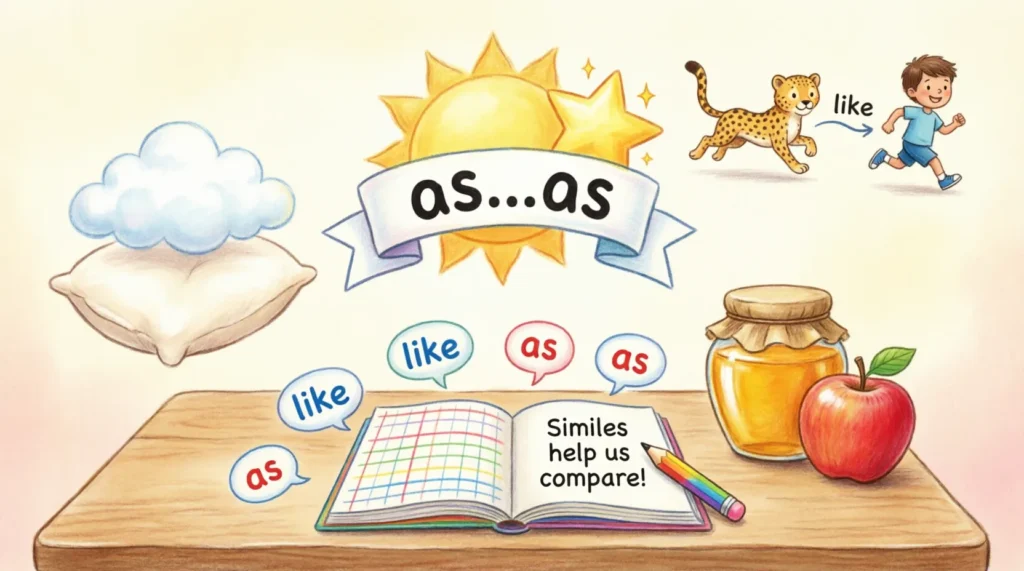
A simile is a way of comparing two things using the words “like” or “as.” It helps you explain something in a more creative and exciting way.
For example:
“The sun is like a glowing ball of fire.”
“She is as fast as a cheetah.”
Language arts educators often say similes help young learners build stronger imagination and better writing skills. When you use similes for 2nd grade, you are learning how to paint pictures with words instead of just saying plain descriptions.
Similes matter because they help you:
Write better stories
Understand reading passages more easily
Express feelings clearly
Make your writing more interesting
Once you understand this, your sentences will never feel boring again—and you will start noticing similes everywhere in books and even songs.
The Best Examples of Similes for 2nd Grade
Here are simple, fun, and creative similes for 2nd grade that you can use in your writing right away:
As busy as a bee in a garden full of flowers
As quiet as a sleeping cat
As bright as the morning sun
As fast as a racing car
As soft as a fluffy cloud
As cold as ice cream on a winter day
As strong as an elephant
As light as a feather floating in the air
As sweet as candy on Halloween
As brave as a little lion
As slow as a turtle crossing the road
As tall as a giant tree
As sharp as a pencil point
As happy as a child on a birthday
As shiny as a new coin
As loud as thunder in the sky
As gentle as a soft breeze
As warm as a cozy blanket
As tricky as a puzzle with missing pieces
As colorful as a rainbow after rain
As playful as kittens chasing yarn
As sleepy as a bear in winter
As bright as stars in the night sky
These similes work well because they use simple ideas you already know—animals, weather, food, and everyday things. They help you connect imagination with real life.
When you use similes for 2nd grade like these, your writing becomes more vivid, and your reader can actually “see” what you are describing in their mind.
How to Use Similes for 2nd Grade in Your Writing
You don’t need to be a professional writer to use similes. You just need practice and imagination. Here’s how you can start using similes for 2nd grade in your own work:
Think of what you want to describe Decide if it is a person, object, or feeling. For example, maybe you want to describe your dog.
Choose a comparison Think of something similar. A playful dog could be compared to a kitten or a bouncing ball.
Use “like” or “as” Put your comparison into a sentence. This is what makes it a simile.
Read it out loud If it sounds fun and makes sense, you’ve done it right.
Example sentence:
“My puppy is as playful as a bouncing rubber ball.”
When you practice similes for 2nd grade like this, you will slowly become more confident in writing and storytelling.
Similes for 2nd Grade in Poems and Stories
Similes are often used in poems and short stories because they make writing more emotional and colorful. When you use similes for 2nd grade, you can turn simple ideas into something magical.
Here are some examples:
Aisha wrote: “The night was as quiet as a sleeping kitten, and the stars twinkled like tiny lights in the sky.”
Liam’s story said: “The river ran as fast as a racing horse through the valley.”
Maya’s poem included: “My heart feels as light as a feather when I think of summer vacation.”
Writers and poets use similes because they help readers feel emotions and imagine scenes more clearly. Instead of just telling, they show.
When you use similes in your own stories, you are not just writing—you are painting pictures with words that your reader can feel and imagine.
More Similes for 2nd Grade by Tone and Context
🌿 Natural & Descriptive
“As busy as a squirrel gathering acorns” — Captures energetic movement and constant activity in a nature-focused description.
“Like a stream winding through a meadow” — Shows smooth, steady motion and works well in descriptive writing.
“As bright as a sunflower in summer” — Highlights cheerfulness and positivity in a vivid way.
“Like leaves dancing in the breeze” — Suggests light, playful movement and natural energy.
“As lively as birds singing at sunrise” — Describes excitement and enthusiasm in a fresh, colorful manner.
💛 Warm & Emotional
“As happy as a child opening a surprise gift” — Expresses pure joy and excitement in personal stories.
“Like a warm hug on a chilly day” — Conveys comfort, kindness, and reassurance.
“As cheerful as a room filled with laughter” — Works well when describing positive moods and friendly moments.
“Like a candle glowing in the dark” — Suggests hope and warmth during meaningful situations.
“As welcoming as an old friend’s smile” — Highlights friendliness and emotional connection.
✨ Poetic & Romantic
“Like starlight resting on a quiet lake” — Creates a peaceful and beautiful image for poems.
“As gentle as moonlight on silver grass” — Conveys softness and calm elegance.
“Like a melody floating through the evening air” — Suggests grace, beauty, and artistic expression.
“As dreamy as clouds drifting across the sky” — Works well for reflective or imaginative writing.
“Like petals carried by a spring breeze” — Creates a delicate and poetic feeling.
😄 Playful & Fun
“As jumpy as popcorn in a hot pan” — Describes excitement and nonstop movement in a fun way.
“Like a puppy chasing its own tail” — Captures playful energy and silliness.
“As bouncy as a ball on a playground” — Shows enthusiasm and active movement.
“Like confetti flying through the air” — Suggests celebration, excitement, and fun.
“As goofy as a monkey wearing sunglasses” — Adds humor and a lighthearted tone to writing.
These tone-grouped similes for 2nd grade give you options for every kind of writing — whether you need something soft and poetic or bold and fun. Try picking one from each group and using them in a short paragraph to see how different the same topic can feel.
Using Similes for 2nd Grade in Real Writing Contexts
In a Descriptive Essay
When writing a descriptive essay, students often need to make ordinary details more interesting and memorable. A simile helps readers picture the scene more clearly by comparing it to something familiar. Example: The classroom was as cheerful as a room filled with laughter, making everyone feel welcome the moment they entered.
In a Poem
Similes for 2nd grade can help create mood and add beautiful imagery to a poem. They allow writers to express feelings and ideas in a creative way. Example: My dreams drifted like petals carried by a spring breeze, soft and light beneath the stars.
In a Story or Creative Scene
In stories, similes can make characters, actions, and settings feel more vivid. They help readers connect with what is happening in the scene. Example: When the school bell rang, Mia raced down the hallway as busy as a squirrel gathering acorns, eager to start her adventure.
In a Social Media Caption or Message
Short similes work well in captions and messages because they quickly add personality and emotion. They can make even simple updates more engaging. Example: Today was as happy as a child opening a surprise gift—what an awesome day!
The more you practice placing similes for 2nd grade into real sentences, the more natural your writing will sound — and the more your reader will feel exactly what you want them to feel.
Common Mistakes Students Make With Similes for 2nd Grade
Learning takes time, and mistakes are part of the journey. Here are some common mistakes when using similes for 2nd grade—and how you can fix them:
Forgetting “like” or “as” A simile must include these words. Without them, it becomes unclear.
Comparing things that don’t make sense Saying “as fast as a rock” doesn’t work because rocks don’t move quickly.
Using too many similes in one sentence One strong simile is better than many confusing ones.
Making comparisons too complicated Keep it simple so your reader understands your idea easily.
Not thinking about the reader Always ask yourself: “Can someone easily imagine this?”
These mistakes are normal, and every student makes them at first. The more you practice similes for 2nd grade, the better you will become at avoiding them.
Fun Activities to Practice Similes for 2nd Grade
Here are some fun ways you can practice and improve your skills:
Simile scavenger hunt Look around your classroom or home and create similes for things you see. For example, “The pillow is as soft as a cloud.”
Draw and describe Draw a picture and write one simile to describe it. This helps connect art with writing.
Finish the simile game Start a sentence like “As fast as…” and try to complete it in different ways.
Simile storytelling challenge Write a short story using at least five similes for 2nd grade.
Group simile circle Sit with friends and take turns creating similes about the same object.
These activities help you think creatively and make learning fun instead of boring. The more you practice, the more natural similes will feel in your writing.
What NOT to Do With Similes for 2nd Grade
Sometimes students get confused or pick up bad habits. Here are things you should avoid:
Don’t use confusing comparisons If your reader cannot imagine it, the simile is not helpful.
Don’t forget the purpose Similes should make writing clearer, not more complicated.
Don’t copy the same similes again and again Try to be creative and think of new ideas.
Don’t mix metaphors and similes Keep your comparisons simple and consistent when learning similes for 2nd grade.
Frequently Asked Questions About Similes for 2nd Grade
What is a simile for 2nd grade in simple words?
A simile for 2nd grade is a comparison that uses “like” or “as” to describe something. It helps you explain ideas in a fun and easy way. For example, “as fast as a cheetah” is a simple simile.
Why do students learn similes in 2nd grade?
Students learn similes for 2nd grade because they help improve writing and imagination. They also make reading more fun and help you understand descriptions better in stories and books.
Can I use similes in my school essays?
Yes, you can! Using similes for 2nd grade in essays makes your writing more interesting. Just make sure your comparisons are simple and easy for others to understand.
What are some easy similes I can remember?
Some easy ones include “as happy as a child,” “as cold as ice,” and “as fast as a car.” These similes for 2nd grade are easy to remember and use in writing.
How can I get better at writing similes?
Practice every day by looking around you and making comparisons. The more you practice similes for 2nd grade, the more creative and confident you will become in writing.
Final Thoughts on Similes for 2nd Grade
Similes are one of the easiest and most fun ways to improve your writing skills. When you use similes for 2nd grade, you learn how to describe the world in creative and colorful ways.
You have seen examples, learned how to use them, and even discovered fun activities to practice. Now it is your turn to try. Start small, keep it simple, and let your imagination guide you.
Every great writer begins with small steps—and your journey with similes is one of those exciting first steps. Keep practicing, and your words will become more powerful every day.
Frequently Asked Questions
What is a simile and why is it important for 2nd graders?▼
A simile is a comparison between two things using the words ‘like’ or ‘as.’ For 2nd graders, similes are important because they help make writing more creative and vivid, allowing young learners to express their thoughts and feelings in a more colorful way.
Can you give me examples of similes that are suitable for 2nd graders?▼
Sure! Here are some fun similes: ‘As busy as a bee in a garden full of flowers’ and ‘As soft as a fluffy cloud.’ These examples use simple ideas that children can easily relate to.
How can similes help me improve my writing skills?▼
Similes enhance your writing by making it more interesting and engaging. They help you create vivid images in the reader’s mind, allowing for better expression and clarity in your storytelling.
What steps can I take to create my own similes?▼
To create your own similes, start by thinking of what you want to describe, then choose a comparison that relates to it. Finally, incorporate the comparison into a sentence using ‘like’ or ‘as.’
Why do educators recommend using similes in language arts?▼
Educators recommend using similes because they help students build stronger imagination and improve their writing skills. By learning to use similes, students can better understand reading passages and express their feelings more clearly.
What kinds of things can I compare using similes?▼
You can compare a wide variety of things using similes, including people, objects, and feelings. Everyday items, animals, and natural elements are great for creating relatable and vivid comparisons.
How can I practice using similes in my writing?▼
You can practice using similes by writing short stories or descriptions and deliberately including them. Start with simple comparisons and gradually challenge yourself to create more complex ones as your confidence grows.
Liam Nguyen is a passionate educator and writer with a deep love for figurative language. He holds a master’s degree in Creative Writing and has spent eight years teaching at various educational settings, focusing on language enrichment programs for children from grades 2-6. His expertise in crafting metaphorical language and similes into captivating content stems from his belief that storytelling is the heartbeat of learning. Liam’s contributions to SimilePedia span from emotion-driven examples to color-inspired narrative tools. He is committed to fostering a creative environment where students can explore and find joy in their unique expressions.