In short, similes games for kids are fun learning activities that help children recognize, create, and use similes through play. These games turn language lessons into exciting challenges that build creativity, improve writing, and make learning memorable. Keep reading to discover classroom-ready games, creative examples, and simple ways you can practice every day.
What Are Similes Games for Kids? (And Why They Matter)
Have you ever looked at a writing assignment and wondered how to make your sentences more interesting? Maybe your teacher asked you to write a simile, but every idea seemed to disappear the moment you picked up your pencil. If that sounds familiar, you are not alone.
Similes games for kids are enjoyable activities that teach children how to compare two different things using words like “as” or “like.” Instead of memorizing rules, you learn by playing, guessing, drawing, and creating.
These games matter because they help you become a stronger writer, a better reader, and a more confident storyteller. When you practice through games, you remember ideas longer and enjoy learning more.
Many literacy educators and language arts researchers encourage playful learning because it helps students understand figurative language naturally. Whether you are practicing for school, preparing for a test, or writing your own story, these games can make learning feel exciting instead of stressful.
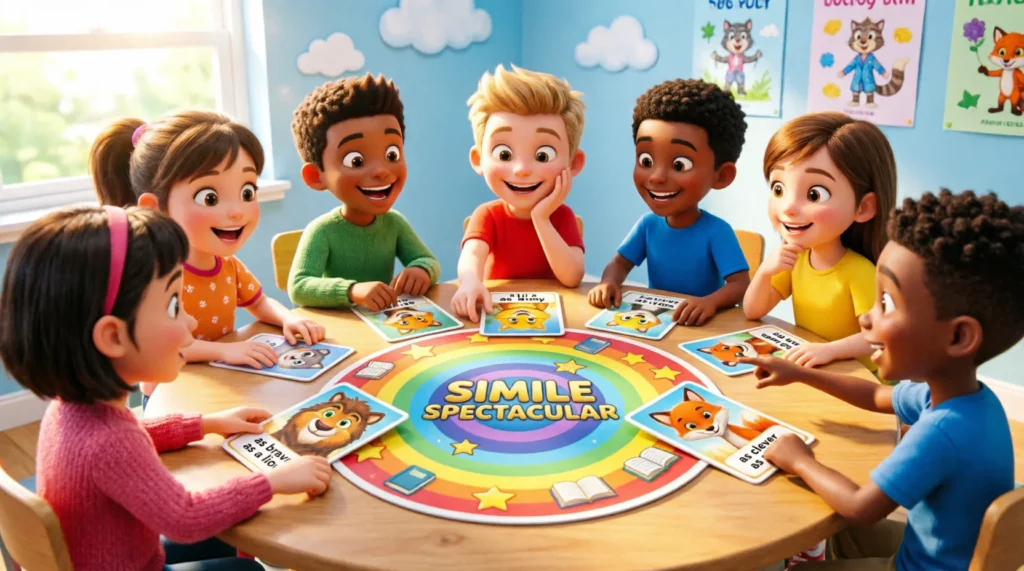
[IMAGE: Children playing a classroom simile matching game]
Now that you know why these activities are useful, let’s explore some of the best examples you can try.
The Best Examples of Similes Games for Kids
Here are some fun and engaging similes games for kids that work well at home or in the classroom.
Simile Match-Up: Match the beginning of a simile with its correct ending, such as “as brave as…” and “…a lion.”
Finish the Simile: One player says, “As fast as…” and another completes it creatively.
Simile Charades: Act out a simile while others guess it.
Draw the Simile: Draw “as busy as a bee” or “as quiet as a mouse.”
Simile Memory Cards: Match pictures with their matching similes.
Roll and Create: Roll a dice to choose two random objects and compare them using a simile.
Classroom Simile Hunt: Find similes hidden around the classroom.
Story Builder: Every player adds one sentence using a new simile.
Simile Bingo: Mark similes you hear while someone reads a story.
Picture Prompt Challenge: Look at a picture and invent three original similes.
Mystery Bag: Pull out an object and compare it to something unexpected.
Race Against the Clock: Write five similes in one minute.
Comic Strip Similes: Create a comic where every character uses one simile.
Outdoor Nature Hunt: Compare leaves, clouds, rocks, and flowers using similes.
Guess My Simile: Give clues until someone guesses your comparison.
Emoji Similes: Pick an emoji and describe it with a simile.
Reading Detective: Find similes while reading your favorite book.
Simile Relay: Teams take turns writing new similes on the board.
Spin and Compare: Spin a wheel with nouns and adjectives to create funny comparisons.
Creative Writing Challenge: Write a paragraph using at least five original similes.
These activities work because they combine imagination with practice. You use pictures, movement, teamwork, and storytelling, making each simile easier to remember. The stronger the imagery and sensory detail, the more memorable your writing becomes.
Next, let’s see how you can use what you learn during these games in your own writing.
How to Use Similes Games for Kids in Your Writing
Once you have played a few games, you can start using your new ideas in stories and essays.
Think about what you want your reader to imagine. Ask yourself, “What does this remind me of?”
Choose something familiar to compare it with. Good similes help readers picture the idea quickly.
Use “like” or “as” naturally instead of forcing a comparison into every sentence.
Read your sentence aloud. If it sounds clear and paints a picture, you have probably written a strong simile.
Example:
“My little brother ran as fast as a racing cheetah to catch the school bus.”
As you practice, you will notice that writing becomes more colorful and enjoyable.
Similes Games for Kids in Poems and Stories
Poets and storytellers often use similes because they make emotions and scenes easier to imagine. Creative writing teachers encourage students to experiment with comparisons that sound fresh and meaningful.
Aisha wrote:
“The moon floated like a silver boat, Across the quiet evening sky.”
Lucas wrote:
“My laughter bounced like popcorn, Filling the room with happy sounds.”
Priya wrote:
“The wind danced like a playful puppy, Chasing leaves across the playground.”
These small examples show how similes can make even simple sentences feel alive. The more you practice through games, the easier these creative ideas become.
Before you continue practicing, it helps to know a few common mistakes that many students make.
Common Mistakes Students Make With Similes Games for Kids
Using comparisons that do not make sense. A simile should help readers picture something clearly. If the comparison is confusing, try choosing a more familiar image.
Forgetting to use “like” or “as.” Without these words, you may accidentally write a metaphor instead of a simile.
Repeating the same similes every time. “As busy as a bee” is great, but challenge yourself to invent original comparisons too.
Adding too many similes in one paragraph. Too many comparisons can distract readers. Choose only the strongest ones.
Treating every game like a competition. The goal is to build creativity, not just finish first. Take time to think of interesting ideas.
Now that you know what to avoid, let’s explore some exciting ways to practice.
Fun Activities to Practice Similes Games for Kids
Grab a pencil and create a Simile Journal. Write one new simile every day about something you noticed at school or home.
Play a family guessing game. One person reads a simile while everyone else guesses what is being described.
Challenge yourself with picture cards. Pick random images and write one creative comparison for each.
Create a drawing and writing page. Draw your favorite simile, then explain why you chose it.
Complete a printable worksheet. Fill in missing similes, match pairs, and write your own examples afterward.
Read a favorite story together. See how many similes you can find before the chapter ends, then try creating similar ones yourself.
These simple activities help you build confidence one step at a time while keeping learning enjoyable.
What NOT to Do With Similes Games for Kids
Do not memorize without understanding. Knowing why a simile works is much more valuable than simply remembering one.
Do not think there is only one correct answer. Many creative comparisons can work if they make sense and create a clear picture.
Do not copy every example you find online. Original ideas make your writing more interesting and help you grow as a writer.
Do not believe games are only for younger children. Older students also benefit from playful practice because creativity develops with regular use.
With these tips in mind, you are ready to answer some common questions students often ask.
Frequently Asked Questions About Similes Games for Kids
What are the best similes games for kids?
Some of the most popular games include Simile Bingo, Simile Charades, Draw the Simile, Story Builder, and Simile Match-Up. These activities keep learning active while helping you remember figurative language more easily.
How do similes games for kids improve writing?
They encourage you to think creatively and practice making vivid comparisons. Over time, your stories become more descriptive, engaging, and enjoyable to read.
Are similes games for kids suitable for elementary students?
Yes. Most games can be adapted for different ages by making the comparisons simpler or more challenging. Younger students enjoy pictures and matching games, while older students can create original stories.
Can I play similes games for kids at home?
Absolutely. Many games only require paper, pencils, picture cards, or everyday objects around your house. Family members can join in and make learning even more fun.
Why do teachers use similes games for kids?
Teachers use these activities because learning through play helps students stay engaged and remember concepts longer. Literacy researchers have found that active participation often leads to deeper understanding and stronger writing skills.
Final Thoughts on Similes Games for Kids
Learning figurative language does not have to feel difficult. With similes games for kids, you can turn writing practice into something you actually look forward to.
You discovered creative games, practical writing tips, common mistakes to avoid, and fun activities you can try in the classroom or at home. Each one helps you become more confident with similes.
Remember that every great writer starts by practicing simple skills again and again. Each new comparison you create helps your imagination grow a little stronger.
Keep playing, keep writing, and keep experimenting with new ideas. Your next story might be as bright as the morning sun—and you have everything you need to make it shine.
Liam is a language enthusiast and lead writer at Similepedia.com, where he focuses on creating clear, creative, and easy-to-use similes for everyday writing. He specializes in turning simple ideas into vivid comparisons that make sentences more engaging, expressive, and memorable.
Instead of overcomplicating language with technical jargon, Liam approaches similes as practical tools for better communication. He breaks down how comparisons work, when to use them, and how to make them sound natural — not forced or awkward.
He pays close attention to tone, context, and clarity, ensuring every simile fits smoothly into real sentences. From fun and playful comparisons to more descriptive and expressive ones, Liam helps readers improve how they write, speak, and express ideas.
At Similepedia.com, his mission is simple: make language more colorful and effective without making it complicated. He doesn’t just list similes — he helps readers understand how to use them confidently in real situations.