In short, similes for feeling lost compare the emotion of confusion, uncertainty, or loneliness to something familiar using the words “like” or “as.” In this guide, you’ll discover vivid examples, writing tips, common mistakes, and fun activities that will help you express this powerful feeling with confidence.
What Are Similes for Feeling Lost? (And Why They Matter)
Have you ever stared at a blank page because you knew how a character felt but couldn’t find the right words? Maybe your teacher asked you to describe someone’s emotions, and “sad” or “confused” just didn’t seem strong enough. If that’s happened to you, you’re not alone.
Similes for feeling lost are comparisons that help you describe the emotion of being uncertain, lonely, confused, or without direction. They usually use the words “like” or “as” to make the feeling easier for readers to imagine.
Instead of simply writing, “I felt lost,” you can help your reader see and feel that emotion. A strong simile creates a picture in the reader’s mind and makes your writing more memorable.
Language arts researchers and literacy educators often encourage students to use figurative language because it improves creative writing, reading comprehension, and descriptive skills. Once you learn how to use similes for feeling lost, you’ll find it much easier to bring your stories and poems to life.
[IMAGE: Student looking thoughtfully at a notebook while imagining creative similes]
The Best Examples of Similes for Feeling Lost
Here are some vivid and creative similes for feeling lost that students and writers can use in stories, poems, journals, or classroom assignments.
I felt like a ship drifting without a compass.
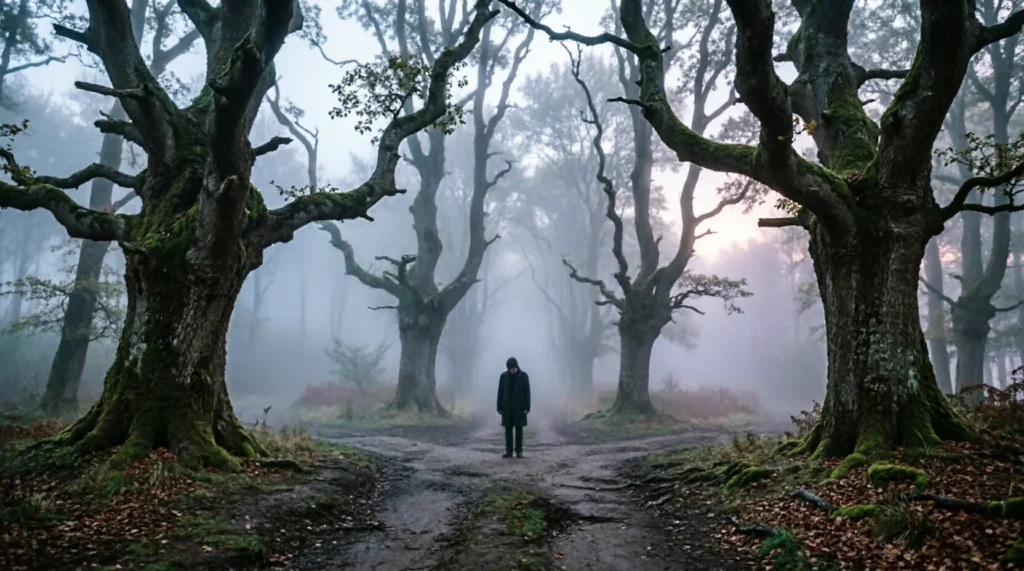
She wandered like a traveler in a thick fog.
He looked as lost as a child in a giant maze.
My thoughts scattered like leaves blown by the wind.
I was like a bird searching for its nest.
She stood as confused as someone reading a map upside down.
He felt like a puzzle missing its final piece.
I drifted like a cloud with nowhere to go.
She was like a star hidden behind heavy clouds.
My heart felt as empty as an abandoned house.
He walked like someone chasing a disappearing shadow.
I felt like a book with missing chapters.
She floated like a balloon carried by uncertain winds.
He seemed as unsure as a sailor in a storm.
I wandered like an ant separated from its colony.
She felt like a key that fit no lock.
My mind spun like a compass that wouldn’t stop turning.
He looked as lonely as the last tree in an empty field.
I was like a puzzle dumped out without the picture on the box.
She felt as distant as an island in the middle of the ocean.
He moved like someone searching for a door in total darkness.
I felt like a kite whose string had snapped.
She wandered like a butterfly caught in a strong wind.
My dreams seemed as far away as stars before sunrise.
He felt like a train stopped on forgotten tracks.
These examples work because they create clear mental pictures. Many also appeal to your senses or emotions, helping readers understand exactly how uncertainty feels. When you choose imagery that matches the mood of your story, your writing becomes stronger and more memorable.
Now that you’ve seen many examples, let’s look at how you can create and use them in your own writing.
How to Use Similes for Feeling Lost in Your Writing
You don’t need to be a professional author to write effective similes. Follow these simple steps whenever you want your writing to feel more expressive.
Think about exactly what kind of “lost” you mean. Are you confused, lonely, frightened, or unsure? Choosing the right emotion helps you choose the right comparison.
Find something your readers already understand. Nature, travel, weather, animals, and everyday objects often make excellent comparisons.
Use “like” or “as” naturally. Don’t force the comparison if it doesn’t fit your sentence.
Read your sentence aloud. If the simile sounds smooth and creates a clear picture, you’ve probably chosen a good one.
Example:
“After moving to a new school, Maya felt like a bird searching for its nest, unsure where she belonged.”
As you practice, you’ll notice that your descriptions become more vivid and your readers can picture your ideas much more easily.
Similes for Feeling Lost in Poems and Stories
Poets and storytellers often use similes to help readers connect with characters’ emotions. A thoughtful comparison can communicate feelings much more powerfully than simply saying someone is confused.
Poem Example
Aisha whispered, “I drift through the day like a cloud without the wind, searching for somewhere to belong.”
Story Example
Carlos looked around the unfamiliar city. He felt like a compass that had forgotten which way was north, taking one uncertain step after another.
Story Example
Mei folded the letter carefully. Her thoughts floated like autumn leaves across a quiet lake, never settling in one place.
Creative writing teachers often recommend similes because they add rhythm, emotion, and vivid imagery. They help readers experience your character’s feelings instead of just reading about them.
Let’s also look at a few mistakes you can avoid while using similes for feeling lost.
Common Mistakes Students Make With Similes for Feeling Lost
Using comparisons that don’t match the emotion. If your character feels confused, comparing them to something cheerful may weaken your description. Choose imagery that matches the mood.
Mixing too many similes together. One strong comparison usually works better than several crowded into the same paragraph.
Forgetting to use “like” or “as.” Without these words, your sentence may become a metaphor instead of a simile.
Choosing overused comparisons every time. “Like a fish out of water” is useful, but trying fresh ideas can make your writing stand out.
Making the comparison too complicated. Your reader should understand the image quickly. Simple, clear similes are often the most effective.
These mistakes are completely normal when you’re learning. Every piece of writing helps you improve.
Fun Activities to Practice Similes for Feeling Lost
Emotion Challenge Grab a pencil and write five different situations where someone might feel lost. Create a unique simile for each one.
Drawing and Writing Draw a picture of someone who feels confused or uncertain. Then write three similes that match your drawing.
Group Guessing Game One student reads a simile aloud while everyone else guesses what emotion it describes. This is a fun classroom activity that builds vocabulary.
Reading Detective While reading a novel or poem, try to find similes that describe confusion, loneliness, or uncertainty. Discuss why the author chose them.
Worksheet Race Challenge yourself to complete a worksheet where you match situations with the best similes for feeling lost. Then create three original ones of your own.
These activities help you practice without making writing feel like a chore.
What NOT to Do With Similes for Feeling Lost
Don’t think every sentence needs a simile. Too many comparisons can make your writing feel crowded instead of powerful.
Don’t copy examples exactly every time. Use them as inspiration, but try creating comparisons that reflect your own ideas and experiences.
Don’t confuse feeling physically lost with emotionally lost. Some stories involve getting lost on a map, while others describe uncertainty about life or choices. Make sure your simile matches the situation.
Don’t choose random comparisons. The best similes for feeling lost create meaningful emotional connections instead of surprising readers for no reason.
By avoiding these habits, you’ll write with greater confidence and clarity.
Frequently Asked Questions About Similes for Feeling Lost
What is a good simile for feeling lost?
A good simile might be “like a ship drifting without a compass” or “as confused as a traveler in a thick fog.” The best simile depends on the emotion and situation you’re describing.
How do you use similes for feeling lost in a sentence?
You can write, “After the argument, Liam felt like a kite whose string had snapped.” The simile helps readers imagine his uncertainty more clearly.
What is the difference between a simile and a metaphor for feeling lost?
A simile uses “like” or “as” to compare two things. A metaphor says one thing is another without using those comparison words.
Are similes for feeling lost appropriate for middle school students?
Yes. They are excellent for Grades 5–8 because they encourage descriptive writing, creative thinking, and stronger reading comprehension. Many classroom writing assignments include figurative language practice.
Why do writers use similes for feeling lost?
Writers use them because emotions are easier to understand when readers can picture them. A strong simile creates vivid imagery and helps readers connect emotionally with the story.
Final Thoughts on Similes for Feeling Lost
Learning similes for feeling lost gives you a powerful way to describe emotions that are often difficult to explain. Instead of using simple words like “confused” or “uncertain,” you can paint clear pictures that stay in your reader’s mind.
You’ve explored dozens of creative examples, learned how to build your own comparisons, discovered common mistakes to avoid, and practiced using similes in stories and poems. These skills will help you become a more confident writer.
Remember, every great writer started by practicing one sentence at a time. The more you experiment with imagery and figurative language, the more natural it will feel.
Keep writing, keep imagining, and trust that your creativity will grow with every story you tell.
Liam is a language enthusiast and lead writer at Similepedia.com, where he focuses on creating clear, creative, and easy-to-use similes for everyday writing. He specializes in turning simple ideas into vivid comparisons that make sentences more engaging, expressive, and memorable.
Instead of overcomplicating language with technical jargon, Liam approaches similes as practical tools for better communication. He breaks down how comparisons work, when to use them, and how to make them sound natural — not forced or awkward.
He pays close attention to tone, context, and clarity, ensuring every simile fits smoothly into real sentences. From fun and playful comparisons to more descriptive and expressive ones, Liam helps readers improve how they write, speak, and express ideas.
At Similepedia.com, his mission is simple: make language more colorful and effective without making it complicated. He doesn’t just list similes — he helps readers understand how to use them confidently in real situations.