In short, a similes song for kids is a fun and catchy way to learn comparisons using words like “as” and “like.” These songs help students remember figurative language through rhythm, rhyme, and creative examples. Keep reading to discover playful similes, writing tips, song-inspired activities, and easy examples you can use right away.
[IMAGE: Children singing a classroom song about similes with colorful music notes and books]
What Are Similes Song for Kids? (And Why They Matter)
Have you ever stared at a worksheet trying to think of a good simile while the clock kept ticking? Or maybe your teacher asked for a creative comparison, and your mind suddenly went blank. A similes song for kids can make that whole process feel much easier and more fun.
A simile is a comparison that uses the words “like” or “as.” A similes song for kids teaches these comparisons through music, rhythm, and memorable lyrics that stick in your head long after class ends.
These songs matter because they help you understand descriptive language faster. Instead of memorizing rules, you hear examples in a playful way. Many literacy educators say students often remember figurative language better when it is connected to music and repetition.
Similes also improve your storytelling, reading comprehension, poetry writing, and creative thinking. Whether you are writing a school poem or reading a novel, understanding similes helps you picture ideas more clearly. That is why creative writing teachers often use songs to introduce figurative language in class.
Now that you know why these songs are helpful, let’s explore some fun examples you can use in your own writing and singing.
The Best Examples of Similes Song for Kids
Here are some catchy and kid-friendly examples inspired by the style of a similes song for kids:
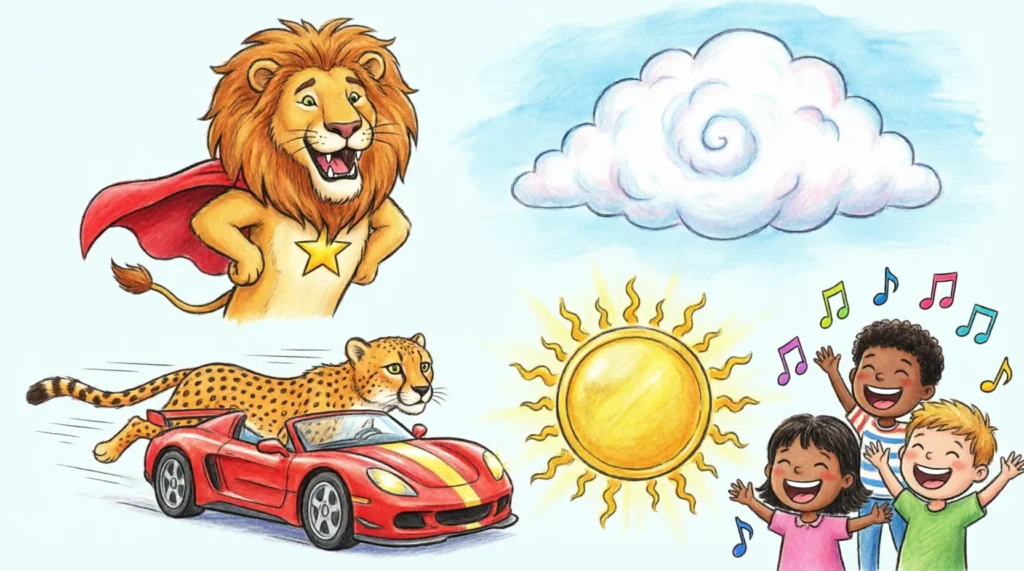
“Bright as the morning sun shining over the playground.”
“Fast like a rocket zooming through the sky.”
“Soft as a fluffy pillow after a long day.”
“Busy like bees building honey in spring.”
“Cool as ice cream on a hot summer afternoon.”
“Happy like a puppy chasing bubbles.”
“Loud as thunder crashing across the clouds.”
“Quiet like snow falling at midnight.”
“Silly as a monkey dancing in pajamas.”
“Brave like a lion standing tall in the jungle.”
“Sweet as candy melting on your tongue.”
“Light like a feather floating in the breeze.”
“Shiny as a brand-new bicycle in the sun.”
“Hungry like a bear waking up from winter sleep.”
“Slow as a turtle crossing the sidewalk.”
“Wiggly like spaghetti on a fork.”
“Warm as cocoa on a rainy evening.”
“Wild like popcorn popping in a pan.”
“Tall as a tree reaching for the clouds.”
“Tiny like an ant carrying crumbs.”
“Bouncy as a basketball in the gym.”
“Smooth like butter spread on toast.”
“Colorful as a rainbow after a storm.”
“Sleepy like a cat curled beside the window.”
“Sharp as a pencil ready for homework.”
These examples work well because they create strong mental pictures. You can almost hear, taste, or feel what the comparison describes. Language arts researchers explain that vivid imagery helps students remember figurative language more naturally.
A good similes song for kids also uses rhythm and repetition. That musical pattern helps your brain connect the words and meaning more quickly.
How to Use Similes Song for Kids in Your Writing
Learning from a similes song for kids becomes even more useful when you start writing your own comparisons. Here are some easy ways to do that.
Pick something familiar to compare.
Think about objects, animals, foods, or activities you know well. Kids often create stronger similes when they compare things to everyday experiences.
Use your senses.
Ask yourself what something looks, sounds, smells, tastes, or feels like. This helps your similes feel more alive and detailed.
Keep your comparisons clear.
A good simile should help the reader understand your idea quickly. If the comparison feels confusing, try a simpler image.
Read your simile out loud.
Since many similes appear in songs and poems, hearing the rhythm can help you decide if it sounds smooth and natural.
Example sentence:
“The classroom buzzed like a hive of busy bees before the science fair.”
That sentence works because you can instantly imagine the noisy excitement in the room.
Once you start using similes naturally, you will notice them everywhere — especially in poems, stories, and children’s songs.
Similes Song for Kids in Poems and Stories
Many poems and children’s songs use similes because they create emotion, rhythm, and colorful imagery. Writers know that musical language keeps readers and listeners interested.
Here are a few short fictional examples inspired by a similes song for kids.
“Ali sang as loud as thunder, Dancing through the rain, His laughter bounced like marbles Rolling down the lane.”
“Sophia’s smile glowed like sunshine on the first day of spring. Everyone in the classroom felt warmer when she walked in.”
“Ravi’s sneakers flashed like lightning As he raced across the field, Quick as a cheetah chasing wind, Never ready to yield.”
Poets and songwriters use similes because they make ordinary moments feel exciting. A simple sentence becomes much more memorable when it includes a vivid comparison.
You can even turn your homework into a mini song by adding rhythm and repetition to your similes. That is one reason a similes song for kids is such a powerful learning tool.
More similes song for kids by Tone and Context
🌿 Natural & Descriptive
“As cheerful as a bird singing at sunrise” — Captures a bright, uplifting feeling that works well in descriptive writing about music.
“Like a stream dancing over smooth stones” — Shows a song flowing smoothly and naturally from one note to the next.
“As light as a breeze through spring leaves” — Highlights a gentle, easy-to-listen-to song.
“Like raindrops tapping on a quiet pond” — Describes a soft rhythm that feels calm and peaceful.
“As colorful as a rainbow after a storm” — Emphasizes the variety and excitement found in a lively children’s song.
💛 Warm & Emotional
“Like a hug from a favorite grandparent” — Expresses comfort, warmth, and a feeling of being cared for.
“As comforting as a blanket on a cold evening” — Works well when describing a song that makes listeners feel safe and relaxed.
“Like a smile shared across a room” — Suggests friendliness and happiness that spreads from person to person.
“As sweet as a note tucked into a lunchbox” — Conveys kindness and affection in a simple, relatable way.
“Like laughter around a family table” — Reflects togetherness and joyful memories connected to music.
✨ Poetic & Romantic
“Like moonlight floating across a lake” — Creates a dreamy and graceful image for a gentle melody.
“As soft as a whisper carried by the wind” — Suggests delicate sounds and a peaceful mood.
“Like stars twinkling in a midnight sky” — Describes a song filled with wonder and magic.
“As graceful as petals drifting through the air” — Highlights beauty and elegance in musical expression.
“Like a silver ribbon winding through the night” — Paints a poetic picture of a song moving smoothly from verse to verse.
😄 Playful & Fun
“As bouncy as popcorn popping in a pan” — Perfect for describing energetic songs that make kids want to move.
“Like a puppy chasing its own tail” — Shows excitement, silliness, and endless fun.
“As lively as monkeys swinging through trees” — Captures action and playful energy.
“Like a trampoline full of giggles” — Emphasizes a song that feels exciting and joyful.
“As zippy as a scooter racing downhill” — Describes a fast-paced tune bursting with enthusiasm.
These tone-grouped similes for similes song for kids give you options for every kind of writing — whether you need something soft and poetic or bold and fun. Try picking one from each group and using them in a short paragraph to see how different the same keyword can feel.
Using Similes Song for Kids in Real Writing Contexts
In a Descriptive Essay
When writing about music in a school essay, a simile can help readers imagine how a song sounds and feels. Instead of simply saying a song was nice, compare it to something familiar and vivid. Example: The children’s song was as cheerful as a bird singing at sunrise, filling the classroom with energy.
In a Poem
Similes for similes song for kids can create mood and make poetry more expressive. They help readers hear and feel the music through imagery. Example: The melody drifted like moonlight floating across a lake, while the chorus sparkled like stars in the sky.
In a Story or Creative Scene
In stories, similes can show how a song affects characters or changes the atmosphere of a scene. They make descriptions more engaging and memorable. Example: As the music began, the song bounced through the playground like a puppy chasing its own tail, and every child rushed to join the fun.
In a Social Media Caption or Message
Short similes work well in captions and messages because they quickly create a clear image. They add personality without needing many words. Example: Today’s favorite tune is as bouncy as popcorn popping in a pan! 🎵✨
The more you practice placing similes for Similes Song for Kids into real sentences, the more natural your writing will sound — and the more your reader will feel exactly what you want them to feel.
Common Mistakes Students Make With Similes Song for Kids
Even strong writers make mistakes while learning figurative language. That is completely normal. Here are some common problems students face with a similes song for kids and how you can fix them.
Using comparisons that do not make sense
Sometimes students compare two things that are too unrelated. Try choosing comparisons your readers can easily picture.
Forgetting the words “like” or “as”
A simile usually needs “like” or “as.” Without those words, your sentence may become a metaphor instead.
Making similes too long
Long comparisons can lose their impact. Keep your similes short, clear, and easy to understand.
Repeating the same similes again and again
Phrases like “busy as a bee” are fine, but using them too often can sound boring. Challenge yourself to invent fresh comparisons.
Focusing only on rhyme in songs
In a similes song for kids, some students care so much about rhyming that the comparison stops making sense. Meaning should always come first.
The good news is that practice helps quickly. The more you read and write similes, the more natural they become.
Fun Activities to Practice Similes Song for Kids
The best way to improve is by practicing in creative ways. Try these fun activities at home or in the classroom.
Create Your Own Simile Song
Pick a simple tune you already know and replace the lyrics with similes. You can sing about school, animals, sports, or even your favorite snack.
Simile Drawing Challenge
Grab a pencil and draw one of your similes. Then write a sentence underneath explaining the comparison.
Finish-the-Simile Game
One person says the first half of a simile, and another person finishes it. For example: “Bright as…” and someone answers, “the summer sun!”
Simile Scavenger Hunt
Read a poem, song, or storybook and search for similes. See how many examples you can find in ten minutes.
Musical Simile Circle
Sit in a circle with classmates or family members. Each person sings or says a new simile before the music stops.
Worksheet-to-Song Activity
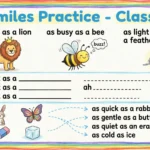
Take similes from a worksheet and turn them into short song lyrics. This helps you remember examples more easily during tests or writing assignments.
Activities like these help you learn while having fun. That is one reason literacy researchers encourage music-based language activities for younger learners.
What NOT to Do With Similes Song for Kids
There are also a few myths and habits you should avoid while learning similes through songs.
Do not think every line must rhyme
Rhyming can sound fun, but a strong simile matters more than perfect rhyme.
Do not copy examples without understanding them
If you use a simile, make sure you understand what the comparison means and why it works.
Do not force a simile into every sentence
Too many comparisons can make your writing feel crowded. Use similes where they add excitement or imagery.
Do not assume similes are only for poetry
You can use similes in stories, essays, speeches, songs, and even everyday conversation.
Now that you know what to avoid, let’s answer some common questions students and parents often ask.
Frequently Asked Questions About Similes Song for Kids
What is a similes song for kids?
A similes song for kids is a song that teaches comparisons using “like” or “as.” These songs often include catchy rhythms and simple examples that help students remember figurative language more easily.
Why are simile songs helpful for students?
Music makes learning more memorable. Many students remember similes faster when they hear them repeated in songs because rhythm and repetition help the brain store information.
How do you use similes song for kids in class?
Teachers often play songs before writing lessons or poetry activities. Students may also sing along, identify similes in lyrics, or write their own song-inspired comparisons.
What is the difference between a simile and a metaphor in songs?
A simile compares two things using “like” or “as.” A metaphor compares things directly without those words. For example, “fast like lightning” is a simile, while “you are lightning” is a metaphor.
Are similes song for kids good for younger children?
Yes, they are excellent for younger learners because music keeps children engaged. The playful examples and repetition also help students understand figurative language in a less stressful way.
Final Thoughts on Similes Song for Kids
A similes song for kids can turn figurative language from something confusing into something exciting and memorable. Through music, rhythm, and playful comparisons, students learn how to create vivid imagery in a natural way.
You explored catchy simile examples, writing tips, creative activities, and common mistakes to avoid. You also saw how songs, poems, and stories use similes to make words feel more colorful and emotional.
Creative writing teachers and language arts educators often encourage musical learning because it keeps students curious and involved. When you enjoy learning, you usually remember the lesson much longer.
The more you practice similes in songs and writing, the stronger your creativity will become — and your words will start painting pictures all on their own.
Frequently Asked Questions
What is a similes song for kids and why is it effective?▼
A similes song for kids is a fun and catchy way to teach comparisons using the words ‘like’ and ‘as.’ These songs make learning figurative language enjoyable and memorable by incorporating rhythm, rhyme, and creative examples that stick in students’ minds.
How can similes improve storytelling and reading comprehension?▼
Similes enhance storytelling and reading comprehension by helping readers visualize ideas more clearly. By understanding similes, students can create more vivid imagery in their writing and better grasp the descriptive language used in novels and poems.
What are some examples of catchy similes for kids?▼
Some catchy similes for kids include ‘Bright as the morning sun shining over the playground’ and ‘Happy like a puppy chasing bubbles.’ These examples create strong mental pictures, making it easier for children to remember and use figurative language.
How can I incorporate similes songs into my teaching?▼
You can incorporate similes songs into your teaching by playing them during lessons or encouraging students to create their own. Integrating music and repetition will help students grasp the concept of similes more naturally and effectively.
What tips can help kids write their own similes?▼
To help kids write their own similes, encourage them to pick familiar objects, animals, or activities for comparison. This familiarity often leads to stronger and more creative similes, making the writing process more enjoyable.
Why do literacy educators recommend using music to teach figurative language?▼
Literacy educators recommend using music to teach figurative language because it engages students and helps them remember concepts through repetition and rhythm. Music creates a playful environment that makes learning more enjoyable and effective.
How do similes relate to creative writing and poetry?▼
Similes are essential in creative writing and poetry as they enhance imagery and deepen emotional resonance. By using similes, writers can create vivid and relatable comparisons that enrich their storytelling and expressive abilities.
Sara Liu holds a Master’s degree in English Education from the University of Washington and has been an educator for over 15 years. She specializes in curriculum development for elementary and middle school students, with a particular focus on figurative language. Sara’s love for similes and metaphors blossomed when she discovered their power to spark imagination and convey emotion. At SimilePedia, Sara creates engaging worksheets and reference guides that help young learners grasp the nuances of figurative language. Her favorite part of writing content is developing resources that make complex concepts accessible to children. She is passionate about nurturing a love for words and creativity in her students, and her contributions are shaped by this commitment.