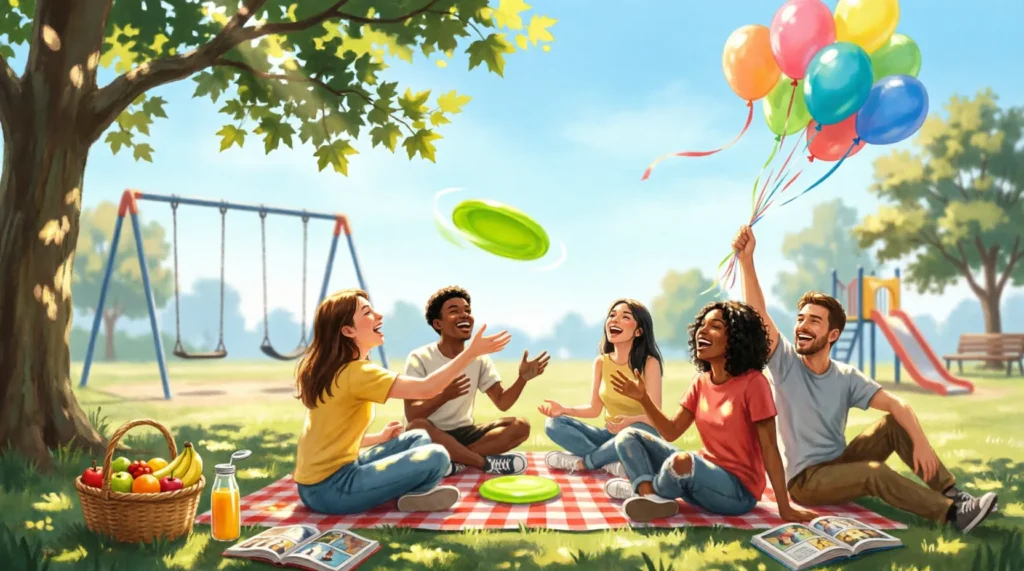
In short, similes for having fun are creative comparisons that help you describe joy, excitement, laughter, and good times in a more vivid way. You’ll find funny, imaginative, and easy-to-use examples in this guide, along with tips, activities, and writing ideas that can make your stories and school assignments more exciting to read.
What Are Similes for Having Fun? (And Why They Matter)
Picture this: you’re writing a story about a birthday party, a school trip, or a game night with friends. You know the characters are having a blast, but every sentence keeps sounding the same: “They had fun.” “It was fun.” “Everyone was happy.” After a while, your writing feels flat.
That’s where similes for having fun can help. A simile compares one thing to another using words like “as” or “like” to create a stronger picture in the reader’s mind. Instead of simply saying someone had fun, you can describe it in a colorful and memorable way.
For example, you might write, “The children laughed like popcorn popping in a pan.” Suddenly, your reader can almost hear the excitement.
Language arts educators often encourage students to use similes because they improve storytelling, reading comprehension, and creative thinking. Literacy researchers also note that figurative language helps readers connect emotionally with what they read, making your writing more lively and enjoyable.
Once you start noticing similes in books, poems, songs, and even conversations, you’ll realize they are everywhere. And the best part is that you can learn to use them too.
The Best Examples of Similes for Having Fun
[IMAGE: Students laughing together while writing creative similes in class]
The kids ran around like fireworks exploding on a summer night.
Her laughter bubbled like soda fizzing over a cup.
We danced like nobody in the world was watching us.
The party buzzed like bees in a flower garden.
Their excitement spread like sunshine across a playground.
He grinned like a child opening presents on their birthday.
The team celebrated like they had just won the championship.
The friends joked around like monkeys swinging through trees.
Everyone laughed like popcorn popping in a microwave.
The carnival lights sparkled like stars at a festival.
She felt as free as a bird gliding through the sky.
The class trip was like stepping into a dream world.
Their game night was as wild as a roller coaster ride.
The children splashed in the pool like playful dolphins.
His happiness burst out like confetti from a cannon.
The crowd cheered like thunder rolling across the sky.
We sang together like birds greeting the morning sun.
The sleepover felt like a nonstop comedy show.
Their laughter echoed like music filling a concert hall.
The playground came alive like a carnival at sunset.
She skipped down the hallway like she had springs in her shoes.
The campfire stories spread joy like marshmallows melting over flames.
They raced around the park like puppies set free.
The birthday party sparkled like glitter under bright lights.
His excitement bounced around like a basketball on the court.
The children giggled like water splashing over smooth rocks.
The festival felt like a rainbow dancing in the rain.
Their fun exploded like balloons bursting at a celebration.
The cousins played together like actors in an adventure movie.
The amusement park roared like a giant machine powered by joy.
Her smile shined like the first sunny day after a storm.
The picnic felt as cheerful as birds singing in spring.
Their excitement crackled like a campfire late at night.
The room glowed like a stage before a concert begins.
The kids darted around like squirrels chasing each other in trees.
Their joy floated like bubbles in the wind.
The dance floor shook like an earthquake made of music.
The soccer match felt like a celebration wrapped in energy.
The fair was as colorful as a painter’s imagination.
The children’s laughter rolled through the park like ocean waves.
Their jokes flew around like paper airplanes in a classroom.
The movie night felt warm like hot chocolate on a cold day.
The backyard party sparkled like holiday lights in December.
The students chatted like excited birds before sunrise.
Their happiness spread like ripples in a pond.
These similes work well because they use strong imagery and familiar experiences. When you compare fun to fireworks, sunshine, music, or bubbles, your reader can picture and feel the excitement more clearly.
Good similes for having fun also create emotion. Some feel energetic and loud, while others feel warm, cozy, or magical. That variety helps your writing sound more natural and creative.
Now that you’ve seen plenty of examples, you’re probably ready to try using them in your own writing.
How to Use Similes for Having Fun in Your Writing
Using similes for having fun becomes much easier when you follow a few simple steps.
Think about the type of fun you want to describe.
Is it loud and exciting? Calm and happy? Silly and chaotic? Your simile should match the mood. A carnival might feel “like fireworks,” while a quiet game night could feel “like warm cocoa on a winter evening.”
Compare the fun to something your reader already knows.
The best similes use familiar images. Readers understand popcorn popping, sunshine spreading, or bubbles floating because they’ve seen those things before.
Don’t force too many similes into one paragraph.
If every sentence has a simile, your writing can feel crowded. Choose one or two strong comparisons that really stand out.
Read your sentence out loud.
If it sounds smooth and natural, you’re probably on the right track. If it feels confusing, simplify it.
Here’s a quick example:
“During the school fair, the students laughed like popcorn popping while music blasted from every corner.”
That sentence gives your reader sound, movement, and excitement all at once.
As you practice, you’ll start noticing that similes can turn ordinary writing into something much more memorable.
More similes for having fun by Tone and Context
🌿 Natural & Descriptive “Having fun was like a river dancing over smooth stones.” — This captures a steady, lively kind of happiness and works well in descriptive writing. “As cheerful as birds singing at sunrise.” — Use this to show bright, fresh excitement in essays or narratives. “Like leaves twirling in a gentle breeze, they were having fun all afternoon.” — This simile creates a calm and carefree mood. “As lively as waves skipping across the shore.” — It highlights energy and movement in vivid descriptions. “Like butterflies drifting through a sunny garden.” — This gives a light and colorful feeling to happy moments.
💛 Warm & Emotional “Having fun together was like sharing a warm blanket on a chilly evening.” — This shows comfort and togetherness in personal writing. “As happy as a child hearing good news.” — Use this to express simple, heartfelt joy. “Like a favorite song playing at the perfect moment.” — This simile captures pleasant memories and special feelings. “As comforting as laughter around the dinner table.” — It works well when writing about family and friendship. “Like sunshine reaching through a cloudy sky.” — This emphasizes happiness that brightens difficult days.
✨ Poetic & Romantic “Having fun with you was like stars shining across a midnight sky.” — This creates a dreamy and romantic mood. “As sweet as a melody carried by the wind.” — Use this in poems and song lyrics to add softness. “Like moonlight painting silver across a quiet lake.” — This simile brings elegance and beauty to joyful moments. “As endless as the echoes of a beautiful song.” — It suggests memories that seem to last forever. “Like petals floating through spring air.” — This gives writing a gentle and poetic touch.
😄 Playful & Fun “Having fun was like popcorn popping in every direction.” — This shows excitement and nonstop activity. “As goofy as puppies chasing their own tails.” — Use this for silly and humorous situations. “Like confetti flying at a surprise party.” — This simile captures celebration and excitement. “As wild as kids racing toward an ice cream truck.” — It emphasizes eager, energetic fun. “Like bouncing on a trampoline made of laughter.” — This creates a funny and imaginative picture.
These tone-grouped similes for having fun give you options for every kind of writing — whether you need something soft and poetic or bold and fun. Try picking one from each group and using them in a short paragraph to see how different the same keyword can feel.
Using Similes for Having Fun in Real Writing Contexts
In a Descriptive Essay Students often describe enjoyable events such as vacations, parties, or school trips. A simile helps readers picture the happiness more clearly and makes the writing more vivid. For example, Our class was having fun like confetti flying at a surprise party as we explored the science museum together.
In a Poem Similes for having fun can create a joyful or dreamy mood in poetry. They help readers feel the emotion behind the words. We laughed beneath the evening sky, like stars shining across a midnight sea, and our happiness drifted softly free.
In a Story or Creative Scene A simile can show how characters react or what the atmosphere feels like during exciting moments. It adds color to scenes and makes emotions easier to imagine. As the carnival lights flashed around them, Maya and her friends were having fun like popcorn popping in every direction, unable to stop laughing.
In a Social Media Caption or Message Short similes work well in casual writing because they quickly show excitement and personality. They make captions and messages more memorable. Best weekend ever—having fun like puppies chasing their own tails! 🎉
The more you practice placing similes for having fun into real sentences, the more natural your writing will sound — and the more your reader will feel exactly what you want them to feel.
Similes for Having Fun in Poems and Stories
[IMAGE: Child writing poetry in a notebook beside colorful lights]
Poets and storytellers love similes because they make emotions feel real and vivid. When you read a good simile, it almost feels like you are inside the moment yourself.
Here are a few short creative examples.
Maya twirled across the stage like a leaf dancing in the wind. Her laughter floated through the room like bells ringing on a holiday morning.
Aamir sprinted through the water park like a rocket taking off. His cousins chased him, laughing like seagulls calling over the ocean.
“Sara’s birthday party sparkled like stars scattered across the night sky,” wrote Lina in her journal. “Every smile felt warm like sunshine after rain.”
Creative writing teachers often encourage students to experiment with figurative language because it adds rhythm, emotion, and personality to stories and poems. Even one strong simile can make your reader remember a scene long after they finish reading.
Before long, you may start inventing your own similes naturally whenever you write.
Common Mistakes Students Make With Similes for Having Fun
Everyone makes mistakes while learning figurative language. That’s completely normal, and each mistake is a chance to improve.
Using similes that don’t match the mood
Sometimes students compare fun to something gloomy or scary. If your scene is cheerful, your simile should support that feeling instead of confusing the reader.
Repeating the same simile too often
Writing “happy like a clown” again and again can make your work feel repetitive. Try exploring new comparisons that fit your scene better.
Making the simile too complicated
A simile should help readers understand your idea quickly. If your comparison is confusing, simplify it so your audience can picture it easily.
Forgetting to use “like” or “as”
A simile needs comparison words such as “like” or “as.” Without them, your sentence may turn into a metaphor instead.
Using random comparisons unrelated to fun
When writing similes for having fun, keep your images connected to joy, laughter, excitement, or celebration. Comparing fun to something unrelated can weaken your writing.
The more you practice, the easier it becomes to spot these mistakes and fix them naturally.
Fun Activities to Practice Similes for Having Fun
[IMAGE: Classroom activity where students match similes with emotions]
Create a “Fun Simile Jar”
Grab slips of paper and write exciting objects or experiences on them, like fireworks, roller coasters, bubbles, or music. Pick one and challenge yourself to turn it into a simile about having fun.
Play the Simile Challenge Game
With friends or classmates, take turns describing fun events using similes. The funniest or most creative comparison wins the round.
Draw and Describe
Draw a fun memory like a picnic, birthday party, or sports game. Then write three similes that match your drawing.
Rewrite Boring Sentences
Take simple sentences like “The kids had fun” and improve them. You could rewrite it as “The kids laughed like popcorn exploding in a pan.”
Read Books and Spot Similes
Try reading stories, poems, or song lyrics and highlighting similes connected to joy and excitement. You’ll quickly learn how professional writers make scenes feel alive.
Create a Simile Poster
Use markers, stickers, or digital tools to design a colorful poster filled with your favorite similes for having fun. This works great for classrooms or study spaces at home.
Activities like these help you build creativity while making language arts feel much more enjoyable.
What NOT to Do With Similes for Having Fun
Don’t use similes just to sound fancy
A simile should make your writing clearer and more interesting, not more confusing. Simple comparisons are often the strongest.
Don’t copy every simile you find online
It’s okay to learn from examples, but your own ideas will make your writing feel more personal and original.
Don’t mix too many emotions together
If your scene is cheerful, avoid adding comparisons that suddenly feel sad, angry, or frightening unless the story truly changes direction.
Don’t assume longer similes are always better
Some students think a huge, detailed comparison sounds smarter. Often, short and vivid similes are easier for readers to enjoy and remember.
Learning what to avoid can improve your writing just as much as learning what to include.
Frequently Asked Questions About Similes for Having Fun
What is a simile for having fun?
A simile for having fun is a comparison that describes happiness, excitement, or enjoyment using “like” or “as.” For example, “The children laughed like popcorn popping in a pan” creates a vivid picture of joyful energy.
How do you use similes for having fun in a sentence?
You can place the simile directly into your description. For example: “During the carnival, the crowd buzzed like bees in a flower garden.” This helps your reader imagine the scene more clearly.
What is the difference between a simile and a metaphor about fun?
A simile uses words like “like” or “as” to compare things, while a metaphor says one thing actually is another. “The party was like fireworks” is a simile, but “The party was fireworks” is a metaphor.
Why do writers use similes for having fun?
Writers use them to make emotions stronger and scenes more colorful. Similes help readers feel the excitement, joy, or silliness instead of just reading plain descriptions.
Are similes for having fun good for school assignments?
Yes, they work very well in stories, poems, essays, and creative writing projects. Teachers often encourage students to use figurative language because it improves detail, imagery, and expression.
Final Thoughts on Similes for Having Fun
Similes for having fun can turn ordinary writing into something bright, memorable, and full of energy. Instead of simply telling readers that people were happy, you can help them hear the laughter, picture the excitement, and feel the joy.
You’ve now seen dozens of examples, learned how to use them in your own writing, and explored ways to practice creatively at home or in class. Whether you’re writing a poem, a school essay, or a short story, these comparisons can make your ideas stand out.
Remember, strong writing doesn’t happen overnight. Even experienced writers experiment with different similes until they find the perfect one for the moment.
The more you practice using figurative language, the more confident and creative your writing will become — and that’s something worth celebrating.
Frequently Asked Questions
What are similes for having fun and why are they useful?▼
Similes for having fun are creative comparisons that enhance the description of joy, excitement, and laughter in writing. They help create vivid imagery for readers, making stories more engaging and memorable.
Can you provide examples of similes for having fun?▼
Certainly! Examples include, ‘The kids ran around like fireworks exploding on a summer night’ and ‘Her laughter bubbled like soda fizzing over a cup.’ These comparisons vividly illustrate the fun and joy experienced.
How do similes improve storytelling and creative writing?▼
Similes enhance storytelling by adding color and vibrancy, allowing readers to connect emotionally with the narrative. They encourage creative thinking and make writing more enjoyable to read, transforming flat sentences into dynamic imagery.
In what contexts can I apply similes for having fun?▼
You can use similes for having fun in various contexts such as writing stories about birthday parties, school activities, or game nights. They can also be applied in poetry, song lyrics, and even casual conversations to express joy and excitement.
Why do educators encourage students to use similes?▼
Educators promote the use of similes because they help improve storytelling, reading comprehension, and creative expression. By using figurative language, students can enhance their writing skills and engage more deeply with texts.
How can I learn to recognize and use similes in my writing?▼
You can learn to recognize similes by paying attention to books, poems, songs, and everyday conversations. Practicing writing your own similes based on experiences or observations can also help you become more comfortable using them effectively.
What activities or tips can help with writing similes for fun?▼
Activities like brainstorming comparisons for everyday experiences or creating simile-based poems can be helpful. Additionally, experimenting with different contexts and emotions can inspire more creative and playful similes.
Sara Liu holds a Master’s degree in English Education from the University of Washington and has been an educator for over 15 years. She specializes in curriculum development for elementary and middle school students, with a particular focus on figurative language. Sara’s love for similes and metaphors blossomed when she discovered their power to spark imagination and convey emotion. At SimilePedia, Sara creates engaging worksheets and reference guides that help young learners grasp the nuances of figurative language. Her favorite part of writing content is developing resources that make complex concepts accessible to children. She is passionate about nurturing a love for words and creativity in her students, and her contributions are shaped by this commitment.