In short, similes for Grade 4 help students compare two different things using words like “as” or “like.” They make writing more colorful, easier to imagine, and more fun to read. In this guide, you’ll discover simple examples, writing tips, creative activities, and ways to use similes confidently in your own stories and schoolwork.
What Are Similes for Grade 4? (And Why They Matter)
Picture this: you’re sitting in class, staring at a blank page while your teacher says, “Describe the storm using a simile.” Suddenly, your mind goes completely empty. If that sounds familiar, you’re not alone.
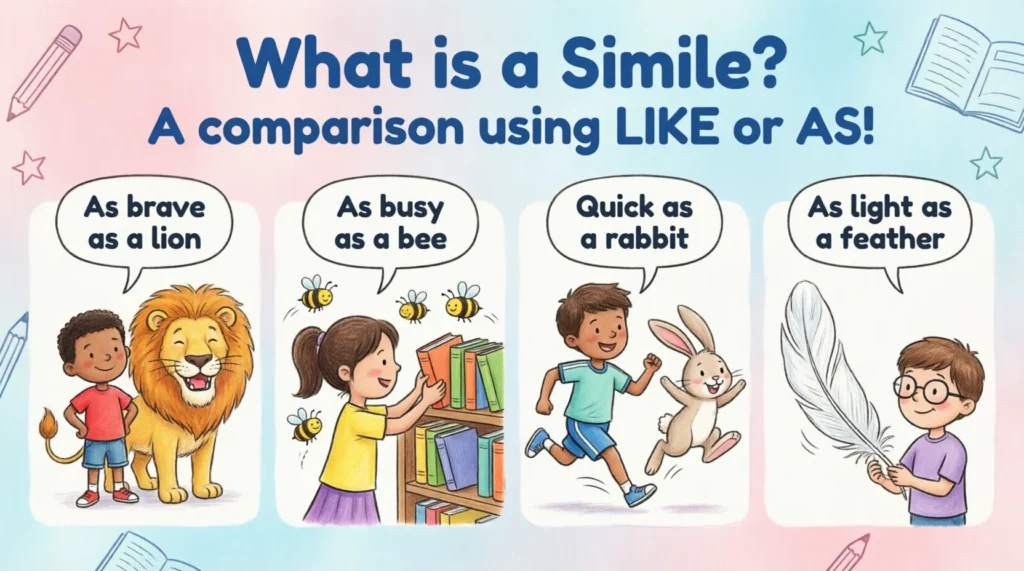
Similes for Grade 4 are simple comparisons that use the words “like” or “as.” They help you describe something by comparing it to something else readers already understand.
For example:
“The baby was as quiet as a mouse.”
“The water sparkled like diamonds.”
These comparisons matter because they make your writing more exciting and easier to picture. Instead of saying “the dog was fast,” you could say “the dog ran like the wind.” That creates a stronger image in your reader’s mind.
Language arts educators and literacy researchers often encourage students to practice similes because they improve creative thinking, storytelling, reading comprehension, and descriptive writing. Once you learn how to use similes well, your poems, stories, and classroom assignments become much more interesting.
Now that you know what similes are, let’s look at some of the best examples you can start using today.
The Best Examples of Similes for Grade 4
[IMAGE: Fourth-grade student writing creative similes in a notebook]
The classroom was as quiet as a library.
Her smile shined like the sun.
The puppy was as fluffy as a cloud.
He ran like a cheetah across the playground.
The ice cream melted like snow in spring.
My backpack felt as heavy as a rock.
The stars twinkled like tiny candles in the sky.
The baby slept like a log.
The popcorn popped like fireworks.
Her laugh sounded like ringing bells.
The muddy field looked like chocolate pudding.
The test felt as long as a train ride.
His hair stuck up like porcupine needles.
The rain fell like silver strings from the clouds.
My little brother followed me like a shadow.
The cat moved as quietly as a ninja.
The pancakes were as flat as paper.
The wind howled like a wolf at night.
Her eyes sparkled like glitter.
The turtle moved as slowly as a snail.
The cookie was as crunchy as potato chips.
The basketball bounced like a rubber ball.
The teacher’s voice was as calm as still water.
My fingers were as cold as ice.
The kite danced like a butterfly in the air.
The classroom buzzed like a beehive before lunch.
The blanket felt as soft as cotton candy.
The lightning flashed like a camera.
The soup was as hot as lava.
The little girl sang like a bird in the morning.
The mountain stood tall like a giant.
The puppy’s tail wagged like a fan.
His face turned red like a tomato.
The moon glowed like a flashlight.
The crowd roared like thunder.
The crayons rolled across the desk like tiny cars.
The river flowed like a ribbon.
The cake smelled as sweet as flowers.
Her backpack was stuffed like a packed suitcase.
The frog jumped like a spring toy.
The leaves danced like ballerinas in the wind.
The hallway was as busy as a market.
My heart pounded like a drum before the spelling bee.
The snow sparkled like sugar.
The old chair creaked like a squeaky door.
These examples work well because they create strong mental pictures. Good similes use imagery, sounds, feelings, or movement that readers can easily imagine. When you use sensory details, your writing feels alive instead of plain.
The next step is learning how you can create your own similes naturally and confidently.
How to Use Similes for Grade 4 in Your Writing
Using similes becomes easier when you practice step by step. You do not need fancy words to make your writing powerful.
Think about what you want to describe.
Ask yourself what the object, person, or feeling looks, sounds, or feels like. Is it loud, soft, fast, bright, cold, or funny?
Compare it to something familiar.
Choose something your reader already knows well. A fast runner could be compared to a cheetah, lightning, or the wind.
Use “like” or “as.”
Most similes use one of these words:
“The soup was as hot as lava.”
“The leaves floated like feathers.”
Keep your comparison clear.
Your reader should understand the picture quickly. If the simile feels confusing, try a simpler comparison.
Here’s one example used in context:
“Amira’s heart pounded like a drum as she walked onto the stage for the school play.”
That sentence helps you feel her nervousness more clearly. Once you start noticing similes around you, you’ll begin using them naturally in your own writing.
Similes for Grade 4 in Poems and Stories
[IMAGE: Kids reading poetry and writing stories with figurative language]
Poets and story writers use similes to create emotion, rhythm, and vivid pictures. Even short lines can become memorable with the right comparison.
Here are a few creative examples students might enjoy.
Aarav’s poem: “The snow fell like feathers at night, Soft and silent, shiny and white.”
Sofia’s story: “The cafeteria buzzed like a beehive as students rushed to grab their lunches.”
Lina’s journal entry: “My excitement jumped around like popcorn when I heard we were going on a field trip.”
Writers use similes because they help readers connect emotionally with the scene. Instead of only telling you what happened, similes help you experience it in your imagination.
As you read books and poems, you’ll start spotting similes everywhere. That makes it easier to create your own.
More similes for grade 4 by Tone and Context
🌿 Natural & Descriptive
“As bright as a rainbow after a storm” — This captures cheerful energy and works well in descriptive essays or nature writing.
“Like a river flowing gently through a valley” — This shows smooth and calm movement and fits peaceful scenes.
“As colorful as a field of spring flowers” — This highlights variety and beauty when describing something lively.
“Like leaves dancing in the autumn breeze” — This creates a vivid image of movement and lightness.
“As fresh as morning dew on the grass” — This suggests something new and refreshing in descriptive writing.
💛 Warm & Emotional
“Like a warm blanket on a chilly evening” — This expresses comfort and kindness and suits personal stories.
“As comforting as a hug from a friend” — This shows affection and support in heartfelt writing.
“Like sunshine breaking through the clouds” — This represents hope and happiness during emotional moments.
“As gentle as a mother’s lullaby” — This creates a soft and caring feeling for letters or memories.
“Like a candle glowing in the dark” — This symbolizes warmth and encouragement in meaningful writing.
✨ Poetic & Romantic
“As dreamy as moonlight on a quiet lake” — This creates a peaceful and poetic mood for poems and songs.
“Like stars sparkling across the midnight sky” — This adds wonder and beauty to creative writing.
“As graceful as a swan gliding over water” — This captures elegance and calm in poetic descriptions.
“Like a melody drifting through the air” — This gives writing a gentle and artistic feeling.
“As magical as a wish carried by the wind” — This adds mystery and imagination to romantic or poetic lines.
😄 Playful & Fun
“Like popcorn popping in a movie theater” — This creates a lively and exciting feeling for funny writing.
“As cheerful as a puppy chasing its tail” — This captures happiness and playful energy.
“Like confetti flying at a celebration” — This shows excitement and joy in casual writing.
“As bouncy as a basketball on the court” — This gives a sense of movement and enthusiasm.
“Like a monkey swinging through the trees” — This adds humor and fun to stories and captions.
These tone-grouped similes for similes for grade 4 give you options for every kind of writing — whether you need something soft and poetic or bold and fun. Try picking one from each group and using them in a short paragraph to see how different the same keyword can feel.
Using similes for grade 4 in Real Writing Contexts
In a Descriptive Essay
Students often use similes for grade 4 when describing people, places, or objects in a more colorful way. A simile helps readers picture details more clearly and makes ordinary descriptions more interesting. For example, The garden was as colorful as a field of spring flowers, filling the yard with bright shades and sweet scents.
In a Poem
Similes for grade 4 can help create mood and add beauty to poems. They allow writers to express feelings and images in a memorable way. For example, Your laughter floated like a melody drifting through the air, and your smile shone as bright as a rainbow after a storm.
In a Story or Creative Scene
Writers can use similes for grade 4 to show emotions, actions, or settings in a vivid way. A well-placed comparison helps readers feel part of the scene. For example, As Mia stepped onto the stage, her excitement burst like confetti flying at a celebration, and she waved happily to the crowd.
In a Social Media Caption or Message
Short similes for grade 4 work well in casual writing because they quickly express feelings in a fun way. They make captions and messages more creative and memorable. For example, Today was as cheerful as a puppy chasing its tail—couldn’t stop smiling!
The more you practice placing similes for grade 4 into real sentences, the more natural your writing will sound — and the more your reader will feel exactly what you want them to feel.
Common Mistakes Students Make With Similes for Grade 4
Everyone makes mistakes while learning figurative language. The good news is that most simile problems are easy to fix once you notice them.
Forgetting to use “like” or “as”
A simile usually needs one of these comparison words. Without them, you may accidentally write a metaphor instead.
Using confusing comparisons
Sometimes students compare things that do not connect clearly. If readers cannot picture the comparison, choose something simpler and more familiar.
Repeating the same similes too often
Phrases like “busy as a bee” are common, but using the same examples again and again can make writing feel boring. Try creating fresh comparisons from your own experiences.
Making similes too long
A simile should help the reader quickly imagine something. If the comparison becomes a whole paragraph, it can distract from the story.
Choosing comparisons that do not fit the mood
A funny simile may not work well in a serious scene. Try matching your simile to the feeling of your writing.
Creative writing teachers often remind students that mistakes are part of learning. Every new draft helps you become a stronger writer.
Now let’s make practice more exciting with some hands-on activities.
Fun Activities to Practice Similes for Grade 4
Simile Scavenger Hunt
Grab a pencil and search through your favorite books for similes. Write down every example you find and explain why it works well.
Draw-and-Describe Challenge
Draw an animal, weather scene, or funny character. Then write three similes describing your picture using “like” or “as.”
Classroom Simile Game
Play in small groups. One student names an object, and the others race to create the best simile for it. You might be surprised how creative your classmates become.
Finish-the-Simile Worksheet
Try sentence starters such as:
“The moon looked like…”
“The puppy sounded as…”
“The classroom felt like…”
Then finish them in your own unique way.
Simile Poetry Time
Create a four-line poem using at least two similes. Challenge yourself to describe seasons, emotions, or favorite foods.
Read and Rewrite
Take a boring sentence like “The cake tasted good.” Rewrite it with a stronger simile such as “The cake tasted as sweet as melted candy.”
These activities help you practice without making writing feel stressful. The more you play with language, the easier it becomes.
What NOT to Do With Similes for Grade 4
Do not force a simile into every sentence.
Too many comparisons can make your writing feel crowded. Use similes where they add strong imagery or emotion.
Do not copy every simile from the internet.
It’s fine to learn from examples, but your own ideas make your writing more original and personal.
Do not make comparisons that readers cannot understand.
A good simile should feel clear and relatable for your audience, especially in Grade 4 writing.
Do not confuse similes with metaphors.
A simile uses “like” or “as,” while a metaphor compares things directly. This mix-up happens often, so don’t worry if you need extra practice.
Frequently Asked Questions About Similes for Grade 4
What is a simple simile for Grade 4?
A simple simile compares two things using “like” or “as.” For example, “The pillow was as soft as a cloud” is easy for Grade 4 students to understand and imagine.
How do you teach similes to fourth graders?
You can teach similes by starting with familiar objects and simple comparisons. Reading poems, playing word games, and practicing short writing activities also help students learn naturally.
What are fun similes kids can use in stories?
Kids often enjoy playful similes like “The popcorn popped like fireworks” or “The puppy bounced like a rubber ball.” Funny and visual comparisons usually make stories more entertaining.
What is the difference between a simile and a metaphor?
A simile uses the words “like” or “as” to compare things. A metaphor compares things directly without using those words. For example, “Her smile was sunshine” is a metaphor.
Why are similes important for Grade 4 students?
Similes help students improve descriptive writing and reading comprehension. Literacy educators also note that figurative language encourages creativity and helps young writers express emotions more clearly.
Final Thoughts on Similes for Grade 4
Learning similes for Grade 4 can completely change the way you write. Simple comparisons make stories brighter, poems more emotional, and descriptions easier for readers to imagine.
You explored dozens of examples, learned how to create your own similes, discovered common mistakes to avoid, and practiced activities that make figurative language more fun. Every new comparison helps you become a more confident writer.
Remember, you do not need perfect words right away. Great similes often come from observing the world around you and experimenting with ideas.
With practice, your writing can become as colorful as a rainbow and as memorable as your favorite storybook. Keep writing, keep imagining, and enjoy the creative journey ahead.
Frequently Asked Questions
What are similes and how do they help Grade 4 students?▼
Similes are comparisons using the words ‘like’ or ‘as’ to describe something by relating it to something else that is familiar. They help Grade 4 students enhance their writing by making descriptions more vivid and engaging, allowing readers to visualize the comparisons more easily.
Can you provide some examples of similes that Grade 4 students can use?▼
Certainly! Some fun examples include ‘The puppy was as fluffy as a cloud’ and ‘Her smile shined like the sun.’ These similes create strong images that can help make writing more colorful and enjoyable.
Why are similes important for creative writing and storytelling?▼
Similes are important because they improve creative thinking and storytelling by encouraging students to think critically about their descriptions. They also enhance reading comprehension and make writing assignments more interesting, helping students express their ideas more effectively.
How can students practice using similes in their writing?▼
Students can practice using similes by creating their own comparisons based on everyday experiences or observations. Activities like writing creative stories, poems, or even simple descriptive sentences can help reinforce their understanding and use of similes.
What writing tips can help students use similes confidently?▼
To use similes confidently, students should start by identifying familiar objects or experiences they can compare. They should also experiment with different similes to see which ones evoke the strongest imagery and fit naturally within their writing.
How can similes be integrated into classroom activities?▼
Similes can be integrated into classroom activities through games like simile matching, where students pair phrases with appropriate comparisons, or creative writing prompts that specifically ask for similes. This hands-on approach allows students to engage with the concept in a fun and memorable way.
What role do educators play in teaching similes to Grade 4 students?▼
Educators play a critical role by introducing similes in a way that is relatable and engaging for students. They can provide examples, encourage practice, and offer constructive feedback to help students become more comfortable and skilled in using similes in their writing.
More Fun Similes for Grade 4 Kids
The puppy zoomed around the yard like a toy car with no off switch.
My backpack felt as heavy as a bag of bowling balls.
The classroom got as quiet as a library during a test.
His sneeze was as loud as a firework going off indoors.
Liam Nguyen is a passionate educator and writer with a deep love for figurative language. He holds a master’s degree in Creative Writing and has spent eight years teaching at various educational settings, focusing on language enrichment programs for children from grades 2-6. His expertise in crafting metaphorical language and similes into captivating content stems from his belief that storytelling is the heartbeat of learning. Liam’s contributions to SimilePedia span from emotion-driven examples to color-inspired narrative tools. He is committed to fostering a creative environment where students can explore and find joy in their unique expressions.