In short, similes for frozen are comparisons that help you describe something icy, stiff, cold, or emotionally numb using the words “like” or “as.” These creative comparisons make your writing feel vivid and alive, whether you are working on a poem, story, or school assignment. Keep reading to discover examples, writing tips, and fun ways to practice using them.
[IMAGE: Student writing winter similes in a notebook beside a snowy window]
What Are Similes for Frozen? (And Why They Matter)
You sit in class staring at your paper, trying to describe a frozen lake or a character who feels emotionally cold. Your teacher says, “Use figurative language,” but your mind suddenly goes blank. If that sounds familiar, you are definitely not alone.
Similes for frozen are comparisons that describe something cold, icy, stiff, motionless, or emotionally distant by using the words “like” or “as.” For example, “Her hands were as cold as ice cubes” is a simple frozen simile.
These similes matter because they help your reader picture exactly what you mean. Instead of saying “It was cold,” you can say, “The air bit like a wolf in winter.” Suddenly, your writing feels stronger and more emotional.
Language arts researchers and literacy educators often explain that figurative language helps students improve creativity, reading comprehension, and storytelling skills. When you practice similes for frozen scenes or feelings, you train your brain to notice detail and create stronger images in your writing.
Now that you know what these similes are, let’s explore some examples you can actually use in your next assignment or story.
The Best Examples of Similes for Frozen
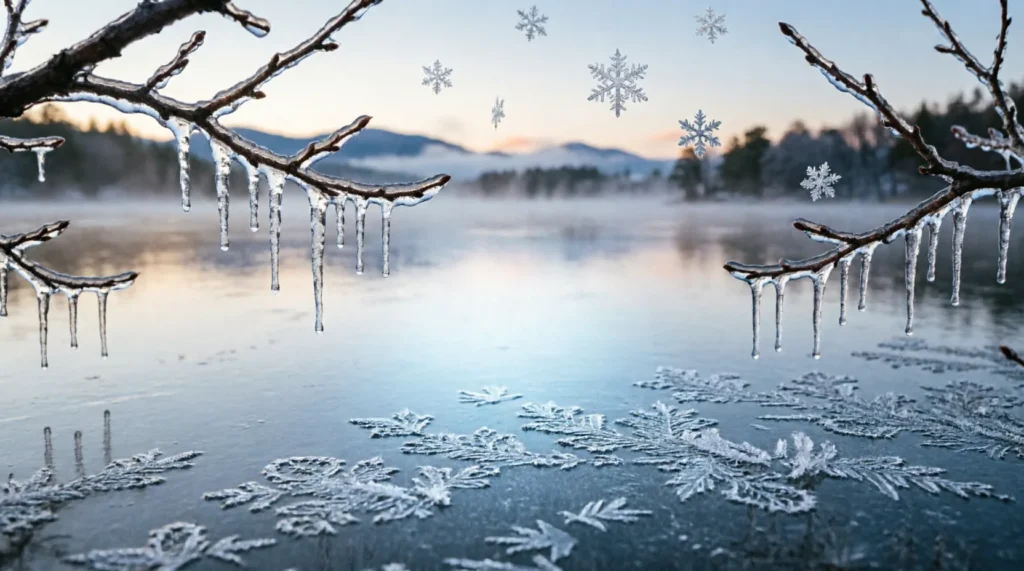
[IMAGE: Frozen lake with icy trees and snow-covered mountains]
The pond was as still as frozen glass.
Her fingers felt like tiny blocks of ice.
The winter wind cut like a frozen blade.
His smile was as frozen as an old photograph.
The sidewalk shimmered like frozen silver.
My toes were as numb as stones in snow.
The lake looked like a mirror trapped in ice.
Her voice sounded cold like frozen rain.
The classroom went silent like a frozen movie scene.
The snowflakes sparkled like frozen stars.
His heart felt as frozen as the Arctic Ocean.
The branches cracked like frozen bones.
The ice cream was hard as a frozen brick.
Her stare was as icy as a winter storm.
The river moved slowly like syrup left in a freezer.
The cave walls glittered like frozen diamonds.
His hands shook like leaves trapped in frost.
The air around us felt cold like an open freezer.
The abandoned house stood still like a frozen memory.
My backpack straps felt stiff as frozen rope.
The field looked white like a frozen blanket.
Her laugh disappeared like breath in icy air.
The mountain peak shined like frozen crystal.
The soup turned cold as forgotten snow.
His expression stayed frozen like a paused video.
The morning grass crunched like frozen cereal.
The clouds hung low like frozen smoke.
Her feet felt as cold as penguins on ice.
The castle tower rose like a frozen giant.
The window glittered like sugar frozen in winter.
These examples work well because they create strong mental pictures. Some focus on physical coldness, while others describe emotions, silence, or stillness.
Creative writing teachers often encourage students to use sensory details in similes. When you compare frozen things to glass, ice, silver, or frost, your reader can almost feel the cold in the scene.
Once you collect a few favorite examples, you can start using them naturally in your own writing.
How to Use Similes for Frozen in Your Writing
You do not need to sound like a famous poet to use similes well. A few thoughtful comparisons can make your writing much more powerful.
Think about what feels frozen.
Ask yourself whether you are describing weather, emotions, objects, or movement. A frozen river feels different from a frozen friendship, so your simile should match the mood.
Use details your reader already knows.
Readers understand things like ice cubes, freezers, snowstorms, and frosty windows. Familiar images help your simile feel clear and relatable.
Avoid repeating the same comparison.
Not every frozen simile needs to mention ice. You can compare frozen things to statues, paused videos, stiff ropes, or silent rooms to keep your writing fresh.
Match the tone of your story or poem.
Funny writing can use playful comparisons, while serious writing may need more emotional imagery. You want your simile to fit naturally into your sentence.
Example sentence:
“The hallway felt as silent and frozen as an abandoned castle during winter.”
As you practice, you will notice that the best similes sound smooth instead of forced. That skill becomes easier every time you write.
Similes for Frozen in Poems and Stories
[IMAGE: Young student reading a winter poem beside a fireplace]
Poets and story writers love frozen imagery because it creates emotion quickly. Frozen settings can feel lonely, magical, peaceful, or even frightening depending on the words you choose.
Here are a few short fictional examples that show similes for frozen in action.
Aisha wrote in her notebook:
“Snow drifted across the yard like feathers trapped in ice. The night stood still as a frozen clock.”
Mateo described his story character this way:
“Grandfather’s hands trembled like frozen branches during the storm, but his voice stayed calm and warm.”
Priya used frozen imagery in a short poem:
“My thoughts floated slowly like fish beneath frozen water. Every word felt cold as moonlight on snow.”
Authors use these similes because they help readers feel the mood instead of simply reading about it. A frozen simile can instantly create tension, sadness, beauty, or silence in just a few words.
Once you start noticing these comparisons in books and poems, you will see them almost everywhere.
More similes for frozen by Tone and Context
🌿 Natural & Descriptive “As frozen as a pond beneath winter stars” — This captures complete stillness and works well in nature descriptions and essays. “Like frost clinging to a mountain peak” — Use this to show something cold and untouched by time. “As frozen as morning dew turned to ice” — This creates a fresh, vivid image for descriptive writing. “Like a river trapped beneath a sheet of ice” — It suggests hidden movement beneath a calm surface. “As frozen as snow resting on a silent field” — This simile highlights peace and quiet in a scene.
💛 Warm & Emotional “As frozen as the smile after bad news” — This expresses shock or sadness in personal writing. “Like a hug forgotten in the cold” — Use this when describing loneliness or emotional distance. “As frozen as a heart afraid to trust again” — This captures emotional pain and hesitation. “Like tears paused before they could fall” — It shows feelings being held back during difficult moments. “As frozen as words left unsaid” — This works well when writing about regret or silence.
✨ Poetic & Romantic “Like moonlight resting on crystal ice” — This creates a gentle, dreamy mood in poems and lyrics. “As frozen as a promise waiting to bloom again” — Use this to suggest hope hidden beneath sadness. “Like a rose asleep beneath winter snow” — This simile adds beauty and softness to romantic writing. “As frozen as a melody lost in the night” — It brings a mysterious and emotional feeling to poetry. “Like stars reflected in a frozen lake” — This paints a peaceful and elegant image.
😄 Playful & Fun “As frozen as my brain during a surprise quiz” — This adds humor when talking about feeling stuck. “Like a popsicle forgotten in the freezer” — Use this in funny conversations and captions. “As frozen as a video buffering at the worst moment” — This works well for relatable jokes. “Like a snowman posing for a selfie” — It creates a silly and cheerful picture. “As frozen as my dance moves when everyone starts watching” — This captures awkward moments with humor.
These tone-grouped similes for frozen give you options for every kind of writing — whether you need something soft and poetic or bold and fun. Try picking one from each group and using them in a short paragraph to see how different the same keyword can feel.
Using Similes for Frozen in Real Writing Contexts
In a Descriptive Essay When writing about winter weather, landscapes, or objects covered in ice, a simile can make your description much more vivid. It helps readers picture the scene instead of simply reading that something was cold. For example: The lake was as frozen as a pond beneath winter stars, shining softly under the pale evening sky.
In a Poem Similes for frozen can create quiet, lonely, or beautiful moods in poetry. They help readers feel the emotions hidden inside the words. For example: Like moonlight resting on crystal ice, your memory lingered in the silence of the night.
In a Story or Creative Scene A simile can describe a character’s emotions or show how still and tense a setting feels. It adds detail and makes scenes easier to imagine. For example: When the principal called his name, Ethan stood as frozen as my brain during a surprise quiz while the entire classroom stared at him.
In a Social Media Caption or Message Short and funny similes work great in captions and texts because they quickly show a mood or reaction. They can make everyday moments feel more relatable. For example: First day back at school and I was as frozen as a video buffering at the worst moment 😂.
The more you practice placing similes for frozen into real sentences, the more natural your writing will sound — and the more your reader will feel exactly what you want them to feel.
Common Mistakes Students Make With Similes for Frozen
Everyone struggles with figurative language sometimes. The good news is that these mistakes are normal and easy to fix.
Using too many frozen similes in one paragraph
If every sentence compares something to ice or snow, your writing can feel repetitive. Choose one or two strong similes instead of filling every line with them.
Mixing emotions and imagery in confusing ways
A sentence like “Her happiness was as frozen as sunshine” sounds unclear because sunshine usually feels warm. Make sure your comparison matches the feeling you want.
Forgetting to use “like” or “as”
A simile needs connecting words. Without them, your sentence may accidentally become a metaphor instead.
Choosing comparisons that are too complicated
Trying to sound overly fancy can confuse your reader. Clear and vivid comparisons usually work better than difficult ones.
Describing frozen things without sensory detail
Students sometimes write, “It was frozen like ice,” which feels repetitive. Add texture, sound, color, or emotion to make your simile more interesting.
When you revise your work slowly, you can usually spot these problems quickly and improve them.
Fun Activities to Practice Similes for Frozen
Learning figurative language becomes much easier when you turn it into a game or creative challenge.
Frozen Object Challenge
Grab a pencil and write down five cold or icy objects. Then create one simile for each object using “like” or “as.”
Winter Scene Drawing
Draw a snowy landscape and label different parts with similes. You might describe the trees, sky, lake, or wind using frozen comparisons.
Simile Match Game
Play with friends or classmates by matching frozen objects to creative comparisons. For example, match “lake” with “smooth as frozen glass.”
Read and Highlight
Choose a winter poem or story and highlight every frozen simile you find. This helps you notice how authors use imagery naturally.
Create a Two-Line Poem
Challenge yourself to write a tiny poem using one strong frozen simile. Keeping it short forces you to choose your words carefully.
Frozen Feelings Worksheet
Write emotions like fear, loneliness, calmness, or silence at the top of a page. Then invent frozen similes that match each feeling.
Activities like these help your brain connect creativity with writing skills. You may even start inventing similes naturally during homework assignments.
What NOT to Do With Similes for Frozen
[IMAGE: Student crossing out weak similes in a writing notebook]
Do not compare everything to ice.
Ice is useful, but repeating it constantly can make your writing boring. Try frost, glass, statues, snow, crystals, or frozen lakes instead.
Do not force a simile into every sentence.
Strong writing needs balance. Sometimes a simple sentence works better than another comparison.
Do not use confusing comparisons just to sound smart.
If your reader has to stop and figure out what your simile means, the image may not be effective.
Do not assume frozen similes only describe weather.
Frozen imagery can also describe emotions, silence, fear, awkwardness, or stillness. That flexibility makes these similes powerful tools for storytelling.
Now let’s answer some common questions students and parents often ask about this topic.
Frequently Asked Questions About Similes for Frozen
What is a simile for frozen water?
A good simile for frozen water is “The lake looked like a sheet of glass.” This comparison helps readers picture smooth, icy water clearly. You can also say, “The pond was as hard as crystal.”
How do you use similes for frozen in a sentence?
You can use them to describe weather, emotions, or objects. For example: “Her hands felt as cold as frozen metal after the snowstorm.” The simile makes the sentence more vivid and detailed.
What is the difference between a frozen simile and a frozen metaphor?
A simile uses “like” or “as,” while a metaphor compares things directly. “The road was like frozen steel” is a simile, but “The road was frozen steel” is a metaphor.
Are similes for frozen good for middle school students?
Yes, they are perfect for middle school writing because they help students practice descriptive language. Creative writing teachers often use winter imagery to teach figurative language in a fun and memorable way.
Why do writers use frozen similes in stories?
Writers use frozen similes to create mood and emotion quickly. A frozen comparison can make a scene feel lonely, magical, tense, or peaceful within just a few words.
Final Thoughts on Similes for Frozen
Learning similes for frozen can completely change the way your writing sounds. Instead of plain descriptions, you can create scenes that feel vivid, emotional, and memorable for your reader.
You explored examples about icy weather, frozen emotions, snowy landscapes, and silent winter moments. You also learned how to avoid common mistakes and practice figurative language in creative ways.
Literacy researchers and creative writing teachers often remind students that strong writing comes from practice, not perfection. Every time you experiment with a new simile, you become a more confident writer.
So the next time your page feels blank and cold, remember that your imagination is anything but frozen. Keep writing, keep experimenting, and enjoy the creative journey ahead.
Frequently Asked Questions
What are similes for frozen, and how can they enhance my writing?▼
Similes for frozen are comparisons that describe something icy, stiff, or emotionally numb using ‘like’ or ‘as.’ They enhance writing by creating vivid imagery, making the reader feel the coldness or emotional distance more intensely.
Can you provide examples of similes for frozen to use in my assignments?▼
Sure! Some examples include ‘Her fingers felt like tiny blocks of ice’ and ‘The winter wind cut like a frozen blade.’ These similes evoke strong mental images and can be easily incorporated into poetry or stories.
Why is figurative language, like similes, important for students?▼
Figurative language, including similes, helps improve creativity, reading comprehension, and storytelling skills. By practicing similes for frozen scenes, students learn to notice details and create stronger images in their writing.
How do I practice using similes for frozen in my writing?▼
Start by collecting your favorite examples from the article and try to create your own based on personal experiences or observations. Experiment with comparing frozen elements to everyday objects to strengthen your descriptive skills.
What types of imagery can I create with similes for frozen?▼
Similes for frozen can create imagery related to physical coldness, emotional distances, or stillness. For instance, comparing a character’s heart to ‘the Arctic Ocean’ conveys a sense of emotional numbness.
Are there specific contexts where similes for frozen are most effective?▼
Similes for frozen are especially effective in winter-themed poetry, stories set in cold environments, or when describing emotional states of characters. They can also enhance scenes where silence and stillness are key elements.
How can I make my writing feel more emotional using similes for frozen?▼
To evoke more emotion, focus on similes that connect physical sensations with emotional experiences. For example, saying ‘His smile was as frozen as an old photograph’ conveys a sense of nostalgia and emotional detachment.
Jamal Rodriguez is a poet and author who has been writing professionally for over a decade. With a Bachelor’s degree in Creative Writing, Jamal’s expertise lies in the use of vivid imagery and emotional depth in poetic language. Fascinated by the limitless possibilities of similes and metaphors, he joined SimilePedia to share his knowledge with budding writers. Jamal focuses on creating content for creative writers and poets, helping them understand the emotional resonance that figurative language can evoke. Through his work, he aims to inspire others to explore their own creative boundaries and embrace the beauty of language as an art form. His contributions include a range of exercises that stimulate imagination across all grade levels.