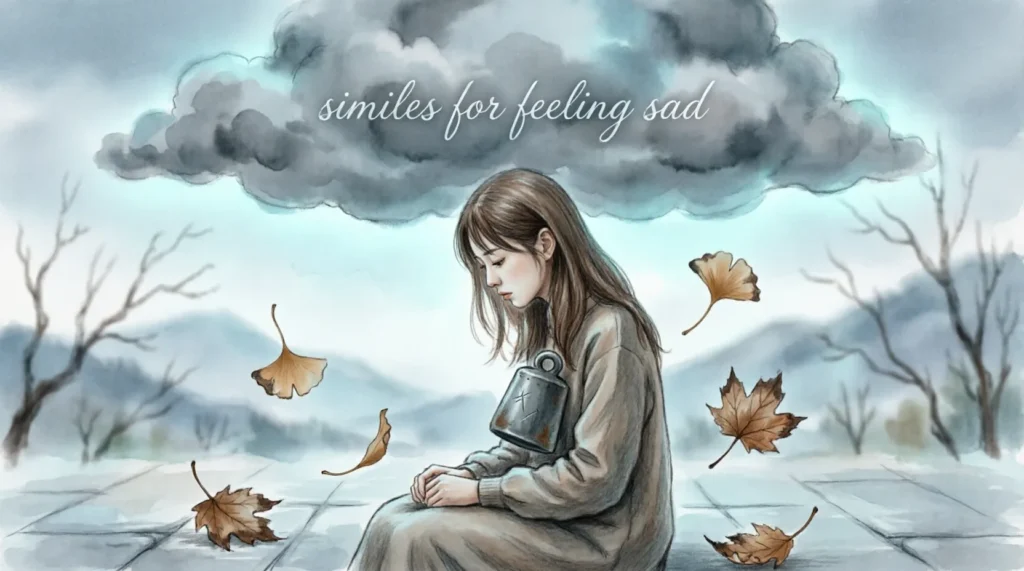
In short, similes for feeling sad are descriptive comparisons that help you express emotions like heartbreak, loneliness, or disappointment using “like” or “as.” They make your writing more vivid so readers can truly feel your emotions instead of just reading about them. In this article, you’ll discover powerful examples and learn how to use them to make your writing more expressive and meaningful.
What Are Similes for Feeling Sad? (And Why They Matter)
Imagine you’re sitting in class, staring at a blank page, and your teacher asks you to describe sadness—but your mind goes empty. You feel it, but you can’t quite say it. That’s where similes for feeling sad become your best writing tool.
Similes for feeling sad are comparisons that describe sadness by linking it to something familiar using “like” or “as.” Instead of just saying “I am sad,” you can say “I feel like a cloud heavy with rain.”
These similes matter because they help you bring emotion into your writing. Literacy educators often explain that emotional imagery improves reading comprehension and storytelling power, especially for students learning expressive language.
When you use similes for feeling sad, you help your reader step into your emotional world. You don’t just tell them—you show them.
The Best Examples of Similes for Feeling Sad
Here are powerful, creative, and age-appropriate similes for feeling sad that you can use in stories, poems, or personal writing.
- Sad like a balloon slowly losing its air after the party ends
- As lonely as a single shoe left in the rain
- Like a sky that forgot how to shine
- As heavy as a backpack filled with stones
- Sad like a song that no one finishes listening to
- As quiet as an empty playground at sunset
- Like a wilted flower bending toward the ground
- As lost as a phone without a signal
- Sad like pages torn from a favorite book
- As empty as a lunchbox on a forgotten school day
- Like a winter tree standing without leaves
- As cold as tea left too long on the table
- Sad like a candle burning out in a dark room
- As broken as a pencil snapped in half
- Like a rainy window that never clears
- As silent as footsteps fading down a hallway
- Sad like a letter never sent
- As heavy as storm clouds before thunder
- Like a melody played without sound
- As hollow as a drum with no rhythm
- Sad like a teddy bear left on an empty bed
- As dim as a lightbulb flickering out
These similes for feeling sad work well because they connect emotions to everyday images you already understand. You can almost see, feel, or hear each one, which makes your writing stronger and more relatable.
How to Use Similes for Feeling Sad in Your Writing
Using similes for feeling sad is easy once you practice a few simple steps. You can make your writing more emotional and creative by following this process.
- Think about the emotion you want to show
Ask yourself: Are you feeling lonely, disappointed, or heartbroken? Be specific so your simile has meaning. - Choose a clear image from real life
Pick something your reader already knows, like weather, objects, or nature. - Connect it using “like” or “as”
For example: “I felt like a tree stripped of its leaves.” - Add it naturally into your sentence
Example: “After the goodbye, I felt like a tree stripped of its leaves, standing alone in the cold wind.”
When you practice, you’ll notice your writing becomes more expressive. You help your reader understand not just what you feel, but how deeply you feel it.
Similes for Feeling Sad in Poems and Stories
Writers and poets often use similes for feeling sad because they add rhythm and emotional depth. Instead of directly stating emotions, they let readers feel them through images.
Here are a few creative examples:
Mina wrote in her poem:
“My heart was like a cloudy sky, waiting for a sun that never came.”
Jason described his story scene:
“He walked home as lonely as a shadow without a person.”
Aisha wrote in her journal:
“I felt like a book left open in the rain, slowly fading away.”
Poets use these comparisons because they turn simple emotions into strong mental pictures. You feel more connected to the character when sadness is shown through imagery rather than directly told.
Common Mistakes Students Make With Similes for Feeling Sad
It’s completely normal to make mistakes when learning similes for feeling sad. The good news is that every mistake helps you improve your writing skills.
- Using unclear comparisons
Sometimes students write similes that don’t make sense, like “sad like a chair.” You should always choose something meaningful and relatable. - Repeating the same ideas
Many learners keep using “sad like rain” again and again. Try to explore different images like silence, emptiness, or broken objects. - Making the simile too complicated
If your reader has to guess the meaning, it loses impact. Keep your comparison simple and clear. - Forgetting emotional connection
A simile should match the feeling you want to show. If you feel deep sadness, your comparison should reflect that depth. - Overusing similes in one paragraph
You don’t need a simile in every sentence. Use them carefully so they stay powerful.
More similes for feeling sad by Tone and Context
🌿 Natural & Descriptive (for nature writing, essays, vivid description)
“As quiet as a lake without a breeze” — Captures a calm, heavy kind of sadness that settles over someone without loud emotion.
“Like leaves falling from an autumn tree” — Shows sadness that comes with change, loss, or the passing of time.
“As pale as the morning fog” — Describes someone whose sadness has drained away their energy or excitement.
“Like a flower waiting for the rain” — Expresses longing and hope mixed with sadness after a difficult time.
“As lonely as a single cloud in a wide sky” — Works well when describing feelings of isolation or being left out.
💛 Warm & Emotional (for personal stories, letters, heartfelt writing)
“Like a child missing home” — Reflects deep emotional sadness and a longing for comfort or familiar people.
“As heavy as an unwritten goodbye” — Describes the pain of parting or words left unsaid.
“Like an old photograph fading with time” — Suggests sadness connected to memories and the passing of years.
“As empty as an unanswered letter” — Shows disappointment when someone feels ignored or forgotten.
“Like holding back tears in a crowded room” — Captures quiet sadness that someone tries to hide from others.
✨ Poetic & Romantic (for poems, song lyrics, love writing)
“Like the last note of a forgotten song” — Creates a soft, lingering feeling of sadness that stays in the heart.
“As distant as a star behind the clouds” — Expresses emotional separation or unreachable happiness.
“Like moonlight fading before dawn” — Suggests gentle sadness as beautiful moments come to an end.
“As silent as a candle after the flame is gone” — Paints a peaceful but sorrowful image of loss.
“Like waves carrying whispers away” — Evokes sadness that slowly drifts into memory.
😄 Playful & Fun (for casual use, social media captions, humor)
“Like a balloon that lost all its air” — Describes feeling disappointed or let down in a lighthearted way.
“As gloomy as a rainy picnic” — Perfect for everyday situations when plans do not work out.
“Like a cookie without chocolate chips” — Adds a funny twist to mild sadness or disappointment.
“As droopy as a sleepy puppy” — Shows feeling down while keeping the mood cute and friendly.
“Like a phone with one percent battery” — A modern, relatable simile for feeling emotionally drained.
These tone-grouped similes for similes for feeling sad give you options for every kind of writing — whether you need something soft and poetic or bold and fun. Try picking one from each group and using them in a short paragraph to see how different the same keyword can feel.
Using similes for feeling sad in Real Writing Contexts
In a Descriptive Essay
When writing a descriptive essay, you may need to explain how a person felt after a disappointing event or a difficult experience. A simile helps readers picture the emotion instead of simply being told about it. For example: After losing the championship game, Maya looked as quiet as a lake without a breeze, speaking only when someone asked her a question.
In a Poem
Similes for feeling sad can create a gentle, emotional mood that helps readers connect with the poem. They make simple emotions sound more vivid and memorable. Like moonlight fading before dawn, my smile slipped away, leaving only silent dreams behind.
In a Story or Creative Scene
In stories, similes can reveal a character’s emotions without directly saying they are sad. This makes scenes feel more natural and engaging for the reader. When Jake watched the moving truck disappear, he stood like a child missing home, unable to wave goodbye.
In a Social Media Caption or Message
A short simile can quickly express your mood while keeping your writing creative and relatable. It adds personality to captions and messages without sounding too serious. Today’s mood: like a balloon that lost all its air, but tomorrow is a new day.
The more you practice placing similes for feeling sad into real sentences, the more natural your writing will sound — and the more your reader will feel exactly what you want them to feel.
Fun Activities to Practice Similes for Feeling Sad
Try these creative activities to improve your use of similes for feeling sad. You can do them alone, with friends, or in class.
- Emotion match game
Write different feelings on paper slips. Pick one and create a simile for it as quickly as you can. - “Sad object” challenge
Choose any object in your room and describe it using a sad simile. For example, a broken pen might feel like “a voice that stopped speaking.” - Story rewrite practice
Take a simple sentence like “He was sad” and rewrite it using a simile. Try different versions to see what feels strongest. - Drawing + writing combo
Draw something sad, like a rainy window, then write a simile to match the drawing. - Simile chain game
One person starts with a simile, and the next person builds another connected to it. Keep going as long as you can.
These activities help you think creatively and make similes feel natural instead of forced.
What NOT to Do With Similes for Feeling Sad
To improve your writing, it’s just as important to know what to avoid when using similes for feeling sad.
- Don’t use random comparisons
Saying “sad like a spoon” doesn’t create a clear image. Always choose something meaningful. - Don’t over-exaggerate too much
Extreme comparisons can confuse readers instead of helping them understand your emotion. - Don’t rely on clichés
Phrases like “sad as rain” are common. Try to create fresh, original images. - Don’t force a simile into every sentence
Your writing should flow naturally. Too many similes can distract your reader.
Frequently Asked Questions About Similes for Feeling Sad
What is a simile for feeling sad?
A simile for feeling sad is a comparison that uses “like” or “as” to describe sadness in a creative way. For example, “I feel like a cloud heavy with rain” helps show emotion through imagery.
Why do writers use similes for feeling sad?
Writers use similes for feeling sad because they make emotions more vivid and relatable. Instead of telling readers someone is sad, they help readers feel that sadness through images.
How do I create my own similes for feeling sad?
You can create your own by thinking of a sad emotion and matching it with something in real life. Use “like” or “as” to connect them, such as “as quiet as an empty classroom.”
Are similes for feeling sad good for students?
Yes, similes for feeling sad are great for students because they improve creative writing skills. They also help you express emotions clearly in essays and stories.
What makes a strong simile for feeling sad?
A strong simile for feeling sad is simple, emotional, and easy to picture. It should help your reader instantly understand the feeling you are trying to express.
Final Thoughts on Similes for Feeling Sad
Similes for feeling sad give you a powerful way to express emotions that are often hard to explain. Instead of saying you feel sad, you can show it through images that your reader understands and remembers.
As you practice, you’ll notice your writing becoming more expressive and meaningful. You’ll also find it easier to connect with your reader on an emotional level.
Remember, you don’t have to be a professional writer to use strong similes. You just need imagination, practice, and a willingness to explore new comparisons. Keep experimenting, and your writing will naturally grow stronger and more expressive over time.
Frequently Asked Questions
What are similes for feeling sad and why are they important?▼
Similes for feeling sad are descriptive comparisons that express emotions like heartbreak or loneliness using ‘like’ or ‘as.’ They are important because they bring emotional imagery into writing, helping readers connect with the author’s feelings.
Can you provide some examples of similes for feeling sad?▼
Sure! Some examples include ‘Sad like a balloon slowly losing its air after the party ends’ and ‘As lonely as a single shoe left in the rain.’ These comparisons help illustrate sadness in relatable ways.
How can I incorporate similes for feeling sad into my writing?▼
To incorporate similes, first think about the specific emotion you want to convey. Then, choose a familiar image from everyday life and connect it using ‘like’ or ‘as’ in a natural way within your sentences.
Why do similes enhance emotional imagery in writing?▼
Similes enhance emotional imagery by linking abstract feelings to concrete experiences, making them more relatable. This connection helps readers not only understand the emotion but also feel it, improving overall comprehension and engagement.
What themes can I explore using similes for feeling sad?▼
You can explore themes like loneliness, disappointment, heartbreak, and loss using similes for feeling sad. These themes resonate with many readers, allowing for deeper emotional connections in your writing.
How do similes improve storytelling power for students?▼
Similes improve storytelling power by encouraging students to use expressive language that evokes strong imagery. This helps them convey emotions more vividly, enhancing their ability to engage readers and communicate feelings effectively.
Are there age-appropriate similes for feeling sad I can use in my writing?▼
Yes, the article provides several age-appropriate similes like ‘Sad like a candle burning out in a dark room’ and ‘As quiet as an empty playground at sunset.’ These examples are relatable and can be used in various writing contexts.

Sara Liu holds a Master’s degree in English Education from the University of Washington and has been an educator for over 15 years. She specializes in curriculum development for elementary and middle school students, with a particular focus on figurative language. Sara’s love for similes and metaphors blossomed when she discovered their power to spark imagination and convey emotion. At SimilePedia, Sara creates engaging worksheets and reference guides that help young learners grasp the nuances of figurative language. Her favorite part of writing content is developing resources that make complex concepts accessible to children. She is passionate about nurturing a love for words and creativity in her students, and her contributions are shaped by this commitment.