In short, a similes worksheet for class 3 helps young students learn how to compare things using words like “as” and “like.” These worksheets make writing more colorful, improve reading skills, and help children express ideas clearly through fun examples and activities. Keep reading to discover examples, games, worksheets, and simple tips that make similes exciting for third graders.
What Are Similes Worksheet for Class 3? (And Why They Matter)
Picture a student sitting at the kitchen table, staring at a worksheet that says, “Complete the simile.” They know the sentence is supposed to sound interesting, but they are not sure what words to use. That is exactly where a good similes worksheet for class 3 can help.
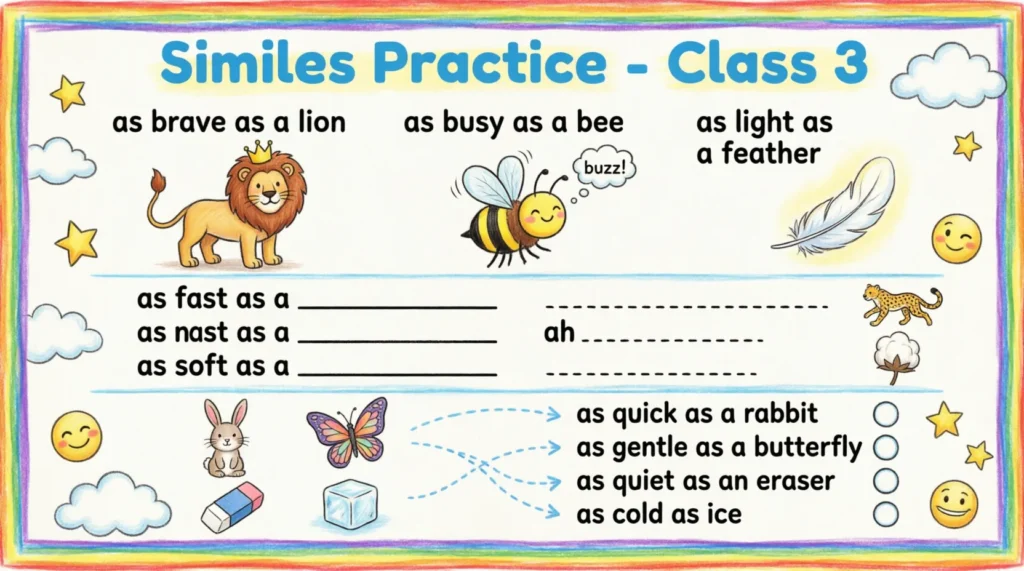
A simile is a comparison between two different things using the words “like” or “as.” For example, “The moon was as bright as a lamp” is a simple simile that helps readers imagine something clearly.
A similes worksheet for class 3 gives you practice with these comparisons through matching activities, fill-in-the-blanks, sentence writing, and reading exercises. Instead of memorizing rules, you learn by actually using similes in fun ways.
Language arts educators often explain that figurative language helps children become stronger readers and writers. When you practice similes, you improve your imagination, vocabulary, storytelling, and even exam writing skills.
[IMAGE: Third grade student completing a colorful similes worksheet at a desk]
Once you understand what similes are, the next step is seeing lots of examples that make sense for your age and grade level.
The Best Examples of Similes Worksheet for Class 3
Here are some fun and easy similes you might find in a similes worksheet for class 3:
The puppy was as fluffy as a cotton ball.
Her smile shined like the sun.
The baby slept like a peaceful kitten.
The ice cream melted as fast as snow in summer.
The boy ran like a cheetah.
My backpack felt as heavy as a rock.
The classroom was as quiet as a library.
The stars twinkled like tiny diamonds.
His voice was as loud as thunder.
The girl danced like a butterfly in the wind.
The soup was as hot as fire.
Dad snores like a roaring bear.
The rabbit jumped like popcorn popping.
The blanket felt as soft as feathers.
The little bird sang like a tiny flute.
The muddy shoes smelled like old socks.
The water sparkled like glass.
My little brother clung to me like glue.
The test felt as long as a road trip.
The pancakes were as flat as paper.
The kitten’s fur was as white as milk.
The tree stood tall like a giant tower.
Her cheeks were as red as cherries.
The rain sounded like drums on the roof.
The popcorn was as light as air.
These examples work well because they create strong pictures in your mind. A good simile helps you see, hear, feel, or imagine something quickly.
Literacy researchers say students remember descriptive writing better when they connect it to familiar objects like food, animals, weather, or toys. That is why similes worksheet for class 3 activities often use everyday examples children already understand.
Now that you have seen strong examples, let’s look at how you can use similes in your own writing.
How to Use Similes Worksheet for Class 3 in Your Writing
Using similes becomes much easier when you follow a few simple steps.
Think about what you want to describe.
Maybe you want to describe a fast runner, a loud storm, or a happy character. Start with one clear idea in your mind.
Compare it to something familiar.
Ask yourself, “What does this remind me of?” A fast runner could be “like a rocket” or “like a cheetah.”
Use “like” or “as.”
These words help turn your comparison into a simile. For example: “The car moved like lightning.”
Read your sentence out loud.
If your simile sounds natural and paints a picture in your head, you probably did a great job.
Here is one example used in context:
“The playground buzzed like a beehive during recess.”
That sentence feels lively because you can almost hear the noise and excitement. Creative writing teachers often encourage students to use similes this way because they make simple sentences much more interesting.
Once you start practicing, you will begin noticing similes in stories, songs, and poems everywhere you look.
More Similes Worksheet for Class 3 by Tone and Context
🌿 Natural & Descriptive
“As clear as a river on a sunny day” — Captures easy-to-understand answers and neat work in a worksheet.
“Like leaves dancing in a gentle breeze” — Describes ideas that flow smoothly across the page.
“As bright as morning sunlight” — Works well when talking about cheerful learning activities.
“Like a trail through a green forest” — Suggests a worksheet that guides students step by step.
“As fresh as spring rain” — Highlights new and exciting learning experiences.
💛 Warm & Emotional
“As comforting as a favorite storybook” — Shows how a familiar worksheet can make learning feel enjoyable.
“Like a hug from a good friend” — Describes activities that feel welcoming and encouraging.
“As cheerful as a smile at recess” — Fits fun classroom tasks that bring happiness.
“Like a warm blanket on a cool day” — Suggests a worksheet that helps students feel confident.
“As kind as a helping hand” — Works well for describing supportive learning exercises.
✨ Poetic & Romantic
“Like a melody floating through the air” — Creates a gentle, artistic feeling for learning.
“As graceful as a swan on a lake” — Describes smooth and well-organized worksheet activities.
“Like stars scattered across the night sky” — Suggests many creative ideas waiting to be discovered.
“As lovely as a garden in bloom” — Highlights colorful and inspiring classroom work.
“Like a whisper carried by the wind” — Adds a soft, imaginative tone to writing about learning.
😄 Playful & Fun
“As bouncy as a ball in the playground” — Perfect for energetic and exciting worksheet tasks.
“Like popcorn popping in a pan” — Describes ideas appearing quickly and enthusiastically.
“As silly as a monkey wearing sunglasses” — Adds humor to fun classroom activities.
“Like a roller coaster of surprises” — Fits worksheets filled with interesting challenges.
“As lively as a puppy chasing its tail” — Captures excitement and movement in learning.
These tone-grouped similes for similes worksheet for class 3 give you options for every kind of writing — whether you need something soft and poetic or bold and fun. Try picking one from each group and using them in a short paragraph to see how different the same topic can feel.
More Similes Worksheet for Class 3: Fun Practice Activities Kids Will Actually Enjoy (2026) by Tone and Context
🌿 Natural & Descriptive
“As bright as the morning sun” — Perfect for describing cheerful ideas or happy moments in worksheet sentences.
“Like a bird gliding through the sky” — Shows smooth movement and fits creative writing activities.
“As fresh as new spring leaves” — Captures a feeling of freshness and is great for nature-themed exercises.
“Like raindrops dancing on a window” — Creates a lively picture and encourages students to imagine movement.
“As calm as a quiet lake at sunrise” — Works well when students practice describing peaceful scenes.
💛 Warm & Emotional
“Like a warm blanket on a cold evening” — Expresses comfort and kindness in personal writing tasks.
“As gentle as a grandmother’s hug” — Helps children describe caring people in a heartfelt way.
“Like a candle glowing in the dark” — Suggests hope and encouragement during emotional writing.
“As welcoming as an open door” — Fits stories about friendship and kindness.
“Like a favorite bedtime story” — Conveys comfort and happiness in simple language.
✨ Poetic & Romantic
“As soft as moonlight on the water” — Adds a peaceful, dreamy feeling to poems.
“Like stars whispering across the night sky” — Creates a magical image for creative poetry.
“As graceful as a feather floating on the breeze” — Describes beauty and gentle movement with elegance.
“Like music drifting through the evening air” — Brings a calm and artistic mood to descriptive writing.
“As timeless as the changing seasons” — Works well when students write thoughtful or reflective pieces.
😄 Playful & Fun
“Like popcorn popping in a hot pan” — Describes excitement and energetic action in a fun way.
“As bouncy as a rubber ball” — Great for describing playful characters or actions.
“Like a puppy chasing its own tail” — Adds humor to stories and classroom activities.
“As silly as a monkey wearing sunglasses” — Encourages imagination and makes writing enjoyable.
“Like a race car zooming around the track” — Perfect for showing speed and excitement in student sentences.
These tone-grouped similes for Similes Worksheet for Class 3: Fun Practice Activities Kids Will Actually Enjoy (2026) give you options for every kind of writing — whether you need something soft and poetic or bold and fun. Try picking one from each group and using them in a short paragraph to see how different the same keyword can feel.
Using Similes Worksheet for Class 3: Fun Practice Activities Kids Will Actually Enjoy (2026) in Real Writing Contexts
In a Descriptive Essay
A similes worksheet helps students learn how to make ordinary descriptions more colorful and interesting. Instead of simply stating facts, children can compare one thing to another to create stronger images for the reader. For example: The playground was as lively as a buzzing beehive during recess.
In a Poem
Poetry becomes more expressive when students use similes to build mood and rhythm. A worksheet gives children plenty of opportunities to practice creative comparisons before writing their own poems. For example: My dreams floated like feathers on the evening breeze, carrying hope into the stars.
In a Story or Creative Scene
Similes help readers picture characters, settings, and emotions more clearly in stories. After practicing with a worksheet, students can naturally include comparisons that make scenes more memorable. For example: Mia held the surprise gift as carefully as a bird protecting its tiny nest while everyone waited for her to open it.
In a Social Media Caption or Message
Short similes can make even casual writing sound more creative and memorable. Practicing them in a worksheet gives students confidence to use them outside the classroom too. For example: Today’s art class was as colorful as a rainbow after the rain! 🎨🌈
The more you practice placing similes for Similes Worksheet for Class 3: Fun Practice Activities Kids Will Actually Enjoy (2026) into real sentences, the more natural your writing will sound — and the more your reader will feel exactly what you want them to feel.
Using Similes Worksheet for Class 3 in Real Writing Contexts
In a Descriptive Essay
Students may write about classroom activities, favorite lessons, or learning experiences. Adding a simile can help readers picture the worksheet more clearly and make the description more engaging. Example: “The similes worksheet was as bright as morning sunlight, filling the classroom with excitement and new ideas.”
In a Poem
Similes for a class 3 worksheet can help create mood and make simple school topics sound more creative. They add rhythm and imagery that make poems easier to enjoy. Example: “Our worksheet was like stars across the sky, / Guiding our thoughts as the hours flew by.”
In a Story or Creative Scene
A simile can help describe what a character sees, feels, or experiences while working on an activity. It adds detail that makes the scene more vivid for the reader. Example: “As Mia solved each question, the worksheet seemed like a trail through a green forest leading her toward hidden treasures.”
In a Social Media Caption or Message
Short similes work well in casual writing because they quickly express a feeling or experience. They can make simple posts sound more creative and memorable. Example: “Today’s similes worksheet was as bouncy as a ball in the playground—learning was actually fun!”
The more you practice placing similes for similes worksheet for class 3 into real sentences, the more natural your writing will sound — and the more your reader will feel exactly what you want them to feel.
Similes Worksheet for Class 3 in Poems and Stories
Similes appear naturally in poems and stories because they add emotion, rhythm, and vivid imagery. Writers use them to help readers feel connected to a scene or character.
Here are a few short fictional examples you can learn from:
Ayaan raced down the field like the wind chasing leaves. His shoes barely touched the grass.
Mina’s laughter floated like music in the air, bright and cheerful all afternoon.
“Your room looks like a tornado passed through it!” Grandma joked as Leo searched for his missing shoe.
These examples feel fun because they help you picture the scene clearly. Poets and story writers often use similes to make readers feel excitement, happiness, fear, or wonder.
If you are using a similes worksheet for class 3 at school or home, try turning simple sentences into colorful story lines like these. You will quickly notice how much stronger your writing becomes.
Of course, learning similes also means learning what mistakes to avoid.
Common Mistakes Students Make With Similes Worksheet for Class 3
Forgetting to use “like” or “as”
Sometimes students accidentally write a metaphor instead of a simile. That is completely normal. Just check whether your sentence includes “like” or “as.”
Using confusing comparisons
A simile should help readers understand something better. Saying “The cookie was like a bicycle” might confuse people because the comparison does not make sense.
Repeating the same similes again and again
Many students use “as fast as lightning” too often. Try challenging yourself to create fresh comparisons using animals, sports, food, or nature.
Making similes too long
A simile works best when it is short and clear. If your sentence becomes too complicated, readers may lose focus.
Choosing examples that are too hard for class 3 level
A similes worksheet for class 3 should use simple, age-appropriate ideas. Comparisons about space science or difficult emotions may confuse younger learners.
These mistakes happen to almost everyone at first. The good news is that practice makes simile writing easier every time you try.
Now let’s make practice more exciting with some fun activities you can use at school or at home.
Fun Activities to Practice Similes Worksheet for Class 3
Simile Match-Up Game
Grab a pencil and match sentence beginnings with the best endings. For example, “The pillow was as soft as…” can match with “a cloud.”
Draw Your Simile
Write a simile and then draw it. If you write “The sun was like a golden coin,” try sketching the picture beside your sentence.
Create a Simile Race
Challenge yourself or your classmates to write five similes in two minutes. You can compare animals, food, weather, or classroom objects.
Reading Detective Activity
Open a storybook and search for similes. Every time you find one, underline it and explain what picture it creates in your mind.
Fill-in-the-Blank Worksheets
A classic similes worksheet for class 3 often includes unfinished comparisons. Try completing sentences like “The water was as cold as _____.”
Simile Story Challenge
Write a short paragraph using at least three similes. You could describe a birthday party, rainy day, or soccer game.
[IMAGE: Children playing a classroom simile matching game]
These activities help you practice without feeling bored. Many literacy educators recommend combining drawing, reading, and writing because students remember figurative language more easily that way.
As you practice more, it is also important to know what habits can slow your progress.
What NOT to Do With Similes Worksheet for Class 3
Do not memorize similes without understanding them
You should know why the comparison works. Understanding the picture behind the simile matters more than memorizing words.
Do not force a simile into every sentence
Too many similes can make writing feel crowded. Use them when they truly improve your description.
Do not copy examples exactly every time
It is okay to learn from examples, but try creating your own ideas too. Your imagination is one of your best writing tools.
Do not assume every comparison is a simile
Remember, similes specifically use “like” or “as.” This is one of the most common misunderstandings in similes worksheet for class 3 exercises.
When you avoid these habits, your writing becomes clearer, more creative, and easier to read.
Frequently Asked Questions About Similes Worksheet for Class 3
What is a simile worksheet for class 3?
A simile worksheet for class 3 is a practice sheet that teaches children how to compare two things using “like” or “as.” These worksheets often include matching games, sentence writing, reading tasks, and fun creative activities.
How do you teach similes to class 3 students?
The best way is through simple examples and playful activities. Teachers and parents often use animals, food, weather, and classroom objects because children can easily picture those comparisons.
What are easy simile examples for class 3?
Easy examples include “as soft as cotton,” “like a shining star,” and “as busy as a bee.” These work well because they are short, visual, and easy for young learners to understand.
Why are similes important for third graders?
Similes help students become stronger readers and writers. They improve imagination, vocabulary, and descriptive skills while making stories and essays more fun to read.
Are similes worksheet for class 3 activities useful for homework?
Yes, they are excellent for homework practice. Short worksheet exercises help students review figurative language in a simple and stress-free way at home.
Final Thoughts on Similes Worksheet for Class 3
Learning similes does not have to feel difficult or boring. With the right examples, activities, and practice sheets, you can turn ordinary sentences into colorful and exciting descriptions.
A good similes worksheet for class 3 helps you build creativity while also improving reading comprehension and writing confidence. From funny comparisons to story writing challenges, every activity gives you another chance to grow your language skills.
Remember, even great writers started by practicing simple comparisons like “as bright as the sun” or “like a buzzing bee.” The more you experiment with words, the easier creative writing becomes.
Keep practicing, stay curious, and enjoy discovering how powerful your imagination can be every time you write.
Frequently Asked Questions
What are similes and why are they important for third graders?▼
Similes are comparisons between two different things using the words ‘like’ or ‘as.’ They are important for third graders because they help improve imagination, vocabulary, and storytelling skills, making writing more colorful and engaging.
How can a similes worksheet help my child with reading skills?▼
A similes worksheet provides practice with figurative language through fun activities, which enhances comprehension and encourages creative thinking. By using similes, children learn to express ideas clearly, making it easier for them to understand and retain what they read.
What types of activities are included in a similes worksheet for class 3?▼
Activities in a similes worksheet for class 3 typically include matching activities, fill-in-the-blanks, sentence writing, and reading exercises. These engaging formats help students practice similes in enjoyable and relatable contexts.
Can you provide examples of similes that are appropriate for third graders?▼
Sure! Some examples include ‘The puppy was as fluffy as a cotton ball’ and ‘Her smile shined like the sun.’ These similes create vivid images that are easy for third graders to understand and relate to.
How do similes enhance a child's writing skills?▼
Similes enhance a child’s writing skills by allowing them to create strong visual images and evoke emotions in their readers. By practicing similes, children learn to make their writing more descriptive and engaging, which can lead to better performance in exams and storytelling.
What are some tips for using similes effectively in writing?▼
Start with a clear idea of what you want to describe and compare it to something familiar. This helps create relatable and vivid imagery that resonates with readers, making your writing more impactful.
Why do educators emphasize the use of figurative language like similes in language arts?▼
Educators emphasize figurative language because it helps children become stronger readers and writers. By incorporating similes into their work, students can improve their creativity, vocabulary, and overall communication skills.
Liam is a language enthusiast and lead writer at Similepedia.com, where he focuses on creating clear, creative, and easy-to-use similes for everyday writing. He specializes in turning simple ideas into vivid comparisons that make sentences more engaging, expressive, and memorable.
Instead of overcomplicating language with technical jargon, Liam approaches similes as practical tools for better communication. He breaks down how comparisons work, when to use them, and how to make them sound natural — not forced or awkward.
He pays close attention to tone, context, and clarity, ensuring every simile fits smoothly into real sentences. From fun and playful comparisons to more descriptive and expressive ones, Liam helps readers improve how they write, speak, and express ideas.
At Similepedia.com, his mission is simple: make language more colorful and effective without making it complicated. He doesn’t just list similes — he helps readers understand how to use them confidently in real situations.