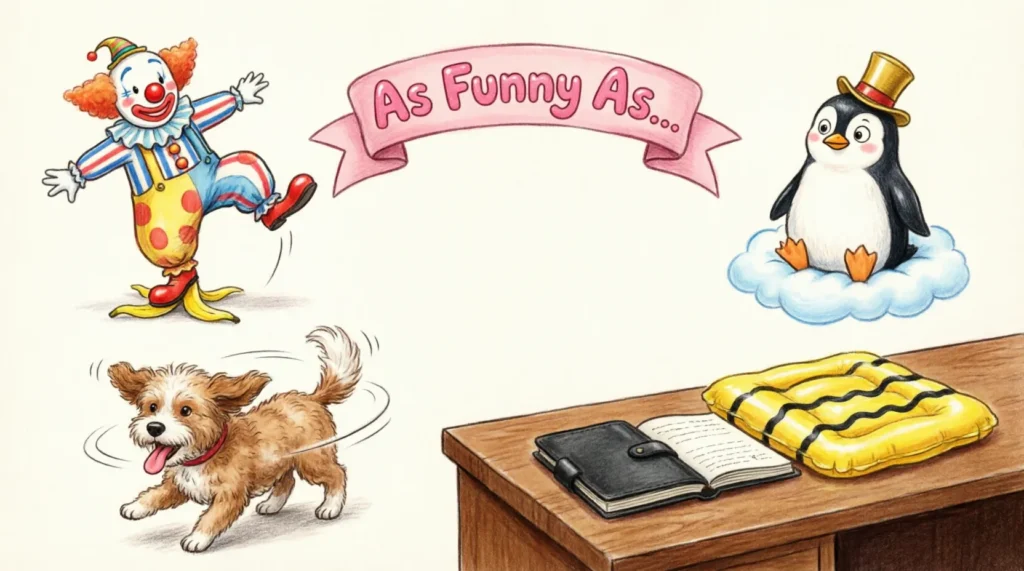
In short, similes for funny are creative comparisons that use “like” or “as” to describe something humorous in a vivid way. They help you show how funny something is by comparing it to something equally silly, surprising, or exaggerated. In this guide, you’ll discover powerful examples and learn how to use them in your own writing with confidence.
What Are Similes For Funny? (And Why They Matter)
Imagine you’re sitting in class, trying to describe a joke that made everyone laugh, but your words feel boring or flat. Or maybe you’re writing a story and want your reader to feel the humor, not just read about it. This is where similes for funny can completely change your writing.
Similes for funny are comparisons that use “like” or “as” to show how humorous, silly, or ridiculous something is. Instead of saying “that was funny,” you show it in a creative way.
For example, instead of saying “the joke was funny,” you might say “the joke was as funny as a monkey wearing sunglasses.”
Language arts educators often say figurative language like this helps students build stronger imagination and communication skills. It also makes writing more engaging for readers, especially in stories, essays, and creative tasks.
When you learn similes for funny, you don’t just improve your writing—you also learn how to make people feel the humor in your words. And that’s a powerful skill you’ll use again and again.
The Best Examples of Similes For Funny
Here are some creative and entertaining similes for funny that you can use in your writing or schoolwork:
As funny as a cat trying to bark like a dog
Like a clown slipping on a banana peel (but still laughing)
As funny as a chicken wearing roller skates
Like a joke that sneaks up on you and tickles your brain
As funny as a penguin doing the moonwalk
Like a teacher accidentally using slang in class
As funny as a balloon running away at a birthday party
Like a monkey stealing your sandwich and waving goodbye
As funny as a robot trying to tell a knock-knock joke
Like a sneeze that sounds like a trumpet solo
As funny as a dog watching TV and barking at commercials
Like a pizza falling face-first but landing perfectly
As funny as a squirrel doing parkour in the park
Like a giggle that turns into a full-blown laugh attack
As funny as a frog wearing a tiny crown
Like a classroom chair that squeaks at the worst moment
As funny as a comedian forgetting their own punchline
Like a balloon animal popping at the wrong time
As funny as a parrot repeating embarrassing secrets
Like a hamster running like it’s late for school
As funny as a penguin sliding into a pool party
Like a joke that makes even the teacher laugh unexpectedly
These similes for funny work because they create strong mental pictures. You can see the humor happening, which makes the reader feel more connected to your writing. The best ones are exaggerated, surprising, and a little silly.
How to Use Similes For Funny in Your Writing
Using similes for funny in your own writing is easier than you think. You just need to follow a few simple steps.
Think of something funny you want to describe Start with a moment, joke, or situation that made you laugh or smile.
Choose a comparison that feels unexpected You want something slightly silly or surprising to make your reader smile.
Use “like” or “as” to connect the ideas This is what makes it a simile instead of just a description.
Test it by reading it out loud If it makes you smile or imagine a scene, you’re on the right track.
For example, you might write: “The classroom was as loud as a zoo during snack time.”
When you practice similes for funny like this, your writing becomes more vivid and enjoyable for anyone reading it—including you.
Similes For Funny in Poems and Stories
Writers and poets often use humor-based comparisons to make scenes more lively and memorable. Similes for funny can turn an ordinary moment into something readers won’t forget.
[IMAGE: cartoon classroom with laughing students and playful chaos]
In poems, they add rhythm and surprise. In stories, they help build characters and moods that feel real and entertaining.
Here are a few creative examples:
Amir’s laugh echoed like a fire alarm in a quiet library.
The classroom felt as funny as a circus with missing clowns.
Sara’s joke landed like a pie in a comedy show—messy but perfect.
Poets and authors use humor like this to create emotional contrast and keep readers engaged. When you include similes for funny, your writing becomes more colorful and alive.
Common Mistakes Students Make With Similes For Funny
It’s normal to make mistakes when learning similes for funny. The good news is that each mistake helps you improve.
Making comparisons that don’t make sense Sometimes students mix unrelated ideas, which confuses the reader instead of making them laugh.
Overusing the same idea Repeating the same type of humor makes writing feel boring instead of fresh.
Forgetting the “like” or “as” structure Without it, your simile becomes a plain sentence instead of a comparison.
Trying too hard to be funny If you force humor, it can feel unnatural. The best similes feel simple and surprising.
Using unclear images If your reader can’t picture it, the humor won’t land properly.
These are all normal steps in learning similes for funny. With practice, your comparisons will become sharper and more creative.
Fun Activities to Practice Similes For Funny
Create a “laugh list” Write down 5 things that made you laugh today, then turn each into a simile.
The classroom comedy challenge Try describing your school day using at least 3 funny similes.
Object comparison game Pick random objects around you and compare them in silly ways.
Draw and describe Draw a funny scene, then write a simile describing it.
Partner joke exchange Share a joke with a friend and both of you create similes for funny based on it.
Simile speed round Set a timer and try to write as many funny similes as possible in 2 minutes.
These activities help you practice creativity without pressure. The more you try, the easier it becomes to think in imaginative comparisons.
What NOT to Do With Similes For Funny
Don’t make comparisons too complicated If your reader has to think too hard, the humor gets lost.
Don’t copy the same structure every time Repeating patterns makes your writing predictable instead of fun.
Don’t force humor where it doesn’t fit Not every sentence needs to be funny—balance is important.
Don’t use confusing or unrelated images Similes should make meaning clearer, not harder to understand.
More similes for the word funny by Tone and Context
“As funny as a squirrel chasing its own tail” — Captures playful, unexpected humor that makes everyone smile.
“Like sunlight dancing on a quiet stream” — Describes gentle, cheerful humor that brightens a moment without being loud.
“As funny as leaves spinning in a windy park” — Works well for lighthearted scenes full of movement and joy.
“Like a curious bird hopping from branch to branch” — Suggests lively, amusing behavior that keeps people entertained.
“As funny as a bouncing raindrop on a puddle” — Highlights quick, cheerful moments of laughter in descriptive writing.
💛 Warm & Emotional (for personal stories, letters, heartfelt writing)
“Like a warm hug on a difficult day” — Shows humor that brings comfort and helps people feel better.
“As funny as a grandparent’s cheerful storytelling” — Fits memories filled with kindness, family, and shared laughter.
“Like a favorite song that always makes you smile” — Expresses dependable humor that lifts your mood every time.
“As funny as childhood memories around the dinner table” — Perfect for describing joyful family moments that everyone remembers.
“Like laughter shared between lifelong friends” — Conveys a deep, genuine kind of humor built on friendship and trust.
✨ Poetic & Romantic (for poems, song lyrics, love writing)
“Like stars giggling across the night sky” — Creates a dreamy image of joyful, magical laughter.
“As funny as moonlight playing on gentle waves” — Blends humor with peaceful, poetic beauty.
“Like petals floating through a spring breeze” — Suggests light, graceful humor that feels effortless.
“As funny as a melody skipping through the air” — Works well when describing laughter that feels musical and uplifting.
“Like a rainbow appearing after gentle rain” — Shows humor arriving at just the right moment to brighten emotions.
😄 Playful & Fun (for casual use, social media captions, humor)
“Like a puppy discovering its own shadow” — Describes adorable, silly humor that makes everyone laugh.
“As funny as popcorn popping all over the kitchen” — Suggests fast, energetic humor that keeps surprising people.
“Like a clown riding a tiny skateboard” — Perfect for over-the-top, goofy comedy.
“As funny as a banana wearing sunglasses” — Creates a wonderfully ridiculous image for playful writing.
“Like a cartoon character bouncing off the walls” — Fits exaggerated, energetic humor in casual conversations.
These tone-grouped similes for the word funny give you options for every kind of writing — whether you need something soft and poetic or bold and fun. Try picking one from each group and using them in a short paragraph to see how different the same keyword can feel.
Using similes for the word funny in Real Writing Contexts
In a Descriptive Essay
When you’re describing a person, event, or memory, similes for the word funny can help readers picture the kind of humor you mean. Instead of simply saying something was funny, compare it to something vivid and memorable. Example: My uncle was as funny as a puppy discovering its own shadow, making everyone at the family picnic burst into laughter.
In a Poem
Similes for the word funny can make a poem feel lighter, happier, or more magical. They help create a mood that readers can easily imagine. Example: Your laughter was like stars giggling across the night sky, turning every quiet moment into music.
In a Story or Creative Scene
A simile can show how a character’s jokes, expressions, or actions affect the people around them. This makes the scene more colorful and engaging. Example: Mia walked into the classroom like a cartoon character bouncing off the walls, and within minutes the entire class was laughing.
In a Social Media Caption or Message
Short similes for the word funny work well in captions, texts, and posts because they’re easy to read and memorable. A creative comparison can make your message stand out. Example: Today was as funny as popcorn popping all over the kitchen—I couldn’t stop laughing!
The more you practice placing similes for the word funny into real sentences, the more natural your writing will sound — and the more your reader will feel exactly what you want them to feel.
Frequently Asked Questions About Similes For Funny
What is a simple example of similes for funny?
A simple example of similes for funny is “as funny as a monkey wearing sunglasses.” It creates a silly mental image that helps the reader understand the humor instantly. The best examples are easy to picture and slightly exaggerated.
How do I write my own similes for funny?
Start by thinking of something humorous, then compare it to something unexpected using “like” or “as.” For example, you could say, “The classroom was as funny as a clown convention.” Practice helps you improve quickly.
Why do writers use similes for funny in stories?
Writers use them to make scenes more engaging and memorable. Humor helps readers connect emotionally with the story and enjoy the writing more. It also makes descriptions more vivid.
Are similes for funny good for school writing?
Yes, similes for funny are great for school writing when used appropriately. They show creativity and help improve descriptive skills. Teachers often appreciate original and thoughtful comparisons.
What makes a simile for funny effective?
A good simile is clear, creative, and easy to imagine. It should surprise the reader in a fun way without being confusing. The best ones create a strong mental picture that makes people smile.
Final Thoughts on Similes For Funny
Similes for funny are more than just playful comparisons—they are tools that help you bring humor and imagination into your writing. When you use them well, your sentences become more engaging and expressive.
You’ve seen how these comparisons can turn simple ideas into vivid, laugh-worthy images. You’ve also learned how to build your own, avoid common mistakes, and use them in stories and activities.
With practice, you’ll notice your writing becoming more creative and confident. Keep experimenting, keep imagining, and don’t be afraid to make your readers smile.
Your words have the power to make people laugh—and that’s a skill worth developing.
Jamal Rodriguez is a poet and author who has been writing professionally for over a decade. With a Bachelor’s degree in Creative Writing, Jamal’s expertise lies in the use of vivid imagery and emotional depth in poetic language. Fascinated by the limitless possibilities of similes and metaphors, he joined SimilePedia to share his knowledge with budding writers. Jamal focuses on creating content for creative writers and poets, helping them understand the emotional resonance that figurative language can evoke. Through his work, he aims to inspire others to explore their own creative boundaries and embrace the beauty of language as an art form. His contributions include a range of exercises that stimulate imagination across all grade levels.