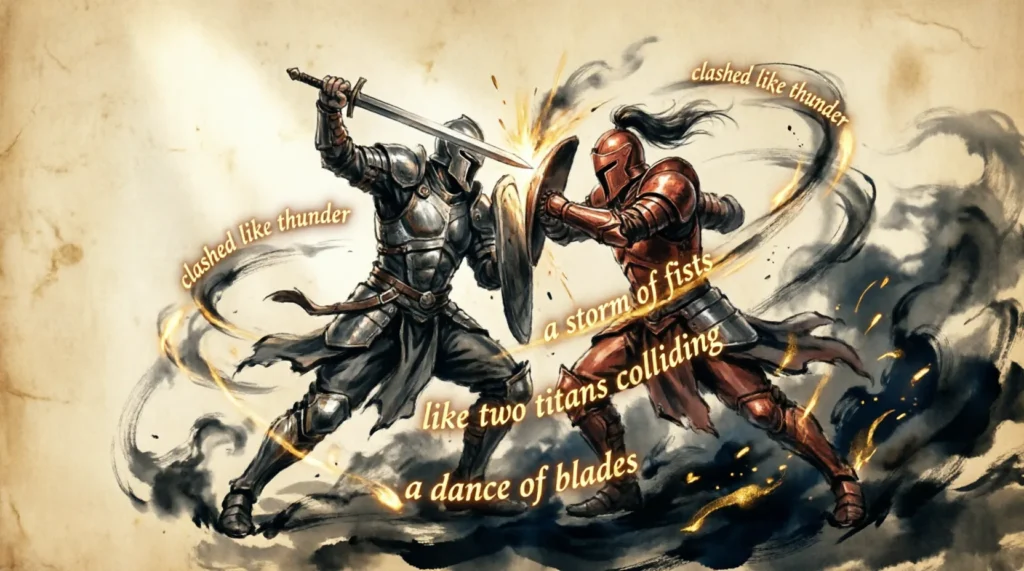
In short, similes and metaphors for fighting are creative ways to describe conflict, arguments, or battles using comparison and imagination. Instead of saying “they fought,” you might say “they fought like storm clouds crashing” or “their argument was a wildfire.” You’ll find vivid examples, easy explanations, and writing tips that will help you bring your stories to life.
If you’ve ever struggled to describe a fight scene or an argument in your writing, this guide will help you turn plain words into powerful images that your reader can actually feel.
What Are Similes And Metaphors For Fighting? (And Why They Matter)
Imagine you’re staring at a blank page, trying to describe two characters arguing or a battle scene in a story. You know what’s happening, but the words feel too simple—“they fought” just doesn’t sound strong enough.
That’s where similes and metaphors for fighting come in. They help you compare conflict to something more vivid, like nature, animals, or powerful forces, so your reader can picture it clearly.
A simile uses “like” or “as” (for example: “They fought like roaring lions”), while a metaphor says something is something else (for example: “Their argument was a thunderstorm”).
Literacy educators often explain that figurative language like this helps you make your writing more emotional, memorable, and engaging. Instead of telling the reader what happened, you show them how it felt.
Now that you understand the idea, let’s look at how powerful these comparisons can really be in action.
The Best Examples Of Similes And Metaphors For Fighting
Here are vivid, creative examples of similes and metaphors for fighting that you can use in stories, poems, or even school assignments:
They fought like two storms colliding in the sky.
Their argument was a wildfire spreading out of control.
He charged into the fight like a lion protecting its pride.
The quarrel burned between them like hot coal.
They clashed like swords in an ancient battlefield.
Her words were arrows flying straight to the heart.
The fight was like thunder shaking the ground beneath them.
Their disagreement was a tug-of-war with no winner.
He defended himself like a wall standing against a flood.
The argument exploded like fireworks in a dark sky.
They fought like wolves circling each other in the wild.
His anger was a volcano ready to erupt.
The conflict was a stormy sea tossing them around.
She stood her ground like a tree in a hurricane.
Their battle of words was a boxing match without gloves.
The fight was a cage of snapping wild animals.
His temper was a match dropped into dry grass.
They argued like crashing waves refusing to calm down.
The room felt like a battlefield after a long war.
Their fight was a storm that left everything shaken.
They fought like two boxers refusing to hear the final bell.
Their rivalry was a chess match played with raised voices.
He came at the argument like a bull charging a red flag.
Their feud was a fault line, cracking wider with every year.
She fired back like a soldier defending the last line of trenches.
Their standoff was a tightrope neither one wanted to fall from.
The argument was a pressure cooker finally letting off steam.
These similes and metaphors for fighting work because they use strong imagery—nature, animals, and forces of power—to make emotions and actions feel larger than life. When you use comparisons like these, your reader doesn’t just understand the fight—they see it.
How To Use Similes And Metaphors For Fighting In Your Writing
Using figurative language might feel tricky at first, but you can absolutely learn it step by step. Here’s how you can start using similes and metaphors for fighting in your own writing:
Think about the feeling of the fight. Is it angry, chaotic, or controlled? Choose an image that matches that emotion.
Pick something strong to compare it to, like storms, animals, fire, or sports.
Decide whether you want a simile (“like/as”) or a metaphor (direct comparison).
Write a full sentence and read it out loud to see if it feels powerful and clear.
For example: “Their argument was like a hurricane tearing through a quiet town.”
When you practice this, your writing becomes more expressive and exciting for your reader.
Similes And Metaphors For Fighting In Poems And Stories
Writers and poets love using similes and metaphors for fighting because they turn simple conflict into emotional scenes that stay in the reader’s mind.
[IMAGE: dramatic storm clouds over a battlefield representing conflict imagery in writing]
In poems, you might see something like:
“Their words clashed like steel in the night, Cutting through silence with burning light.” — Maya
In short stories, you might read:
“Aisha and Omar argued like two rivers crashing into each other, neither willing to change direction.”
“His anger wasn’t just loud—it was a fire that consumed every calm thought in the room.” — Daniel
Writers use these comparisons because they add rhythm, emotion, and imagery. Instead of telling you someone is angry, they help you feel the anger.
Common Mistakes Students Make With Similes And Metaphors For Fighting
Learning figurative language takes practice, and mistakes are completely normal. Here are some things students often struggle with:
Using weak comparisons Saying “they fought like a thing” doesn’t create a clear image. You need something specific and strong.
Mixing too many ideas If you combine storms, animals, and fire in one sentence, your reader may feel confused instead of engaged.
Forgetting the emotion A fight isn’t just action—it has feeling. Your comparison should match the mood.
Overusing the same idea If every fight is “like a storm,” your writing can feel repetitive.
Not making the sentence smooth Sometimes the comparison is good, but the sentence feels awkward. Reading it aloud helps fix this.
More similes and metaphors for fighting by Tone and Context
“They fought like crashing waves against the rocks.” — This simile captures powerful, repeated conflict that refuses to settle.
“The argument spread like a wildfire through the forest.” — Use this to show how a disagreement quickly grows beyond control.
“They stood against each other as firmly as ancient oak trees.” — This highlights determination and stubbornness during a fight.
“Their clash was like thunder rolling across the mountains.” — It emphasizes loud, dramatic conflict with lasting impact.
“The rivals circled each other like hawks above an open field.” — This creates a vivid image of careful, watchful opponents before a confrontation.
💛 Warm & Emotional (for personal stories, letters, heartfelt writing)
“The disagreement felt like a knot that tightened with every word.” — Use this when describing emotional tension between people who care about each other.
“They argued as if carrying heavy backpacks filled with old hurts.” — This suggests that past feelings make a present conflict harder.
“The fight lingered like rain clouds that refused to drift away.” — It expresses sadness and unresolved emotions after an argument.
“Their words fell like tiny stones into a quiet pond.” — This works well for showing how even small comments can create lasting effects.
“The quarrel was as difficult to untangle as a ball of string.” — Use it when explaining a complicated disagreement.
✨ Poetic & Romantic (for poems, song lyrics, love writing)
“Their hearts collided like stars crossing the midnight sky.” — This portrays an emotional conflict that feels beautiful yet intense.
“The lovers argued as if dancing through a storm.” — It blends conflict with grace, making it ideal for poetry.
“Their voices rose like birds startled into flight.” — This creates a delicate but expressive image of sudden disagreement.
“The battle between hope and fear was like sunrise chasing away the night.” — Use this to describe an inner struggle with a hopeful ending.
“Their emotions tangled like ivy climbing an old stone wall.” — This suggests deep, intertwined feelings that are difficult to separate.
😄 Playful & Fun (for casual use, social media captions, humor)
“We argued like two squirrels racing for the same acorn.” — Perfect for describing a silly, harmless disagreement.
“They faced off as dramatically as cats guarding the last sunny spot.” — This adds humor to everyday conflicts.
“The debate bounced around like popcorn in a hot pan.” — Use it when conversations become lively and energetic.
“We were as competitive as kids chasing the ice cream truck.” — This fits friendly rivalries and lighthearted contests.
“The siblings argued like two magnets that refused to stick together.” — A fun way to describe constant bickering without sounding too serious.
These tone-grouped similes for similes and metaphors for fighting give you options for every kind of writing — whether you need something soft and poetic or bold and fun. Try picking one from each group and using them in a short paragraph to see how different the same keyword can feel.
Using similes and metaphors for fighting in Real Writing Contexts
In a Descriptive Essay
When writing a descriptive essay, a simile can help readers picture the intensity or emotion of a fight instead of simply saying people argued. Choosing a comparison that matches the mood makes your description more memorable. For example: “The two teams charged toward each other like crashing waves, filling the stadium with excitement and noise.”
In a Poem
Similes for fighting can create mood, reveal emotions, and make conflicts feel more meaningful in poetry. Gentle or dramatic comparisons help readers connect with the feelings behind the struggle. For example: “Our voices rose like thunder in the rain, yet hope still glimmered beyond the clouds.”
In a Story or Creative Scene
In a story, similes can reveal how a character reacts during a fight or describe the atmosphere around them. They help readers imagine the scene without relying on plain descriptions. For example: “As the rivals circled each other like hawks above an open field, Mia gripped the fence and held her breath.”
In a Social Media Caption or Message
A short simile can make a caption or message more expressive and entertaining. It adds personality while keeping the writing simple and easy to understand. For example: “Today’s debate at school was like popcorn in a hot pan—everyone had something to say! 😂”
The more you practice placing similes for similes and metaphors for fighting into real sentences, the more natural your writing will sound — and the more your reader will feel exactly what you want them to feel.
Fun Activities To Practice Similes And Metaphors For Fighting
Storm Comparison Challenge Write five different similes and metaphors for fighting using only weather ideas like rain, thunder, or wind.
Animal Battle Writing Game Pick two animals and describe a fight using their traits as inspiration for comparisons.
Comic Scene Creator Draw a short comic of two characters arguing, then add captions using similes and metaphors for fighting.
Emotion Swap Exercise Take a calm sentence and rewrite it as a conflict scene using figurative language.
Group Story Build In a group, each person adds one sentence using a new simile or metaphor to build a fight scene together.
What NOT To Do With Similes And Metaphors For Fighting
Don’t make comparisons too confusing If your reader can’t picture it, the metaphor isn’t working yet.
Don’t overuse figurative language Too many similes and metaphors in one paragraph can distract from your story.
Don’t choose unrelated comparisons A fight described as “like a sunny picnic” doesn’t make emotional sense.
Don’t forget clarity Your reader should still understand what is happening, even with creative language.
Need a few more comparisons for a tense scene? These bonus similes and metaphors for fighting cover everything from playground scuffles to full-scale battles. If you liked these, check out our similes for shaking for even more comparisons.
They fought like two storms colliding over open water.
The argument hit like a fighter throwing haymakers with no plan.
She defended herself like a fortress under siege.
The rivalry burned like a fuse that had been lit for years.
He fought back like a cornered animal with nothing left to lose.
Frequently Asked Questions About Similes And Metaphors For Fighting
What are simple examples of similes and metaphors for fighting?
Simple examples include “They fought like cats and dogs” or “Their argument was a storm.” These help you describe conflict in a more visual and emotional way. They are easy to use once you start practicing.
Why do writers use similes and metaphors for fighting?
Writers use them to make scenes more exciting and meaningful. Instead of plain statements, these comparisons help readers see and feel the intensity of a fight or argument.
Can students use similes and metaphors for fighting in school essays?
Yes, you can use them in stories, descriptive writing, and creative essays. Just make sure they are clear and not too confusing for the reader.
What is the difference between similes and metaphors for fighting?
A simile compares using “like” or “as,” while a metaphor directly says one thing is another. For example, “like a storm” is a simile, but “a storm of anger” is a metaphor.
How can I make my similes and metaphors for fighting better?
You can improve them by choosing strong, specific images and matching them to the emotion of the scene. The more you practice, the more natural your writing will become.
Final Thoughts On Similes And Metaphors For Fighting
Similes and metaphors for fighting help you turn simple conflict into powerful, emotional writing. Instead of flat descriptions, you now have tools to create scenes that feel alive, visual, and engaging for your reader.
When you practice using comparisons like storms, fire, animals, and battles, your writing becomes stronger and more expressive. You don’t just tell what happened—you help your reader experience it.
Keep experimenting with new ideas, trust your imagination, and remember that every great writer started exactly where you are now. With practice, your words will grow sharper, clearer, and more powerful each time you write.
Liam Nguyen is a passionate educator and writer with a deep love for figurative language. He holds a master’s degree in Creative Writing and has spent eight years teaching at various educational settings, focusing on language enrichment programs for children from grades 2-6. His expertise in crafting metaphorical language and similes into captivating content stems from his belief that storytelling is the heartbeat of learning. Liam’s contributions to SimilePedia span from emotion-driven examples to color-inspired narrative tools. He is committed to fostering a creative environment where students can explore and find joy in their unique expressions.