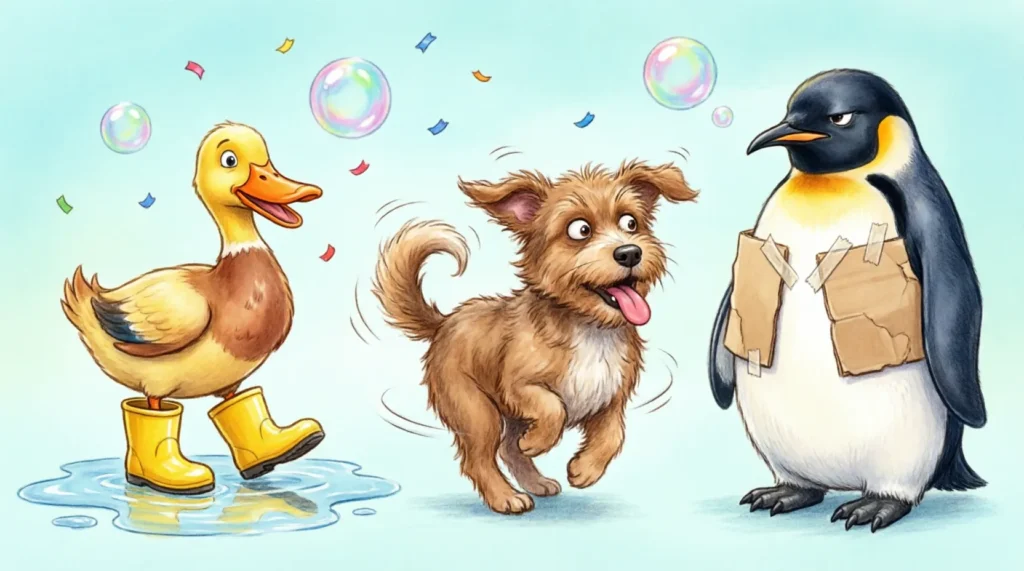
In short, similes for silly are creative comparisons that help you describe funny, goofy, or playful behavior using “as” or “like.” They make your writing more vivid, exciting, and easy to imagine. In this guide, you’ll discover examples, tips, and activities that will help you use these playful expressions with confidence in your own writing.
[IMAGE: playful cartoon children laughing in classroom]
What Are Similes for Silly? (And Why They Matter)
Have you ever stared at a blank page, trying to describe a friend acting goofy, but your mind goes completely empty? Or maybe your teacher asked for a funny description, and you only wrote “he was silly” again and again. That’s where similes for silly come in to save your writing.
Similes for silly are comparisons that show someone or something is funny, playful, or a little ridiculous by using “like” or “as.” For example, “as silly as a dancing penguin.”
These expressions matter because they make your writing more colorful and memorable. Literacy educators often explain that figurative language helps readers build stronger mental images and emotional connections.
When you use similes for silly, you’re not just telling your reader something is funny—you’re helping them see it, feel it, and laugh with it.
Next, let’s explore a big collection of creative examples you can start using right away.
The Best Examples of Similes for Silly
Here are 25 playful, creative, and student-friendly similes for silly that you can use in stories, poems, and everyday writing:
as silly as a goose wearing sunglasses
like a monkey doing homework upside down
as silly as a clown on roller skates
like a cat trying to bark
as silly as a chicken in a superhero cape
like a dog chasing its own tail in circles
as silly as a frog singing karaoke
like a penguin sliding through a classroom
as silly as a kangaroo in rain boots
like a banana telling jokes at lunch
as silly as a squirrel dancing in the street
like a robot trying to do the moonwalk
as silly as a duck wearing sneakers
like a giraffe stuck in a tiny car
as silly as a hamster on a spinning wheel marathon
like a pizza doing ballet on stage
as silly as a sheep telling knock-knock jokes
like a turtle racing a race car
as silly as a parrot repeating nonsense jokes
like a jellybean bouncing on a trampoline
as silly as a kid wearing shoes on their hands
like a cloud trying to tickle the sun
as silly as a wizard mixing soup instead of potions
like a fish riding a bicycle in the ocean
as silly as a pencil drawing circles instead of words
These similes for silly work because they use strong mental images and surprising combinations. You can see the humor, and your brain naturally connects with the playful energy.
Now that you’ve seen examples, let’s learn how you can use them in your own writing.
How to Use Similes for Silly in Your Writing
Using similes for silly in your writing is easier than you think. You just need a little imagination and practice.
Think of something funny or goofy you want to describe Start by choosing a person, animal, or object doing something playful or strange.
Compare it to something unexpected Use “like” or “as” to connect it with something funny or unusual, like “a dancing chicken” or “a laughing robot.”
Keep your reader in mind Ask yourself: Will this help you imagine the scene more clearly? If yes, you’re on the right track.
Add it into a full sentence For example: “You were as silly as a monkey spinning in circles when you tried to dance.”
When you practice similes for silly, your writing becomes more expressive and fun to read. You’ll notice your descriptions feel more alive and engaging.
Next, let’s see how writers use these ideas in poems and stories.
Similes for Silly in Poems and Stories
Writers love using similes for silly because they bring humor and imagination into creative work. Whether it’s a poem, a short story, or even a song, these comparisons make readers smile.
Here are some fun examples:
Mina wrote in her poem: “The classroom was as silly as a circus at noon, with laughter bouncing around like a runaway balloon.”
Jason added to his story: “My brother was like a penguin on roller skates, sliding through the kitchen without control.”
Aisha’s character said: “I felt as silly as a frog singing in the rain, but I didn’t care because I was happy.”
Poets and authors use these expressions because they add rhythm, emotion, and vivid imagery. When you use similes for silly, your reader doesn’t just read the scene—they experience it.
Next, let’s look at some common mistakes students make.
More similes for silly by Tone and Context
🌿 Natural & Descriptive
As silly as a squirrel chasing its own tail — Captures playful, energetic foolishness that fits nature writing or lighthearted descriptions.
Like a leaf dancing in circles on the wind — Suggests carefree, aimless behavior with a gentle, descriptive feel.
As silly as a duck splashing in every puddle — Shows cheerful excitement without worrying about looking serious.
Like a butterfly zigzagging through a sunny garden — Describes someone acting in a joyful, unpredictable way.
As silly as a puppy discovering its own shadow — Highlights innocent curiosity and playful behavior.
💛 Warm & Emotional
Like a child’s giggle on a quiet afternoon — Expresses harmless silliness that brings comfort and happiness.
As silly as friends laughing over an old joke — Perfect for showing shared joy and close friendships.
Like a smile that refuses to fade — Describes playful behavior that brightens everyone’s mood.
As silly as a family game night full of laughter — Reflects warm, happy moments spent together.
Like warm sunshine making everyone grin — Suggests a lighthearted spirit that spreads happiness.
✨ Poetic & Romantic
As silly as moonlight playing on gentle waves — Creates a dreamy image of carefree charm.
Like stars winking at secret jokes — Suggests playful mystery in poems or lyrical writing.
As silly as a breeze teasing blooming flowers — Combines lightness and beauty in a poetic comparison.
Like a feather floating wherever the wind whispers — Describes carefree actions with a graceful tone.
As silly as laughter echoing through the evening sky — Adds a soft, musical feeling to creative writing.
😄 Playful & Fun
Like a penguin trying to breakdance — Creates a funny mental picture of clumsy enthusiasm.
As silly as socks worn on your hands — Shows goofy behavior in a way students can easily imagine.
Like popcorn bouncing out of the bowl — Describes wild, energetic excitement that cannot be contained.
As silly as a robot learning to tell jokes — Fits humorous stories about awkward or unexpected behavior.
Like a monkey wearing oversized sunglasses — Paints a playful, exaggerated image that works well in casual writing.
These tone-grouped similes for similes for silly give you options for every kind of writing — whether you need something soft and poetic or bold and fun. Try picking one from each group and using them in a short paragraph to see how different the same keyword can feel.
Using similes for silly in Real Writing Contexts
In a Descriptive Essay
When describing a person’s behavior or a funny moment in an essay, a simile can help readers picture it more clearly. Instead of simply saying someone was silly, compare their actions to something vivid and memorable. Example:My little brother was as silly as a puppy discovering its own shadow, making everyone at the picnic laugh.
In a Poem
Similes for silly can add a playful mood while making your images more creative. They help readers imagine joyful scenes with colorful language. Example:Like stars winking at secret jokes, our laughter danced across the quiet night.
In a Story or Creative Scene
A well-chosen simile can reveal a character’s personality or make a funny scene more entertaining. It adds movement and emotion without using long descriptions. Example:She skipped into the classroom like popcorn bouncing out of the bowl, making even the serious students smile.
In a Social Media Caption or Message
Short similes work perfectly in captions, texts, and funny posts because they are quick and memorable. They make everyday moments feel more creative. Example:Today’s mood: as silly as socks worn on my hands. 😂
The more you practice placing similes for silly into real sentences, the more natural your writing will sound — and the more your reader will feel exactly what you want them to feel.
Common Mistakes Students Make With Similes for Silly
Using boring comparisons Many students write “as silly as a clown” too often. Try being more creative with your ideas.
Forgetting the “like” or “as” structure Similes need clear comparison words. Without them, your sentence may not make sense.
Making comparisons too confusing If your reader cannot picture it, the simile loses its effect.
Overusing similes in one paragraph Too many comparisons can make your writing feel crowded instead of fun.
Not matching the tone A silly simile should feel playful, not serious or unrelated to the situation.
These mistakes are normal, and you improve by practicing. Next, let’s make learning more fun with activities.
Fun Activities to Practice Similes for Silly
Silly comparison challenge Grab a notebook and write 10 funny “as…as…” similes in 5 minutes. Try to surprise yourself with creative ideas.
Classroom comedy game Take turns with a friend or classmate saying the silliest simile you can think of. The funniest one wins.
Draw and describe Draw a silly character, then write a simile for it like “as silly as a dog wearing glasses.”
Story builder activity Write a short story and include at least 5 similes for silly to make it more entertaining.
Simile scavenger hunt Look around your room and create silly comparisons for random objects you see.
These activities help you practice, experiment, and improve your creativity step by step.
What NOT to Do With Similes for Silly
Don’t repeat the same comparisons Using “as silly as a clown” too many times makes your writing predictable.
Don’t force humor where it doesn’t fit Your simile should match the mood of your sentence.
Don’t make comparisons too complicated If you need to explain your simile, it may not be effective.
Don’t forget clarity Your reader should understand your idea instantly without confusion.
Frequently Asked Questions About Similes for Silly
What are similes for silly in simple words?
Similes for silly are funny comparisons that show something is playful or goofy using “like” or “as.” For example, “as silly as a dancing chicken” helps you create a clear mental picture.
How do you use similes for silly in a sentence?
You can add them when describing actions or characters. For example, “You were as silly as a monkey on a trampoline today.”
Why do writers use similes for silly?
Writers use them to make stories more entertaining and vivid. They help readers imagine funny scenes more clearly and enjoy the writing more.
Can students use similes for silly in exams?
Yes, absolutely. Using them can improve your descriptive writing score if they are clear and relevant to your topic.
What makes a good simile for silly?
A good one is creative, easy to understand, and funny enough to create a strong mental image in your reader’s mind.
Final Thoughts on Similes for Silly
Similes for silly are a powerful way to make your writing more fun, creative, and memorable. They help you turn simple ideas into lively images that your reader can instantly understand.
When you practice regularly, you’ll find it easier to describe emotions, characters, and actions in exciting ways. You don’t need perfect writing—just imagination and a willingness to try.
Keep experimenting, keep writing, and let your creativity grow every time you use similes for silly in your work. Your ideas will only get stronger from here.
Frequently Asked Questions
What are some examples of similes for silly?▼
Some fun examples include ‘as silly as a goose wearing sunglasses’ and ‘like a monkey doing homework upside down.’ These creative comparisons help to vividly describe funny or goofy behavior.
How can I use similes for silly in my writing?▼
To use similes for silly, think of a funny scenario and choose a person, animal, or object acting playfully. Then, make a comparison using ‘like’ or ‘as’ to create a vivid image, such as ‘as silly as a frog singing karaoke’.
Why are similes for silly important in writing?▼
Similes for silly enhance your writing by making it more colorful and memorable. They help readers build stronger mental images and emotional connections, making the writing not just informative but also enjoyable.
What should I keep in mind when creating my own similes for silly?▼
When creating similes for silly, consider the humor and surprise of the comparison. Ask yourself if the simile will help your readers imagine the scene more clearly; if it does, you’re on the right track!
Can similes for silly be used in poetry as well as stories?▼
Yes, similes for silly can be effectively used in both poetry and stories. They add a playful tone and can make the text more engaging for readers of all ages.
How many similes for silly are included in the article?▼
The article includes a collection of over 25 playful, creative similes for silly that students and writers can use in their work. These examples are designed to inspire and encourage imaginative writing.
What is the main purpose of using similes for silly?▼
The main purpose of using similes for silly is to add humor and vividness to your writing. They allow you to describe playful behavior in a way that sparks the reader’s imagination and evokes laughter.
Liam Nguyen is a passionate educator and writer with a deep love for figurative language. He holds a master’s degree in Creative Writing and has spent eight years teaching at various educational settings, focusing on language enrichment programs for children from grades 2-6. His expertise in crafting metaphorical language and similes into captivating content stems from his belief that storytelling is the heartbeat of learning. Liam’s contributions to SimilePedia span from emotion-driven examples to color-inspired narrative tools. He is committed to fostering a creative environment where students can explore and find joy in their unique expressions.