In short, similes for describing a person help you compare someone’s appearance, personality, emotions, or actions to something familiar using the words “like” or “as.” They make your writing more colorful, memorable, and interesting, and you’ll discover plenty of examples and tips below to help you write with confidence.
[IMAGE: Student writing vivid character descriptions in a notebook]
What Are the Similes for Describing a Person? (And Why They Matter)
Have you ever looked at a writing assignment and thought, “How do I describe this character without saying they’re just nice, tall, or funny?” You’re not alone. Many students reach that moment when simple words don’t seem exciting enough.
Similes for describing a person compare someone to something else using “like” or “as.” These comparisons help readers picture a person’s looks, personality, behavior, or feelings more clearly.
Instead of saying someone is brave, you might write, “She was as brave as a lion.” That single comparison creates a much stronger image in your reader’s mind.
Language arts researchers and literacy educators often encourage students to use similes because they build stronger descriptive writing, improve reading comprehension, and make stories more engaging. Once you learn how to use them, your writing becomes more vivid and enjoyable to read.
Now that you know what they are, let’s explore some creative examples you can use right away.
The Best Examples of the Similes for Describing a Person
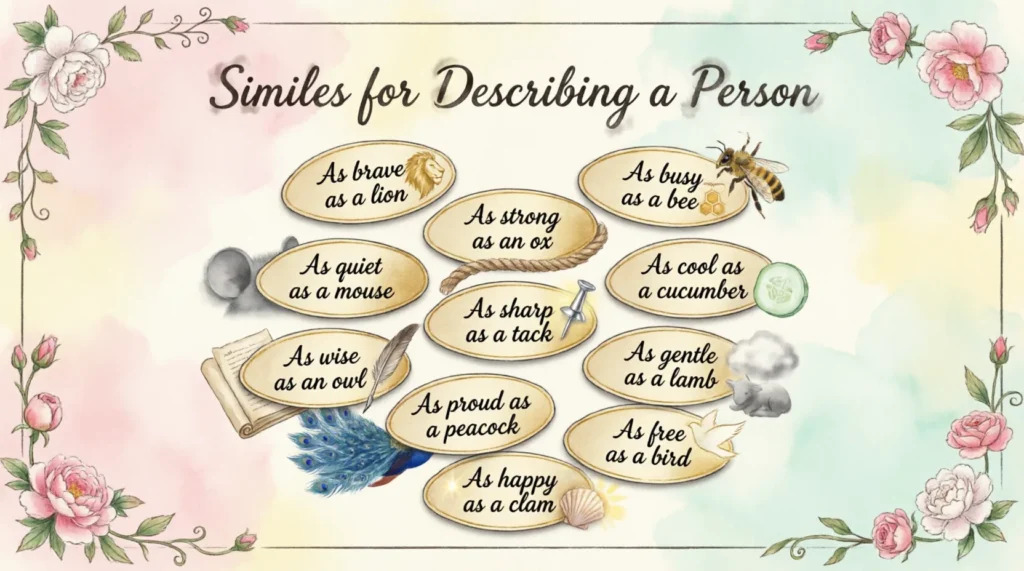
As brave as a lion.
As gentle as a lamb.
As busy as a bee.
As wise as an owl.
As cheerful as sunshine.
As quiet as a mouse.
As stubborn as a mule.
As quick as lightning.
As calm as a still lake.
As kind as a grandmother’s hug.
As curious as a kitten.
As playful as a puppy.
As proud as a peacock.
As cool as a cucumber.
As strong as an ox.
As graceful as a swan.
As bright as the morning sun.
Like a walking encyclopedia when answering questions.
Like a lighthouse guiding others through problems.
Like a warm blanket on a cold evening.
Like a spark that lights up every room.
Like a mountain that never gives up.
Like a gentle breeze on a summer afternoon.
Like a superhero without a cape.
Like a rainbow after a storm.
These examples work well because they create clear mental pictures. Instead of simply telling your reader what someone is like, you help them imagine the person through familiar images.
Good similes also connect with emotions and everyday experiences. The more your reader can picture the comparison, the stronger your writing becomes.
[IMAGE: Colorful illustration showing different personality traits represented by animals and nature]
How to Use the Similes for Describing a Person in Your Writing
Start by thinking about the person’s strongest quality. Are they funny, kind, nervous, confident, or energetic? Once you know the trait, you can find a comparison that matches it.
Choose comparisons your readers will understand. A familiar image usually creates a stronger impression than an unusual one.
Use similes only when they add something special. If every sentence contains one, your writing may feel crowded instead of creative.
Read your sentence aloud. If the comparison sounds natural, you’ve probably chosen a good simile.
Example:
“Emma walked into the classroom as confident as a queen, smiling at everyone she passed.”
As you practice, you’ll discover that creating your own similes becomes easier and more fun.
Similes for Describing a Person in Poems and Stories
Poets and story writers use similes because they help readers feel emotions and imagine characters more clearly. A well-chosen comparison can make a character unforgettable.
Mina smiled like the first sunrise of spring. Everyone around her forgot about the rainy morning.
Arjun stood as steady as an old oak tree. Even during the strongest storm, he refused to give up.
Layla laughed like sparkling water dancing over rocks. Her happiness spread through the room in seconds.
These short examples show how similes add rhythm, imagery, and emotion. Creative writing teachers often encourage students to experiment with different comparisons until they find one that feels just right.
Next, let’s look at a few common mistakes that many students make—and how you can avoid them.
Common Mistakes Students Make With the Similes for Describing a Person
Using overused comparisons without thinking. Expressions like “as busy as a bee” are correct, but using the same familiar similes over and over can make your writing less original. Try creating fresh comparisons too.
Comparing the wrong qualities. Make sure your comparison matches the person’s trait. Saying someone is “as loud as a feather” would confuse readers because feathers aren’t loud.
Using too many similes in one paragraph. Similes are most effective when they stand out. A few strong comparisons usually work better than many weak ones.
Choosing comparisons that don’t fit the character. Think carefully about the person’s age, personality, and situation. A playful child and a serious detective may need very different similes.
Forgetting the words “like” or “as.” Without those words, your comparison may become a metaphor instead of a simile. Paying attention to this small detail helps you answer exam questions correctly.
The good news is that every writer makes mistakes while learning. With practice, you’ll begin spotting these issues on your own.
Fun Activities to Practice the Similes for Describing a Person
Character Challenge Grab a pencil and write down five people you know or have read about. Create one original simile for each person’s personality.
Guess the Person Play with classmates or family members. Read a simile aloud, and let everyone guess which type of person it describes.
Drawing and Writing Combo Draw a character, then write three similes that describe their appearance and three that describe their personality.
Reading Detective While reading a story, highlight every simile used to describe a character. Think about why the author chose each comparison.
Worksheet Race Create two columns. In one, list personality traits like brave, shy, funny, and patient. In the other, match each trait with a creative simile as quickly as you can.
These activities help you practice without making learning feel like hard work.
What NOT to Do With the Similes for Describing a Person
Don’t force a simile into every sentence. Your writing should still sound natural and easy to read.
Don’t choose confusing comparisons just because they sound fancy. Clear images are usually more effective.
Don’t assume every famous simile is the best choice. Original comparisons often make your writing more memorable.
Don’t describe every character with the same kinds of similes. Different people deserve different comparisons that match their unique personalities.
Understanding what to avoid is just as helpful as knowing what to include.
Frequently Asked Questions About the Similes for Describing a Person
What is a good simile for describing a kind person?
You could write, “She was as gentle as a lamb” or “He was like a warm blanket on a cold day.” These comparisons help readers picture kindness through familiar images.
How do you use similes for describing a person in a sentence?
Simply compare a person’s quality using “like” or “as.” For example: “My grandfather was as wise as an owl and always gave thoughtful advice.”
What is the difference between a simile and a metaphor when describing a person?
A simile uses the words “like” or “as” to make a comparison. A metaphor says one thing is another without using those words, such as “She is a shining star.”
Are similes for describing a person suitable for elementary and middle school students?
Yes. They are commonly taught because they help students write more detailed descriptions and understand figurative language in stories and poems. You can start with simple comparisons and gradually create your own.
Why do writers use similes for describing a person?
Writers use them to help readers picture characters more clearly and feel connected to them. A strong simile can reveal personality, emotion, or appearance in just a few words.
Final Thoughts on the Similes for Describing a Person
Learning similes for describing a person gives you a powerful way to make your writing more colorful and expressive. Whether you’re writing a story, poem, essay, or classroom assignment, these comparisons help your readers imagine your characters more clearly.
You’ve explored dozens of examples, learned when to use them, discovered common mistakes, and practiced fun activities that build your confidence. Every new simile you create helps strengthen your creative writing skills.
Remember that the best similes come from careful observation. Look around you, notice the world, and think about how everyday objects, animals, and nature can help describe the people in your stories.
Keep practicing, keep experimenting, and don’t be afraid to create your own unique comparisons. Your writing will grow stronger with every sentence, and you have everything you need to make your descriptions come alive.
More Similes for Describing a Person
She was as sharp as a tack in every meeting she joined.
He moved through the crowd like a shadow slipping past streetlights.
Her patience was as steady as an old oak in a windstorm.
He was as stubborn as a mule refusing to leave the barn.
Her kindness spread like warmth from a well-fed fire.
Liam is a language enthusiast and lead writer at Similepedia.com, where he focuses on creating clear, creative, and easy-to-use similes for everyday writing. He specializes in turning simple ideas into vivid comparisons that make sentences more engaging, expressive, and memorable.
Instead of overcomplicating language with technical jargon, Liam approaches similes as practical tools for better communication. He breaks down how comparisons work, when to use them, and how to make them sound natural — not forced or awkward.
He pays close attention to tone, context, and clarity, ensuring every simile fits smoothly into real sentences. From fun and playful comparisons to more descriptive and expressive ones, Liam helps readers improve how they write, speak, and express ideas.
At Similepedia.com, his mission is simple: make language more colorful and effective without making it complicated. He doesn’t just list similes — he helps readers understand how to use them confidently in real situations.