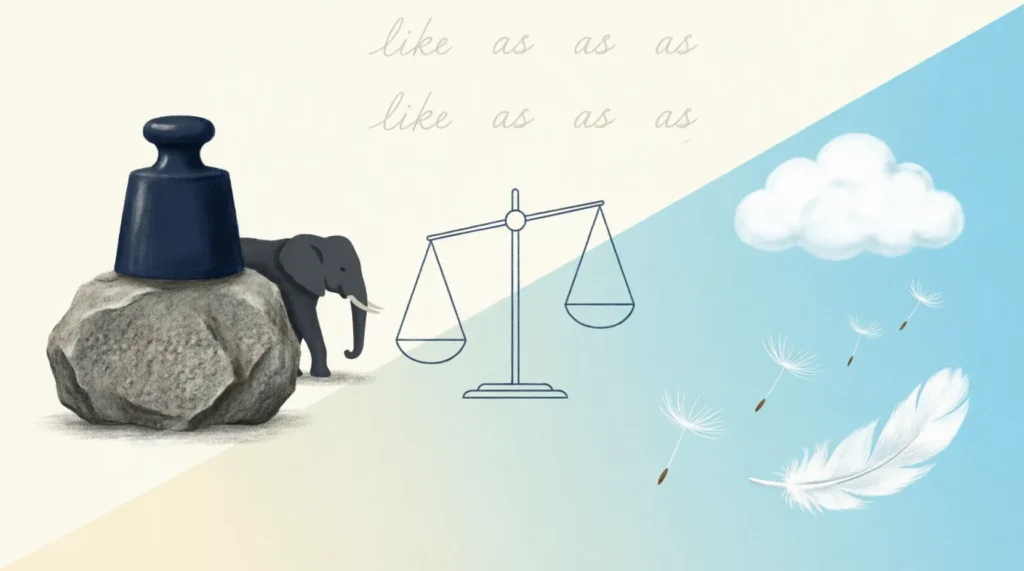
In short, similes for weight are descriptive comparisons that help you explain how heavy or light something feels using “like” or “as.” They make your writing more vivid by connecting weight to familiar objects and experiences. In this article, you’ll discover clear examples, creative uses, and fun activities that will help you master these expressive comparisons in your own writing.
What Are Similes for Weight? (And Why They Matter)
Have you ever stared at a blank page trying to describe something heavy—like a school bag—or something light like a feather, but couldn’t find the right words? Maybe you’ve said “very heavy” and felt it sounded boring. That’s exactly where you need similes for weight.
Similes for weight are comparisons that describe how heavy or light something feels by using “like” or “as.” For example, “as heavy as a boulder” instantly gives your reader a strong mental image.
Literacy educators often explain that these comparisons are powerful tools in language arts because they help you turn simple descriptions into vivid mental pictures. Instead of just telling, you show.
When you use similes for weight, you help your reader feel what you mean. That’s why writers, poets, and storytellers use them in exams, essays, and creative writing.
Now that you understand the idea, let’s explore the most creative examples you can use in your own writing.
The Best Examples of Similes for Weight
Here are some vivid and creative similes for weight that you can use in your writing. Try to imagine each one as you read—you’ll notice how clearly they paint a picture in your mind.
As heavy as a mountain sitting on your shoulders
As light as a feather floating in the wind
As heavy as a bag full of wet sand
As light as a soap bubble drifting away
As heavy as a giant stone locked in place
As light as a paper sheet in a breeze
As heavy as an elephant stepping on the ground
As light as a cotton ball in your hand
As heavy as a locked treasure chest full of gold
As light as air on a spring morning
As heavy as a school backpack on exam day
As light as a butterfly landing on a flower
As heavy as a car without wheels
As light as a whisper in a silent room
As heavy as iron chains wrapped around you
As light as a snowflake touching your skin
As heavy as a collapsing bridge of stone
As light as a leaf floating on water
As heavy as a boulder rolling downhill
As light as a strand of hair in the wind
As heavy as a sack of bricks on your back
As light as a dream you almost forget
These similes for weight work because they connect physical sensation with familiar objects. When you use them, you help your reader see and feel the difference instantly.
They also make your writing more emotional and imaginative, which is exactly what teachers love to see in creative work.
[IMAGE: feather floating in air vs heavy rock comparison illustration]
Now let’s learn how you can start using them in your own sentences.
How to Use Similes for Weight in Your Writing
You don’t need to be a professional writer to use similes effectively. You just need practice and imagination. Here’s how you can do it:
First, think about the object you want to describe. Ask yourself: is it heavy or light? You should clearly understand what you want your reader to feel.
Next, choose something familiar to compare it with. For example, if you are describing something heavy, you might think of a rock, a car, or a mountain.
Then build your sentence using “as” or “like.” For example: The suitcase was as heavy as a bag of bricks.
Finally, read your sentence aloud. You should feel the image clearly in your mind—and your reader should too.
When you practice similes for weight like this, your writing becomes stronger and more expressive. You are no longer just telling—you are painting pictures with words.
Similes for Weight in Poems and Stories
Writers and poets love using similes for weight because they add emotion and rhythm to writing. When you use them, you make your words feel alive.
For example, in a poem, you might write:
The burden on his heart was as heavy as stone, Yet hope still floated like a feather unknown.
Or in a story:
Sara lifted the box. It felt as heavy as a sleeping elephant, and she almost dropped it before taking a deep breath.
Another example:
Ali’s worries were as light as dust in the wind, but they never seemed to settle.
Poets and authors use these comparisons because they help you connect emotionally with the reader. You don’t just understand the feeling—you experience it.
More Similes for Weight by Tone and Context
🌿 Natural & Descriptive
“As steady as a mountain under winter snow” — Captures great weight and strength, making it useful for vivid descriptions of heavy objects.
“Like a boulder resting beside a riverbank” — Suggests solid, unmoving weight that has settled into place over time.
“As weighty as storm clouds gathering before rain” — Conveys a sense of heaviness that feels powerful and noticeable.
“Like a fallen tree stretched across a forest path” — Highlights physical weight and the challenge of moving something large.
“As heavy as wet earth after a long rain” — Works well when describing dense, moisture-filled heaviness.
💛 Warm & Emotional
“Like a blanket wrapped around tired shoulders” — Suggests a comforting kind of weight rather than a burden.
“As gentle as a sleeping baby in your arms” — Describes a weight that feels precious and meaningful.
“Like a backpack filled with treasured memories” — Shows emotional weight connected to important experiences.
“As reassuring as a hand resting on your shoulder” — Captures a calm, supportive sense of presence and weight.
“Like a family photo album resting in your lap” — Reflects emotional significance along with physical heaviness.
✨ Poetic & Romantic
“As heavy as a heart full of unspoken words” — Expresses emotional weight in a poetic and reflective way.
“Like moonlight settling softly on a quiet lake” — Suggests a delicate, dreamy kind of weight.
“As weighty as a promise carried through the years” — Works well in poems about loyalty, commitment, or love.
“Like a crown resting upon a ruler’s head” — Symbolizes responsibility, honor, and meaningful burden.
“As heavy as the silence between two distant souls” — Creates a thoughtful and emotional atmosphere in creative writing.
😄 Playful & Fun
“Like a backpack stuffed with a hundred snacks” — Adds humor while describing something surprisingly heavy.
“As heavy as a giant stack of comic books” — A fun comparison students can easily picture.
“Like carrying three sleepy cats at once” — Creates a playful image of awkward, unexpected weight.
“As weighty as a bowling ball in one hand” — Emphasizes heaviness in a familiar and relatable way.
“Like a suitcase packed by someone who brought everything” — Humorously describes an overloaded object.
These tone-grouped similes for weight give you options for every kind of writing — whether you need something soft and poetic or bold and fun. Try picking one from each group and using them in a short paragraph to see how different the same topic can feel.
Using Weight in Real Writing Contexts
In a Descriptive Essay
When writing a descriptive essay, you may need to explain how heavy an object feels or how difficult it is to move. A simile helps readers picture that weight more clearly.
Example: The old stone statue was as heavy as wet earth after a long rain, forcing four workers to move it slowly across the yard.
In a Poem
Similes for weight can help create mood and deepen emotions in poetry. They can make physical or emotional heaviness feel more vivid to the reader.
Example: My thoughts were as heavy as a heart full of unspoken words, drifting through the quiet night.
In a Story or Creative Scene
In stories, similes can show a character’s feelings, struggles, or the atmosphere around them. They help readers experience the moment instead of simply being told about it.
Example: As Mia opened the letter, the silence in the room felt as heavy as storm clouds gathering before rain, and nobody spoke a word.
In a Social Media Caption or Message
Short similes can make captions and messages more expressive and memorable. They add personality while quickly communicating a feeling or situation.
Example: Just finished moving boxes all day—my arms feel as heavy as a giant stack of comic books!
The more you practice placing similes for weight into real sentences, the more natural your writing will sound — and the more your reader will feel exactly what you want them to feel.
Common Mistakes Students Make With Similes for Weight
Learning similes for weight is fun, but students often make a few common mistakes. Don’t worry—these are easy to fix.
Using unclear comparisons: Sometimes students say things like “as heavy as something.” This doesn’t help your reader visualize anything. Always choose a clear object.
Mixing metaphors and similes: You should use “like” or “as” for similes. Without them, it becomes a metaphor.
Overusing the same ideas: If you always compare weight to rocks or feathers, your writing becomes repetitive. Try to be creative.
Using unrealistic comparisons: Saying something is “as heavy as a planet in your backpack” may sound funny but doesn’t feel believable in writing tasks.
Forgetting emotional impact: Your simile should help your reader feel the weight, not just describe it.
Fun Activities to Practice Similes for Weight
Look around your room and pick five objects. Try writing a simile for each one based on its weight. You’ll train your imagination quickly.
Play a “heavy or light” guessing game with a friend. Describe something using a simile, and let them guess the object.
Draw two columns labeled “heavy” and “light.” Fill each with creative similes for weight you can think of.
Write a short paragraph about your school day and include at least three similes for weight.
Challenge yourself to rewrite boring sentences using similes. For example, change “The bag was heavy” into something more vivid.
Create a mini story where every important object is described using a simile. This will push your creativity further.
What NOT to Do With Similes for Weight
Don’t make your comparisons too complicated: If your reader has to think too hard, your simile loses its power.
Don’t repeat the same simile again and again: Variety keeps your writing fresh and interesting.
Don’t force similes into every sentence: Use them when they truly improve your description, not just for decoration.
Don’t use unclear or confusing objects: Always choose something your reader can easily imagine.
Frequently Asked Questions About Similes for Weight
What are similes for weight used for in writing?
Similes for weight are used to describe how heavy or light something feels in a more creative way. They help you turn simple descriptions into strong visual images that your reader can easily understand. You can use them in essays, stories, and poems.
How do you write a good simile for weight?
To write a good simile for weight, you should compare an object to something familiar. For example, “as heavy as a rock” or “as light as a feather.” Make sure your comparison is clear so your reader can picture it easily.
Why are similes for weight important for students?
Similes for weight help you improve your creative writing skills. Teachers often look for them in exams because they show imagination and understanding of language. They also help you express ideas more clearly.
Can similes for weight be funny?
Yes, similes for weight can be funny if you use creative comparisons. For example, “as heavy as my backpack on Monday morning” adds humor while still making sense. Just make sure it still fits the context of your writing.
Where can you use similes for weight in real writing?
You can use similes for weight in stories, essays, poems, and even speeches. They are especially useful when you want to describe objects, emotions, or experiences in a more vivid way.
Final Thoughts on Similes for Weight
Similes for weight are a simple but powerful way to make your writing more expressive and engaging. They help you turn ordinary descriptions into vivid images that your reader can actually feel.
When you practice using similes for weight, you start noticing details in everyday life—how things feel, how they move, and how they compare to other objects. That’s a big step toward becoming a stronger writer.
Keep experimenting with your own ideas, and don’t be afraid to get creative. The more you practice, the more natural it will feel, and your writing will become richer and more enjoyable to read.
You have everything you need to start using similes confidently—just keep writing, imagining, and exploring.
Frequently Asked Questions
What are similes for weight and why are they useful?▼
Similes for weight are descriptive comparisons that help explain how heavy or light something feels by using ‘like’ or ‘as.’ They are useful because they transform simple descriptions into vivid mental images, enabling readers to feel the weight of the objects being described.
Can you provide examples of creative similes for weight?▼
Certainly! Some examples include ‘as heavy as a mountain sitting on your shoulders’ and ‘as light as a feather floating in the wind.’ These comparisons connect physical sensations with familiar objects, making your writing more vivid.
How do similes for weight enhance writing?▼
Similes for weight enhance writing by making descriptions more emotional and imaginative. They allow writers to show rather than tell, helping readers visualize and feel the sensations associated with weight.
What steps should I follow to create my own similes for weight?▼
To create your own similes for weight, start by identifying the object you want to describe and determine if it feels heavy or light. Then, think of a familiar object to compare it with, which will help convey the intended feeling to your readers.
Are similes for weight only useful in creative writing?▼
No, similes for weight can be used in various forms of writing, including essays, exams, and storytelling. They provide clarity and engagement, making them valuable tools across different writing contexts.
How can similes for weight help students in language arts?▼
Similes for weight help students in language arts by fostering creativity and enhancing their descriptive skills. They encourage students to think critically about language and how to express complex ideas in relatable ways.
What impact do similes for weight have on reader engagement?▼
Similes for weight significantly improve reader engagement by creating vivid imagery that resonates emotionally. When readers can visualize and feel the weight of objects, they become more invested in the text.
Liam Nguyen is a passionate educator and writer with a deep love for figurative language. He holds a master’s degree in Creative Writing and has spent eight years teaching at various educational settings, focusing on language enrichment programs for children from grades 2-6. His expertise in crafting metaphorical language and similes into captivating content stems from his belief that storytelling is the heartbeat of learning. Liam’s contributions to SimilePedia span from emotion-driven examples to color-inspired narrative tools. He is committed to fostering a creative environment where students can explore and find joy in their unique expressions.