Picture a wall of water roaring off a cliff — how do you get that power onto the page? Similes for waterfalls are the fastest fix: vivid comparisons that turn a flat description into a scene readers can hear and feel. Below you’ll find dozens of ready-to-use examples, plus tips for building your own, whether you’re writing a poem, story, or school assignment.
What Are Similes for Waterfalls? (And Why They Matter)
Have you ever stared at a blank page trying to describe a waterfall, but all you could think of was “it was beautiful”? You’re not alone. Many students want their writing to sound exciting but struggle to find the right words.
Similes for waterfalls are comparisons that describe waterfalls using “like” or “as.” For example, “The waterfall crashed like thunder” compares the sound of the waterfall to thunder so your reader can imagine it clearly.
These similes matter because they make your writing more powerful and easier to picture. Instead of plain descriptions, you give your reader sounds, feelings, movement, and emotion. Literacy educators often encourage students to use similes because they improve storytelling, reading comprehension, and creative thinking.
Whether you’re writing a nature poem, a fantasy story, or a school essay, similes for waterfalls can help your words feel more vivid and memorable. Once you start using them, your descriptions become much more fun to read.
The Best Examples of Similes for Waterfalls
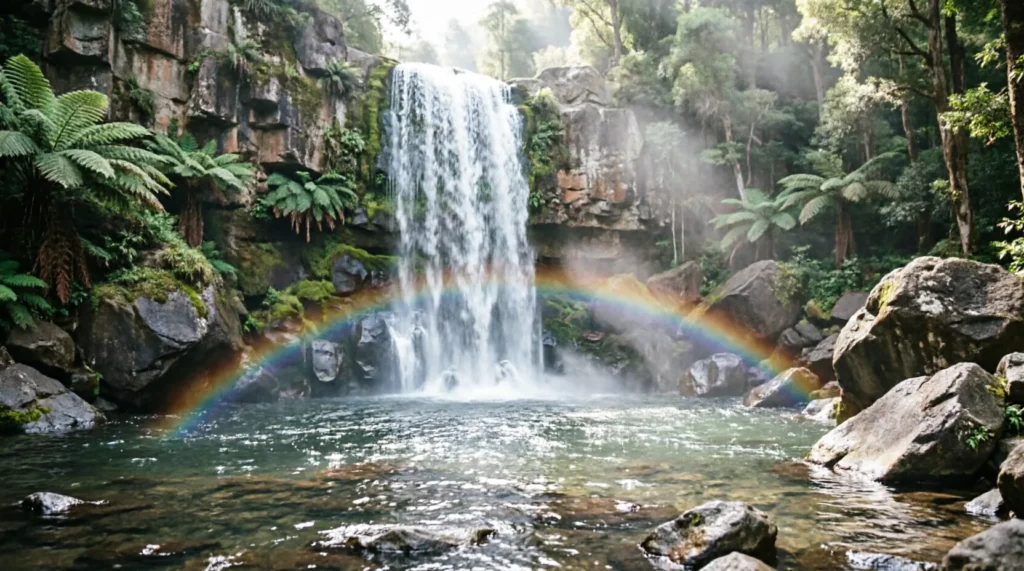
[IMAGE: A tall waterfall crashing down a rocky cliff surrounded by mist]
The waterfall roared like a lion in the wild.
Water poured down the cliff like silver ribbons fluttering in the wind.
The waterfall sparkled like diamonds under the sunlight.
It crashed like thunder during a stormy night.
The water flowed like melted glass over the rocks.
The waterfall danced like a ballerina spinning across a stage.
The rushing water sounded like applause in a crowded theater.
The mist floated around us like soft cotton candy.
The waterfall fell like a curtain covering the mountainside.
The stream below twisted like a snake through the forest.
The waterfall shimmered like a thousand tiny stars.
Water splashed like kids jumping into a swimming pool.
The roaring falls echoed like drums in a concert hall.
The waterfall moved like a wild horse racing downhill.
The foam looked like whipped cream on hot chocolate.
The water slid down the rocks like silk across a table.
The waterfall exploded like fireworks hitting the sky.
It flowed like tears down the face of the mountain.
The mist wrapped around us like a cold blanket.
The waterfall glowed like liquid moonlight at night.
The rushing water sounded like traffic in a busy city.
The waterfall spread out like a giant fan opening slowly.
Water crashed into the river like cymbals in a band.
The waterfall moved like a silver snake through the canyon.
The falling water looked like strands of white hair blowing in the wind.
The waterfall thundered like a train speeding past.
The pool below sparkled like a mirror covered in glitter.
The waterfall poured endlessly like sand through an hourglass.
It rushed down the cliff like kids running out of school.
The waterfall gleamed like polished crystal in the sunlight.
The water tumbled like marbles rolling down stairs.
The mist drifted like smoke from a campfire.
The waterfall crashed like waves during a hurricane.
The flowing water looked like flowing milk from the sky.
The waterfall leaped over the rocks like an excited puppy.
The sound rolled through the valley like a giant beating a drum.
The waterfall shimmered like satin under the moon.
Water raced downward like a skier flying down a snowy hill.
The waterfall spread like paint dripping down a canvas.
The falls sparkled like coins at the bottom of a fountain.
The waterfall moved like a giant white ribbon twisting in the air.
The sound of the falls rumbled like airplanes overhead.
The mist cooled our skin like icy breath on a winter morning.
The waterfall glistened like pearls scattered across stone.
Water crashed over the cliff like a never-ending avalanche.
These examples work well because they create strong imagery and sensory detail. Some focus on sound, while others describe movement, light, or emotion. Creative writing teachers often explain that good similes help readers “see” the scene inside their minds.
Now that you’ve seen strong examples, you can start using similes for waterfalls in your own writing with more confidence.
How to Use Similes for Waterfalls in Your Writing
Using similes well is easier than you might think. You just need to focus on what the waterfall reminds you of.
Think About the Waterfall’s Best Feature
Ask yourself what stands out most. Is it loud, shiny, fast, peaceful, or huge? Once you notice the strongest detail, compare it to something familiar.
Example: “The waterfall roared like thunder across the valley.”
Use Senses in Your Description
Good similes help readers hear, see, or feel something. Try describing the sound, temperature, or movement of the waterfall.
Example: “The cold mist wrapped around us like icy fog.”
Avoid Overused Comparisons
Some similes are common, and that’s okay sometimes. But your writing becomes stronger when you create fresh images from your own imagination.
Instead of only saying “like rain,” you could write, “The waterfall spilled down the rocks like silver threads unraveling.”
Match the Mood of Your Story
A peaceful story needs calm similes, while an adventure scene may need stronger, louder comparisons.
For example, in a mystery story you could write: “The waterfall growled like a hidden monster in the dark forest.”
The more you practice, the easier it becomes to create similes naturally in your writing.
Similes for Waterfalls in Poems and Stories
[IMAGE: A student writing poetry beside a waterfall]
Writers often use similes for waterfalls because waterfalls already create strong emotions and images. In poems and stories, these comparisons help readers feel the power, beauty, or mystery of nature.
Here are a few short creative examples you can learn from:
Aisha stood quietly beside the cliff. “The waterfall shimmered like silver rain,” she whispered as the mist touched her face.
“The falls crashed like angry drums,” Mateo wrote in his adventure story. “The sound shook the cave beneath our feet.”
Priya opened her notebook and wrote: “The waterfall flowed like a dream slipping through the mountains.”
Poets and authors use similes because they add rhythm, emotion, and imagination. Language arts educators often encourage students to experiment with nature imagery because it helps descriptions feel more real and expressive.
Once you notice similes in stories and poems, you’ll begin spotting them everywhere — even in songs and movies.
More Similes for Waterfalls by Tone and Context
🌿 Natural & Descriptive
“Like silver ribbons falling from the mountains” — This captures the graceful movement of waterfalls and works well in nature essays and vivid descriptions.
“As steady as rain flowing down a cliff” — Use this to show a waterfall’s constant and reliable motion.
“Like crystal threads woven through the rocks” — This creates a clear and detailed image for descriptive writing.
“As fresh as a stream spilling over stones” — It highlights the clean and refreshing feeling of waterfalls.
“Like misty curtains swaying in the breeze” — This simile emphasizes softness and movement in scenic writing.
💛 Warm & Emotional
“Like a waterfall washing away worries” — This expresses peace and comfort in personal stories.
“As calming as water slipping over smooth rocks” — Use this when describing quiet and relaxing moments.
“Like gentle tears of joy falling from the sky” — This simile adds heartfelt emotion to memories and letters.
“As comforting as a waterfall’s endless song” — It conveys warmth and reassurance.
“Like a peaceful embrace made of flowing water” — This works well when describing feelings of safety and happiness.
✨ Poetic & Romantic
“Like moonlight dancing through a waterfall” — This creates a dreamy image for poems and romantic writing.
“As beautiful as a hidden waterfall at sunrise” — Use this to express admiration and wonder.
“Like whispered melodies carried by falling water” — This simile adds a soft and musical quality to poems.
“As magical as stars reflected in a waterfall” — It gives writing a mysterious and enchanting mood.
“Like a love song flowing endlessly through the valley” — This captures beauty and devotion in lyrical writing.
😄 Playful & Fun
“Like a giant shower that never runs out” — This adds humor and works well in casual writing.
“As lively as a waterfall at a splash contest” — Use this for energetic and cheerful descriptions.
“Like nature’s own water slide rushing downhill” — This playful image suits captions and stories.
“As noisy as a crowd cheering at a game” — It highlights the loud and exciting sound of waterfalls.
“Like a bucket of glitter poured from the sky” — This creates a fun and imaginative picture for younger writers.
These tone-grouped similes for waterfalls give you options for every kind of writing — whether you need something soft and poetic or bold and fun. Try picking one from each group and using them in a short paragraph to see how different the same keyword can feel.
Using Similes for Waterfalls in Real Writing Contexts
In a Descriptive Essay
Students often describe waterfalls when writing about travel, landscapes, or natural wonders. A simile helps readers picture the scene more clearly and makes the description feel alive. For example, The waterfall stretched down the cliff like silver ribbons falling from the mountains, shining brightly in the morning sun.
In a Poem
Similes for waterfalls can create peaceful, magical, or emotional moods in poetry. They help readers imagine sound, movement, and beauty. The waterfall flowed like moonlight dancing through the valley, and its song drifted softly through the night.
In a Story or Creative Scene
A simile can make the setting or a character’s feelings more vivid during an important scene. It helps readers experience the moment with the character. As Maya stepped into the hidden cave, the waterfall behind her shimmered like crystal threads woven through the rocks, filling her with wonder.
In a Social Media Caption or Message
Short similes work great in captions and messages because they quickly paint a picture. They can make a post more creative and memorable. Weekend adventure complete—this waterfall looked like a giant shower that never runs out!
The more you practice placing similes for waterfalls into real sentences, the more natural your writing will sound — and the more your reader will feel exactly what you want them to feel.
Common Mistakes Students Make With Similes for Waterfalls
Everyone makes mistakes while learning figurative language. The good news is that you can improve quickly once you know what to watch for.
Using similes that don’t match the waterfall A waterfall probably shouldn’t be compared to something completely unrelated, like a sandwich or a pencil, unless you’re writing comedy. Try choosing comparisons connected to sound, movement, or nature.
Forgetting to use “like” or “as” A simile needs comparison words. Without them, your sentence may become a metaphor instead.
Adding too many similes in one paragraph Using several similes back-to-back can confuse your reader. Pick one strong image instead of five weaker ones.
Choosing comparisons readers can’t picture If your audience doesn’t understand the comparison, the simile loses its power. Keep your images clear and relatable.
Repeating the same waterfall simile again and again Writing “like thunder” every time gets repetitive. Challenge yourself to create fresh comparisons using light, texture, speed, or emotion.
These mistakes are completely normal, especially when you’re learning creative writing. Every great writer improves through practice and revision.
Fun Activities to Practice Similes for Waterfalls
Learning similes becomes much easier when you turn it into a fun challenge instead of a boring worksheet.
Create a Waterfall Word Bank
Grab a pencil and list words connected to waterfalls, such as “roaring,” “sparkling,” “misty,” or “rushing.” Then match each word with something similar from everyday life.
Draw and Describe
Sketch a waterfall and write five similes around your drawing. This activity helps you connect images with descriptive language.
Simile Speed Challenge
Set a timer for two minutes and see how many waterfall similes you can invent. Don’t worry about perfection — just let your ideas flow.
Read Nature Poems
Find poems about rivers, rain, or waterfalls and highlight the similes you notice. Reading strong examples helps your own writing grow faster.
Group Story Game
In class or at home, take turns adding one sentence to a waterfall story. Each person must include a new simile before passing the story on.
Compare Calm vs. Powerful Waterfalls
Write one paragraph about a peaceful waterfall and another about a dangerous waterfall. Try using completely different similes in each description.
Creative writing teachers often recommend activities like these because they build confidence while making figurative language feel less stressful.
Don’t force a simile into every sentence Too many comparisons can make your writing sound crowded. Use similes when they truly improve the image.
Don’t copy every simile you find online It’s fine to learn from examples, but your best writing comes from your own imagination and experiences.
Don’t confuse similes with metaphors A simile uses “like” or “as,” while a metaphor directly says one thing is another. Both are useful, but they work differently.
Don’t make every waterfall sound the same Some waterfalls are peaceful, while others are loud and dangerous. Your similes should match the waterfall’s mood and setting.
Understanding what to avoid can make your writing feel more natural and polished.
Frequently Asked Questions About Similes for Waterfalls
What is a simile for a waterfall?
A simile for a waterfall compares the waterfall to something else using “like” or “as.” For example, “The waterfall roared like thunder” helps readers imagine the loud sound of the water more clearly.
How do you use similes for waterfalls in a sentence?
You can place the simile directly into your description. For example: “The waterfall sparkled like diamonds in the sunlight.” This makes your sentence more vivid and interesting.
What is the difference between a waterfall simile and a metaphor?
A simile uses comparison words such as “like” or “as.” A metaphor does not. Saying “The waterfall was a silver ribbon” is a metaphor, while “The waterfall flowed like a silver ribbon” is a simile.
Why do writers use similes for waterfalls?
Writers use them to create stronger imagery and emotion. Waterfalls already have powerful sounds and movement, so similes help readers picture the scene more clearly in their minds.
Are similes for waterfalls good for school writing?
Yes, they’re excellent for poems, essays, stories, and descriptive paragraphs. Many literacy researchers believe figurative language helps students become more creative and expressive writers.
Final Thoughts on Similes for Waterfalls
Similes for waterfalls can turn ordinary writing into something exciting and memorable. Instead of simply saying a waterfall was “nice” or “big,” you now have dozens of creative ways to describe its sound, movement, beauty, and energy.
You’ve learned how similes work, explored vivid examples, and discovered practical ways to use them in poems, stories, and classroom assignments. You also saw common mistakes to avoid so your writing stays clear and powerful.
The best part is that you don’t need to be a professional author to write great similes. Every strong writer starts by observing the world carefully and practicing one sentence at a time.
So the next time you describe a waterfall, let your imagination flow freely — your words are stronger than you think.
Frequently Asked Questions
What are similes for waterfalls and why are they useful in writing?▼
Similes for waterfalls are creative comparisons that use ‘like’ or ‘as’ to vividly describe waterfalls. They enhance your writing by making descriptions more engaging and emotional, allowing readers to visualize the scene more effectively.
Can you provide examples of similes for describing waterfalls?▼
Certainly! Some examples include ‘The waterfall roared like a lion in the wild’ and ‘The water flowed like melted glass over the rocks.’ These comparisons help convey the sound, movement, and beauty of waterfalls in a more imaginative way.
How do similes improve storytelling and reading comprehension?▼
Similes enrich storytelling by providing vivid imagery that captivates readers, making the narrative more memorable. They also aid in reading comprehension by helping readers visualize concepts and understand emotions behind the words.
What types of writing can benefit from using similes for waterfalls?▼
Similes for waterfalls can enhance various types of writing, including poetry, fantasy stories, and school essays. They add depth and creativity, making any piece more enjoyable and impactful.
Why do educators encourage the use of similes among students?▼
Literacy educators promote the use of similes because they foster creative thinking and improve writing skills. By using similes, students learn to express their ideas more vividly, which enhances both their storytelling abilities and overall communication.
How can similes make descriptions of waterfalls more exciting?▼
Similes transform ordinary descriptions into vivid imagery by comparing waterfalls to relatable experiences, such as ‘The waterfall danced like a ballerina.’ This approach evokes emotions and paints a clearer picture in the reader’s mind.
What is the significance of the emotional aspect in similes for waterfalls?▼
The emotional aspect of similes for waterfalls allows writers to connect with their readers on a deeper level. By evoking feelings through comparisons, writers can create a more immersive experience that resonates with the audience.
Quick-Reference Waterfall Similes
The falls thundered down like a stampede of white horses.
Mist rose off the pool like breath from a sleeping giant.
The water braided itself like silver ribbons over the rocks.
It roared like a jet engine trapped inside a canyon wall.
The spray drifted like confetti caught in a slow-motion parade.
Jamal Rodriguez is a poet and author who has been writing professionally for over a decade. With a Bachelor’s degree in Creative Writing, Jamal’s expertise lies in the use of vivid imagery and emotional depth in poetic language. Fascinated by the limitless possibilities of similes and metaphors, he joined SimilePedia to share his knowledge with budding writers. Jamal focuses on creating content for creative writers and poets, helping them understand the emotional resonance that figurative language can evoke. Through his work, he aims to inspire others to explore their own creative boundaries and embrace the beauty of language as an art form. His contributions include a range of exercises that stimulate imagination across all grade levels.