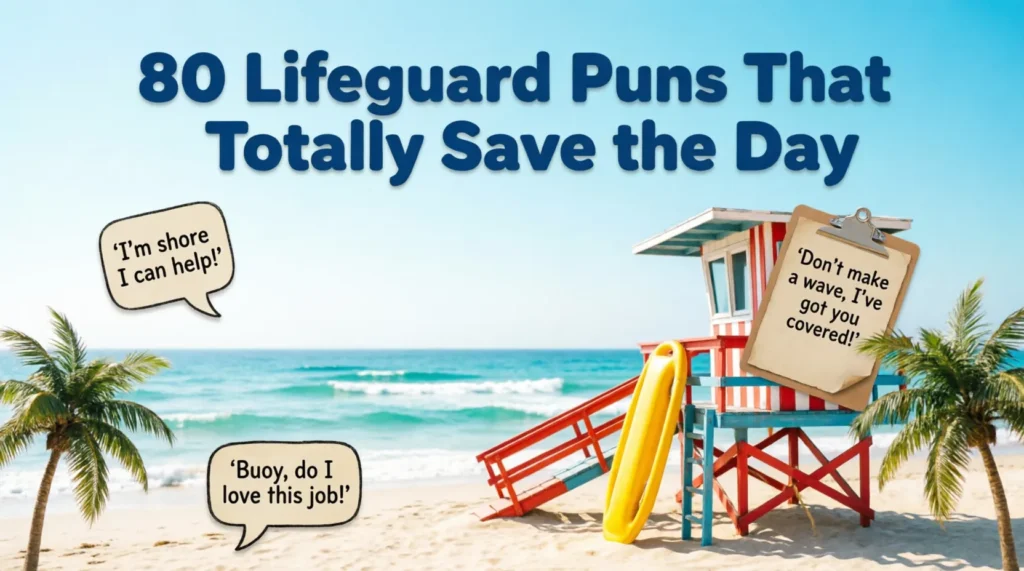
Need some rescue-ready humor? These 80 lifeguard puns and jokes are perfect for Instagram captions, beach party invites, summer camp shirts, birthday cards, and poolside texts. Grab your whistle, dive in, and start copying your favorites before they drift away.
The Best Lifeguard Puns (Start Here)
I’m just here to make waves and save days.
Lifeguards don’t panic — they just go with the flow.
You had me at “no running by the pool.”
That lifeguard energy? Deeply current.
I’m shore you’ll love these jokes.
Rescue me? I’m already drowning in compliments.
Poolside drama is not in my swim lane.
Keep calm and float on.
Short Lifeguard One-Liners
These quick lifeguard puns are ideal for captions, T-shirts, beach signs, and casual summer jokes. Short, punchy, and easy to drop into any conversation.
I’m on bay-watch for bad vibes.
Whistle while you work the shoreline.
Just another day guarding my turf and surf.
I take my pool position very seriously.
Current mood: lifeguard off duty.
Life’s better with a little pool authority.
I’m trained to handle deep situations.
Stay salty, not reckless.
I’m basically the CEO of sunscreen reminders.
Lifeguards always know how to stay afloat socially.
My summer job has serious depth.
I don’t chase people — unless they run near the pool.
Funny Lifeguard Jokes
These Q&A-style jokes are made for pool parties, summer camps, and anyone who enjoys a little splash of goofy humor.
Q: Why did the lifeguard bring a pencil to work? A: To draw the line at horseplay.
Q: Why are lifeguards so calm? A: They’re used to staying above water under pressure.
Q: Why did the lifeguard become a musician? A: They already mastered the whistle.
Q: Why did the swimmer blush? A: The lifeguard caught them doing the backstroke badly.
Q: Why don’t lifeguards gossip? A: They hate stirring up waves.
Q: Why did the lifeguard sit in the shade? A: They needed a little pool-down time.
Q: Why was the lifeguard good at relationships? A: They always knew when someone needed support.
Q: Why did the lifeguard fail at hide-and-seek? A: They’re trained to spot everything.
Q: Why did the lifeguard become a teacher? A: They were tired of repeating “walk please” all day.
Q: Why was the lifeguard great at parties? A: They knew how to keep things from going off the deep end.
Q: Why did the lifeguard bring snacks? A: Saving lives builds an appetite.
Q: Why are lifeguards bad at poker? A: Their rescue face gives everything away.
More similes for excellent by Tone and Context
🌿 Natural & Descriptive “As excellent as a waterfall sparkling in the morning sun” — This captures beauty and freshness, making it useful in descriptive essays and nature writing. “Like a mountain standing proudly above the clouds” — This simile highlights strength and greatness in a vivid way. “As excellent as a field of wildflowers in full bloom” — It expresses colorful perfection and works well in detailed descriptions. “Like the first rain after a long summer” — This shows something refreshing and deeply satisfying. “As excellent as a clear lake reflecting the sky” — Use this to suggest calmness, purity, and outstanding quality.
💛 Warm & Emotional “As excellent as a hug from an old friend” — This creates feelings of comfort and happiness in personal writing. “Like a kind word when you need it most” — It emphasizes encouragement and heartfelt appreciation. “As excellent as laughter shared around the dinner table” — This simile captures warmth and joyful memories. “Like a handwritten note filled with love” — It suggests something thoughtful and deeply meaningful. “As excellent as hearing good news after a hard day” — Use this when describing relief and happiness.
✨ Poetic & Romantic “As excellent as moonlight dancing on the ocean” — This gives writing a dreamy and elegant tone. “Like a melody floating through the night air” — It expresses beauty and harmony in poems and songs. “As excellent as a rose opening at sunrise” — This simile conveys grace and gentle perfection. “Like stars scattered across a velvet sky” — It paints a magical image perfect for romantic writing. “As excellent as a gentle breeze carrying spring blossoms” — Use this to create a soft and poetic feeling.
😄 Playful & Fun “As excellent as finding extra fries at the bottom of the bag” — This brings humor and excitement to casual writing. “Like a superhero arriving at the perfect moment” — It captures the feeling of something amazingly helpful. “As excellent as getting an A on a surprise quiz” — This simile works well for school-related stories and jokes. “Like a puppy wagging its tail at breakfast time” — It adds cheerful energy and fun. “As excellent as a roller coaster on the first ride of summer” — Use this to show excitement and unforgettable enjoyment.
These tone-grouped similes for excellent give you options for every kind of writing — whether you need something soft and poetic or bold and fun. Try picking one from each group and using them in a short paragraph to see how different the same keyword can feel.
Using the keyword in Real Writing Contexts
In a Descriptive Essay Students may need to describe an outstanding performance, achievement, or experience in an essay. A simile can make the description more vivid and memorable for readers. For example, Her science project was as excellent as a clear lake reflecting the sky, impressing everyone who visited the display.
In a Poem Similes for excellent can create beauty and mood in poetry. They help readers picture greatness in a creative and emotional way. Your smile is like a melody floating through the night air, as excellent as moonlight dancing on the ocean.
In a Story or Creative Scene In stories, similes can show how characters react to something amazing or describe a remarkable moment. They help scenes feel more alive and expressive. When Jake tasted his grandmother’s pie, he grinned and declared it as excellent as hearing good news after a hard day while everyone around the table laughed.
In a Social Media Caption or Message Short and fun similes fit perfectly in captions, texts, and casual messages. They make ordinary compliments sound more creative and memorable. Today’s concert was as excellent as finding extra fries at the bottom of the bag—best night ever!
The more you practice placing similes for excellent into real sentences, the more natural your writing will sound — and the more your reader will feel exactly what you want them to feel.
Lifeguard Instagram Captions
Posting beach pics, pool selfies, or summer vacation content? These lifeguard caption ideas keep the vibe sunny and funny.
Serving looks and safety tips all summer long.
Sun’s out, whistle’s out.
Saving lives one tan line at a time.
Too cool for the kiddie pool.
Making waves responsibly.
Pool hair, don’t care — safety first.
Caught between sunscreen and saving the day.
Just coastin’ through lifeguard season.
Deep end energy only.
Beach patrol but make it fashionable.
I’m basically summer’s security system.
Rescue-ready and camera-friendly.
Flirty Lifeguard Puns
These playful lifeguard lines are perfect for crush texts, beach flirting, or summer romance captions with a splash of charm.
Are you caught in a riptide, or did you just sweep me away?
You make my heart do synchronized swimming.
I’d dive in for you every time.
You’re the only distraction on my watch tower.
I think we’ve got serious pool chemistry.
You had me floating from hello.
You’re hotter than pool concrete in July.
Can I interest you in a private rescue lesson?
You make my whistle malfunction.
I’d never leave you stranded in the shallow end.
Our connection is deeper than the diving section.
You must be a perfect wave because I’m totally drawn to you.
Pool Party & Summer Puns
Planning a beach bash or summer event? These lifeguard jokes fit perfectly on invites, banners, playlists, and party decor.
This party’s making serious waves.
No lifeguard on duty — good decisions required.
Welcome to the splash zone of bad dance moves.
Floaties encouraged, drama discouraged.
Lifeguards by day, cannonball champions by night.
Pool rules: hydrate, celebrate, and don’t belly flop emotionally.
Summer forecast: 100% chance of pool noodles.
Swim responsibly but party enthusiastically.
Every great pool party needs a whistleblower.
Catch me guarding the snack table now.
The deep end is where the legends hang out.
This summer’s officially rescue-certified fun.
Kid-Friendly Lifeguard Puns
These clean and silly lifeguard puns are great for kids, camps, school events, and family-friendly summer fun.
Why did the fish trust the lifeguard? Because they seemed reel nice!
I’m shore kids love pool days.
Don’t worry — I’m professionally splash-proof.
Lifeguards always make a splash entrance.
Swimmers have more fun when safety’s in session.
The pool said, “Water you waiting for?”
Every pool noodle deserves emotional support.
I’m just here for the float parade.
Lifeguards are basically summer superheroes in flip-flops.
Keep your cool and your goggles on.
Pool days are my current favorite.
Splish happens — that’s why lifeguards exist.
How to Use These Lifeguard Puns
These lifeguard jokes and witty beach lines work almost anywhere summer fun happens. Add them to Instagram captions for pool selfies, beach vacation photos, or swim team posts to make your content more playful and memorable. Funny lifeguard sayings also fit perfectly on custom T-shirts, water bottles, party invitations, and camp posters.
If you’re planning a summer birthday party or pool event, these puns can spice up decorations, snack tables, and game signs without feeling cheesy. They’re also great conversation starters for group chats, beach trips, and vacation photo dumps.
Teachers, camp counselors, and swim instructors can use clean lifeguard humor for bulletin boards, team names, and kid-friendly activities. Meanwhile, the flirty lines make fun additions to dating bios, summer texts, or playful beach banter. From goofy one-liners to clever rescue jokes, these puns help keep the mood light while bringing plenty of sunny personality to any situation.
Frequently Asked Questions
Q: What is a good pun about lifeguards? A: A good lifeguard pun mixes beach, pool, or rescue themes with clever wordplay. Lines like “I’m just here to make waves and save days” work because they sound playful and naturally fit summer situations.
Q: What are funny lifeguard one-liners? A: Funny lifeguard one-liners are short jokes that reference swimming, whistles, sunscreen, or pool safety. They’re popular for captions, camp shirts, and beach party signs because they’re quick and easy to remember.
Q: Are lifeguard puns good for Instagram captions? A: Yes — lifeguard captions are perfect for pool photos, beach vacations, swim meets, and summer selfies. They add humor and personality without needing a long caption.
Q: What makes a lifeguard pun funny? A: The best lifeguard humor plays on water-related phrases, rescue situations, and summer culture in a clever way. Timing and relatable pool experiences usually make the jokes land better.
Q: What do you call a lifeguard joke? A: Most people simply call them lifeguard puns, pool jokes, or beach humor. Some swimmers also refer to them as “deep-end comedy” when the jokes get extra cheesy.
{
“@context”: “https://schema.org”,
“@type”: “FAQPage”,
“mainEntity”: [
{
“@type”: “Question”,
“name”: “What are some funny lifeguard jokes I can use at a summer party?”,
“acceptedAnswer”: {
“@type”: “Answer”,
“text”: “You can use jokes like, ‘Why did the lifeguard bring a pencil to work? To draw the line at horseplay.’ Another great one is, ‘Why are lifeguards so calm? They’re used to staying above water under pressure.’ These jokes are perfect for breaking the ice!”
}
},
{
“@type”: “Question”,
“name”: “Can I use lifeguard puns for Instagram captions?”,
“acceptedAnswer”: {
“@type”: “Answer”,
“text”: “Absolutely! Puns like ‘Sun’s out, whistle’s out’ or ‘Saving lives one tan line at a time’ are great for keeping your beach pics fun and engaging. They add a humorous touch to your summer memories.”
}
},
{
“@type”: “Question”,
“name”: “What short lifeguard one-liners are best for T-shirts?”,
“acceptedAnswer”: {
“@type”: “Answer”,
“text”: “Consider using slogans like ‘I’m on bay-watch for bad vibes’ or ‘Stay salty, not reckless.’ These are punchy and perfect for casual summer apparel that showcases your lifeguard humor.”
}
},
{
“@type”: “Question”,
“name”: “How can I incorporate lifeguard puns into my summer camp activities?”,
“acceptedAnswer”: {
“@type”: “Answer”,
“text”: “You can use puns like ‘I take my pool position very seriously’ during camp games or as themes for team names. They can also be integrated into camp crafts, such as creating signs or T-shirts that feature these playful phrases.”
}
},
{
“@type”: “Question”,
“name”: “Are there any flirty lifeguard puns for summer romance?”,
“acceptedAnswer”: {
“@type”: “Answer”,
“text”: “Definitely! Try lines like ‘Are you caught in a riptide, or did you just sweep me away?’ or ‘You make my heart do synchronized swimming.’ These playful puns are perfect for text messages or social media posts to catch someone’s attention.”
}
},
{
“@type”: “Question”,
“name”: “What is a good lifeguard joke for kids?”,
“acceptedAnswer”: {
“@type”: “Answer”,
“text”: “A kid-friendly joke is, ‘Why did the swimmer blush? The lifeguard caught them doing the backstroke badly.’ It’s lighthearted and relatable for children at summer camps or pool parties.”
}
},
{
“@type”: “Question”,
“name”: “How can I use lifeguard humor in birthday cards?”,
“acceptedAnswer”: {
“@type”: “Answer”,
“text”: “You could write something like, ‘Hope your birthday makes waves of fun!’ or ‘You’re swimming in another year of awesomeness!’ These puns bring a cheerful, beachy vibe to birthday celebrations.”
}
}
]
}
.ch-faq-block{margin:2em 0}.ch-faq-block h3{font-size:1.3em;font-weight:700;margin:0 0 14px}.ch-faq-item{border:1px solid #e5e7eb;border-radius:10px;margin-bottom:8px;overflow:hidden}.ch-faq-item summary{list-style:none;display:flex;justify-content:space-between;align-items:center;gap:12px;padding:14px 18px;background:#f9fafb;cursor:pointer;font-weight:600;-webkit-user-select:none;user-select:none}.ch-faq-item summary::-webkit-details-marker{display:none}.ch-faq-item summary::marker{display:none}.ch-faq-item summary:hover{background:#f3f4f6}.ch-faq-arrow{font-size:11px;flex-shrink:0;color:#6b7280;transition:transform .2s ease}.ch-faq-item[open] .ch-faq-arrow{transform:rotate(180deg)}.ch-faq-answer{padding:14px 18px;border-top:1px solid #e5e7eb;margin:0}.ch-faq-answer p{margin:0}
Frequently Asked Questions
What are some funny lifeguard jokes I can use at a summer party?▼
You can use jokes like, ‘Why did the lifeguard bring a pencil to work? To draw the line at horseplay.’ Another great one is, ‘Why are lifeguards so calm? They’re used to staying above water under pressure.’ These jokes are perfect for breaking the ice!
Can I use lifeguard puns for Instagram captions?▼
Absolutely! Puns like ‘Sun’s out, whistle’s out’ or ‘Saving lives one tan line at a time’ are great for keeping your beach pics fun and engaging. They add a humorous touch to your summer memories.
What short lifeguard one-liners are best for T-shirts?▼
Consider using slogans like ‘I’m on bay-watch for bad vibes’ or ‘Stay salty, not reckless.’ These are punchy and perfect for casual summer apparel that showcases your lifeguard humor.
How can I incorporate lifeguard puns into my summer camp activities?▼
You can use puns like ‘I take my pool position very seriously’ during camp games or as themes for team names. They can also be integrated into camp crafts, such as creating signs or T-shirts that feature these playful phrases.
Are there any flirty lifeguard puns for summer romance?▼
Definitely! Try lines like ‘Are you caught in a riptide, or did you just sweep me away?’ or ‘You make my heart do synchronized swimming.’ These playful puns are perfect for text messages or social media posts to catch someone’s attention.
What is a good lifeguard joke for kids?▼
A kid-friendly joke is, ‘Why did the swimmer blush? The lifeguard caught them doing the backstroke badly.’ It’s lighthearted and relatable for children at summer camps or pool parties.
How can I use lifeguard humor in birthday cards?▼
You could write something like, ‘Hope your birthday makes waves of fun!’ or ‘You’re swimming in another year of awesomeness!’ These puns bring a cheerful, beachy vibe to birthday celebrations.
Sara Liu holds a Master’s degree in English Education from the University of Washington and has been an educator for over 15 years. She specializes in curriculum development for elementary and middle school students, with a particular focus on figurative language. Sara’s love for similes and metaphors blossomed when she discovered their power to spark imagination and convey emotion. At SimilePedia, Sara creates engaging worksheets and reference guides that help young learners grasp the nuances of figurative language. Her favorite part of writing content is developing resources that make complex concepts accessible to children. She is passionate about nurturing a love for words and creativity in her students, and her contributions are shaped by this commitment.