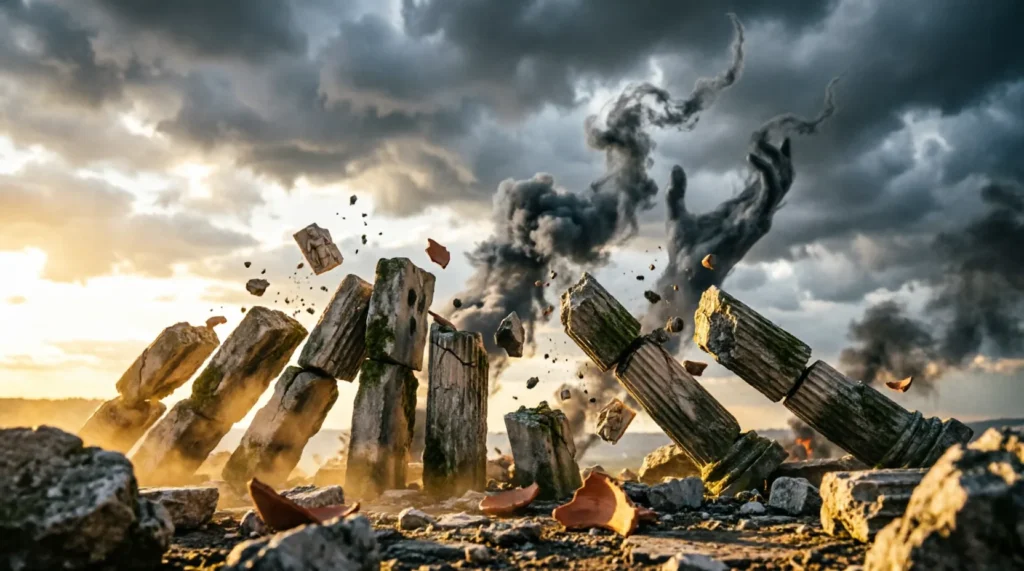
A city block turned to rubble in seconds — how do you make a reader feel that? Similes for destruction compare breaking, collapsing, burning, or violent chaos to something vivid and familiar, using “like” or “as” to paint a stronger picture in the reader’s mind. Below you’ll find powerful examples and tips for using them with confidence in your own writing.
What Are Similes for Destruction? (And Why They Matter)
Imagine you’re writing a story, and a building collapses—but your sentence feels flat. You want your reader to see the dust, feel the impact, and hear the crash. That’s exactly where similes for destruction help you.
Similes for destruction are comparisons that describe damage, collapse, fire, explosions, or chaos by linking them to familiar images using “like” or “as.” For example, saying “the city fell like a house of cards” instantly creates a strong mental picture.
These similes matter because they make your writing more powerful, emotional, and memorable. Language arts educators often say that figurative language helps you connect abstract ideas—like chaos or ruin—to real-life experiences your reader already understands.
Writers, students, and storytellers use similes for destruction to make scenes more dramatic, whether in essays, stories, or poems. Without them, your writing can feel plain. With them, your words feel alive, intense, and unforgettable.
Now that you understand the basics, let’s explore the most vivid examples you can start using right away.
The Best Examples of Similes for Destruction
Here are powerful and creative similes for destruction you can use in your writing. Each one helps you picture chaos, collapse, or devastation in a different way.
The building crumbled like a sandcastle hit by crashing waves.
The explosion spread like wildfire through dry grass.
The city fell like a house of cards in a sudden wind.
The walls collapsed like paper under heavy rain.
The storm tore through the village like an angry beast.
The bridge snapped like a dry twig under pressure.
The fire roared through the forest like a living monster.
The tower broke apart like glass hitting a concrete floor.
The earthquake shook the town like a child shaking a toy box.
The explosion echoed like thunder trapped inside mountains.
The ruins scattered like leaves in a hurricane.
The machinery broke down like a heart stopping suddenly.
The battlefield looked like a storm had chewed it up and spit it out.
The dam burst like a stretched rubber band snapping.
The destruction spread like ink spilling across white paper.
The city lights went out like candles in a strong wind.
The structure collapsed like a biscuit dipped in water.
The wreckage piled up like toys after a wild tantrum.
The explosion hit like a giant fist punching the earth.
The land split like cracked pottery under pressure.
These similes for destruction work because they connect intense events with everyday images you already understand. When you use them, your reader doesn’t just read the scene—they experience it.
Next, let’s learn how you can use them in your own writing.
How to Use Similes for Destruction in Your Writing
If you want your writing to feel stronger and more expressive, you can start using similes for destruction in a simple and natural way.
First, identify what you are describing—fire, collapse, explosion, or damage. Think clearly about the scene you want your reader to imagine.
Next, choose something familiar to compare it with, like glass breaking, wind blowing, or cards falling. You want your reader to instantly recognize the image.
Then, connect the two using “like” or “as” to form your simile. For example: “The tower fell like a stack of blocks knocked over by a child.”
Finally, read your sentence out loud and ask yourself if it feels vivid. If you can see it clearly in your mind, you’re doing it right.
When you practice this, your writing becomes more powerful and engaging. You start to think like a storyteller, not just a student completing an assignment.
Now let’s see how these ideas come alive in creative writing.
Similes for Destruction in Poems and Stories
Writers often use similes for destruction in poems and stories to create emotion, tension, and atmosphere. These comparisons help readers feel the weight of chaos and ruin.
[IMAGE: dramatic ruined city with smoke and collapsing buildings]
Aisha wrote:
“The city crumbled like a dream forgotten at dawn.”
Liam described a storm:
“The wind howled like a broken engine tearing through the night.”
Mina added in her story:
“The old castle fell like sand slipping through open fingers.”
Poets and authors use these comparisons because they add rhythm and emotion. Instead of simply stating facts, they help you feel the destruction, making your writing more powerful and memorable.
Next, let’s look at common mistakes students often make.
“Like a river cutting through stone” — This captures slow but unstoppable destruction and works well in descriptive essays.
“As fierce as a wildfire racing through dry grass” — Use this to show rapid and powerful destruction in nature scenes.
“Like a thunderstorm tearing apart the sky” — This simile creates dramatic imagery and suits vivid descriptions.
“As relentless as ocean waves wearing down a cliff” — It highlights gradual destruction caused over time.
“Like an earthquake splitting the earth in two” — Use this when describing sudden and shocking destruction.
💛 Warm & Emotional (for personal stories, letters, heartfelt writing)
“Like broken glass scattered across memories” — This expresses emotional destruction and sadness in personal writing.
“As painful as watching autumn leaves fall one by one” — Use it to describe slow loss and change.
“Like a candle melting away in silence” — This simile captures quiet destruction and fading hope.
“As heavy as rain washing away old footprints” — It shows the feeling of memories disappearing over time.
“Like a photograph fading with each passing year” — This works well when writing about emotional loss and change.
✨ Poetic & Romantic (for poems, song lyrics, love writing)
“Like shadows swallowing the last light of day” — This creates a mysterious and dramatic mood in poetry.
“As endless as stars disappearing behind storm clouds” — Use this to express beauty mixed with destruction.
“Like a rose losing its petals to the wind” — This simile suggests gentle loss and fading beauty.
“As silent as moonlight slipping beneath dark waters” — It adds a calm and poetic feeling to descriptions of destruction.
“Like echoes fading through an empty valley” — This captures loneliness and the slow disappearance of something precious.
😄 Playful & Fun (for casual use, social media captions, humor)
“Like a toddler attacking a tower of blocks” — This adds humor when describing sudden destruction.
“As messy as a puppy tearing apart a newspaper” — Use this for funny or lighthearted situations.
“Like popcorn exploding all over the room” — This creates a lively image of chaotic destruction.
“As wild as a squirrel raiding a bird feeder” — It works well for playful descriptions of disorder.
“Like a game controller after a championship loss” — This humorous simile fits casual conversations and jokes.
These tone-grouped similes for destruction give you options for every kind of writing — whether you need something soft and poetic or bold and fun. Try picking one from each group and using them in a short paragraph to see how different the same keyword can feel.
Using Similes for Destruction in Real Writing Contexts
In a Descriptive Essay
Students may need to describe destruction caused by weather, war, or natural disasters in essays. A simile helps readers picture the damage more clearly and makes the description stronger. For example, The abandoned village looked as broken as a nest after a storm, with shattered walls and debris covering the streets.
In a Poem
Similes for destruction can create sadness, mystery, or drama in poetry. They help set the mood and make emotions more vivid. Like a rose losing its petals to the wind, dreams vanished into the night, leaving only silence behind.
In a Story or Creative Scene
Writers often use similes to show a character’s feelings or describe damaged surroundings. A creative comparison helps readers feel the tension in the scene. As Maya stepped into the ruined house, the living room looked like an earthquake splitting the earth in two, and fear tightened in her chest.
In a Social Media Caption or Message
Short similes can make captions and messages more expressive and memorable. A funny or dramatic comparison adds personality to casual writing. Today’s cleaning disaster was like a puppy tearing apart a newspaper—complete chaos everywhere!
The more you practice placing similes for destruction into real sentences, the more natural your writing will sound — and the more your reader will feel exactly what you want them to feel.
Common Mistakes Students Make With Similes for Destruction
When learning similes for destruction, it’s normal to make a few mistakes. The good news is you can fix them quickly once you notice them.
Using boring comparisons Sometimes students use very simple ideas like “it was destroyed like something broken.” This doesn’t create a strong image. Try to be more specific and creative.
Mixing metaphors and similes incorrectly Some writers forget to use “like” or “as.” Remember, similes always need those connecting words.
Overusing the same ideas If you keep comparing everything to fire or explosions, your writing can feel repetitive. Try different images like glass, storms, or falling objects.
Making comparisons too confusing If your reader can’t understand the connection, the simile loses its power. Keep it simple and clear.
Forgetting the emotion Destruction isn’t just physical—it often carries emotion. Your similes should reflect that feeling too.
Now let’s turn your learning into fun practice activities.
Fun Activities to Practice Similes for Destruction
Destruction Detective Game Read a short story and highlight every simile you find. Then rewrite one of them in your own creative way.
Before and After Writing Challenge Write a simple sentence like “The building fell.” Then rewrite it using a simile for destruction to make it more powerful.
Draw and Describe Activity Draw a scene of destruction—like a storm or explosion—and write three similes to describe it.
Simile Swap Game Work with a friend and exchange sentences. Improve each other’s similes by making them more vivid.
Poem Creation Challenge Write a short poem using at least three similes for destruction to describe chaos or disaster.
Story Builder Exercise Create a short story where every paragraph includes at least one simile for destruction. Challenge yourself to be creative.
These activities help you practice until using similes feels natural and fun.
Now let’s clear up some myths and mistakes.
What NOT to Do With Similes for Destruction
Don’t use weak or obvious comparisons Saying “it was destroyed like something destroyed” doesn’t help your reader visualize anything.
Don’t overload every sentence If you use too many similes for destruction, your writing can feel crowded and confusing.
Don’t ignore meaning Your simile should make sense in context. Random comparisons confuse the reader instead of helping them.
Don’t copy the same structure repeatedly Variety keeps your writing interesting and engaging.
Frequently Asked Questions About Similes for Destruction
What are simple examples of similes for destruction for students?
Simple examples include phrases like “the wall fell like blocks stacked too high” or “the fire spread like wind through dry leaves.” These help younger students understand destruction in a clear, visual way.
How do you write similes for destruction in a story?
You start by identifying what is being destroyed, then compare it to something familiar using “like” or “as.” For example, “The tower collapsed like a stack of cards in a breeze.”
Why are similes for destruction useful in creative writing?
They help you create strong mental images for your reader. Instead of just saying something was destroyed, you show how it felt and looked in a vivid way.
Can students use similes for destruction in exams?
Yes, especially in descriptive writing tasks. Using similes for destruction can help improve your vocabulary score and make your answers more engaging.
What is the difference between similes and metaphors in destruction descriptions?
A simile uses “like” or “as,” such as “the city fell like sand.” A metaphor says something directly, like “the city was sand collapsing in the wind.”
Final Thoughts on Similes for Destruction
Similes for destruction help you turn simple descriptions into powerful, image-filled writing. Instead of plain sentences, you now have tools to show collapse, chaos, and destruction in a way your reader can clearly imagine.
When you practice regularly, your writing becomes stronger, more creative, and more confident. You start noticing details and turning them into expressive comparisons without even thinking too hard.
Keep experimenting with different images, and don’t be afraid to try new ideas. Every great writer once started exactly where you are now—learning how to make words come alive.
Your writing has the power to paint entire worlds of destruction, and now you know how to shape it.
Frequently Asked Questions
What are similes for destruction and why are they important?▼
Similes for destruction are comparisons that vividly describe chaos, damage, or collapse using ‘like’ or ‘as’. They are important because they create powerful mental images for the reader, making the writing more emotional and memorable.
Can you give examples of similes for destruction used in writing?▼
Sure! Some examples include, ‘the building crumbled like a sandcastle hit by crashing waves’ and ‘the explosion spread like wildfire through dry grass’. These comparisons help convey the intensity of destructive events.
How can I incorporate similes for destruction into my own writing?▼
To use similes for destruction, first identify the event you want to describe, such as an explosion or a collapse. Then, think of a familiar image to compare it to, and connect them with ‘like’ or ‘as’ to form your simile.
Why do language arts educators emphasize the use of figurative language like similes?▼
Language arts educators emphasize figurative language because it helps connect abstract concepts, such as chaos or ruin, to real-life experiences that readers can easily understand. This connection makes writing more engaging and impactful.
What impact do similes for destruction have on the reader's experience?▼
Similes for destruction enhance the reader’s experience by allowing them to visualize and emotionally connect with intense scenes. Instead of merely reading about destruction, readers can feel the chaos and intensity as if they are experiencing it themselves.
Are there specific themes or genres where similes for destruction are particularly effective?▼
Similes for destruction are particularly effective in genres such as fiction, poetry, and essays that focus on dramatic events or emotional experiences. They help to paint vivid scenes that resonate with readers, making them more engaged with the narrative.
How can I avoid using clichés when creating similes for destruction?▼
To avoid clichés, focus on unique comparisons that are specific to your scene or context. Think creatively about fresh images and experiences that can vividly illustrate destruction, rather than relying on overused phrases.
Extra Similes for Destruction
The storm tore the roof off like paper ripped from a notebook.
The building folded like a house of cards in a strong breeze.
The flood swallowed the town like a wave over a sandcastle.
The fire chewed through the barn like a hungry animal.
The wreckage lay scattered like a puzzle dropped from a great height.
Sara Liu holds a Master’s degree in English Education from the University of Washington and has been an educator for over 15 years. She specializes in curriculum development for elementary and middle school students, with a particular focus on figurative language. Sara’s love for similes and metaphors blossomed when she discovered their power to spark imagination and convey emotion. At SimilePedia, Sara creates engaging worksheets and reference guides that help young learners grasp the nuances of figurative language. Her favorite part of writing content is developing resources that make complex concepts accessible to children. She is passionate about nurturing a love for words and creativity in her students, and her contributions are shaped by this commitment.