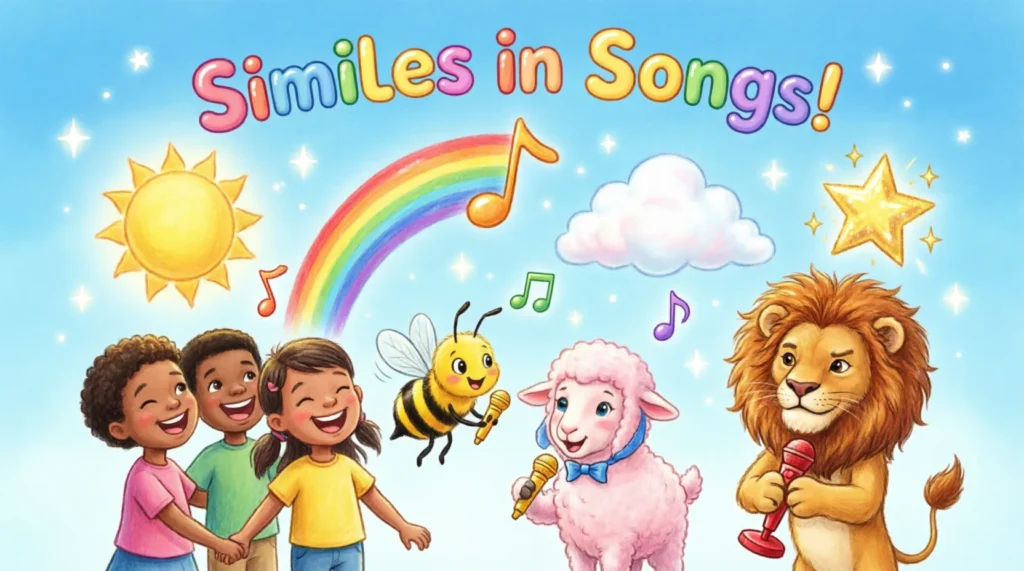
In short, similes in songs for kids are fun comparisons that use words like “like” or “as” to make lyrics more colorful and memorable. Kids hear these comparisons in school songs, cartoons, pop music, and nursery rhymes every day without even realizing it. In this guide, you’ll discover creative examples, writing tips, fun activities, and easy ways to use similes in your own songs and stories.
What Are Similes in Songs for Kids? (And Why They Matter)
Picture this: your teacher asks you to explain how happy a character feels, but all you can think of is “really happy.” That’s where similes can help. They make ordinary descriptions sound exciting and vivid.
A simile is a comparison between two different things using the words “like” or “as.” In songs, similes help listeners imagine feelings, sounds, and scenes more clearly.
For example, a lyric like “shining like the sun” creates a brighter picture in your mind than simply saying “very bright.” That’s why similes in songs for kids are so powerful. They turn simple lyrics into something memorable and emotional.
Language arts educators often encourage students to study song lyrics because music makes figurative language easier to remember. Literacy researchers also note that rhythm and repetition help kids recognize patterns in creative writing.
Songs are especially helpful because you can hear similes, sing them, and use them in your own writing. Once you start noticing them, you’ll hear them almost everywhere.
The Best Examples of Similes in Songs for Kids
[IMAGE: children singing cheerful songs while learning figurative language]
Here are some fun and age-friendly examples of similes in songs for kids. Some sound poetic, while others are playful and silly enough to make students smile.
“You shine like a star in the midnight sky.”
“Happy as a puppy chasing a ball.”
“My heart beats like a marching drum.”
“Bright like fireworks on summer nights.”
“The music danced like leaves in the wind.”
“Her laugh was like bubbles floating upward.”
“Fast as a rocket zooming through space.”
“The melody flowed like a gentle river.”
“Cold like ice cream on a winter day.”
“The classroom buzzed like a busy beehive.”
“Soft as cotton clouds above the playground.”
“His voice cracked like popcorn in a pan.”
“The rain tapped like tiny fingers on the roof.”
“Excited as kids on the last day of school.”
“The guitar sang like birds at sunrise.”
“The moon glowed like a silver lantern.”
“The beat bounced like a basketball on concrete.”
“Warm as hot cocoa by the fireplace.”
“The chorus spread like sunshine across the room.”
“Her smile sparkled like diamonds in the light.”
“Loud like thunder rolling through the hills.”
“The tune floated like feathers in the breeze.”
“Busy as squirrels gathering acorns.”
“The singer soared like an eagle in the sky.”
“Sweet as strawberries picked in summer.”
These examples work well because they create strong mental pictures. You can almost hear, feel, or see the comparison happening.
Many creative writing teachers use song lyrics to teach imagery because music naturally connects emotion with language. The best similes make listeners feel something while also helping them imagine a scene more clearly.
Now that you’ve seen great examples, you might wonder how to create your own. The good news is that you don’t need to be a songwriter to do it.
How to Use Similes in Songs for Kids in Your Writing
Writing your own similes can feel tricky at first, but it gets easier with practice. Here are a few simple steps you can try today.
Pick a feeling or object you want to describe.
Think about emotions, sounds, weather, or movement. Ask yourself, “What does this remind me of?”
Compare it to something familiar.
Kids understand comparisons better when they connect to everyday experiences like sports, pets, snacks, games, or nature.
Use “like” or “as” naturally.
Don’t force the comparison. A smooth simile sounds easy to read or sing aloud.
Read your line out loud.
Since songs depend on rhythm, your simile should sound musical when spoken or sung.
For example:
“Her voice floated like feathers across the playground song.”
That sentence works because it creates movement, softness, and rhythm all at once. As you practice using similes in songs for kids, your writing will start sounding more creative and expressive.
Similes in Songs for Kids in Poems and Stories
[IMAGE: student writing song lyrics in a notebook]
Similes appear naturally in poems, stories, and song lyrics because they help writers paint pictures with words. They also add rhythm and emotion, which is especially important in children’s music.
Here are a few short fictional examples.
Amina sang softly beneath the stars.
“Your words drift like snowflakes in the night, Gentle as lanterns glowing bright.”
Carlos tapped his pencil during music class.
“The drumbeat bounced like rubber balls, Echoing loudly through the halls.”
Mei listened to the choir rehearse after school.
“The voices rose like birds in spring, Filling the room with everything.”
Poets and songwriters use similes because they help listeners connect emotionally to the words. A simple comparison can make a lyric feel exciting, funny, peaceful, or even magical.
If you pay attention while listening to children’s songs, movie soundtracks, or school performances, you’ll probably start spotting similes everywhere.
More similes in songs for kids by Tone and Context
🌿 Natural & Descriptive “As bright as a rainbow after rain” — Captures cheerful energy and works well when describing happy songs or lively moments. “Like leaves dancing in the breeze” — Shows gentle movement and is useful for describing calm melodies. “As clear as a mountain stream” — Highlights pure, easy-to-understand lyrics in a song. “Like sunlight spilling across a meadow” — Creates a vivid image of warmth and joy in music. “As peaceful as snow falling at dawn” — Expresses a quiet and soothing feeling in a song.
💛 Warm & Emotional “Like a hug from a best friend” — Shows comfort and affection, making it great for personal memories. “As sweet as a bedtime story” — Captures kindness and warmth in lyrics or melodies. “Like laughter around a family table” — Describes songs that bring people together and create happy memories. “As gentle as a mother’s smile” — Conveys care and tenderness in emotional writing. “Like a candle glowing in the dark” — Suggests hope and comfort during difficult moments.
✨ Poetic & Romantic “Like stars shining across the night sky” — Creates a dreamy mood that fits poems and song lyrics. “As lovely as petals floating on water” — Adds elegance and beauty to descriptive writing. “Like whispers carried by the wind” — Gives a soft and mysterious feeling to a scene. “As magical as moonlight on the sea” — Brings wonder and imagination to poetic language. “Like a melody wrapped in dreams” — Expresses beauty and creativity in a graceful way.
😄 Playful & Fun “As bouncy as popcorn in a pan” — Shows excitement and works well in humorous writing. “Like monkeys swinging through the trees” — Adds a silly and energetic image to a sentence. “As cheerful as a clown at a birthday party” — Captures happiness and fun in a lively way. “Like bubbles popping in the sunshine” — Suggests lighthearted joy and excitement. “As lively as kids racing across the playground” — Describes energetic songs and playful moments.
These tone-grouped similes for similes in songs for kids give you options for every kind of writing — whether you need something soft and poetic or bold and fun. Try picking one from each group and using them in a short paragraph to see how different the same keyword can feel.
Using similes in songs for kids in Real Writing Contexts
In a Descriptive Essay A student might describe a favorite song or explain how music creates certain feelings. Adding a simile makes the description more colorful and memorable. For example, The tune floated through the classroom like leaves dancing in the breeze, making everyone feel calm and relaxed.
In a Poem Similes in songs for kids can help create mood and make lines sound more musical. They add emotion and vivid images that readers can picture easily. The melody glowed like a candle in the dark, and hope rose as bright as a rainbow after rain.
In a Story or Creative Scene Similes in songs for kids can show how characters react to music or describe the atmosphere around them. They make scenes feel more alive and expressive. As Mia listened to the campfire song, the voices around her felt as peaceful as snow falling at dawn, and she smiled quietly.
In a Social Media Caption or Message Short similes work well in casual writing because they quickly share emotions in a fun way. They can make captions sound more creative and cheerful. This song is as bouncy as popcorn in a pan—can’t stop singing along! 🎵
The more you practice placing similes for similes in songs for kids into real sentences, the more natural your writing will sound — and the more your reader will feel exactly what you want them to feel.
Common Mistakes Students Make With Similes in Songs for Kids
Everyone makes mistakes while learning figurative language. That’s completely normal. Here are some common problems students run into and how you can fix them.
Using comparisons that don’t make sense
Sometimes students compare two things that have nothing in common. Try choosing objects that share a clear feeling, shape, sound, or movement.
Forgetting to use “like” or “as”
A simile needs comparison words. Without them, your sentence may turn into a metaphor instead.
Making similes too long
Song lyrics should sound smooth and easy to remember. Shorter similes often sound stronger and more musical.
Repeating the same comparisons over and over
Phrases like “busy as a bee” are fine, but your writing becomes more interesting when you create original comparisons.
Writing similes that don’t fit the mood of the song
A silly simile may not work in a serious or emotional song. Think about the feeling you want your audience to have.
Creative writing teachers often remind students that even professional songwriters revise their lyrics many times. Practice is part of the process.
Fun Activities to Practice Similes in Songs for Kids
[IMAGE: classroom activity with children creating song lyrics]
Learning figurative language becomes much easier when you turn it into a game. Try these fun activities at home or in class.
Song Lyric Hunt
Listen to a kid-friendly song and write down every simile you hear. Challenge yourself to explain what each comparison means.
Finish the Simile Game
Start a sentence like “The music was like…” and let friends or classmates finish it in creative ways.
Draw Your Simile
Grab a pencil and illustrate a simile from a song. Drawing helps you visualize the imagery more clearly.
Create a Mini Chorus
Write four short song lines using at least two similes. Try reading them aloud to hear the rhythm.
Simile Match-Up Cards
Write emotions on one set of cards and objects on another. Mix and match them to invent funny or poetic comparisons.
Rewrite Plain Sentences
Turn boring sentences into colorful lyrics. Change “The singer was loud” into “The singer roared like thunder.”
Activities like these help you remember figurative language faster because you’re actively creating instead of only reading.
What NOT to Do With Similes in Songs for Kids
Sometimes students hear confusing advice about figurative language online or in class. Here are a few myths worth avoiding.
Don’t think every song line needs a simile
Too many comparisons can make lyrics sound crowded. A few strong similes usually work better.
Don’t copy famous lyrics word for word
It’s okay to learn from songs, but your own comparisons will make your writing more original.
Don’t confuse rhyming with similes
A lyric can rhyme without using figurative language. Similes specifically compare two things using “like” or “as.”
Don’t make similes overly complicated
The best similes in songs for kids are usually simple enough to understand quickly while still sounding creative.
Once you avoid these habits, your writing will sound smoother and more natural.
Frequently Asked Questions About Similes in Songs for Kids
What is a simile in a kids’ song?
A simile in a kids’ song is a comparison using “like” or “as.” It helps listeners imagine feelings, sounds, or actions more clearly. For example, “bright like the sun” is a simple simile many children can easily understand.
Why do children’s songs use similes?
Children’s songs use similes because they make lyrics more vivid, emotional, and memorable. Music and figurative language work well together because rhythm helps kids remember comparisons more easily.
How can students find similes in songs?
You can listen for comparison words like “like” and “as.” When a lyric compares one thing to another, it’s usually a simile. Reading lyrics while listening to music can also help you spot them faster.
Are similes in songs good for school learning?
Yes, they are excellent for learning. Language arts educators often use songs to teach figurative language because students stay engaged and remember examples more clearly through music.
What is the difference between similes and metaphors in songs?
A simile uses “like” or “as” to compare things, while a metaphor says one thing actually is another thing. For example, “Her smile was like sunshine” is a simile, but “Her smile was sunshine” is a metaphor.
Final Thoughts on Similes in Songs for Kids
Learning about similes in songs for kids can make reading, writing, and listening much more exciting. Instead of using plain descriptions, you can create lyrics and stories that sound vivid, emotional, and memorable.
You explored catchy examples, writing tips, common mistakes, and fun classroom activities. You also learned how songwriters use comparisons to create rhythm, imagery, and emotion.
The more you listen to music and practice writing your own similes, the easier figurative language will become. Even small comparisons can make your words feel alive.
Keep experimenting, keep listening closely to lyrics, and remember that creative writing gets stronger every time you practice.
Frequently Asked Questions
What are some examples of similes in songs for kids?▼
Some catchy examples include “You shine like a star in the midnight sky” and “Happy as a puppy chasing a ball.” These comparisons make the lyrics more vivid and memorable for young learners.
Why are similes important in songs for kids?▼
Similes help create strong mental images, making descriptions more exciting and relatable. They allow kids to imagine feelings and scenes more clearly, enhancing their emotional connection to the music.
How can I use similes in my own writing?▼
To create your own similes, start by picking a feeling or object you want to describe. Then think of a comparison using “like” or “as” that will make your description more colorful and engaging.
What role do similes play in teaching language arts?▼
Educators often use song lyrics to teach similes because the rhythm and repetition help students remember figurative language. This method connects music with creative writing, making it easier for kids to grasp these concepts.
How do similes enhance children's understanding of emotions?▼
Similes translate abstract feelings into relatable images, such as saying someone is “excited as kids on the last day of school.” This makes emotional concepts more accessible for young learners.
Can you give me a tip for teaching similes to kids?▼
Engage children by having them listen to songs and identify similes together. Encourage them to create their own similes based on their experiences, which can make the learning process interactive and fun.
What types of songs typically use similes?▼
Similes are commonly found in school songs, pop music, cartoons, and nursery rhymes. These musical formats make it easy for children to encounter and learn figurative language in an enjoyable way.
Sara Liu holds a Master’s degree in English Education from the University of Washington and has been an educator for over 15 years. She specializes in curriculum development for elementary and middle school students, with a particular focus on figurative language. Sara’s love for similes and metaphors blossomed when she discovered their power to spark imagination and convey emotion. At SimilePedia, Sara creates engaging worksheets and reference guides that help young learners grasp the nuances of figurative language. Her favorite part of writing content is developing resources that make complex concepts accessible to children. She is passionate about nurturing a love for words and creativity in her students, and her contributions are shaped by this commitment.