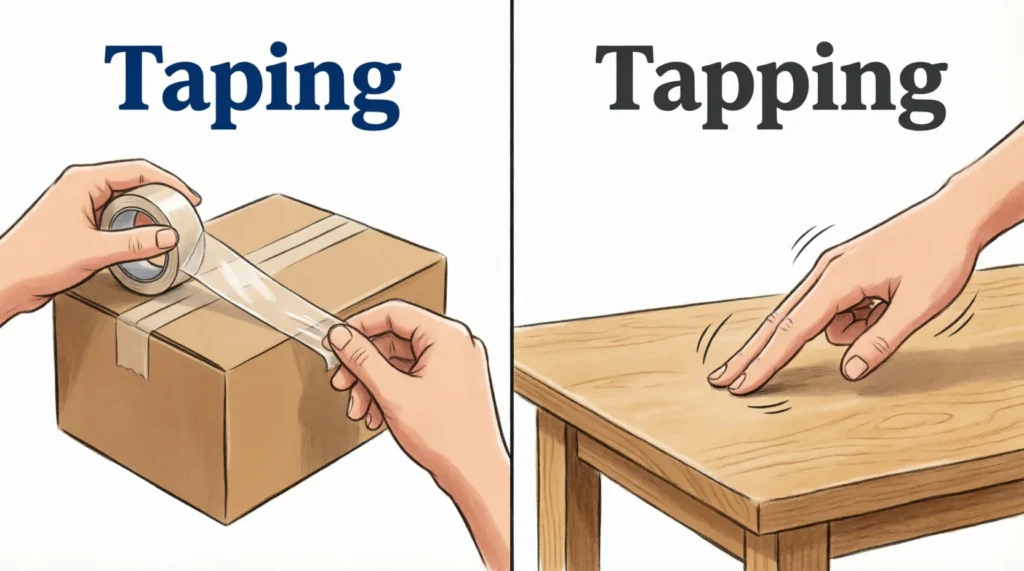
In short, taping vs tapping is about knowing the difference between two similar-looking words with very different meanings. “Taping” usually means attaching something with tape or recording audio or video, while “tapping” means lightly touching, striking, or accessing something. Keep reading to learn when to use each word with confidence.
[IMAGE: Student comparing the words “taping” and “tapping” in a notebook]
What Are Taping vs Tapping? (And Why They Matter)
Have you ever paused while writing because you weren’t sure whether to write taping or tapping? Maybe your teacher asked you to edit a sentence, or your spell checker didn’t catch the mistake because both words are spelled correctly.
Taping vs tapping is a common word-choice question in English. Although the words differ by only one letter, they have completely different meanings and are used in different situations.
Taping comes from the word tape. It can mean fastening something with adhesive tape or recording sound or video. Tapping comes from the verb tap, which means touching something lightly, knocking gently, or selecting something on a touchscreen.
Language arts educators remind students that choosing the correct word improves writing, reading comprehension, and communication. Literacy researchers also note that understanding similar-looking words helps readers become stronger writers and more careful editors.
Now that you know the basic difference, let’s look at clear examples you can remember.
The Best Examples of Taping vs Tapping
She spent the afternoon taping the torn poster back together.
Dad is taping the soccer game so we can watch it later.
The teacher was taping the class presentation for absent students.
Emma finished taping the gift before adding a ribbon.
We are taping the science project to the display board.
The bird kept tapping on the window every morning.
Liam was tapping his pencil while thinking about the answer.
Maya started tapping her foot when the music began.
The doctor was tapping gently on the patient’s knee during the checkup.
You can unlock the tablet by tapping the screen.
He kept tapping on the microphone to test the sound.
Sofia heard someone tapping softly at the door.
The woodpecker spent hours tapping the tree trunk.
Ava smiled while tapping the rhythm on the desk.
The app opens after tapping the blue button.
We finished taping the package before mailing it.
The film crew is taping today’s interview.
Noah was tapping his fingers as he waited for the bus.
She continued taping family memories with an old video camera.
The child enjoyed tapping the piano keys to make different sounds.
These examples work because each sentence clearly matches the meaning of the word. You can picture someone fastening with tape, recording a video, gently knocking, or lightly touching a surface. Strong imagery helps you remember which spelling belongs in each situation.
As you read and write more, spotting the right choice will become much easier.
How to Use Taping vs Tapping in Your Writing
Think about the action first. If someone is using tape or recording something, choose taping. If someone is touching, knocking, or pressing lightly, choose tapping.
Ask yourself whether tape is involved. If the answer is yes, taping is probably correct.
Look for movement. Gentle knocking, finger movements, or touching a screen usually mean tapping.
Read your sentence aloud. If the meaning sounds wrong, check whether you accidentally used the other word.
Example:
“Aisha kept tapping the tablet screen while her brother was taping the school play.”
When you focus on the action instead of just the spelling, you will make fewer mistakes.
Taping vs Tapping in Poems and Stories
Creative writers often use both words naturally because they describe everyday actions that readers can easily imagine.
Story Example
“Mateo finished taping the treasure map to the wall. Suddenly, he heard someone tapping gently on the window.”
Poem Example
“Tap, tap, went the rain, Tapping softly on the glass. Inside, Grandma smiled while taping Old family photos that would last.”
Story Example
“Priya kept tapping her notebook while thinking of the perfect ending. Her teacher was busy taping the class performance for parents.”
Creative writing teachers encourage students to choose precise verbs because they create stronger images and help readers see the story clearly.
Common Mistakes Students Make With Taping vs Tapping
Using “taping” when someone is touching a screen This happens often because the words look similar. Remember that phones and tablets are usually tapped, not taped.
Using “tapping” when talking about recording a video If someone records a performance or television show, they are taping it.
Forgetting that “taping” has two meanings Many students remember adhesive tape but forget that it also means recording audio or video.
Choosing the word because it sounds similar Similar pronunciation can trick you. Always think about the action in the sentence before deciding.
Ignoring the context Context gives you clues. A package, poster, or camera suggests taping, while a finger, door, keyboard, or screen usually suggests tapping.
Everyone makes these mistakes while learning. The good news is that each correction helps you become a stronger writer.
Fun Activities to Practice Taping vs Tapping
Picture Match Grab a pencil and match pictures to the correct word. Is someone wrapping a package or touching a phone screen?
Sentence Sort Write ten sentences on small cards. Challenge yourself to sort them into “taping” and “tapping” piles.
Act It Out Play a guessing game with friends. One person pretends to tape or tap something, and everyone else guesses the correct word.
Drawing Challenge Draw two comic panels. In one, someone is taping a project. In the other, someone is tapping on a door. Then write captions.
Editing Hunt Read a short paragraph and circle every place where “taping” or “tapping” appears. Check whether each one is correct.
Create Your Own Worksheet Make ten fill-in-the-blank sentences using both words. Exchange worksheets with a classmate or family member and compare answers.
Practicing in different ways helps you remember the difference long after the lesson ends.
What NOT to Do With Taping vs Tapping
Don’t assume the words mean the same thing. They look alike, but they describe different actions.
Don’t rely only on spell check. Both words are correctly spelled, so your computer may not notice the mistake.
Don’t guess based on pronunciation. Think about what the person is actually doing in the sentence.
Don’t forget that “taping” can also mean recording. Many learners remember tape for wrapping but overlook its recording meaning.
Frequently Asked Questions About Taping vs Tapping
What is the difference between taping and tapping?
Taping usually means fastening something with tape or recording audio or video. Tapping means touching, knocking, or pressing something lightly.
Is tapping used for phones and tablets?
Yes. When you touch a button or icon on a touchscreen, you are tapping the screen. You are not taping it.
Can taping mean recording a video?
Yes. Although digital technology is common today, people still use taping to describe recording a television show, interview, or performance.
How can I remember taping vs tapping?
Think about the letter e in tape. If tape or recording is involved, choose taping. If you imagine a light touch or knock, choose tapping.
Are taping and tapping commonly confused?
Yes. They are often confused because they differ by only one letter. Reading the whole sentence carefully usually makes the correct choice clear.
Final Thoughts on Taping vs Tapping
Understanding taping vs tapping is easier once you focus on the action instead of the spelling. One word connects to tape or recording, while the other describes a light touch, knock, or press.
As you read books, complete assignments, or write stories, you will notice these words appearing in different contexts. Paying attention to those clues helps you choose the correct one every time.
Language arts educators encourage students to build vocabulary through real examples rather than memorizing long lists. When you understand how words work in everyday situations, your writing becomes clearer and more natural.
Keep practicing, keep reading, and remember that every new word you master makes you a more confident English writer. You’ve got this!
Jamal Rodriguez is a poet and author who has been writing professionally for over a decade. With a Bachelor’s degree in Creative Writing, Jamal’s expertise lies in the use of vivid imagery and emotional depth in poetic language. Fascinated by the limitless possibilities of similes and metaphors, he joined SimilePedia to share his knowledge with budding writers. Jamal focuses on creating content for creative writers and poets, helping them understand the emotional resonance that figurative language can evoke. Through his work, he aims to inspire others to explore their own creative boundaries and embrace the beauty of language as an art form. His contributions include a range of exercises that stimulate imagination across all grade levels.