In short, similes for smelling bad are comparisons that help you describe awful odors in a creative and memorable way. You’ll find funny, dramatic, and vivid examples that can make your stories, poems, and school assignments much more interesting. Keep reading to discover examples you can actually use in your own writing today.
What Are Similes for Smelling Bad? (And Why They Matter)
Have you ever stared at a writing assignment and thought, “How do I describe this terrible smell without just saying ‘it stinks’?” You’re not alone. Many students want their writing to sound more colorful but struggle to find the right words.
A simile compares one thing to another using the words “like” or “as.” Similes for smelling bad help you describe unpleasant odors in a way readers can instantly imagine.
Instead of writing “The locker room smelled bad,” you could write, “The locker room smelled like rotten eggs left in the sun.” Suddenly, your reader can almost smell it too.
Language arts educators and literacy researchers often encourage students to use sensory details because they make writing stronger and easier to picture. When you use similes well, your stories feel more alive, emotional, and memorable.
Once you understand how these comparisons work, you can start building your own creative descriptions with confidence.
The Best Examples of Similes for Smelling Bad
[IMAGE: Student wrinkling nose while brainstorming funny bad smell similes]
The garbage smelled like rotten fish baking on hot pavement.
His gym socks smelled as bad as spoiled milk in a locked car.
The kitchen smelled like eggs forgotten for a month.
The old basement smelled like wet dogs trapped in the rain.
The science lab smelled as sour as moldy cheese.
The trash can smelled like a swamp on a summer afternoon.
Her lunchbox smelled as awful as onions left in the sun.
The abandoned fridge smelled like something had died inside it.
The locker room smelled as nasty as muddy sneakers after a football game.
The garbage truck smelled like rotten vegetables mixed with dirty socks.
The sink smelled as foul as a sewer after heavy rain.
His breath smelled like garlic and old cheese together.
The pond smelled as bad as spoiled seafood.
The bus smelled like sweaty socks stuffed into a backpack.
The alley smelled as disgusting as rotten cabbage.
The compost bin smelled like bananas melting in the heat.
The old carpet smelled as musty as a forgotten attic.
The trash bag smelled like leftovers abandoned for weeks.
The public bathroom smelled as sharp as sour vinegar.
The refrigerator smelled like spoiled meat hidden behind the shelves.
The dog kennel smelled as strong as a barn full of dirty hay.
The classroom smelled like tuna sandwiches left overnight.
The muddy shoes smelled as terrible as wet garbage.
The drain smelled like dirty water mixed with rotten eggs.
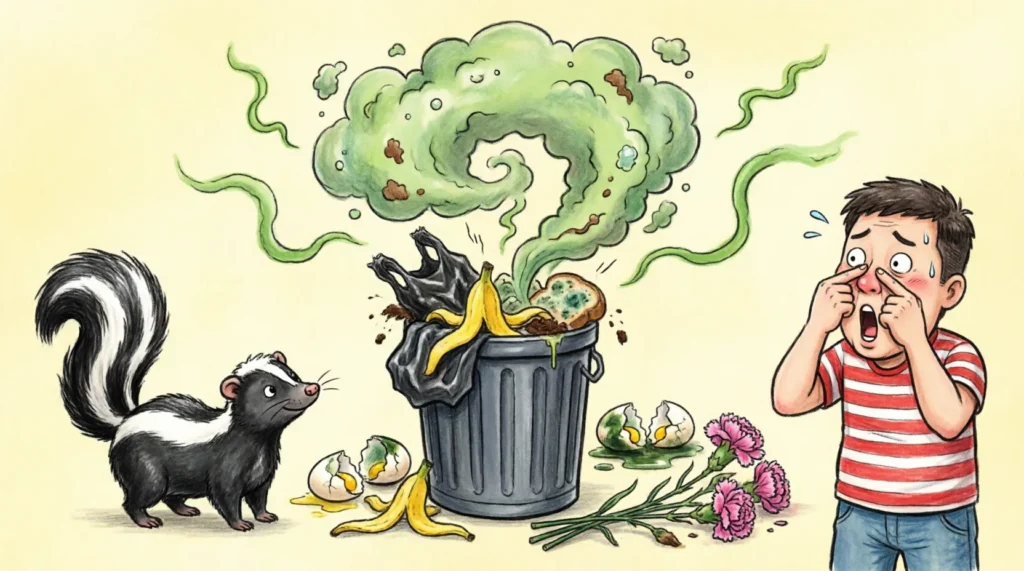
The dumpster smelled as horrible as a dead skunk on the roadside.
The room smelled bad, like a gym bag left in a hot car all week.
It reeked like old milk forgotten at the back of the fridge.
The odor hit like a dumpster baking in the afternoon sun.
It smelled as foul as a fish market at closing time.
The stench crept in like a skunk had wandered through the kitchen.
It smelled like sweaty socks stuffed inside a locked locker.
Some of these similes are funny, while others sound dramatic or gross. That variety helps you match the mood of your writing.
These examples work well because they use strong sensory imagery. Readers can connect the smell to real-life experiences, which makes your writing more vivid and emotionally powerful.
Now that you’ve seen good examples, you’re ready to learn how to create your own.
How to Use Similes for Smelling Bad in Your Writing
Using similes well is easier than you might think. You just need to focus on helping your reader imagine the smell clearly.
Think about the exact kind of bad smell.
Not all unpleasant smells are the same. Is it sour, rotten, sweaty, smoky, or musty? The more specific you are, the stronger your simile becomes.
Compare it to something familiar.
Readers understand smells better when you compare them to common experiences. Rotten eggs, dirty socks, and spoiled milk are popular choices because most people know those odors.
Match the mood of your writing.
A funny story might use silly similes, while a scary story might use darker descriptions. Your comparison should fit the tone you want.
Don’t overuse similes.
One or two strong similes are usually enough in a paragraph. Too many can make your writing feel crowded.
For example:
“The cave smelled like wet garbage left under the blazing sun, and Mia covered her nose before stepping inside.”
That single sentence gives your reader a clear image and emotional reaction at the same time.
As creative writing teachers often explain, sensory details make readers feel connected to the scene instead of simply observing it.
Similes for Smelling Bad in Poems and Stories
[IMAGE: Notebook page filled with descriptive writing and poetry]
Writers often use similes for smelling bad in poems, stories, and even song lyrics because smell creates strong emotional reactions. A single vivid comparison can instantly change the mood of a scene.
Here are a few short fictional examples you can learn from.
“Grandpa’s fishing shed Smelled like old boots in the rain, And Amir nearly ran away.”
“The hallway smelled as sour as forgotten yogurt, and Sofia pinched her nose while hurrying to class.”
“Beneath the bridge, the river smelled like garbage drifting through a storm, making Mateo step back in disgust.”
Notice how these examples do more than describe odor. They also show feelings, reactions, and atmosphere.
Poets and authors use this kind of figurative language because it creates stronger imagery and rhythm. When you write creatively, smells can help your readers feel like they are inside the story with your characters.
That’s why sensory writing is such an important skill in language arts classrooms.
Common Mistakes Students Make With Similes for Smelling Bad
Everyone makes mistakes while learning figurative language. The good news is that these problems are easy to fix once you notice them.
Using comparisons nobody understands
If your reader has never experienced the smell you mention, your simile may feel confusing. Try using common smells people can easily imagine.
Making the simile too long
Sometimes students add too many details and the sentence becomes hard to follow. Keep your simile short and clear whenever possible.
Repeating the same comparison again and again
Writing “like rotten eggs” five times in one essay gets boring. Challenge yourself to use different comparisons.
Forgetting the tone of the story
A silly simile may not fit a serious or emotional scene. Think about the mood before choosing your comparison.
Using weak or vague descriptions
Saying something smelled “bad like trash” is less vivid than saying it smelled “like garbage baking in the summer heat.” Specific details create stronger imagery.
Creative writing teachers often remind students that strong similes paint pictures in the reader’s mind. Small changes can make your descriptions much more memorable.
Once you avoid these common mistakes, your writing will sound more natural and confident.
“Like a swamp baking in the summer sun” — Captures a heavy, damp smell that seems to hang in the air for a long time.
“As foul as a cave full of bats” — Creates a vivid image of a strong, stale odor in descriptive writing.
“Like seaweed left on the beach for days” — Works well when describing a sour, rotting smell in nature.
“As musty as an old forest log after rain” — Describes a damp, earthy odor that feels forgotten and neglected.
“Like stagnant water in an abandoned pond” — Emphasizes an unpleasant smell that feels still and unhealthy.
💛 Warm & Emotional (for personal stories, letters, heartfelt writing)
“Like forgotten gym shoes after vacation” — Adds a humorous but relatable touch to personal memories.
“As unpleasant as yesterday’s lunch left in a backpack” — Perfect for everyday stories where readers can easily picture the smell.
“Like wet clothes forgotten in the washing machine” — Expresses a stale odor in a familiar and realistic way.
“As sour as spoiled milk on a hot day” — Helps readers quickly understand just how unpleasant the smell is.
✨ Poetic & Romantic (for poems, song lyrics, love writing)
“Like a shadow carrying yesterday’s scent” — Creates a mysterious image that fits reflective or emotional poetry.
“As bitter as forgotten smoke in the wind” — Suggests an unpleasant smell lingering long after its source is gone.
“Like wilted flowers left beneath gray skies” — Blends beauty with decay for a more poetic comparison.
“As lingering as old ashes after the fire fades” — Highlights how a bad smell can remain even when everything else has changed.
😄 Playful & Fun (for casual use, social media captions, humor)
“Like a trash can that missed pickup day” — A funny exaggeration that’s perfect for jokes and lighthearted writing.
“As stinky as a monster’s forgotten socks” — Great for younger readers and humorous stories.
“Like a lunchbox hiding last month’s sandwich” — Paints a silly mental picture that’s easy to imagine.
“As smelly as a dragon’s morning breath” — Adds fantasy and humor to playful conversations.
“Like a cheese factory on the hottest day of summer” — Uses exaggeration to create a memorable and funny comparison.
These tone-grouped similes for similes for smelling bad give you options for every kind of writing — whether you need something soft and poetic or bold and fun. Try picking one from each group and using them in a short paragraph to see how different the same similes for smelling bad can feel.
Using similes for smelling bad in Real Writing Contexts
In a Descriptive Essay
When you’re describing a place, object, or situation, a simile helps readers imagine the unpleasant smell instead of simply being told about it. This makes your description more vivid and memorable. Example:The abandoned shed smelled like seaweed left on the beach for days, making everyone step back as soon as the door opened.
In a Poem
Similes for smelling bad can create a gloomy, mysterious, or even humorous mood in poetry. Choosing an unusual comparison helps your images stay with the reader. Example:The wind drifted by, as bitter as forgotten smoke in the wind, carrying memories no one wanted to keep.
In a Story or Creative Scene
A well-placed simile can reveal how a character reacts to a bad smell or help readers picture the setting more clearly. It adds emotion without using many extra words. Example:Mia covered her nose as the hallway smelled like a trash can that missed pickup day, and she hurried toward the open window.
In a Social Media Caption or Message
Short, funny similes work well in casual writing because they quickly grab attention and make people smile. Keep the comparison simple and relatable. Example:“Someone forgot the fridge again—it smells like a lunchbox hiding last month’s sandwich! 😂”
The more you practice placing similes for smelling bad into real sentences, the more natural your writing will sound — and the more your reader will feel exactly what you want them to feel.
Fun Activities to Practice Similes for Smelling Bad
[IMAGE: Classroom activity with students creating funny smell comparisons]
Practicing figurative language can actually be fun when you turn it into a game or challenge.
Create a “Smell Match” game
Write different bad smells on slips of paper and match them with funny comparisons. You can play this with classmates or family members.
Try a sensory writing challenge
Grab a pencil and describe five imaginary smells using similes. Challenge yourself not to repeat the same ideas.
Draw and describe
Draw a messy room, garbage can, or muddy locker room. Then write three similes describing how it smells.
Read books and hunt for similes
While reading stories or poems, look for sensory descriptions. Keep a notebook of strong similes you discover.
Play the “Improve the Sentence” game
Take boring sentences like “The shoes smelled bad” and rewrite them with vivid comparisons. This helps you practice making your writing stronger.
Create a classroom simile wall
Students can post funny or creative similes on the wall each week. Seeing other people’s ideas can inspire your own writing.
These activities help you practice without making writing feel stressful or repetitive.
What NOT to Do With Similes for Smelling Bad
Don’t force every sentence to include a simile
Too many comparisons can make your writing sound unnatural. Use similes only when they truly improve the description.
Don’t copy examples word-for-word all the time
It’s okay to learn from examples, but your writing becomes more interesting when you create your own original comparisons.
Don’t confuse similes with metaphors
A simile uses “like” or “as.” If those words are missing, you may actually be writing a metaphor instead.
Don’t make the smell description unrelated
A comparison should connect clearly to the odor you are describing. Random comparisons can confuse your readers instead of helping them imagine the scene.
Once you understand these habits, you’ll start using figurative language much more naturally and effectively.
Bonus: More Funny Similes for Smelling Bad
Need one more punchline for a truly awful smell? These bonus similes for smelling bad add extra humor for stories, jokes, and creative writing. If you liked these, check out our similes for sweating for even more comparisons.
It smelled like a locker room that had never met a window.
The fridge reeked like a science experiment nobody claimed.
His shoes smelled like a swamp that skipped laundry day.
The room stank like a gym bag left in a hot car all week.
It smelled like something died and then thought better of leaving.
Frequently Asked Questions About Similes for Smelling Bad
What is a simile for smelling bad?
A simile for smelling bad compares an unpleasant odor to something familiar using “like” or “as.” For example, “The trash smelled like rotten eggs” helps readers imagine the smell more clearly.
How do you use similes for smelling bad in a sentence?
You can add them while describing places, people, food, or objects. For example: “The locker room smelled as bad as spoiled milk on a hot day.”
Why do writers use similes for smelling bad?
Writers use them to create stronger sensory imagery and emotional reactions. A vivid smell description can make readers feel disgusted, amused, or uncomfortable in a memorable way.
Are similes for smelling bad good for school writing?
Yes, they can improve stories, poems, and descriptive paragraphs when used correctly. Language arts educators often encourage students to use sensory details to make writing more engaging.
What is the difference between a simile and a metaphor for smelling bad?
A simile uses “like” or “as,” while a metaphor directly states the comparison. “The room smelled like rotten fish” is a simile, while “The room was a rotten swamp” is a metaphor.
Similes for smelling bad can turn boring descriptions into vivid, memorable writing. Instead of simply saying something smelled awful, you now have dozens of creative ways to help readers imagine the scene.
You learned how similes work, why writers use them, and how to build your own comparisons. You also explored funny examples, poem snippets, and simple activities you can practice at home or in class.
The more you experiment with sensory details, the stronger your writing becomes. Even small changes can make your stories feel more alive and expressive.
Keep practicing, stay creative, and remember that every great writer started by learning one sentence at a time.
Frequently Asked Questions
What are similes for smelling bad and why are they useful?▼
Similes for smelling bad are creative comparisons that describe unpleasant odors using ‘like’ or ‘as.’ They help writers convey strong sensory imagery, making their descriptions more vivid and engaging for readers.
Can you give me examples of similes for bad smells?▼
Sure! Some examples include ‘The garbage smelled like rotten fish baking on hot pavement’ and ‘His gym socks smelled as bad as spoiled milk in a locked car.’ These comparisons help the reader vividly imagine the odors being described.
How can I create my own similes for bad smells?▼
To create your own similes, focus on the specific type of bad smell you want to convey. Think about familiar odors and use comparisons that evoke strong sensory imagery to help your reader visualize and almost ‘smell’ the description.
Why is it important to use sensory details in writing?▼
Using sensory details, like similes for bad smells, makes writing more engaging and relatable. It allows readers to connect with the text on a deeper level, enhancing their emotional response and overall experience.
What types of writing can benefit from using similes for smelling bad?▼
Similes for smelling bad can enhance various types of writing, including stories, poems, and even school assignments. They add color and creativity, helping to create a more memorable narrative.
Do all similes for bad smells have to be humorous?▼
No, similes for bad smells can range from funny to dramatic or gross. The key is to match the tone of your writing with the type of simile you choose to enhance the mood effectively.
How can similes improve my writing assignments?▼
Incorporating similes into your writing assignments can make your descriptions more vivid and engaging. Strong sensory imagery helps your work stand out by allowing readers to visualize and connect with the content more effectively.
What makes a "bad smell" simile funny instead of just gross?▼
Timing and specificity make the difference. A vague comparison like "it smelled bad, like garbage" is flat, but a specific, unexpected image — "it smelled like a gym bag left in a hot car all week" — surprises the reader and lands as humor rather than just description.
Liam is a language enthusiast and lead writer at Similepedia.com, where he focuses on creating clear, creative, and easy-to-use similes for everyday writing. He specializes in turning simple ideas into vivid comparisons that make sentences more engaging, expressive, and memorable.
Instead of overcomplicating language with technical jargon, Liam approaches similes as practical tools for better communication. He breaks down how comparisons work, when to use them, and how to make them sound natural — not forced or awkward.
He pays close attention to tone, context, and clarity, ensuring every simile fits smoothly into real sentences. From fun and playful comparisons to more descriptive and expressive ones, Liam helps readers improve how they write, speak, and express ideas.
At Similepedia.com, his mission is simple: make language more colorful and effective without making it complicated. He doesn’t just list similes — he helps readers understand how to use them confidently in real situations.