In short, similes for monsters help you compare monsters to other things using the words “like” or “as” to make your writing more vivid and exciting. Whether you’re writing a spooky story, a Halloween poem, or a creative school assignment, you’ll find plenty of inspiring examples below.
[IMAGE: A friendly cartoon monster beside a notebook filled with colorful similes]
What Are Similes for Monsters? (And Why They Matter)
Have you ever stared at your paper, trying to describe a monster, but all you could think of was “big” or “scary”? You’re not alone. Many students want their stories to sound exciting but aren’t sure how to paint a clear picture with words.
Similes for monsters are comparisons that use the words “like” or “as” to describe how a monster looks, moves, sounds, or behaves. They help your reader imagine the creature more clearly.
When you use these comparisons, your writing becomes more interesting and memorable. Instead of saying a monster is scary, you can show exactly how scary it feels.
Language arts researchers and literacy educators encourage students to use similes because they strengthen descriptive writing, improve reading comprehension, and make storytelling more engaging. Once you learn a few great examples, you’ll start creating your own with confidence.
Now that you know what they are, let’s explore some exciting examples you can use right away.
The Best Examples of Similes for Monsters
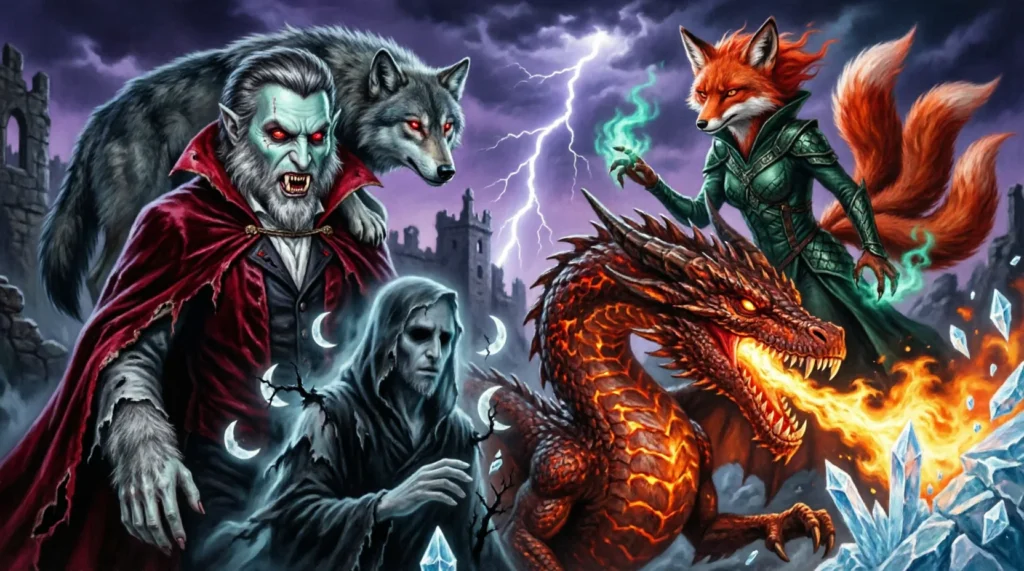
[IMAGE: A spooky forest with imaginative monsters representing different similes]
The monster was as tall as a castle.
Its roar echoed like crashing thunder.
The monster’s eyes glowed like burning coals.
It crept like a silent shadow.
The creature was as hungry as a wolf.
Its claws were like sharpened swords.
The monster charged like a runaway train.
Its breath smelled like rotten eggs.
The giant stomped like an earthquake.
Its skin was as rough as tree bark.
The monster smiled like a crocodile waiting for dinner.
Its laughter sounded like rattling chains.
The beast disappeared like smoke in the wind.
It moved as quietly as an owl at night.
The monster’s teeth were like rows of daggers.
Its tail whipped like a cracking whip.
The creature stood as still as a statue.
Its growl rolled like a distant volcano.
The monster’s hands were like giant shovels.
It chased us like a hurricane racing across the land.
The monster’s face twisted like melted wax.
Its footsteps boomed like giant drums.
The creature floated like a ghost in the fog.
It watched us like a hawk watching its prey.
The monster’s voice was as cold as winter ice.
These examples work well because they create strong mental pictures. Instead of simply telling your reader that a monster is frightening, you help them hear, see, and even imagine how it feels.
Creative writing teachers often remind students that the best similes use familiar comparisons. When your reader already knows what thunder, wolves, or shadows are like, your monster instantly becomes more believable.
How to Use Similes for Monsters in Your Writing
You don’t have to fill every sentence with comparisons. A few carefully chosen similes can make your writing much stronger.
Think about one feature of your monster. Is it huge, fast, loud, or creepy? Compare that feature to something your reader already knows.
Use “like” or “as” naturally. If the comparison sounds awkward when you read it aloud, try another idea.
Match the mood of your story. A funny monster might be “as clumsy as a dancing elephant,” while a terrifying monster could be “like darkness swallowing the moon.”
Read your sentence aloud before you finish. If you can picture the monster clearly, your reader probably can too.
Example:
“The monster crept through the hallway like a silent shadow, making Maya freeze with fear.”
As you practice, you’ll notice that your monster descriptions become more exciting and easier for readers to imagine.
Similes for Monsters in Poems and Stories
Poets and storytellers use similes to make imaginary creatures feel real. These comparisons add emotion, rhythm, and unforgettable images.
Poem Example
Amina whispered, “The monster drifted like morning fog, Its glowing eyes Were as bright as tiny stars.”
Story Example
Carlos held his flashlight tightly. The creature’s roar exploded like thunder, but its footsteps were as soft as falling snow, making it even more mysterious.
Story Example
Priya looked toward the old bridge. The monster stretched its long arms like twisting branches, reaching into the night sky.
Authors use these kinds of comparisons because readers remember vivid images much longer than plain descriptions. You can do the same in your own poems and stories.
Common Mistakes Students Make With Similes for Monsters
Using comparisons that don’t fit Saying a terrifying monster is “like a fluffy pillow” may confuse your reader unless you’re writing a comedy. Choose comparisons that match your story’s mood.
Forgetting to use “like” or “as” Without these words, you may accidentally write a metaphor instead of a simile. Double-check your sentence before moving on.
Repeating the same comparison If every monster is “as scary as a ghost,” your writing becomes predictable. Challenge yourself to invent fresh ideas.
Making similes too long A comparison should help your reader, not slow them down. Keep it clear and easy to understand.
Comparing monsters to things readers don’t know Pick familiar objects, animals, or natural events so your audience can picture the monster immediately.
These mistakes are completely normal, and fixing them gets easier every time you write.
Fun Activities to Practice Similes for Monsters
Monster Drawing Challenge Grab a pencil and draw your own monster. Then write five similes that describe its appearance, voice, and movement.
Mystery Monster Game Play with friends or classmates. One person reads a list of similes while everyone guesses what kind of monster is being described.
Finish the Simile Worksheet Complete sentences like, “The monster’s eyes were like ________.” Try to create ten different endings.
Story Builder Write a one-page Halloween story that includes at least five different monster similes. Challenge yourself not to repeat any comparisons.
Read and Hunt Find a spooky story or fantasy book. Highlight every simile you discover and think about why the author chose it.
Create Monster Cards Make trading cards for imaginary monsters. On each card, include three original similes that describe the creature’s special powers.
These activities help you practice while having fun, making it easier to remember what you’ve learned.
What NOT to Do With Similes for Monsters
Don’t think every monster must be terrifying. Funny, friendly, or silly monsters can have creative similes too.
Don’t copy the same examples from every website. Original comparisons make your writing stand out and show your creativity.
Don’t confuse similes with metaphors. Remember that similes use “like” or “as” to make the comparison.
Don’t add a simile to every sentence. Too many comparisons can distract your reader instead of helping them imagine the monster.
Frequently Asked Questions About Similes for Monsters
What is a good simile for a monster?
A good simile compares a monster to something familiar while creating a strong image. For example, “The monster’s roar was like crashing thunder” helps readers imagine both the sound and the power.
How do you use similes for monsters in a sentence?
You can describe one feature at a time. For example: “The monster’s claws were like sharp knives cutting through the darkness.”
What is the difference between a simile and a metaphor for monsters?
A simile uses “like” or “as” to compare two things. A metaphor says one thing is another without using those words. Both create vivid descriptions, but they work differently.
Are similes for monsters appropriate for elementary and middle school students?
Yes. You can make the comparisons simple for younger students or more detailed for older writers. The key is choosing comparisons that your audience will understand.
Why do writers use similes for monsters?
Writers use them to help readers picture imaginary creatures more clearly. Strong similes also make stories, poems, and creative assignments more exciting and memorable.
Final Thoughts on Similes for Monsters
Writing about monsters doesn’t have to be difficult. With the right similes, you can turn an ordinary creature into something unforgettable that your readers will picture long after they finish your story.
You’ve explored dozens of creative comparisons, learned how to use them naturally, discovered common mistakes to avoid, and practiced fun activities that build your confidence. Each time you write, you’ll find new ways to describe monsters with fresh and exciting ideas.
Literacy researchers and creative writing teachers agree that descriptive language grows stronger through practice. Every new simile you create helps you become a more expressive writer.
Keep experimenting, trust your imagination, and remember that your next monster might become the most memorable character you’ve ever created. Happy writing!
Liam Nguyen is a passionate educator and writer with a deep love for figurative language. He holds a master’s degree in Creative Writing and has spent eight years teaching at various educational settings, focusing on language enrichment programs for children from grades 2-6. His expertise in crafting metaphorical language and similes into captivating content stems from his belief that storytelling is the heartbeat of learning. Liam’s contributions to SimilePedia span from emotion-driven examples to color-inspired narrative tools. He is committed to fostering a creative environment where students can explore and find joy in their unique expressions.