In short, similes for grandparents are creative comparisons that help you describe grandparents in vivid, memorable ways using the words “like” or “as.” In this guide, you’ll discover meaningful examples, writing tips, fun activities, and simple ways to make your stories and poems more expressive.
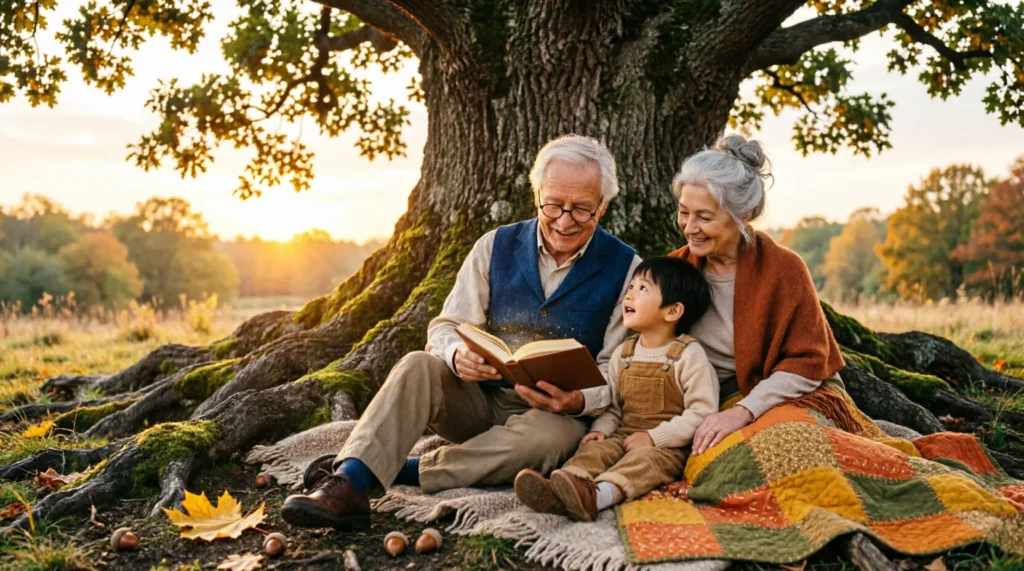
[IMAGE: A grandparent reading a storybook with smiling grandchildren]
What Are Similes for Grandparents? (And Why They Matter)
Have you ever sat in class trying to describe your grandma or grandpa, only to realize that the word “kind” doesn’t quite capture everything you feel? Maybe your teacher asked for a simile, and suddenly your mind went blank. If that sounds familiar, you’re not alone.
Similes for grandparents compare grandparents to something else using the words “like” or “as.” These comparisons help you paint a clearer picture of their personality, love, wisdom, or appearance.
Instead of simply saying your grandfather is wise, you might write, “My grandfather is as wise as an old oak tree.” That gives your reader a stronger image and makes your writing more interesting.
Language arts researchers and literacy educators often encourage students to use similes because they improve descriptive writing, reading comprehension, and creative thinking. Once you learn a few good examples, you’ll find it much easier to write stories, poems, and personal essays.
The Best Examples of Similes for Grandparents
[IMAGE: An illustrated collection of grandparents showing kindness, wisdom, and love]
Here are some of the best similes for grandparents you can use in your writing.
My grandmother is as warm as the morning sun.
My grandfather is as wise as an ancient oak tree.
Grandma’s hugs are like a soft, cozy blanket.
Grandpa’s stories are like hidden treasure maps.
My grandmother smiles like flowers opening in spring.
Grandpa is as dependable as the sunrise.
Grandma’s voice is as gentle as falling rain.
My grandfather is like a sturdy lighthouse during a storm.
Grandma is as sweet as homemade cookies.
Grandpa laughs like rolling thunder on a summer afternoon.
My grandmother is as patient as the changing seasons.
Grandpa is like a trusted compass that always points the right way.
Grandma’s advice is like a bright guiding star.
Grandpa is as strong as an old mountain.
Grandma’s love is like an endless garden in bloom.
My grandfather is as calm as a quiet lake at dawn.
Grandma is like a favorite story you never tire of hearing.
Grandpa’s hands are as steady as solid stone.
Grandma shines like a candle in the darkness.
Grandpa is as reliable as the ticking of a clock.
Grandma’s laughter is like cheerful birds singing at sunrise.
Grandpa’s wisdom is like a well-filled library.
Grandma is as comforting as a warm cup of cocoa.
Grandpa stands like a tall pine protecting the forest.
My grandparents are like the roots of a strong family tree.
These examples work well because they create clear mental pictures. They also connect grandparents with familiar objects from nature and everyday life, making your writing feel more personal and emotional.
As you explore more examples, you’ll notice that the strongest similes help your reader both see and feel what you are describing.
How to Use Similes for Grandparents in Your Writing
You don’t have to be an expert writer to use similes well. Follow these simple steps whenever you write.
Think about what quality you want to describe. Is your grandparent kind, funny, patient, wise, or brave? Choose one main idea before you write.
Find something that shares that quality. You could compare your grandmother to sunshine or your grandfather to an oak tree because both represent warmth or strength.
Use “like” or “as” naturally. Remember that similes always include one of these comparison words.
Read your sentence aloud. Ask yourself whether the comparison sounds natural and helps your reader imagine the person more clearly.
Example:
“My grandfather was as steady as a lighthouse, helping our family through every challenge.”
As you practice, you’ll discover that your writing becomes more colorful and easier for others to picture.
Similes for Grandparents in Poems and Stories
Poets and storytellers often use similes to make emotions stronger and scenes more memorable. Creative writing teachers encourage students to use comparisons because they add rhythm, imagery, and feeling.
Aisha wrote:
“Grandma smiled like morning light, Turning every cloudy day bright.”
Carlos wrote:
“Grandpa stood as strong as an oak, Protecting us whenever storms woke.”
Mei’s story included this sentence:
“When I felt nervous before my speech, Grandma wrapped me in a hug that felt like a warm quilt, and suddenly everything seemed possible.”
These short examples show how similes help readers connect emotionally with characters. When you write about your own grandparents, your comparisons can make your memories feel even more meaningful.
Common Mistakes Students Make With Similes for Grandparents
Choosing comparisons that don’t match the person’s qualities. If your grandparent is gentle, comparing them to a race car might confuse readers. Try choosing images that fit their personality.
Forgetting to use “like” or “as.” Without these words, you may accidentally write a metaphor instead of a simile.
Using overcomplicated comparisons. Simple images often work better than confusing ones. Your reader should understand your comparison right away.
Repeating the same simile again and again. Saying every grandparent is “as sweet as sugar” can become repetitive. Challenge yourself to create fresh comparisons.
Focusing only on appearance. Grandparents are often remembered for their kindness, wisdom, patience, and love. Comparing these qualities usually creates stronger writing.
Once you avoid these common mistakes, your similes will sound more natural and memorable.
Fun Activities to Practice Similes for Grandparents
Memory Jar Challenge Grab a pencil and write five happy memories with your grandparents. Then create one simile for each memory.
Draw and Describe Draw your grandmother or grandfather doing something you remember. Add three similes around your picture that describe what you see or feel.
Family Interview Ask a family member to describe your grandparents. Turn each description into a creative simile.
Classroom Matching Game Play with classmates by matching qualities like “kind,” “wise,” or “patient” to objects that make good similes.
Reading Detective Find a children’s book or poem featuring grandparents. Highlight any similes you discover and discuss why the author chose them.
Create Your Own Worksheet Make two columns. Write grandparent qualities on one side and possible comparison ideas on the other, then connect them to create original similes.
These activities help you practice while having fun, making it easier to remember your new writing skills.
What NOT to Do With Similes for Grandparents
Don’t assume every grandparent is exactly the same. Your comparison should match your own grandparent’s unique personality rather than using stereotypes.
Don’t force a comparison that doesn’t make sense. A simile should help readers understand your description, not leave them confused.
Don’t use too many similes in one paragraph. One or two strong comparisons often have more impact than filling every sentence with them.
Don’t copy every example you find online. Your own experiences make your writing more meaningful, so create similes that reflect your family’s special memories.
Now that you know what to avoid, you’re ready to answer some common questions students often ask.
Frequently Asked Questions About Similes for Grandparents
What is a good simile for grandparents?
A good simile for grandparents highlights qualities like kindness, wisdom, patience, or love. For example, “My grandparents are like the roots of a strong tree” shows how they support the whole family.
How do you use similes for grandparents in a sentence?
Simply compare your grandparent to something familiar using “like” or “as.” For example, “My grandmother was as comforting as a warm blanket on a cold evening.”
What is the difference between a simile and a metaphor for grandparents?
A simile uses “like” or “as” to compare two things. A metaphor says one thing is another without those comparison words. “Grandpa is like a lighthouse” is a simile, while “Grandpa is a lighthouse” is a metaphor.
Are similes for grandparents suitable for elementary and middle school students?
Yes. They are perfect for personal narratives, poetry, descriptive paragraphs, and family writing assignments. You can make them simple or more detailed depending on your grade level.
Why do writers use similes for grandparents?
Writers use them to make grandparents feel real and memorable. Strong comparisons help readers imagine love, wisdom, comfort, and family relationships much more clearly.
Final Thoughts on Similes for Grandparents
Learning similes for grandparents gives you a wonderful way to describe the people who often fill our lives with love, laughter, and wisdom. Instead of using ordinary words, you can create vivid images that stay with your readers.
You have explored dozens of examples, learned how to write your own comparisons, discovered common mistakes to avoid, and practiced through creative activities. Every new simile you write helps you become a more confident writer.
Literacy researchers and creative writing teachers agree that meaningful comparisons make stories, poems, and essays more engaging. The more you observe the people around you, the easier it becomes to create original similes.
Keep practicing, trust your imagination, and remember that every great writer started with a single sentence. Your next story about your grandparents could be your most memorable one yet.
Liam Nguyen is a passionate educator and writer with a deep love for figurative language. He holds a master’s degree in Creative Writing and has spent eight years teaching at various educational settings, focusing on language enrichment programs for children from grades 2-6. His expertise in crafting metaphorical language and similes into captivating content stems from his belief that storytelling is the heartbeat of learning. Liam’s contributions to SimilePedia span from emotion-driven examples to color-inspired narrative tools. He is committed to fostering a creative environment where students can explore and find joy in their unique expressions.