In short, similes for fish are comparisons that use the words “like” or “as” to describe fish in vivid, memorable ways. They help you create stronger images in stories, poems, essays, and classroom assignments. Keep reading to discover creative examples, writing tips, and fun activities that will make using similes much easier.
What Are Similes for Fish? (And Why They Matter)
Have you ever stared at a blank page while trying to describe a fish swimming through water? Maybe your teacher asked for figurative language, but every sentence sounded plain and ordinary.
Similes for fish are comparisons that use “like” or “as” to help readers picture a fish more clearly. Instead of simply saying a fish moved quickly, you might say it darted through the water like a silver arrow.
These comparisons make your writing more interesting and engaging. They help your readers see, hear, and imagine what you are describing.
Language arts educators and literacy researchers often encourage students to use similes because they improve descriptive writing, strengthen reading comprehension, and help young writers express ideas more creatively.
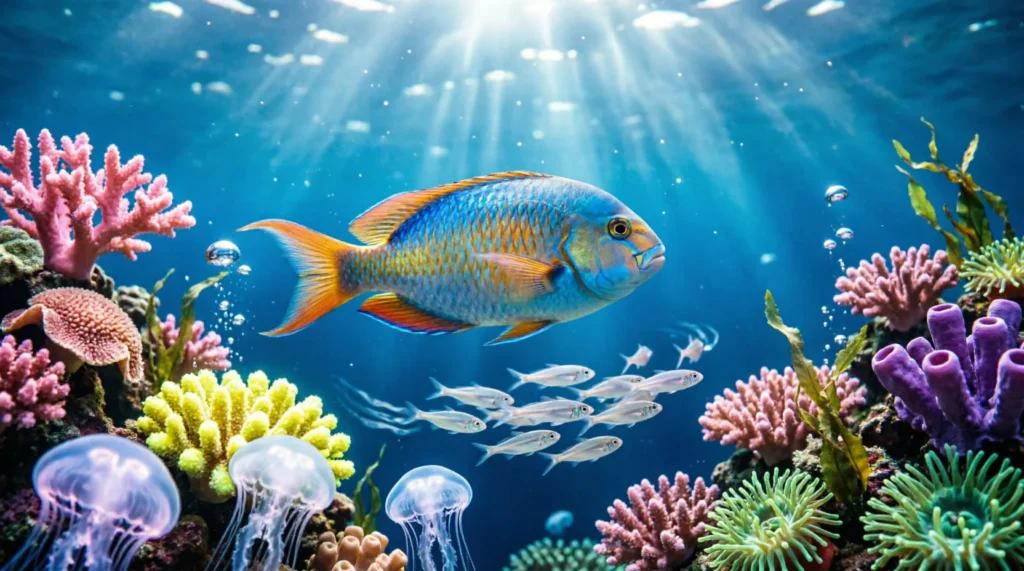
[IMAGE: Colorful fish swimming through clear water]
Now that you know what similes for fish are, let’s explore some vivid examples you can use right away.
The Best Examples of Similes for Fish
The fish flashed through the water like a silver arrow.
The fish glided as smoothly as silk drifting in the wind.
The fish moved like a dancer across a stage.
The fish shimmered like a polished gem beneath the sun.
The fish darted like a rocket through the pond.
The fish swam as quietly as a whisper.
The fish slipped through the water like melted butter.
The fish sparkled like a handful of scattered diamonds.
The fish moved like a leaf carried by a gentle stream.
The fish was as quick as lightning.
The fish swam like a tiny submarine exploring the ocean.
The fish twisted like a ribbon in the current.
The fish floated like a feather on a breeze.
The fish shone like a mirror catching sunlight.
The fish zipped by like a racing bicycle.
The fish was as colorful as a rainbow after rain.
The fish moved like a shadow beneath the waves.
The fish leaped like an acrobat at a circus.
The fish drifted like a cloud across the sky.
The fish was as slippery as a bar of soap.
The fish flashed like a shooting star.
The fish swam like a secret moving through the water.
The fish was as graceful as a ballet performer.
The fish wriggled like a squirming noodle.
The fish moved like a streak of liquid silver.
The trout darted like a silver arrow shot through the current
As slippery as a fish squeezed in a fisherman’s bare hands
The koi drifted like orange lanterns floating beneath the surface
As restless as a fish circling the edges of a too-small bowl
The salmon leapt like a coiled spring released upstream
As quiet as a fish gliding through still, moonlit water
These examples work because they create strong mental pictures. Some focus on speed, while others highlight beauty, movement, color, or grace.
The best similes for fish connect something familiar to something underwater, helping your readers imagine the scene more clearly and remember it longer.
How to Use Similes for Fish in Your Writing
When you use similes effectively, your writing becomes more vivid and enjoyable to read. Here are some simple steps you can follow.
Think about what makes the fish unique. Is it fast, colorful, shiny, tiny, or graceful? Choose the characteristic you want to highlight.
Find something familiar that shares that quality. For example, a fast fish might move like a rocket or a silver arrow.
Use “like” or “as” to create the comparison. This turns an ordinary description into a simile.
Make sure the comparison fits your story. A funny comparison may work in a children’s story, while a poetic comparison may fit a nature essay better.
Example:
“The trout shot through the stream like a silver arrow escaping a bow.”
Notice how the simile helps you picture the fish’s speed and direction instantly.
Once you become comfortable using similes for fish, you’ll start noticing them in poems, stories, and even song lyrics.
Similes for Fish in Poems and Stories
Writers often use similes to create emotion, rhythm, and imagery. A well-placed simile can make a simple description feel alive.
Here are a few short examples.
Amina’s poem:
“Fish drifted like clouds below the lake, Silent as dreams before we wake.”
Ravi’s story:
“The goldfish flashed like a tiny coin tossed into sunlight before disappearing behind the rocks.”
Sofia’s journal entry:
“The fish twisted like a ribbon in the current, dancing between the reeds.”
Creative writing teachers often encourage students to experiment with comparisons like these because they help readers visualize scenes more clearly. They also add personality and emotion to your writing.
Before creating your own similes, it helps to know some common mistakes that many students make.
Common Mistakes Students Make With Similes for Fish
Using comparisons that don’t make sense If your fish is moving slowly, comparing it to a speeding rocket may confuse readers. Make sure your comparison matches the fish’s behavior.
Repeating the same simile over and over Using “like a silver arrow” in every paragraph can become boring. Try creating different comparisons.
Forgetting to use “like” or “as” Without these words, you may accidentally create a metaphor instead of a simile.
Choosing overly complicated comparisons Your readers should understand the image quickly. Simple comparisons are often the strongest.
Comparing fish to unrelated objects without a clear connection This happens often with fish descriptions. If readers cannot see the similarity, the simile may feel confusing rather than helpful.
These mistakes are completely normal when you’re learning. With practice, you’ll become more confident at creating effective comparisons.
Fun Activities to Practice Similes for Fish
Fish Picture Challenge Grab a pencil and look at pictures of different fish. Write three unique similes for each one based on its appearance or movement.
Aquarium Observation Game If you visit an aquarium or watch fish videos online, challenge yourself to write a simile every time you see a fish change direction.
Simile Drawing Activity Draw a fish and then illustrate the object it is being compared to. This helps you visualize the comparison.
Story Starter Challenge Write a short paragraph beginning with: “The fish swam like…” Then continue the story for five sentences.
Group Simile Contest In class or at home, take turns creating fish similes. Vote for the funniest, most creative, or most descriptive comparison.
Reading Detective Game Read a story featuring water, rivers, lakes, or oceans. See how many similes you can find and discuss why they work.
Practicing in different ways helps you build creativity and makes figurative language feel much more natural.
What NOT to Do With Similes for Fish
Don’t assume every fish simile must be about speed. Fish can also be compared based on color, grace, silence, shine, or movement.
Don’t force a comparison just to include a simile. A weak comparison can distract readers instead of helping them.
Don’t use extremely confusing imagery. If readers have to stop and figure out what you mean, the simile may need simplifying.
Don’t copy the same examples from every worksheet. Creating your own original similes often produces stronger and more memorable writing.
Understanding what to avoid can help you create comparisons that feel fresh and effective.
More similes for fish by Tone and Context
🌿 Natural & Descriptive
Like a fish gliding through clear water — Captures smooth, effortless movement and works well in nature writing or descriptive essays.
As silent as a fish beneath a quiet pond — Highlights complete silence and creates a peaceful image.
Like a fish weaving through waving reeds — Shows graceful movement through a busy or crowded space.
As bright as a fish flashing in the morning sun — Emphasizes sparkling color and beauty in vivid descriptions.
Like a fish drifting with the gentle current — Suggests calmness, patience, and moving naturally with the flow.
💛 Warm & Emotional
Like a fish finding its favorite stream — Expresses the comfort of being in a familiar and welcoming place.
As peaceful as a fish resting in calm water — Describes deep relaxation and emotional ease.
Like a fish returning to safe waters — Symbolizes relief, security, or coming home after hardship.
As content as a fish in a quiet lake — Conveys happiness with simple moments and peaceful surroundings.
Like a fish swimming beside its school — Reflects friendship, belonging, and the comfort of staying together.
✨ Poetic & Romantic
Like a silver fish dancing beneath moonlight — Creates a dreamy, magical image perfect for poems or romantic writing.
As graceful as a fish floating through liquid glass — Suggests elegant movement and delicate beauty.
Like a fish carrying tiny stars across the sea — Adds a touch of fantasy and wonder to creative writing.
As gentle as a fish brushing through soft waves — Expresses tenderness and calm emotions.
Like a fish chasing the glow of the sunset — Symbolizes hope, dreams, or the pursuit of something beautiful.
😄 Playful & Fun
Like a fish zooming after breadcrumbs — Describes someone rushing eagerly toward something exciting.
As slippery as a fish at bath time — Perfect for funny moments when someone is hard to catch or hold.
Like a fish showing off in a bubble parade — Adds a cheerful, humorous image for lighthearted writing.
As curious as a fish exploring every corner of the tank — Describes someone who loves discovering new things.
Like a fish splashing through a puddle of excitement — Captures joyful energy and playful enthusiasm.
These tone-grouped similes for similes for fish give you options for every kind of writing — whether you need something soft and poetic or bold and fun. Try picking one from each group and using them in a short paragraph to see how different the same keyword can feel.
Using similes for fish in Real Writing Contexts
In a Descriptive Essay
When writing about lakes, rivers, oceans, or aquariums, similes for fish help readers picture movement, color, and behavior more clearly. Instead of simply saying a fish swam, compare it to something familiar to make the description more memorable. For example: The tiny fish moved like a silver ribbon floating through the water, catching every ray of sunlight.
In a Poem
Similes for fish can create peaceful, mysterious, or magical moods in poetry. A thoughtful comparison helps readers imagine both the beauty of the fish and the feelings behind the words. Like a silver fish beneath the moon, my dreams drifted through the quiet night.
In a Story or Creative Scene
In stories, similes for fish can make underwater scenes more vivid or show how a character moves or reacts. They add detail without making the sentence difficult to understand. The young diver slipped through the reef like a fish gliding through clear water, leaving only a trail of tiny bubbles behind.
In a Social Media Caption or Message
A short simile makes captions and messages more colorful and fun to read. It quickly paints a picture while keeping the writing light and friendly. Today’s beach adventure had me smiling like a fish discovering a brand-new coral reef!
The more you practice placing similes for fish into real sentences, the more natural your writing will sound — and the more your reader will feel exactly what you want them to feel.
Related reading: Looking for more descriptive comparisons? Check out our guides to similes for smelly and similes for shining for additional inspiration.
Frequently Asked Questions About Similes for Fish
What is a simile for a fish swimming fast?
A common example is, “The fish swam like a silver arrow.” You could also say, “The fish darted like lightning through the water.” Both comparisons emphasize speed and movement.
How do you use similes for fish in a sentence?
You can place the simile directly into your description. For example: “The fish glided through the pond like silk floating in the breeze.” This gives readers a clearer picture of the action.
What is the difference between a fish simile and a fish metaphor?
A simile uses words such as “like” or “as” to make a comparison. A metaphor says one thing is another thing directly. For example, “The fish was like a silver arrow” is a simile, while “The fish was a silver arrow” is a metaphor.
Are similes for fish appropriate for elementary and middle school students?
Yes. Similes for fish are excellent for students because they are easy to understand and encourage creative thinking. Teachers often use them when teaching descriptive and figurative language.
Why do writers use similes for fish?
Writers use them to create vivid imagery and make descriptions more engaging. A good simile helps readers picture the fish’s appearance, movement, or behavior more clearly.
Why do writers compare people to fish in similes?
Fish move with speed, slipperiness, or grace that map neatly onto human behavior—someone evasive is “slippery as a fish,” while someone nervous in a crowd might feel “like a fish out of water.”
What’s a good fish simile for describing movement in action writing?
Try pairing the fish with a specific motion verb: “she wove through the crowd like a fish threading through reeds” gives readers both speed and precision in one image.
More Fresh Similes for Fish (2026 Update)
A few additional similes for fish to expand your writing toolkit:
The fish darted like a spark jumping off a live wire.
It hovered in place like a kite caught in still air, barely moving a fin.
The school of fish turned as one, like a flock of birds banking in the sky.
Its scales flashed like sequins catching stage lights.
The fish slipped from his hands like a wet bar of soap.
For more animal-inspired comparisons, see our guide to similes for river, which pairs well with fish and water imagery.
Final Thoughts on Similes for Fish
Learning how to use similes for fish can make your writing more colorful, imaginative, and memorable. Whether you are working on a school assignment, writing a poem, or creating a story, these comparisons help bring your ideas to life.
You explored what similes are, why they matter, and how to use them effectively. You also discovered dozens of examples that highlight speed, beauty, color, and movement.
The more you practice, the easier it becomes to create your own original comparisons. Even a simple sentence can become much more interesting with a well-chosen simile.
Remember, strong figurative language is a skill that grows over time, and every great writer starts by practicing one creative comparison at a time.
Frequently Asked Questions
What are similes for fish and why are they useful?▼
Similes for fish are comparisons that use the words ‘like’ or ‘as’ to create vivid images of fish in writing. They enhance descriptive language, making stories, poems, and essays more engaging and memorable.
Can you give examples of similes for fish?▼
Sure! Some examples include ‘The fish darted like a rocket through the pond’ and ‘The fish shimmered like a polished gem beneath the sun.’ These comparisons highlight qualities such as speed, beauty, and movement.
How can I effectively use similes for fish in my writing?▼
To use similes effectively, start by identifying what makes the fish unique, such as its speed or color. Then, find a familiar object that shares that quality and create a comparison using ‘like’ or ‘as’.
Why do educators encourage the use of similes in writing?▼
Educators promote similes because they enhance descriptive writing skills, improve reading comprehension, and encourage creative expression among young writers. Using similes makes it easier for readers to visualize and connect with the text.
What characteristics should I focus on when creating similes for fish?▼
When crafting similes for fish, consider attributes like speed, color, shimmer, and gracefulness. Each characteristic can inspire different comparisons, allowing for a rich variety of imagery in your writing.
Are there specific contexts where similes for fish are particularly effective?▼
Yes, similes can be particularly effective in children’s stories for humor or in poetry for artistic expression. The context of your writing will guide the type of simile you choose to use.
How do similes help improve descriptive writing?▼
Similes enhance descriptive writing by creating strong mental images that help readers visualize the scene. They make ordinary descriptions more engaging and memorable, allowing readers to connect emotionally with the text.
Liam is a language enthusiast and lead writer at Similepedia.com, where he focuses on creating clear, creative, and easy-to-use similes for everyday writing. He specializes in turning simple ideas into vivid comparisons that make sentences more engaging, expressive, and memorable.
Instead of overcomplicating language with technical jargon, Liam approaches similes as practical tools for better communication. He breaks down how comparisons work, when to use them, and how to make them sound natural — not forced or awkward.
He pays close attention to tone, context, and clarity, ensuring every simile fits smoothly into real sentences. From fun and playful comparisons to more descriptive and expressive ones, Liam helps readers improve how they write, speak, and express ideas.
At Similepedia.com, his mission is simple: make language more colorful and effective without making it complicated. He doesn’t just list similes — he helps readers understand how to use them confidently in real situations.