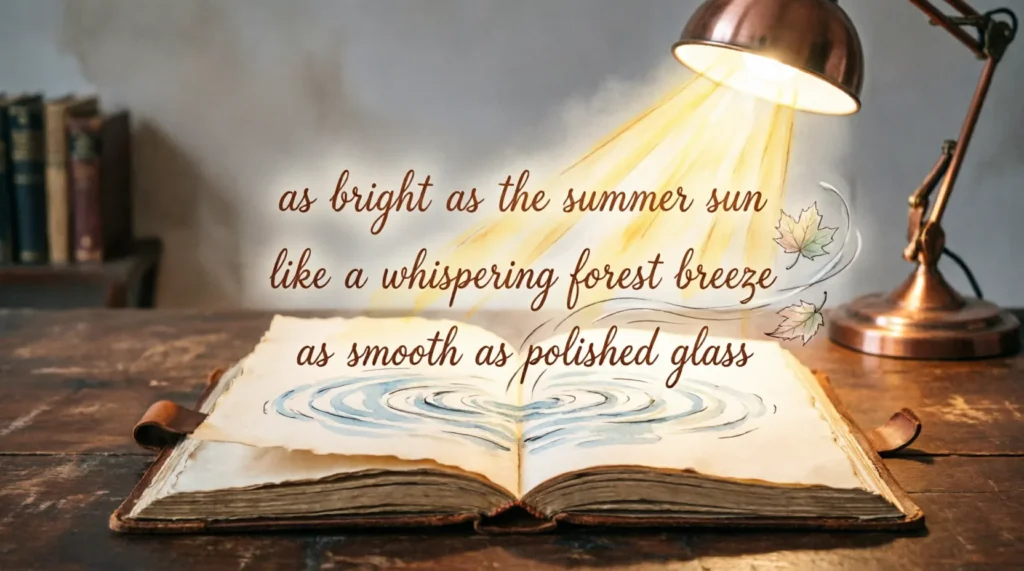
In short, similes for descriptive writing are comparisons that help readers picture, hear, feel, or imagine something more clearly. They usually use the words “like” or “as” to connect two ideas in a vivid way. In this guide, you’ll find creative examples, writing tips, common mistakes to avoid, and fun ways to practice using similes in your own stories and essays.
What Are Similes for Descriptive Writing? (And Why They Matter)
You know that moment when you’re staring at a blank page, trying to describe a character, place, or feeling, but every sentence sounds boring? A lot of students feel that way during writing assignments. You may know what you want to say, but finding the right words can feel tricky.
Similes for descriptive writing are comparisons that help readers imagine something more clearly. A simile usually compares two things using the words “like” or “as.” For example: “The classroom was as quiet as a library.”
These comparisons matter because they turn plain sentences into memorable ones. Instead of saying “the cake was good,” you could write, “The cake melted in my mouth like snow on a warm sidewalk.” Suddenly, your reader can almost taste it.
Language arts educators and literacy researchers often encourage students to use similes because they improve creativity, reading comprehension, and storytelling skills. Whether you’re writing a poem, a short story, or an exam essay, similes help your ideas feel alive.
[IMAGE: Student writing creatively in a notebook with colorful simile ideas around them]
Once you understand how similes work, you can start using them to make your own writing stronger and more exciting.
The Best Examples of Similes for Descriptive Writing
Here are some vivid and student-friendly examples of similes for descriptive writing that you can use for inspiration:
Her smile was as bright as the morning sun.
The thunder roared like a hungry lion.
His backpack felt as heavy as a pile of bricks.
The lake shimmered like a sheet of glass.
My little brother bounced around like popcorn in a pan.
The classroom was as silent as outer space.
The old book smelled like a forgotten attic.
Her voice floated through the room like soft music.
The puppy’s fur was as fluffy as a cloud.
The rain tapped the window like tiny fingers.
His face turned as red as a ripe tomato.
The soccer player ran like the wind.
The stars sparkled like diamonds in the sky.
The ice cream melted as fast as snow in summer.
My thoughts raced like cars on a highway.
The baby slept as peacefully as a kitten in sunlight.
The test paper stared back at me like a scary monster.
The leaves danced in the wind like tiny ballerinas.
Her laughter bubbled up like soda fizz.
The hallway smelled like fresh popcorn at a movie theater.
His hands were as cold as ice cubes.
The candle flickered like a tiny firefly.
The crowd cheered as loudly as crashing waves.
The muddy field looked like chocolate pudding.
Her braid swung like a pendulum clock.
The moon hung in the sky like a silver coin.
The soup was as hot as lava.
The cat moved quietly like a shadow.
The fireworks exploded like colorful flowers in the night sky.
My alarm clock rang like a fire truck siren.
These examples work well because they create strong imagery. Your reader can picture the scene, hear the sounds, or even feel the emotions behind the words. Creative writing teachers often remind students that good similes connect ordinary experiences with surprising comparisons.
As you read more stories and poems, you’ll start noticing how authors use similes naturally to make scenes more memorable.
How to Use Similes for Descriptive Writing in Your Writing
Using similes well is not about adding fancy words everywhere. The goal is to help your reader imagine something clearly and emotionally.
Start with something simple you want to describe.
Maybe you want to describe rain, fear, excitement, or a messy room. Think about how it looks, sounds, smells, or feels.
Compare it to something familiar.
Ask yourself: “What does this remind me of?” If the rain is loud, you might compare it to drums or applause.
Use “like” or “as” naturally.
Don’t force the comparison. Make sure the simile sounds smooth and easy to understand.
Example: “The cafeteria buzzed like a beehive during lunch.”
Avoid overusing similes in every sentence.
Too many comparisons can make your writing confusing. Choose the moments that deserve extra detail and let those shine.
[IMAGE: Notebook page showing a simple sentence transformed into a vivid simile]
Similes for Descriptive Writing in Poems and Stories
You’ll find similes almost everywhere in creative writing. Poems, songs, and stories use them to create mood, rhythm, and emotion. They help readers connect with characters and scenes in a deeper way.
Here are a few short fictional examples:
Aisha watched the snow fall outside her window.
“The flakes drifted down like feathers from a giant pillow, soft and silent against the dark sky.”
Mateo stepped onto the basketball court.
“His heartbeat pounded like a drum, steady and loud before the big game.”
Lina wandered through the crowded market.
“The voices mixed together like waves in the ocean, rising and falling around her.”
Poets and authors use similes because they make writing more emotional and memorable. Instead of simply telling readers what is happening, similes help readers experience it for themselves.
That’s why similes for descriptive writing are so useful in school assignments, especially when teachers ask you to “show, not tell.”
Common Mistakes Students Make With Similes for Descriptive Writing
Everyone makes mistakes while learning figurative language. The good news is that most simile problems are easy to fix once you notice them.
Using comparisons that don’t make sense
Sometimes students compare two things that have nothing in common. For example, “The pencil was like a volcano” feels confusing because the connection is unclear. Try to choose comparisons your reader can understand.
Overusing similes in every paragraph
It’s tempting to add similes everywhere once you learn them. But too many can distract your reader instead of helping them.
Choosing clichés too often
Phrases like “as busy as a bee” or “as cold as ice” are common because they work, but using only familiar similes can make your writing feel less original. Try creating your own fresh comparisons.
Forgetting the subject you’re describing
Some students get so focused on the comparison that the main idea becomes unclear. Make sure your simile actually supports the scene or emotion you want to show.
Making similes too long
A simile should usually be short and easy to picture. If it becomes a giant explanation, your reader may lose focus.
Creative writing teachers often remind students that strong similes are clear, vivid, and connected to the moment in the story.
Fun Activities to Practice Similes for Descriptive Writing
Practicing similes can actually be fun when you turn it into a creative challenge. Grab a pencil and try these activities at home or in class.
Simile Scavenger Hunt
Look around your room or classroom and write similes about five objects you see. For example: “The lamp glowed like a tiny moon.”
Picture Prompt Challenge
Find a photo in a magazine or online and describe it using at least three similes. Try focusing on sounds, colors, and emotions.
Simile Swap Game
Play with a friend or classmate. One person says an emotion like “nervous,” and the other creates a simile for it, such as “as nervous as a mouse near a cat.”
Draw and Describe
Create a quick drawing of a storm, jungle, or magical city. Then write similes that match what you drew.
Read and Highlight
Choose a favorite story or poem and highlight every simile you can find. You’ll start noticing how professional writers use figurative language naturally.
Rewrite a Boring Paragraph
Take a plain paragraph from an old assignment and improve it with similes for descriptive writing. You’ll quickly see how much more vivid your writing becomes.
[IMAGE: Students playing a classroom simile game with colorful word cards]
These activities help you practice creativity without making writing feel stressful or repetitive.
What NOT to Do With Similes for Descriptive Writing
There are also a few myths and habits that can hurt your writing if you’re not careful.
Don’t force a simile into every sentence
Good writing needs balance. Some moments need detailed comparisons, while others work better with simple language.
Don’t copy random similes from the internet without understanding them
A simile should fit your scene and your voice. If you don’t understand the comparison, your reader probably won’t either.
Don’t confuse similes with metaphors
A simile uses “like” or “as.” A metaphor compares things directly without those words. Both are useful, but they work differently.
Don’t make comparisons that are too complicated
If your reader has to stop and decode your simile, it may not be effective. Clear images usually work better than overly fancy ones.
Once you avoid these mistakes, your descriptive writing will sound more natural and confident.
More similes for descriptive writing by Tone and Context
🌿 Natural & Descriptive
Like sunlight spilling across a quiet lake — Use this to create a peaceful, detailed image that helps readers picture a calm scene.
As clear as a mountain stream — This simile highlights sharp, easy-to-understand descriptions in essays or nature writing.
Like leaves dancing in a gentle breeze — Perfect for describing graceful movement or adding life to outdoor settings.
As colorful as a garden in full bloom — Use this when you want your writing to feel bright, lively, and full of detail.
Like morning dew sparkling on fresh grass — This captures freshness and beauty, making descriptions feel vivid and inviting.
💛 Warm & Emotional
Like a warm blanket on a chilly evening — Great for describing comfort, kindness, or a feeling of safety.
As welcoming as an old friend’s smile — Use this to express warmth and familiarity in personal writing.
Like cocoa warming cold hands — This simile creates a cozy feeling that fits heartfelt stories and letters.
As gentle as a parent’s reassuring hug — Perfect for showing care, support, and emotional comfort.
Like a candle glowing in the darkness — Use this to describe hope, encouragement, or quiet happiness.
✨ Poetic & Romantic
Like moonlight resting on calm water — This creates a soft, dreamy image that suits poems and lyrical writing.
As graceful as a feather floating through the air — Ideal for describing elegance, beauty, or peaceful movement.
Like stars whispering across the night sky — Use this to add mystery and wonder to romantic or poetic scenes.
As timeless as the changing seasons — This simile suggests lasting beauty and enduring emotions.
Like petals drifting through spring air — Perfect for creating gentle, delicate imagery in creative writing.
😄 Playful & Fun
Like popcorn popping in a hot pan — Great for describing exciting, energetic moments with humor.
As bouncy as a rubber ball — Use this when writing about lively people, ideas, or actions.
Like confetti flying at a celebration — This simile adds joy and excitement to casual writing.
As busy as a puppy chasing butterflies — Perfect for describing playful energy in stories or captions.
Like bubbles floating at a birthday party — Use this to create a cheerful, lighthearted mood.
These tone-grouped similes for similes for descriptive writing give you options for every kind of writing — whether you need something soft and poetic or bold and fun. Try picking one from each group and using them in a short paragraph to see how different the same keyword can feel.
Using similes for descriptive writing in Real Writing Contexts
In a Descriptive Essay
When writing a descriptive essay, a well-chosen simile helps readers picture a place, object, or person more clearly. Instead of simply stating what something looked like, compare it to something familiar to make the description stronger. The lake stretched across the valley like a polished mirror, reflecting every cloud in the bright afternoon sky.
In a Poem
Similes for descriptive writing can create mood, rhythm, and emotion in poetry. A simple comparison often makes a poem more memorable and expressive. The evening drifted like petals through the breeze, while quiet dreams bloomed beneath the stars.
In a Story or Creative Scene
In stories, similes help readers imagine characters, settings, and emotions with greater detail. They make scenes feel more realistic and engaging. As Mia stepped into the forgotten garden, the flowers glowed like tiny lanterns, guiding her deeper into the silent path.
In a Social Media Caption or Message
A short simile can make everyday posts more interesting and expressive. It adds personality without making the message too long. Today’s sunset was like a painting that the sky didn’t want to erase. 🌅
The more you practice placing similes for similes for descriptive writing into real sentences, the more natural your writing will sound — and the more your reader will feel exactly what you want them to feel.
Frequently Asked Questions About Similes for Descriptive Writing
What is a good simile for descriptive writing?
A good simile creates a clear and vivid image in the reader’s mind. For example, “The wind howled like a wolf” helps readers imagine both the sound and mood of the scene. The best similes feel natural and connected to the subject you’re describing.
How do you use similes for descriptive writing in a sentence?
You can use a simile by comparing two things with “like” or “as.” For example: “The playground buzzed like a beehive during recess.” This comparison helps your reader picture the noisy, busy atmosphere.
Why are similes important in descriptive writing?
Similes make writing more interesting and emotional. They help readers imagine scenes more clearly and connect with characters or settings. Literacy educators often encourage similes because they improve creativity and reading engagement.
What is the difference between a simile and a metaphor?
A simile uses the words “like” or “as,” while a metaphor compares things directly. For example, “Her eyes were like stars” is a simile, but “Her eyes were stars” is a metaphor.
Are similes for descriptive writing good for middle school students?
Yes, they are especially useful for middle school students because they build creativity and vocabulary skills. Similes also help students write stronger essays, stories, and poems in language arts classes.
Final Thoughts on Similes for Descriptive Writing
Learning how to use similes for descriptive writing can completely change the way your writing sounds. Instead of flat or boring descriptions, your sentences can become colorful, emotional, and memorable.
You’ve now seen dozens of examples, practical writing tips, creative activities, and common mistakes to avoid. The more you practice, the easier it becomes to create comparisons that feel natural and imaginative.
Remember, even professional authors started by experimenting with simple figurative language. You don’t need perfect words right away. You just need curiosity, practice, and the confidence to try new ideas.
Your writing voice matters, and with strong similes, you can help readers see the world exactly the way you imagine it.
Frequently Asked Questions
What are similes and how do they enhance descriptive writing?▼
Similes are comparisons that connect two ideas using the words ‘like’ or ‘as.’ They enhance descriptive writing by creating vivid imagery that helps readers picture, hear, or feel the described elements more clearly.
Can you provide some examples of effective similes for writing?▼
Certainly! Examples include ‘Her smile was as bright as the morning sun’ and ‘The thunder roared like a hungry lion.’ These comparisons create strong imagery and engage the reader’s senses.
Why are similes important for students and writers?▼
Similes are important because they improve creativity, reading comprehension, and storytelling skills. They turn ordinary sentences into memorable expressions, making writing more engaging and relatable.
What common mistakes should I avoid when using similes?▼
Common mistakes include using clichés or overly complex comparisons that confuse rather than clarify. It’s essential to ensure that your similes feel fresh and relevant to the context of your writing.
How can I practice using similes in my writing?▼
You can practice by experimenting with different comparisons in your descriptions. Try rewriting plain sentences with similes to see how they enhance the imagery and emotional impact.
What role do similes play in creative writing?▼
In creative writing, similes help connect ordinary experiences to surprising images, thereby enriching the narrative. They can evoke emotions and create a more immersive experience for the reader.
How do similes differ from metaphors in writing?▼
Similes explicitly use ‘like’ or ‘as’ to make comparisons, whereas metaphors imply a direct equivalence without these words. Both tools enrich writing, but similes tend to create more vivid imagery.
Liam is a language enthusiast and lead writer at Similepedia.com, where he focuses on creating clear, creative, and easy-to-use similes for everyday writing. He specializes in turning simple ideas into vivid comparisons that make sentences more engaging, expressive, and memorable.
Instead of overcomplicating language with technical jargon, Liam approaches similes as practical tools for better communication. He breaks down how comparisons work, when to use them, and how to make them sound natural — not forced or awkward.
He pays close attention to tone, context, and clarity, ensuring every simile fits smoothly into real sentences. From fun and playful comparisons to more descriptive and expressive ones, Liam helps readers improve how they write, speak, and express ideas.
At Similepedia.com, his mission is simple: make language more colorful and effective without making it complicated. He doesn’t just list similes — he helps readers understand how to use them confidently in real situations.