In short, similes for candy are comparisons that use the words “like” or “as” to describe candy’s sweetness, color, texture, or the feelings it creates. They help students, writers, and storytellers paint vivid pictures with words. Keep reading to discover creative examples, writing tips, and fun ways to practice using them.
What Are Similes for Candy? (And Why They Matter)
Have you ever stared at a blank page while trying to describe a piece of candy? Maybe your teacher asked you to make your writing more colorful, but you weren’t sure where to start.
Similes for candy are comparisons that use the words “like” or “as” to show what candy looks, feels, tastes, or reminds you of. For example, “The candy was as bright as a rainbow” is a simile.
These comparisons help your readers imagine exactly what you mean. Instead of simply saying a candy is sweet, you can compare it to something familiar and memorable.
Language arts researchers and literacy educators often encourage students to use similes because they strengthen descriptive writing, improve reading comprehension, and make stories more engaging. When you learn to use similes for candy, you add flavor and creativity to your writing.
Now that you know what they are, let’s explore some of the sweetest examples you can use.
The Best Examples of Similes for Candy
The candy was as sweet as honey dripping from a spoon.
The lollipop shone like a tiny rainbow in the sun.
The chocolate melted like snow on a warm day.
The gummy bear was as soft as a marshmallow cloud.
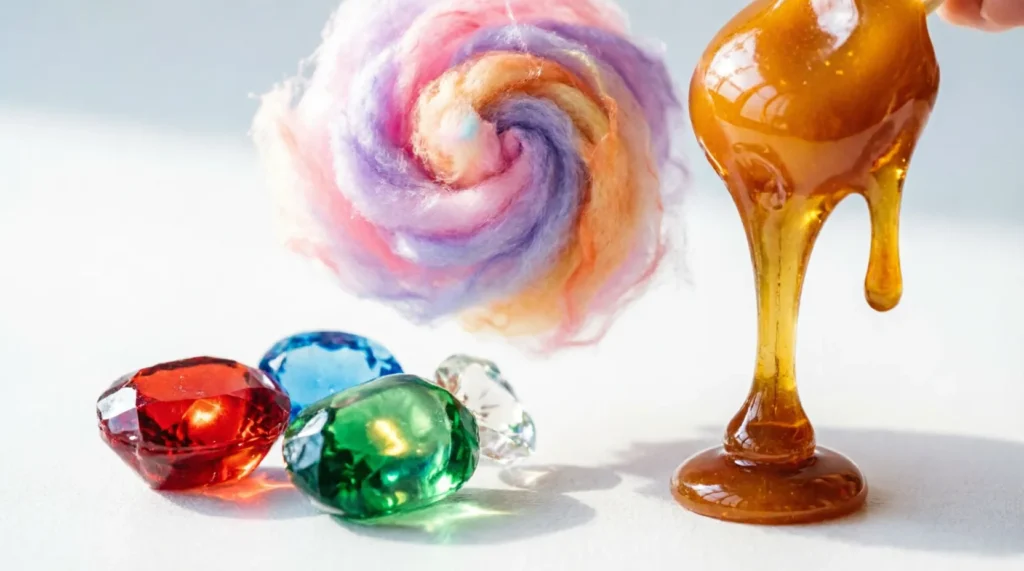
The hard candy sparkled like a jewel in a treasure chest.
The peppermint was as cool as a winter breeze.
The caramel stretched like melted gold.
The candy wrapper crinkled like autumn leaves underfoot.
The jelly bean was as colorful as a painter’s palette.
The candy tasted like a burst of sunshine.
The chocolate bar was as smooth as silk.
The cotton candy floated like a pink cloud in the sky.
The sour candy hit my tongue like a lightning bolt.
The gumdrop was as bright as a neon sign.
The candy cane stood straight like a tiny shepherd’s staff.
The toffee was as chewy as warm taffy on a boardwalk.
The candy glittered like stars on a clear night.
The gummy worm wiggled like a playful snake.
The candy shop smelled like a dream made of sugar.
The chocolate truffle was as rich as a king’s feast.
The candy pieces scattered like colorful confetti.
The lollipop was as round as the full moon.
The sweet flavor lingered like a favorite song.
The candy jar was as full as a treasure chest.
The candy coating cracked like thin ice beneath a boot.
These examples work well because they create strong imagery. They help your readers see, taste, and even feel the candy through sensory details.
Good similes also connect candy to things people already know. That familiar comparison makes your writing easier to imagine and enjoy.
Next, let’s look at how you can create your own similes for candy.
How to Use Similes for Candy in Your Writing
Think about what makes the candy special. Is it sweet, colorful, sour, shiny, chewy, or crunchy? Pick the quality you want your reader to notice.
Find something with a similar quality. If your candy is bright, you might compare it to a rainbow, a jewel, or fireworks.
Use “like” or “as” to build your simile. These words signal that you’re making a comparison.
Make the comparison specific and vivid. Instead of saying “sweet as food,” try “sweet as honey on warm biscuits.”
Example sentence:
“Amira unwrapped the lollipop, and it glowed like a tiny rainbow trapped in her hand.”
When you practice often, creating similes for candy becomes much easier and more natural.
Similes for Candy in Poems and Stories
Candy appears in many poems, stories, and creative writing activities because it is colorful, familiar, and full of sensory details.
Here’s a short poem example:
The cotton candy drifted like a cloud, Pink and light above the crowd, Sweet as a dream on summer air, A sugary treasure beyond compare.
Story example:
Jamal reached into the candy jar. The jelly beans sparkled like scattered gemstones, and each one tasted as bright as sunshine.
Another creative example:
Sofia opened the wrapper slowly. The chocolate melted like velvet on her tongue, leaving behind a sweetness that lingered like a favorite melody.
Poets and authors use similes for candy because they create emotion, imagery, and rhythm. A strong simile helps your readers experience the moment instead of simply reading about it.
Before you start writing your own, it’s helpful to know some common mistakes.
Common Mistakes Students Make With Similes for Candy
Using comparisons that don’t make sense A simile should connect two things with a shared quality. If the comparison feels random, readers may become confused.
Forgetting to use “like” or “as” Without these words, your comparison may become a metaphor instead of a simile.
Choosing boring or overused comparisons “Sweet as sugar” works, but you can often create something more memorable and interesting.
Mixing too many comparisons together Using several similes in one sentence can overwhelm your reader. Pick the strongest one.
Ignoring the candy’s specific qualities Different candies have different textures, flavors, and appearances. A sour candy should not be described the same way as a soft chocolate truffle.
These mistakes are very common, and with practice, you’ll learn how to avoid them naturally.
Let’s make learning even more fun with some activities.
Fun Activities to Practice Similes for Candy
Candy Comparison Challenge Grab a pencil and write down five different candies. Challenge yourself to create a unique simile for each one.
Draw and Describe Draw your favorite candy, then write three similes that describe its appearance, taste, and texture.
Simile Match Game Write candy names on one set of cards and comparison ideas on another. Mix them up and try to create the best matches.
Reading Detective Read a story or poem and look for similes. Notice how writers use comparisons to make descriptions more vivid.
Group Writing Relay In a classroom or family group, have each person add one candy simile to a shared story. See how creative the final story becomes.
Worksheet Creation Activity Create your own worksheet by listing candies in one column and possible comparisons in another. Draw lines to connect matching ideas.
These activities help you build confidence while making figurative language feel like a game instead of homework.
What NOT to Do With Similes for Candy
Don’t compare candy to something completely unrelated without a clear connection. Readers should easily understand why the two things are being compared.
Don’t use the same simile repeatedly. Variety keeps your writing fresh and interesting.
Don’t assume every candy should be described as simply “sweet.” Candy can also be colorful, chewy, crunchy, sour, shiny, or soft.
Don’t force a simile into every sentence. Similes are most effective when used thoughtfully and at the right moments.
Understanding what to avoid helps your best comparisons stand out even more.
More similes for candy by Tone and Context
🌿 Natural & Descriptive
“As colorful as a rainbow after spring rain” — Perfect for describing candy with bright, cheerful colors that immediately catch the eye.
“Like berries shining with morning dew” — Works well when describing glossy, fresh-looking candy in vivid detail.
“As bright as autumn leaves in the sunshine” — Use this to highlight candy with rich, warm colors.
“Like tiny blossoms scattered across a meadow” — A gentle simile that fits small, colorful candies arranged together.
“As sparkling as sunlight dancing on a stream” — Great for candy with glittering wrappers or sugary coatings.
💛 Warm & Emotional
“Like a hug from an old friend” — Shows how candy can bring comfort and happy memories.
“As comforting as a favorite childhood song” — A wonderful choice for writing about nostalgic treats.
“Like sunshine on a chilly morning” — Captures the warm, cheerful feeling candy can bring.
“As welcoming as a smile at the front door” — Describes candy shared during celebrations or kind moments.
“Like a pocket full of happy memories” — Ideal for stories about treasured sweets from the past.
✨ Poetic & Romantic
“Like little stars scattered across the night” — Creates a dreamy image of sparkling candy.
“As sweet as a whispered promise” — Adds a gentle, romantic feeling to poems or expressive writing.
“Like moonlight wrapped in sugar” — A creative simile for magical or elegant descriptions.
“As gentle as petals floating on the breeze” — Gives candy a soft, graceful quality in poetic writing.
“Like a tiny wish waiting to come true” — Works beautifully in imaginative poems and stories.
😄 Playful & Fun
“Like a party that fits in your pocket” — A fun way to describe colorful, exciting candy.
“As cheerful as a clown at a birthday party” — Perfect for playful scenes filled with laughter.
“Like confetti you can eat” — Highlights candy that is colorful, festive, and exciting.
“As exciting as opening a surprise gift” — Shows the thrill of unwrapping a favorite sweet.
“Like a tiny burst of celebration” — Great for describing candy that instantly lifts everyone’s mood.
These tone-grouped similes for similes for candy give you options for every kind of writing — whether you need something soft and poetic or bold and fun. Try picking one from each group and using them in a short paragraph to see how different the same keyword can feel.
Using similes for candy in Real Writing Contexts
In a Descriptive Essay
When writing a descriptive essay, you might want to show how candy looks, feels, or reminds people of happy moments. A well-chosen simile helps readers picture it more clearly instead of simply calling it “sweet” or “colorful.” For example: The bowl of candy was as bright as autumn leaves in the sunshine, filling the room with cheerful color.
In a Poem
Similes for candy can make poems feel magical, gentle, or joyful by creating vivid images. They help readers connect emotions with simple objects in creative ways. The candy glowed like little stars scattered across the night, filling my dreams with gentle light.
In a Story or Creative Scene
In a story, similes for candy can describe a setting, a celebration, or a character’s feelings in a memorable way. They add life to ordinary moments without making the writing difficult to understand. Mia smiled as she opened the colorful bag, and the candies spilled across the table like confetti you can eat, making everyone laugh with delight.
In a Social Media Caption or Message
Short similes work especially well in captions and messages because they are easy to read and fun to share. They quickly add personality and excitement to your words. Today’s treats were like a party that fits in your pocket—sweet, colorful, and impossible to resist!
The more you practice placing similes for candy into real sentences, the more natural your writing will sound — and the more your reader will feel exactly what you want them to feel.
Frequently Asked Questions About Similes for Candy
What is a simile for candy?
A simile for candy is a comparison that uses “like” or “as” to describe candy. For example, “The candy was as bright as a rainbow” compares candy to a rainbow to create a vivid image.
How do you use similes for candy in a sentence?
You can compare candy to something that shares a similar quality. For example, “The chocolate melted like snow in the sunshine” helps readers imagine how quickly it melted.
What are some sweet similes for chocolate candy?
You might write, “The chocolate was as smooth as silk” or “The truffle was as rich as a royal feast.” These comparisons highlight texture and flavor.
Why do writers use similes for candy?
Writers use them to make descriptions more vivid and engaging. A good simile helps readers imagine the taste, texture, color, or feeling associated with candy.
Are similes for candy suitable for school assignments?
Yes. They are excellent for creative writing, poetry, descriptive paragraphs, and language arts activities. Many creative writing teachers encourage students to use similes to improve their descriptive skills.
Final Thoughts on Similes for Candy
Similes for candy are a fun and effective way to make your writing more colorful. They help you describe sweetness, texture, color, and flavor in ways that readers can easily picture.
In this guide, you explored more than twenty creative examples, learned how to build your own comparisons, and discovered practical activities for practice. You also saw how similes can improve poems, stories, and classroom assignments.
The more you notice candy’s unique qualities, the easier it becomes to create original similes. Every piece of candy offers new possibilities for imaginative comparisons.
With a little practice, you can use similes for candy to make your writing brighter, more expressive, and more memorable. Happy writing, and enjoy exploring the sweet side of language!
Frequently Asked Questions
What are similes for candy and why are they useful?▼
Similes for candy are comparisons that use ‘like’ or ‘as’ to describe various qualities of candy, such as its sweetness or texture. They help writers and readers visualize the candy more vividly, making descriptions more engaging and relatable.
Can you give me some examples of similes for candy?▼
Sure! Some examples include ‘The candy was as sweet as honey dripping from a spoon’ and ‘The lollipop shone like a tiny rainbow in the sun.’ These similes create strong imagery that enhances the reader’s experience.
How can I create my own similes for candy?▼
To create your own similes, start by identifying what makes the candy special, such as its color or texture. Then, find a familiar object or experience that shares that quality, and use ‘like’ or ‘as’ to form your comparison.
Why do educators encourage the use of similes in writing?▼
Educators promote similes because they enhance descriptive writing and improve reading comprehension. By using similes, students can create more engaging stories that allow readers to better visualize and connect with the content.
What qualities should I focus on when describing candy with similes?▼
When describing candy, consider its sweetness, color, texture, or even the feelings it evokes. Focusing on these qualities can help you craft more vivid and relatable similes.
How can similes improve my writing?▼
Similes can significantly improve your writing by adding flavor and creativity, making your descriptions more vivid and engaging. They allow readers to connect with your writing through familiar comparisons, enhancing their overall experience.
What is the benefit of using similes in storytelling?▼
Using similes in storytelling helps create strong imagery that paints a clearer picture in the reader’s mind. This not only makes the narrative more enjoyable but also aids in conveying emotions and themes effectively.
Using Similes for Candy in Context
Her smile was as sweet as candy melting slowly on your tongue.
The good news spread through the office like candy passed around at Halloween.
He was as addictive to talk to as candy you can’t stop reaching for.
The compliment felt as sweet as candy after a long, sour day.
Her laugh was bright as candy wrappers catching the sunlight.
Liam is a language enthusiast and lead writer at Similepedia.com, where he focuses on creating clear, creative, and easy-to-use similes for everyday writing. He specializes in turning simple ideas into vivid comparisons that make sentences more engaging, expressive, and memorable.
Instead of overcomplicating language with technical jargon, Liam approaches similes as practical tools for better communication. He breaks down how comparisons work, when to use them, and how to make them sound natural — not forced or awkward.
He pays close attention to tone, context, and clarity, ensuring every simile fits smoothly into real sentences. From fun and playful comparisons to more descriptive and expressive ones, Liam helps readers improve how they write, speak, and express ideas.
At Similepedia.com, his mission is simple: make language more colorful and effective without making it complicated. He doesn’t just list similes — he helps readers understand how to use them confidently in real situations.