In short, seep vs seap is about understanding that seep is a real English word, while seap is generally not. If you’ve ever been unsure which spelling to use, this guide will explain the difference with simple examples, easy tips, and fun practice activities to help you remember.
What Are the Seep vs Seap? (And Why They Matter)
Imagine you’re finishing a writing assignment when you want to describe water slowly moving through the ground. You type “seap” because it sounds right—but your spell checker highlights it in red. Sound familiar? You are not alone.
The phrase seep vs seap helps you compare two similar-looking spellings. The important thing to remember is that seep is the correct English word, while seap is almost always a spelling mistake.
The verb seep means to flow or pass slowly through tiny openings or cracks. Water can seep into the soil, light can seep through curtains, and even ideas or emotions can seem to seep into your thoughts over time.
Literacy educators and language arts researchers encourage students to learn commonly confused spellings because doing so improves reading, writing, spelling, and confidence during exams. Once you understand this pair, you will spot the correct word much more quickly.
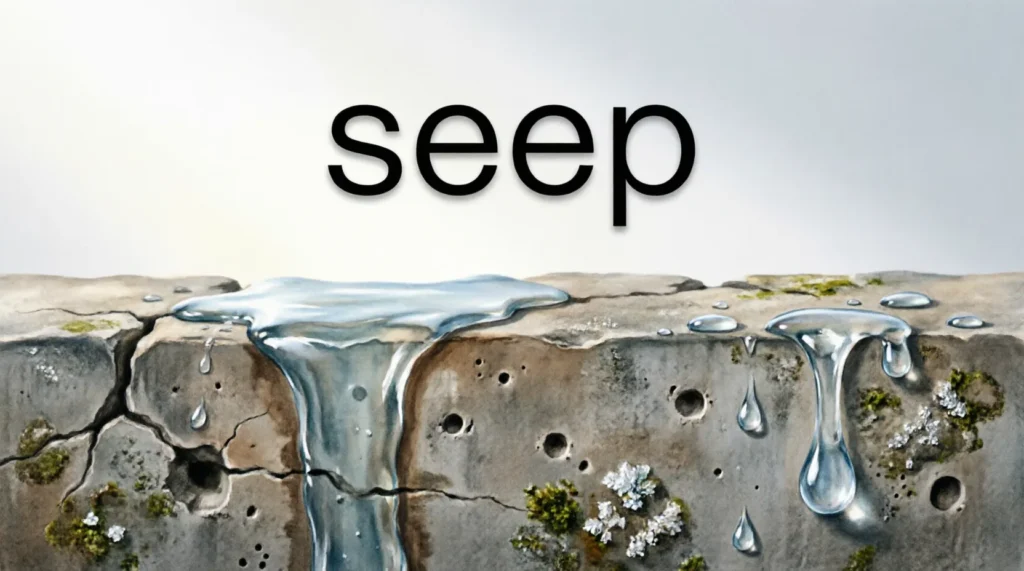
[IMAGE: Water slowly seeping through soil beside the incorrect spelling “seap”]
Now that you know the basic difference, let’s explore real examples that show how seep vs seap works in everyday English.
The Best Examples of the Seep vs Seap
Here are examples showing the correct use of seep and why seap should usually be avoided.
Rainwater began to seep through the tiny crack in the roof.
The morning sunlight seeped through the bedroom curtains.
Tears seemed to seep from her tired eyes.
Oil slowly seeped into the cloth.
The smell of fresh bread seeped through the kitchen.
Cold air seeped under the old door.
Water can seep into the ground after heavy rain.
Hope slowly seeped back into the team’s hearts.
The paint began to seep through the thin paper.
Fog seeped across the quiet valley.
Warmth seeped into his hands by the fireplace.
The news seeped across the school by lunchtime.
Muddy water seeped into the basement.
The ink seeped through the notebook page.
Happiness seeped into Maya’s smile as she read the letter.
Seap is not the correct spelling in standard English.
Instead of writing “Water began to seap through the wall,” write “Water began to seep through the wall.”
If you see seap in a paper, it is usually a simple spelling error that you can fix.
These examples work well because they create clear mental pictures. Creative writing teachers often remind students that vivid verbs like seep help readers imagine movement, texture, and emotion much more easily.
Once you can recognize the correct spelling, using it in your own writing becomes much easier.
How to Use Seep vs Seap in Your Writing
Remember that seep is the correct English word. Before you finish your work, quickly check that you have not accidentally typed seap.
Think about slow movement. You use seep when something moves gradually through small spaces, such as water, light, air, smells, or feelings.
Read your sentence aloud. If you are unsure, ask yourself whether the sentence describes something slowly passing through another object.
Proofread carefully. Many spelling mistakes happen because words sound alike, so giving your work one final review helps you catch errors.
Example sentence:
“The rain continued to seep into the dry ground after the storm.”
The more you notice the word while reading books, the more natural it will feel in your own writing.
Seep vs Seap in Poems and Stories
Poets and authors often choose seep because it creates gentle, gradual movement that readers can picture.
Aisha wrote:
“Golden light began to seep, Painting every leaf asleep.”
Lucas described a forest:
“Mist seeped between the trees as the birds welcomed the morning.”
Priya ended her story with:
“Hope slowly seeped into everyone’s hearts after the storm finally passed.”
Creative writing teachers explain that words like seep make scenes feel alive because they build emotion and strong imagery without using many extra words.
Now let’s look at a few mistakes that many students make when learning seep vs seap.
Common Mistakes Students Make With Seep vs Seap
Writing “seap” instead of “seep.” This is the most common mistake. Simply remember that standard English dictionaries recognize seep, not seap.
Using seep for fast movement.Seep describes slow, gradual movement. A river rushing downhill does not seep.
Forgetting that seep can describe ideas and emotions. You can write that hope, fear, warmth, or happiness seeped into someone’s heart because English often uses the word figuratively.
Skipping proofreading. Even strong writers make spelling mistakes. Reading your work one more time helps you catch them.
Assuming similar pronunciation means similar spelling. English contains many words that sound alike but are spelled differently, so careful spelling always matters.
Everyone makes these mistakes from time to time. The important part is learning how to notice and correct them.
Fun Activities to Practice Seep vs Seap
Word Detective Grab a pencil and search through a storybook or online article. Every time you find the word seep, write down the sentence and explain its meaning.
Sentence Challenge Write five original sentences using seep correctly. Try using water, light, air, smells, and emotions.
Drawing and Writing Draw a picture of rainwater slowly entering the ground. Then write two sentences describing how the water begins to seep into the soil.
Partner Quiz Play with a friend. One person reads sentences aloud while the other decides whether the correct spelling is seep or the incorrect seap.
Editing Practice Create a short paragraph with several spelling mistakes, including seap. Then challenge yourself to find and correct every error.
Practicing in different ways helps you remember the correct spelling much faster.
What NOT to Do With Seep vs Seap
Do not assume “seap” is another accepted spelling. In standard English, it is not. Use seep instead.
Do not use seep for sudden actions. The word suggests slow and gradual movement, not quick changes.
Do not ignore context. Ask yourself whether something is moving gently through small spaces. If not, another verb may work better.
Do not depend only on spell check. Technology helps, but your own understanding makes you a stronger writer.
Learning what not to do is just as valuable as learning the correct usage.
Frequently Asked Questions About Seep vs Seap
Is seep or seap the correct spelling?
The correct spelling is seep. The spelling seap is generally considered a misspelling in standard English.
What does seep mean?
Seep means to move slowly through tiny holes, cracks, or spaces. It can describe liquids, gases, light, smells, and even emotions.
Why do people write seap instead of seep?
Many people confuse the spellings because they sound similar when spoken. Careful proofreading helps you catch this common mistake.
Can seep be used figuratively?
Yes. Writers often say that hope seeped into someone’s heart or that fear seeped through a crowd. These uses create vivid imagery and emotional depth.
How can I remember seep vs seap?
Remember that seep has two “e” letters, just like “deep.” Imagine water slowly moving deep into the ground to help you remember the correct spelling.
Final Thoughts on Seep vs Seap
Understanding seep vs seap is simpler than it first appears. The real English word is seep, and it describes something moving slowly through small spaces.
You also learned that seep can be used both literally and figuratively. Whether you are describing water, sunlight, air, or emotions, it adds rich detail to your writing.
Literacy researchers and language arts educators agree that mastering commonly confused words improves spelling, reading comprehension, and writing confidence. Every time you practice, you strengthen your vocabulary.
Keep reading, keep writing, and keep checking your spelling. With a little practice, you will remember seep every time, and your writing will become clearer and stronger with every new sentence.
Sara Liu holds a Master’s degree in English Education from the University of Washington and has been an educator for over 15 years. She specializes in curriculum development for elementary and middle school students, with a particular focus on figurative language. Sara’s love for similes and metaphors blossomed when she discovered their power to spark imagination and convey emotion. At SimilePedia, Sara creates engaging worksheets and reference guides that help young learners grasp the nuances of figurative language. Her favorite part of writing content is developing resources that make complex concepts accessible to children. She is passionate about nurturing a love for words and creativity in her students, and her contributions are shaped by this commitment.