In short, example of similes for kids means simple and fun comparisons that use the words “like” or “as” to describe people, places, feelings, or things. These examples help children make their writing more colorful, interesting, and memorable. Keep reading to discover great examples, writing tips, and activities you can use right away.
What Are Example of Similes for Kids? (And Why They Matter)
Have you ever stared at a blank page and wondered how to make your writing sound more exciting? Maybe your teacher asked for a simile, and you weren’t quite sure where to start. If that sounds familiar, you’re in the right place.
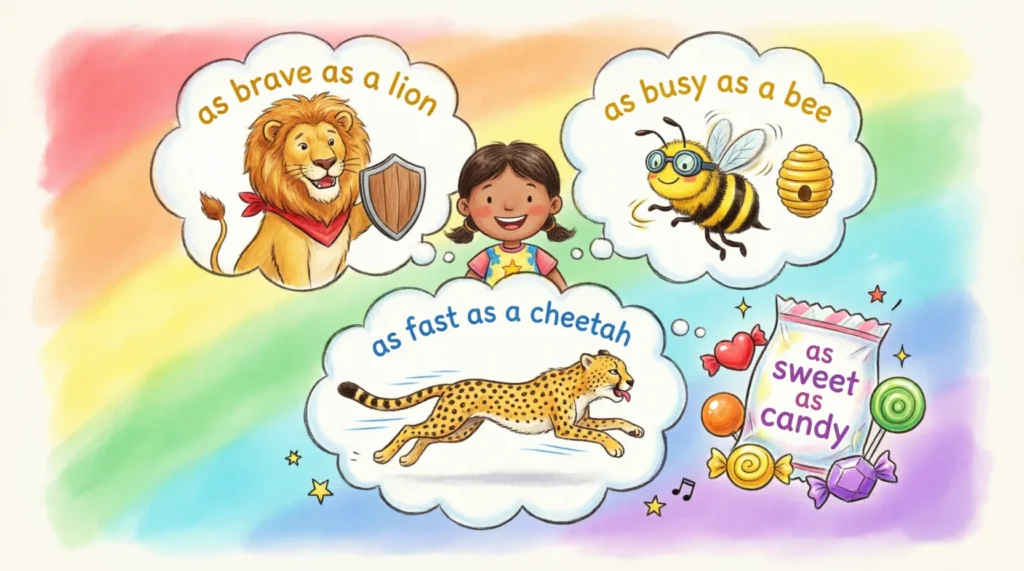
An example of similes for kids is a comparison that uses the words “like” or “as” to help readers imagine something more clearly. Similes make writing vivid by connecting one thing to another in a creative way.
For example, instead of saying, “The rabbit was fast,” you could write, “The rabbit was as fast as the wind.” The second sentence creates a stronger picture in your reader’s mind.
Language arts researchers and literacy educators often encourage students to learn similes because they improve descriptive writing, reading comprehension, storytelling, and creative thinking. Once you understand how similes work, you can make almost any piece of writing more engaging.
Now that you know what similes are, let’s explore some of the best examples you can use in your own writing.
The Best Examples of Example of Similes for Kids
The baby slept like a peaceful kitten.
Her smile was as bright as the sun.
The ice cream was as cold as snow.
He ran like a cheetah chasing its prey.
The classroom was as quiet as a library.
My backpack felt as heavy as a boulder.
The stars sparkled like diamonds in the sky.
She was as busy as a bee.
The pillow was as soft as a cloud.
The puppy followed me like a shadow.
His laugh sounded like a ringing bell.
The water was as clear as glass.
The leaves danced like butterflies in the wind.
The little boy was as brave as a lion.
The cake was as sweet as honey.
The thunder roared like a giant drum.
The snake moved like a ribbon across the ground.
Her hair shone like gold in the sunlight.
The race car was as fast as lightning.
The kitten was as playful as a clown.
The moon hung in the sky like a glowing lantern.
My brother eats like a hungry bear.
The pond was as smooth as a mirror.
The popcorn popped like tiny fireworks.
The alarm clock was as loud as a marching band.
These examples work well because they create clear mental pictures. When you read them, you can almost see, hear, taste, or feel what the writer is describing.
Creative writing teachers often encourage students to choose comparisons that connect with everyday experiences. The more relatable your simile is, the easier it is for your reader to understand.
With these examples in mind, let’s look at how you can create and use similes in your own writing.
How to Use Example of Similes for Kids in Your Writing
Using an example of similes for kids is easier than you might think. Follow these simple steps:
Choose something you want to describe clearly. Think about a person, place, object, or feeling in your writing.
Ask yourself what it reminds you of. Look for something with a similar quality, such as speed, brightness, size, or sound.
Connect the two things with “like” or “as.” This is what turns your comparison into a simile.
Make sure the comparison helps the reader imagine the scene. Pick comparisons that are easy to understand and interesting to picture.
Example sentence:
“The soccer ball flew across the field like a shooting star.”
In this sentence, you can easily imagine the ball moving quickly through the air. That’s the power of a good simile.
Once you start noticing comparisons around you, you’ll find similes everywhere—in books, songs, poems, and stories.
Example of Similes for Kids in Poems and Stories
Poets and authors use similes to add emotion, imagery, and rhythm to their writing. They help readers feel more connected to a scene or character.
Here are a few short examples:
Aisha looked at the sky.
“The clouds floated like cotton candy, Drifting softly overhead.”
Miguel raced toward the finish line.
“His feet moved like lightning, And his heart beat like a drum.”
Priya opened the old treasure chest.
“The jewels sparkled like stars, Lighting the dark room with color.”
These small examples show how similes can make ordinary descriptions feel special. When you use them carefully, your stories become more exciting and memorable for readers.
As you practice, you’ll also learn what mistakes to avoid.
More example of similes for kids by Tone and Context
“As bright as the morning sun” — Shows someone or something full of light and happiness, making it perfect for cheerful descriptions.
“Like leaves dancing in the breeze” — Captures gentle movement and works well when describing nature or playful moments.
“As calm as a quiet pond” — Expresses peacefulness and is useful in descriptive essays about relaxing places or people.
“Like raindrops sparkling on flowers” — Highlights beauty and freshness, adding colorful detail to a scene.
“As fresh as spring grass” — Suggests something new, lively, and full of energy, making descriptions feel more vivid.
💛 Warm & Emotional (for personal stories, letters, heartfelt writing)
“Like a warm blanket on a cold day” — Describes comfort, kindness, or a feeling of safety in personal writing.
“As welcoming as an old friend” — Shows friendliness and trust, making it a great choice for letters or memories.
“Like a candle lighting a dark room” — Suggests hope and encouragement during difficult moments.
“As gentle as a caring smile” — Emphasizes kindness and compassion in emotional stories.
“Like a hug that never lets go” — Expresses lasting love and support in heartfelt writing.
✨ Poetic & Romantic (for poems, song lyrics, love writing)
“Like stars whispering across the sky” — Creates a dreamy image that fits poems and lyrical writing.
“As graceful as a feather floating on the wind” — Describes smooth movement with a soft, elegant tone.
“Like moonlight resting on the water” — Adds a peaceful and magical feeling to creative writing.
“As endless as the evening sky” — Suggests something that feels limitless, making it suitable for reflective poems.
“Like a melody carried by the breeze” — Brings together sound and movement to create a gentle, poetic mood.
😄 Playful & Fun (for casual use, social media captions, humor)
“As bouncy as popcorn in a pan” — Describes excitement and endless energy in a fun way.
“Like a puppy chasing its own tail” — Shows playful behavior and works well in funny stories.
“As wiggly as a bowl of jelly” — Adds humor when describing movement or laughter.
“Like a rocket zooming into space” — Highlights speed and excitement in everyday situations.
“As cheerful as a parade on a sunny day” — Expresses happiness and celebration in a lively, memorable way.
These tone-grouped similes for example of similes for kids give you options for every kind of writing — whether you need something soft and poetic or bold and fun. Try picking one from each group and using them in a short paragraph to see how different the same keyword can feel.
Using example of similes for kids in Real Writing Contexts
In a Descriptive Essay
When writing a descriptive essay, students can use example of similes for kids to help readers picture people, places, or objects more clearly. A simple comparison makes ordinary details more interesting and memorable. For example: “The playground was as lively as a buzzing beehive, filled with children laughing and running in every direction.”
In a Poem
Example of similes for kids can create mood and bring colorful images into a poem. Comparing one thing to another helps readers imagine the scene and connect with the feelings behind the words. For example: “Your smile shines like the morning sun, bringing hope when the day has just begun.”
In a Story or Creative Scene
In stories, example of similes for kids can describe a character’s emotions, actions, or surroundings in a way that feels vivid and engaging. They help readers step into the scene and experience it more clearly. For example: “Maya held the mysterious map like a precious treasure, afraid that even the smallest breeze might carry it away.”
In a Social Media Caption or Message
Short similes make captions and messages more fun, expressive, and easy to remember. They add personality without making the writing too long. For example: “Today was as sweet as fresh cookies—couldn’t have asked for a better day! 😊”
The more you practice placing similes for example of similes for kids into real sentences, the more natural your writing will sound — and the more your reader will feel exactly what you want them to feel.
Common Mistakes Students Make With Example of Similes for Kids
Using a comparison that doesn’t make sense Sometimes students compare two things that have nothing in common. Make sure your comparison helps the reader understand the description.
Forgetting to use “like” or “as” Similes need one of these words. Without them, you may accidentally create a metaphor instead.
Overusing similes in every sentence Too many comparisons can make writing feel crowded. Choose a few strong similes rather than adding them everywhere.
Choosing boring or overused comparisons Similes such as “as busy as a bee” work well, but you can make your writing more original by creating fresh comparisons.
Focusing only on appearance Many students compare how things look but forget about sounds, smells, tastes, and feelings. Using all the senses makes your similes stronger.
These mistakes are completely normal when you’re learning. The good news is that they become easier to spot with practice.
Speaking of practice, here are some fun activities you can try today.
Fun Activities to Practice Example of Similes for Kids
Simile Scavenger Hunt Grab a pencil and search through books, magazines, or websites. See how many similes you can find in 15 minutes.
Finish the Simile Challenge Write prompts such as “as cold as…” or “like a…” and challenge yourself to complete them in creative ways.
Draw and Describe Draw an animal, object, or scene. Then write three similes that describe what you drew.
Simile Matching Game Create cards with descriptions on one side and comparisons on the other. Mix them up and try to find the correct matches.
Story Expansion Activity Take a short paragraph from a worksheet or book and add two or three similes to make it more descriptive.
Group Simile Contest Play with friends or classmates. Pick a topic and see who can create the most imaginative simile in one minute.
These activities help you practice without feeling like you’re doing extra homework.
Before you start creating similes, it’s helpful to know a few habits to avoid.
What NOT to Do With Example of Similes for Kids
Don’t compare things randomly. A simile should help readers understand something better, not confuse them.
Don’t use the same simile repeatedly. Variety makes your writing more interesting and enjoyable to read.
Don’t force a simile into every paragraph. Sometimes a simple description works better than a comparison.
Don’t assume every comparison is a simile. Remember that similes specifically use the words “like” or “as.”
Knowing what to avoid can help you use similes more effectively and confidently.
Frequently Asked Questions About Example of Similes for Kids
What is a simple simile for kids?
A simple simile compares two things using “like” or “as.” For example, “The pillow was as soft as a cloud” is easy for children to understand and imagine.
How do you use a simile in a sentence for kids?
You can place a simile anywhere it helps describe something clearly. For example: “The dog ran like the wind across the park.” The comparison makes the action more vivid.
Why are similes important for kids?
Similes help you create stronger descriptions and improve creative writing. They also help readers picture what you are describing more easily.
What is the difference between a simile and a metaphor?
A simile uses “like” or “as” to compare two things. A metaphor makes a direct comparison without those words. For example, “He is as brave as a lion” is a simile, while “He is a lion” is a metaphor.
Are similes appropriate for elementary school students?
Yes. Similes are often introduced in elementary school because they are simple, fun, and useful for developing writing skills. Many literacy educators use them as one of the first types of figurative language students learn.
Final Thoughts on Example of Similes for Kids
Learning an example of similes for kids is one of the easiest ways to make writing more colorful and engaging. Whether you are describing a person, an animal, a place, or a feeling, similes help your readers see exactly what you mean.
In this guide, you explored what similes are, why they matter, how to use them, and many creative examples you can borrow for your own work. You also learned common mistakes to avoid and fun activities that make practice enjoyable.
The more you read and write, the easier creating similes becomes. Soon you’ll start noticing comparisons everywhere around you and using them naturally in your stories and poems.
Keep practicing, stay curious, and remember that every great writer started by learning simple tools like similes—your next amazing sentence might be just one comparison away.
Frequently Asked Questions
What are similes and why are they important for kids' writing?▼
Similes are comparisons that use the words ‘like’ or ‘as’ to help create vivid imagery in writing. They are important for kids because they enhance descriptive writing, making it more colorful and memorable, which helps readers engage with the text.
Can you give some examples of similes for kids?▼
Sure! Some fun examples include ‘The baby slept like a peaceful kitten’ and ‘Her smile was as bright as the sun.’ These comparisons help paint a clear picture in the reader’s mind.
How can I encourage my child to use similes in their writing?▼
You can encourage your child to use similes by asking them to describe everyday objects or feelings in a creative way. Suggest they think of things that remind them of those objects or feelings and use ‘like’ or ‘as’ to make their comparisons.
What makes a good simile?▼
A good simile is relatable and connects with the reader’s everyday experiences. It should evoke a clear mental image, allowing the reader to visualize the comparison effectively.
How do similes improve storytelling for kids?▼
Similes improve storytelling by making descriptions more vivid and engaging, which helps capture the reader’s attention. They also encourage creative thinking, allowing young writers to express their ideas in more imaginative ways.
What steps can kids follow to create their own similes?▼
Kids can create their own similes by first choosing something they want to describe, thinking about what it reminds them of, and then connecting the two with ‘like’ or ‘as.’ This process helps them express their thoughts more clearly.
Why should teachers encourage the use of similes in language arts?▼
Teachers should encourage the use of similes because they enhance reading comprehension and descriptive writing skills. By learning to use similes, students can make their writing more engaging and relatable, improving their overall communication.
Sara Liu holds a Master’s degree in English Education from the University of Washington and has been an educator for over 15 years. She specializes in curriculum development for elementary and middle school students, with a particular focus on figurative language. Sara’s love for similes and metaphors blossomed when she discovered their power to spark imagination and convey emotion. At SimilePedia, Sara creates engaging worksheets and reference guides that help young learners grasp the nuances of figurative language. Her favorite part of writing content is developing resources that make complex concepts accessible to children. She is passionate about nurturing a love for words and creativity in her students, and her contributions are shaped by this commitment.