In short, similes for conflict are comparisons that help you describe arguments, struggles, disagreements, and emotional tension in vivid ways. They make your stories, essays, and poems more expressive and easier for readers to imagine. Keep reading to discover creative examples and simple ways you can use them in your own writing.
What Are the Similes for Conflict? (And Why They Matter)
[IMAGE: student thinking about how to describe an argument in a story]
Have you ever stared at a blank page and known your characters were fighting, but you couldn’t think of a good way to describe it? Many students face that problem when writing stories or personal narratives.
Similes for conflict are comparisons that use words like “as” or “like” to describe struggles, arguments, battles, or disagreements. They help you paint a clearer picture in your reader’s mind.
These comparisons matter because they make your writing more emotional and interesting. Whether you are working on a school assignment, reading literature, or creating a short story, similes can make tense moments feel real.
Language arts researchers and literacy educators often encourage students to use figurative language because it improves creativity and reading comprehension. The more descriptive your writing becomes, the easier it is for readers to connect with your ideas.
Now that you know why these comparisons matter, let’s explore some vivid examples you can use right away.
The Best Examples of the Similes for Conflict
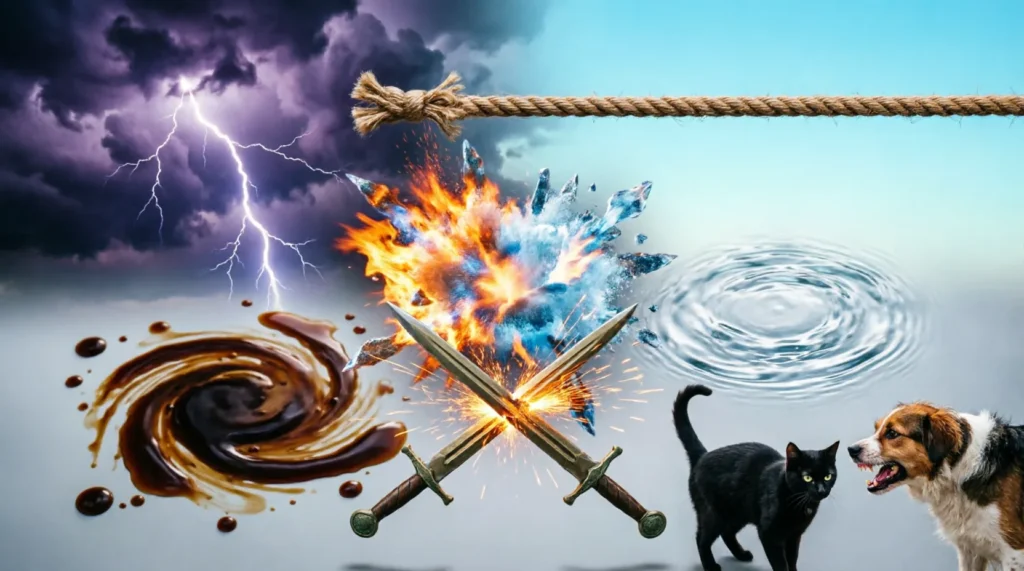
[IMAGE: two storm clouds representing tension]
Here are some strong and creative examples of similes for conflict:
Their argument was like a thunderstorm crashing across the sky.
The disagreement spread like wildfire through the group.
The tension between them was like a stretched rubber band ready to snap.
Their rivalry was like two bulls locking horns.
The debate was like a tug-of-war with no winner.
His anger exploded like a volcano.
The family feud was like a crack in a mirror that kept growing.
Their words hit each other like waves smashing against rocks.
The conflict was like a battlefield covered in smoke.
The argument felt like nails scraping across a chalkboard.
Their friendship broke apart like thin ice under heavy feet.
The fight was like a storm at sea tossing a ship around.
The disagreement spread like weeds in a garden.
Their opinions clashed like cymbals in a marching band.
The tension hung over the room like dark clouds before rain.
Their quarrel was like a knot that kept getting tighter.
The conflict was like a chess match filled with traps.
Their rivalry burned like a campfire left unattended.
The debate was like a roller coaster with sudden drops.
Their harsh words were like arrows flying through the air.
The conflict moved through the team like poison spreading through water.
Their disagreement was like a pressure cooker ready to burst.
The fight was like two cats hissing at each other.
Their rivalry was like a game of chess between stubborn masters.
The tension between siblings was like static electricity in the air.
These examples work well because they create strong imagery. Some appeal to sound, while others use pictures from nature or everyday life.
Creative writing teachers often encourage you to choose comparisons that match the emotions of your scene. A powerful image helps readers feel the conflict instead of simply reading about it.
Once you know good examples, you can begin using them in your own writing.
How to Use the Similes for Conflict in Your Writing
Using similes for conflict becomes easier when you follow a few simple steps.
Identify the kind of conflict you are describing.
Think about whether it is anger, rivalry, disappointment, or an argument.
Find something familiar that feels similar.
Storms, volcanoes, battles, and knots are all useful images.
Use “like” or “as” to create the comparison.
For example:
“Jake and Omar argued like two bulls locking horns, neither willing to give up.”
Keep the comparison clear and natural.
You want your reader to understand the image without becoming confused.
As you practice, you’ll notice that similes make your writing sound more vivid and emotional.
Similes for Conflict in Poems and Stories
Poets and authors use similes for conflict because they add emotion, rhythm, and imagery.
Here’s a short poem by Aisha:
“Their voices rose like thunder in the rain, Their friendship bent like branches in a strain, Yet hope remained like sunlight after pain.”
Here’s a story moment featuring Mateo:
“Mateo and his cousin argued like waves crashing against the shore. No matter how often they calmed down, another burst of anger returned.”
Another example comes from Priya:
“The classroom tension hung like dark clouds. Everyone waited for the storm to break.”
Writers use these kinds of comparisons because they help readers feel fear, frustration, and suspense. That’s why similes appear so often in stories, songs, and poetry.
Knowing how authors use them can help you create stronger writing of your own.
Common Mistakes Students Make With the Similes for Conflict
Using random comparisons
A comparison should match the feeling of conflict. Saying an argument was “like a fluffy pillow” might confuse readers.
Forgetting to use “like” or “as”
Without those words, you may accidentally create a metaphor instead of a simile.
Making comparisons too long
Simple images are easier for readers to understand.
Repeating the same storm simile every time
This is common. Try using sports, animals, or everyday objects to create variety.
Using funny images in serious scenes
If your story is emotional, silly comparisons can weaken the mood. Matching the tone is important.
These mistakes are normal, and with practice, you’ll learn which comparisons fit best.
Fun Activities to Practice the Similes for Conflict
Draw a storm, volcano, or chessboard, then write a simile inspired by your picture.
Create a Simile Match Game.
Write conflicts on one card and comparison ideas on another. Mix and match them with friends.
Grab a pencil and write three story scenes.
Challenge yourself to include one simile in each scene.
Play a Classroom Debate Game.
After a debate, describe the experience using similes for conflict.
Create a worksheet.
Write ten examples and ask a partner to decide which ones fit best.
Read books and hunt for similes.
You will discover how professional writers describe arguments and tension.
These activities make figurative language practice much more enjoyable.
What NOT to Do With the Similes for Conflict
Don’t force a comparison into every sentence.
Too many similes can overwhelm your reader.
Don’t copy the exact same examples from everyone else.
Original comparisons make your writing stand out.
Don’t confuse conflict with violence.
Not every conflict involves fighting. Some conflicts are emotional or internal.
Don’t assume serious conflicts always need dark images.
Sometimes a simple comparison can be more powerful than an extreme one.
Understanding what to avoid helps you use figurative language more effectively.
Frequently Asked Questions About the Similes for Conflict
What is a simile for conflict?
A simile for conflict compares a struggle or disagreement to something else using “like” or “as.” For example, “Their argument was like a thunderstorm.” These comparisons make writing more vivid and emotional.
How do you use similes for conflict in a sentence?
You can compare a disagreement to something familiar. For example, “The brothers argued like two bulls locking horns.” This creates a strong image for your reader.
What is the difference between a metaphor and similes for conflict?
Similes use words like “like” or “as.” Metaphors make direct comparisons without those words. Both create imagery, but similes make the comparison more obvious.
Are similes for conflict suitable for middle school students?
Yes. They are great for Grades 5–8 because they improve descriptive writing and creative thinking. Many literacy researchers and creative writing teachers recommend practicing figurative language at these grade levels.
Why do writers use similes for conflict?
Writers use them to show emotions and tension more clearly. Readers can imagine the scene better and feel more connected to the characters.
Final Thoughts on the Similes for Conflict
Learning similes for conflict can help you bring arguments, struggles, and emotional moments to life. Instead of simply saying people disagreed, you can create images that readers remember.
You explored dozens of examples, learned how to use them, and discovered common mistakes to avoid. You also saw how poets and authors use these comparisons to create emotion and suspense.
Creative writing teachers and language arts educators know that figurative language helps students become stronger writers. With practice, you can develop your own unique style.
Keep experimenting, trust your imagination, and remember that every great writer starts with simple comparisons—your words can paint powerful pictures too.
Jamal Rodriguez is a poet and author who has been writing professionally for over a decade. With a Bachelor’s degree in Creative Writing, Jamal’s expertise lies in the use of vivid imagery and emotional depth in poetic language. Fascinated by the limitless possibilities of similes and metaphors, he joined SimilePedia to share his knowledge with budding writers. Jamal focuses on creating content for creative writers and poets, helping them understand the emotional resonance that figurative language can evoke. Through his work, he aims to inspire others to explore their own creative boundaries and embrace the beauty of language as an art form. His contributions include a range of exercises that stimulate imagination across all grade levels.