In short, similes for second graders are simple comparisons that help you describe something by using “like” or “as.” They make writing more fun, colorful, and easy to understand by connecting ideas to things you already know. In this guide, you’ll find examples, activities, and tips that will help you use similes with confidence in your own writing.
What Are Similes for Second Graders? (And Why They Matter)
Imagine you’re trying to describe how fast a cheetah runs, but you only say “It is fast.” Your teacher might ask, “How fast?” and suddenly your words feel too small. That’s where similes for second graders come in to save the day.
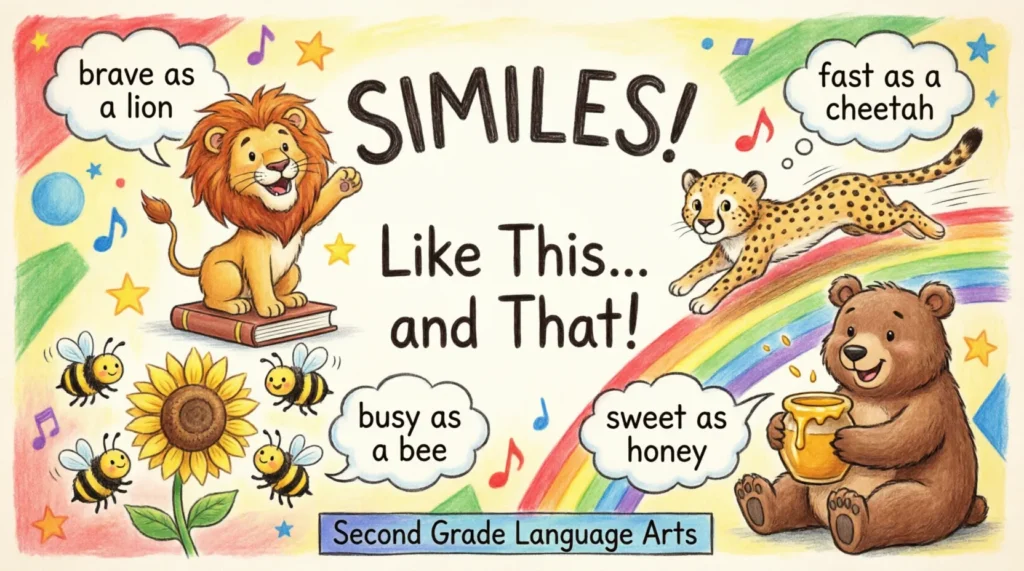
Similes are simple comparisons that use the words “like” or “as” to show how one thing is similar to another. For example, “as fast as a cheetah” helps your reader see the speed in their mind.
Similes for second graders matter because they help you become a stronger writer and storyteller. Literacy educators often explain that young learners understand and remember ideas better when they are connected to images or familiar objects.
When you use similes, your writing becomes more exciting, more creative, and easier for others to imagine. Next, let’s explore lots of fun examples you can start using right away.
The Best Examples of Similes for Second Graders
Here are simple, fun, and creative similes for second graders that you can use in your writing, homework, or stories:
As busy as a bee in a flower garden
As bright as the sun on a summer morning
As soft as a fluffy cloud in the sky
As quiet as a sleeping kitten
As fast as a racing cheetah
As cold as ice cream on a winter day
As happy as a child on a playground
As sweet as candy in a jar
As tall as a giraffe reaching leaves
As light as a feather floating down
As shiny as a new penny
As slow as a sleepy turtle
As brave as a superhero in a comic book
As colorful as a box of crayons
As gentle as a soft breeze
As strong as a big elephant
As messy as a paint-covered art table
As tricky as a puzzle with missing pieces
As warm as fresh cookies from the oven
As calm as a quiet lake at dawn
These similes for second graders work well because they use things you already know—animals, food, weather, and everyday objects. They help your reader feel the idea instead of just reading it.
When you use strong images like these, your writing becomes easier to understand and much more fun to read.
How to Use Similes for Second Graders in Your Writing
You don’t need to be a professional writer to use similes. You just need imagination and a little practice. Here’s how you can start using similes for second graders in your own sentences:
Think about what you want to describe (like a person, animal, or feeling).
Choose something familiar to compare it with (like food, animals, or objects).
Use “like” or “as” to connect them in a sentence.
Read your sentence out loud to see if it paints a picture in your mind.
For example, you could write: “The baby is as quiet as a sleeping kitten.” This helps your reader clearly imagine the calm scene.
The more you practice similes for second graders, the easier it becomes to turn simple sentences into creative ones.
Similes for Second Graders in Poems and Stories
Writers and poets love using similes because they add emotion and imagination. Similes for second graders can make even simple stories feel magical.
Here are some short creative examples:
Lina skipped home as happy as a bird in spring. Her backpack bounced behind her like a tiny drum.
The night sky was as dark as a velvet blanket, and Amir whispered his dreams to the stars.
Maya’s laughter was as bright as sunshine, filling the room with joy.
Poets and authors use similes because they help readers see and feel the story more deeply. They also make rhythm and description more interesting.
When you start adding similes for second graders into your stories, your writing becomes more colorful and alive.
Common Mistakes Students Make With Similes for Second Graders
Learning similes is fun, but it’s normal to make a few mistakes at first. Here are some common ones and how you can fix them:
Forgetting to use “like” or “as” Some students just compare without the correct words. Always remember, similes need “like” or “as.”
Comparing things that don’t make sense Saying “as fast as a rock” doesn’t create a clear image. Try to choose comparisons that actually match.
Using the same examples again and again It’s okay to use favorites, but try new ideas to make your writing more interesting.
Making sentences too long or confusing Keep your similes short and clear so your reader can easily understand them.
Mixing similes and metaphors by accident Similes use “like” or “as,” while metaphors do not. Knowing the difference helps you improve quickly.
Fun Activities to Practice Similes for Second Graders
Try these fun activities to practice your skills and become a simile expert:
Simile Scavenger Hunt Look around your classroom or home and create similes for objects you see. For example, “The pillow is as soft as a cloud.”
Draw and Describe Draw your favorite animal and write three similes to describe it. This helps your imagination grow.
Finish the Sentence Game Start with “as ___ as” and let your friends or family complete it with creative ideas.
Simile Story Time Write a short story and include at least five similes for second graders to make it more exciting.
Nature Walk Writing Go outside, observe nature, and write similes about what you see, hear, or feel.
Simile Challenge Cards Write nouns on cards (like “rain,” “cat,” “sun”) and randomly pick them to create similes.
What NOT to Do With Similes for Second Graders
Here are a few things you should avoid when using similes:
Don’t use unclear comparisons If your reader can’t picture it, the simile won’t work well.
Don’t forget “like” or “as” Without these words, your sentence is no longer a simile.
Don’t overuse similes in every sentence Too many can make your writing feel crowded instead of smooth.
More similes for second graders by Tone and Context
“As curious as a squirrel in spring” — Shows a second grader eagerly exploring and asking questions, making it perfect for classroom or nature writing.
“Like a flower opening to the morning sun” — Describes a child becoming more confident and ready to learn.
“As bright as a rainbow after rain” — Highlights a cheerful personality or positive attitude in descriptive writing.
“Like a gentle breeze through tall grass” — Captures a calm, kind, and peaceful nature.
“As lively as birds singing at sunrise” — Emphasizes energy, excitement, and happiness during school or play.
💛 Warm & Emotional (for personal stories, letters, heartfelt writing)
“Like a warm hug on a chilly day” — Describes a second grader who makes others feel safe and welcome.
“As caring as an older sibling” — Shows kindness and a willingness to help friends or classmates.
“Like sunshine filling a classroom” — Expresses how one cheerful student can brighten everyone’s day.
“As dependable as your favorite storybook” — Works well when describing a trustworthy and reliable child.
“Like a smile shared between good friends” — Highlights friendship, happiness, and positive connections.
✨ Poetic & Romantic (for poems, song lyrics, love writing)
“As hopeful as the first star at dusk” — Creates a gentle, inspiring image of dreams and possibilities.
“Like a melody drifting through the air” — Suggests a second grader’s joyful spirit or gentle laughter.
“As gentle as moonlight on a quiet lake” — Fits poems that focus on calmness and innocence.
“Like a tiny spark lighting the darkness” — Represents a child whose enthusiasm inspires those around them.
“As peaceful as snow resting on the hills” — Paints a quiet and comforting picture for reflective writing.
😄 Playful & Fun (for casual use, social media captions, humor)
“Like popcorn popping in the microwave” — Describes endless excitement and energetic movement.
“As bouncy as a rubber ball” — Perfect for showing playful energy during recess or games.
“Like a puppy chasing its own tail” — Captures funny, carefree enthusiasm.
“As busy as crayons on the first day of school” — Describes a classroom full of creativity and activity.
“Like confetti flying through the air” — Shows joyful excitement and celebration in a fun, colorful way.
These tone-grouped similes for similes for second graders give you options for every kind of writing — whether you need something soft and poetic or bold and fun. Try picking one from each group and using them in a short paragraph to see how different the same keyword can feel.
Using similes for second graders in Real Writing Contexts
In a Descriptive Essay
When writing about young students, a simile can help readers picture their personalities, energy, or love of learning. Instead of simply saying they are curious or cheerful, compare them to something familiar and vivid. The second graders were as curious as squirrels in spring, exploring every new activity with bright smiles and endless questions.
In a Poem
Similes for second graders can create a warm, joyful mood in poetry by comparing children to gentle or beautiful images from nature. These comparisons help readers feel the innocence and excitement of childhood. The second graders bloomed like flowers in the morning light, their laughter floating like birds across the sky.
In a Story or Creative Scene
In stories, similes make classroom moments and characters more memorable by showing emotions through colorful comparisons. They help readers imagine how children act and feel. As the classroom door opened, the second graders bounced like rubber balls, eager to discover what surprise their teacher had planned.
In a Social Media Caption or Message
A short simile adds personality and charm to casual writing, making even simple updates more engaging. It helps your message feel lively without using many words. Today’s second graders were like sunshine filling every corner of the classroom—what a joyful day! ☀️
The more you practice placing similes for second graders into real sentences, the more natural your writing will sound — and the more your reader will feel exactly what you want them to feel.
Frequently Asked Questions About Similes for Second Graders
What are simple examples of similes for second graders?
Simple examples include phrases like “as happy as a child” or “as soft as a pillow.” These help young learners understand how comparisons work in everyday writing.
Why are similes for second graders important in writing?
They help you describe things in a more colorful and creative way. Teachers often use them to improve imagination and reading comprehension skills.
How can I teach similes for second graders easily?
You can use pictures, everyday objects, and fun games. Kids learn best when they connect words to real-life experiences.
What is the difference between a simile and a metaphor for second graders?
A simile uses “like” or “as,” while a metaphor says something is something else. For example, “as fast as a cheetah” is a simile.
Can second graders create their own similes?
Yes! Second graders can easily create their own similes by comparing familiar things, like animals, food, or weather, using imagination.
Final Thoughts on Similes for Second Graders
Similes are one of the easiest and most fun ways to improve your writing skills. When you use similes for second graders, you learn how to turn simple ideas into colorful pictures in the reader’s mind.
You’ve seen examples, learned how to use them, and even explored creative activities to practice. The more you try, the easier it becomes to write with confidence.
Keep experimenting with new comparisons and trust your imagination—it will always help your writing grow stronger and more expressive. Soon, your sentences will shine just like your ideas.
Frequently Asked Questions
What are similes and why are they important for second graders?▼
Similes are simple comparisons that use the words ‘like’ or ‘as’ to describe something in a vivid way. For second graders, they help make writing more exciting and easier to understand by connecting new ideas to familiar images.
Can you provide examples of similes that are suitable for second graders?▼
Sure! Some fun examples include ‘as busy as a bee in a flower garden’ and ‘as bright as the sun on a summer morning.’ These similes use relatable images that help young learners grasp the concepts better.
How can I help my child practice using similes?▼
Encourage your child to think about things they want to describe and find familiar objects to compare them with. You can start by asking them to create sentences using ‘like’ or ‘as’ based on everyday experiences.
What makes similes effective in writing for young learners?▼
Similes are effective because they evoke strong imagery that helps readers visualize the concept being described. This connection to familiar objects or experiences makes it easier for second graders to understand and remember the ideas.
Are similes only used in creative writing, or can they be used in other contexts?▼
While similes are commonly found in creative writing and poetry, they can also enhance descriptive writing in essays and reports. They help clarify ideas and make the text more engaging, regardless of the writing style.
How do similes enhance storytelling for second graders?▼
Similes add emotion and imagination to storytelling, making characters and scenes more relatable and vivid. By using similes, second graders can transform simple narratives into more colorful and dynamic stories.
What tips can you give for creating effective similes?▼
To create effective similes, think about what you want to describe and choose something familiar to compare it with. Using strong imagery and relatable concepts will help your similes resonate with readers, making your writing more impactful.
Sara Liu holds a Master’s degree in English Education from the University of Washington and has been an educator for over 15 years. She specializes in curriculum development for elementary and middle school students, with a particular focus on figurative language. Sara’s love for similes and metaphors blossomed when she discovered their power to spark imagination and convey emotion. At SimilePedia, Sara creates engaging worksheets and reference guides that help young learners grasp the nuances of figurative language. Her favorite part of writing content is developing resources that make complex concepts accessible to children. She is passionate about nurturing a love for words and creativity in her students, and her contributions are shaped by this commitment.