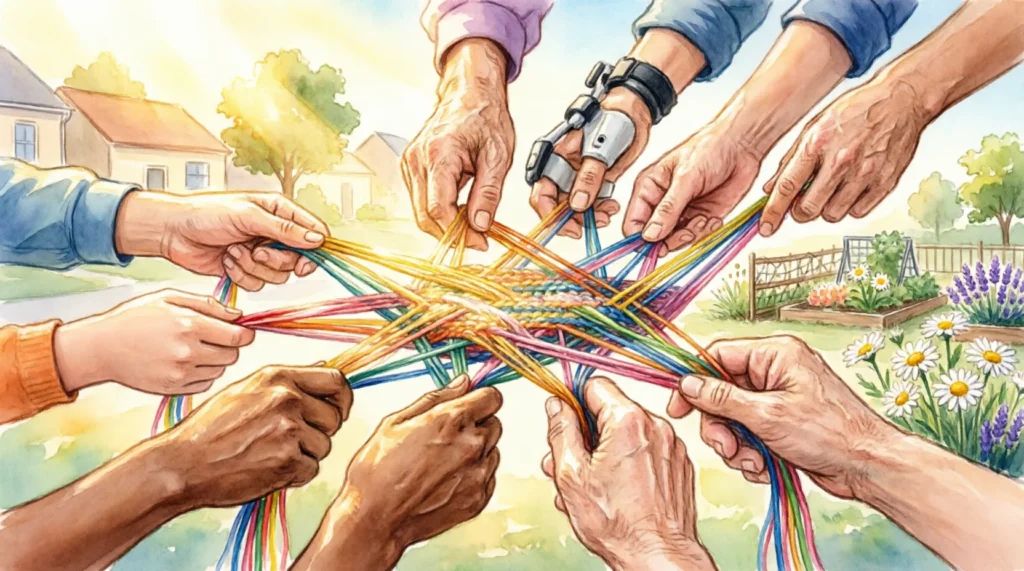
In short, similes for community are creative comparisons that help you describe groups of people, teamwork, friendship, and togetherness in a vivid way. You’ll find powerful examples, writing tips, poems, activities, and common mistakes so you can use community similes confidently in your own writing. Keep reading to discover how these comparisons can make your stories and essays feel more alive and meaningful.
What Are Similes for Community? (And Why They Matter)
Have you ever stared at a blank page during homework and thought, “How do I describe people working together?” Maybe your teacher asked you to write about your neighborhood, your class, or teamwork, and every sentence sounded plain. That happens to many students.
Similes for community are comparisons that describe a community by using the words “like” or “as.” They help you explain feelings of connection, support, teamwork, and belonging in a way readers can picture clearly.
For example, instead of saying “Our class worked together,” you could write, “Our class worked together like bees building a hive.” That one small comparison creates a stronger image in your reader’s mind.
Language arts educators often encourage students to use similes because they improve creativity, reading comprehension, and descriptive writing. When you use similes well, your stories, essays, and poems become more memorable and emotional.
[IMAGE: Students working together in a classroom while writing similes about community]
As you explore the examples below, you’ll notice that some similes sound poetic while others feel funny or relatable. That variety is what makes figurative language exciting.
The Best Examples of Similes for Community
Here are some of the best similes for community you can use in essays, poems, stories, speeches, and classroom assignments:
A community is like a quilt stitched from many different pieces.
Our neighborhood worked together like ants building a colony.
The team moved as smoothly as gears in a machine.
The volunteers gathered like birds flocking together before winter.
The students supported one another like roots holding up a tree.
The town felt as warm as a campfire on a cold night.
Their friendship circle was like a bridge connecting many people.
The classroom buzzed like bees in a busy hive.
The group stood together like bricks in a strong wall.
The families shared food like neighbors at a joyful festival.
The community center welcomed everyone like an open door.
The players worked together like musicians in an orchestra.
The children laughed together like waves rolling toward the shore.
The neighborhood united like threads woven into a tapestry.
The club members fit together like puzzle pieces.
The volunteers spread kindness like sunlight across a field.
The town gathered after the storm like birds returning to a nest.
The students encouraged each other like teammates during a championship game.
The community garden grew like hope after rain.
The crowd moved together like fish swimming in a school.
The neighbors protected one another like a family of wolves.
The people shared ideas like sparks lighting a fire.
The school spirit spread like music through the hallways.
The town celebrated together like stars shining in one sky.
The community supported struggling families like a safety net beneath a tightrope walker.
These examples work well because they create strong imagery and emotions. You can almost see the hive, the quilt, or the orchestra while reading them. Literacy researchers explain that vivid comparisons help readers connect emotionally with writing, which makes your words more powerful.
Now that you’ve seen strong examples, let’s explore how you can create your own similes naturally.
How to Use Similes for Community in Your Writing
Using similes for community becomes much easier when you follow a few simple steps.
Think about the feeling you want to describe.
Do you want your community to feel supportive, busy, peaceful, or united? Choosing the emotion first helps you pick the right comparison.
Compare the community to something familiar.
Think about objects, animals, or activities people already understand. Bees, bridges, roots, and teams are popular because they clearly show connection and teamwork.
Use “like” or “as” naturally.
A simile should sound smooth inside your sentence. Avoid forcing it into your writing.
Example: “The students worked together like musicians performing the same song.”
Keep your comparison clear.
Sometimes students create similes that are too confusing. Your reader should quickly understand the connection you are making.
When you practice often, you’ll notice your descriptions becoming stronger and more creative. That’s one reason creative writing teachers encourage students to experiment with figurative language regularly.
Similes for Community in Poems and Stories
You’ll often find similes for community in poems, short stories, and even song lyrics because they help readers feel emotion more deeply.
Here are a few short fictional examples:
“Amira’s neighborhood glowed like lanterns on a dark street, each family shining beside the next.”
“The soccer team moved like waves in the ocean, each player rising and falling together.”
“Mateo said the town after the festival was as cheerful as birds singing at sunrise.”
Poets and authors use similes because they add rhythm, emotion, and imagery. Instead of simply telling readers that people are connected, they help readers feel that connection.
[IMAGE: A colorful neighborhood festival representing unity and community]
You can try this in your own writing too. The next time you write a story about friendship, teamwork, or school spirit, add one meaningful simile to make your description stronger.
Common Mistakes Students Make With Similes for Community
Everyone makes mistakes while learning figurative language. The good news is that you can improve quickly once you recognize these common problems.
Using comparisons that don’t match the idea of community
Some students compare community to lonely or disconnected things. If your topic is teamwork or unity, your comparison should reflect togetherness.
Making similes too complicated
Trying to sound overly fancy can confuse readers. Simple similes are often the strongest ones.
Forgetting to use “like” or “as”
Without those words, your sentence may become a metaphor instead of a simile. That mix-up is very common in language arts classes.
Repeating the same comparison again and again
Using “like a family” over and over can make your writing feel repetitive. Challenge yourself to create fresh imagery.
Adding similes that don’t fit the mood
If you’re writing about a peaceful community, comparing it to a noisy racing car might feel strange. Make sure your imagery matches your tone.
Creative writing teachers often remind students that mistakes are part of learning. Every writer improves by practicing and experimenting with new ideas.
Fun Activities to Practice Similes for Community
Practicing figurative language does not have to feel boring. These activities can help you build confidence while having fun.
Community Simile Challenge
Grab a pencil and write five objects that represent teamwork or connection. Then turn each object into a simile about community.
Draw and Describe
Draw your ideal neighborhood or classroom. Afterward, write three similes describing how the people work together.
Simile Matching Game
Play with friends or classmates by matching community words like “teamwork” or “friendship” to creative comparisons like “a hive” or “a bridge.”
Story Starter Activity
Write a short story beginning with this sentence: “Our neighborhood came together like…”
This activity helps you practice using similes naturally in context.
Poetry Pair Work
Work with a partner to create a four-line poem using at least two similes for community. You’ll quickly discover how figurative language improves rhythm and emotion.
Reading Hunt
While reading books or poems, highlight similes connected to friendship, groups, or belonging. This helps you learn from real authors.
[IMAGE: Students creating posters with similes about teamwork and friendship]
These activities are simple, creative, and easy to try at home or in the classroom. The more you practice, the easier descriptive writing becomes.
What NOT to Do With Similes for Community
Some writing habits can weaken your similes. Here are a few things you should avoid.
Don’t force a simile into every sentence
Too many comparisons can overwhelm your reader. Use similes where they truly add meaning.
Don’t copy common examples without changing them
Readers enjoy fresh imagery. Try creating your own comparisons instead of only using famous ones.
Don’t make your similes unrelated to community
A comparison should connect clearly to teamwork, belonging, support, or togetherness.
Don’t assume longer similes are better
Short and clear similes often create the strongest impact. A simple image can stay in a reader’s mind for a long time.
Once you avoid these mistakes, your writing will sound smoother and more natural.
More similes for community by Tone and Context
🌿 Natural & Descriptive
“Like roots woven beneath a forest floor” — Captures the hidden connections that keep a community strong and stable.
“As steady as a river feeding many fields” — Shows how a community supports and nourishes the people within it.
“Like a hillside covered in wildflowers” — Emphasizes diversity and beauty working together in one place.
“As connected as branches on the same tree” — Highlights unity while allowing for individual differences.
“Like raindrops gathering into a stream” — Illustrates many individuals coming together for a common purpose.
💛 Warm & Emotional
“Like a blanket on a cold evening” — Conveys comfort, safety, and a sense of belonging.
“As welcoming as an open front door” — Reflects friendliness and acceptance within a community.
“Like a circle of hands reaching out” — Suggests support and care during difficult times.
“As comforting as a familiar voice” — Shows the reassurance people find in their community.
“Like a family gathered around a table” — Expresses closeness, sharing, and togetherness.
✨ Poetic & Romantic
“Like stars stitched across the night sky” — Creates a beautiful image of many people shining together.
“As timeless as a song carried through generations” — Suggests traditions and shared memories that endure.
“Like lanterns glowing along a quiet path” — Evokes guidance, hope, and connection.
“As harmonious as notes in a gentle melody” — Highlights cooperation and balance among people.
“Like threads woven into a treasured tapestry” — Describes individuals creating something meaningful together.
😄 Playful & Fun
“Like teammates cheering from the sidelines” — Captures encouragement and shared excitement.
“As lively as a carnival on a summer afternoon” — Shows energy, activity, and celebration.
“Like puzzle pieces clicking into place” — Emphasizes how different people fit together to form a whole.
“As busy as a popcorn machine at a movie night” — Suggests constant activity and interaction.
“Like friends packed into a photo booth” — Conveys closeness, fun, and shared memories.
These tone-grouped similes for similes for community give you options for every kind of writing — whether you need something soft and poetic or bold and fun. Try picking one from each group and using them in a short paragraph to see how different the same keyword can feel.
Using Similes for Community in Real Writing Contexts
In a Descriptive Essay
When writing about a neighborhood, school, or town, a simile can help readers picture the feeling of the community. It turns a simple description into something more vivid and memorable. Example: Our community was like roots woven beneath a forest floor, quietly connecting people from every street and background.
In a Poem
Similes for community can create mood and help express themes of unity, belonging, or hope. They add imagery that makes the poem more meaningful. Example: Our community is like stars stitched across the night sky, each light small alone but brilliant together.
In a Story or Creative Scene
A simile can help describe the atmosphere of a place or how a character feels about the people around them. It gives readers a stronger emotional connection to the scene. Example: As Maya stepped into the crowded town square, the community felt like a blanket on a cold evening, wrapping her in warmth after a long journey.
In a Social Media Caption or Message
Short similes work well in captions because they quickly express feelings and create a memorable image. They make everyday messages more engaging. Example: Grateful for everyone here—our community is like teammates cheering from the sidelines, always lifting each other up!
The more you practice placing similes for Similes for Community into real sentences, the more natural your writing will sound — and the more your reader will feel exactly what you want them to feel.
Frequently Asked Questions About Similes for Community
What is a good simile for community?
A good simile for community clearly shows togetherness or support. For example, “A community is like a quilt stitched together from many pieces” creates a strong image of connection and unity.
How do you use similes for community in a sentence?
You can place the simile naturally inside your writing. For example: “The students worked together like bees building a hive.” This helps readers picture teamwork more clearly.
What is the difference between a simile and a metaphor for community?
A simile uses the words “like” or “as,” while a metaphor compares things directly. Saying “The town was like a family” is a simile, but “The town was a family” is a metaphor.
Why do writers use similes for community?
Writers use these similes to create emotion and imagery. They help readers feel the warmth, teamwork, or connection within a group of people.
Are similes for community good for school assignments?
Yes, they work very well in essays, poems, speeches, and creative stories. Language arts educators often encourage students to use figurative language because it makes writing more engaging and descriptive.
Final Thoughts on Similes for Community
Similes for community help you describe togetherness in a creative and meaningful way. Whether you compare a community to a hive, a quilt, or an orchestra, your words become more vivid and memorable.
You’ve learned how these similes work, how to use them in writing, and how to avoid common mistakes. You’ve also explored poems, activities, and examples that can help you practice with confidence.
Remember, strong writing is not about using the fanciest words. It’s about helping readers see, feel, and understand your ideas clearly.
The more you practice using similes for community, the easier creative writing will become, and your voice as a writer will grow stronger every day.
Frequently Asked Questions
What are similes for community and how can they enhance my writing?▼
Similes for community are creative comparisons that use ‘like’ or ‘as’ to describe groups of people and their interactions. They enhance writing by creating vivid imagery, helping readers connect emotionally with the text.
Can you provide examples of similes for describing teamwork?▼
Certainly! Examples include ‘The team moved as smoothly as gears in a machine’ and ‘The players worked together like musicians in an orchestra.’ These comparisons vividly illustrate the harmony and efficiency of teamwork.
Why should students use similes in their essays and poems?▼
Students should use similes because they improve creativity and descriptive writing. Similes make writing more memorable and emotional, allowing readers to visualize and connect with the content on a deeper level.
How can I create my own similes for community?▼
To create your own similes, think about the emotions or actions you want to convey and compare them to familiar images or concepts. For example, if you want to describe support, you might say, ‘The community supported each other like a safety net beneath a tightrope walker.’
What are some common mistakes to avoid when using similes?▼
Common mistakes include using clichés that may feel stale or overused, and making comparisons that don’t clearly relate to the community context. It’s important to ensure that your simile enhances the imagery and emotional impact of your writing.
How can similes relate to the theme of belonging in a community?▼
Similes can illustrate feelings of belonging by comparing community connections to familiar and comforting images, such as ‘The neighborhood united like threads woven into a tapestry.’ This helps convey the warmth and support that define a close-knit community.
What role do similes play in improving reading comprehension?▼
Similes can improve reading comprehension by providing readers with relatable images that clarify abstract concepts. When readers can visualize comparisons, they are more likely to engage with the text and understand the underlying messages.
Jamal Rodriguez is a poet and author who has been writing professionally for over a decade. With a Bachelor’s degree in Creative Writing, Jamal’s expertise lies in the use of vivid imagery and emotional depth in poetic language. Fascinated by the limitless possibilities of similes and metaphors, he joined SimilePedia to share his knowledge with budding writers. Jamal focuses on creating content for creative writers and poets, helping them understand the emotional resonance that figurative language can evoke. Through his work, he aims to inspire others to explore their own creative boundaries and embrace the beauty of language as an art form. His contributions include a range of exercises that stimulate imagination across all grade levels.