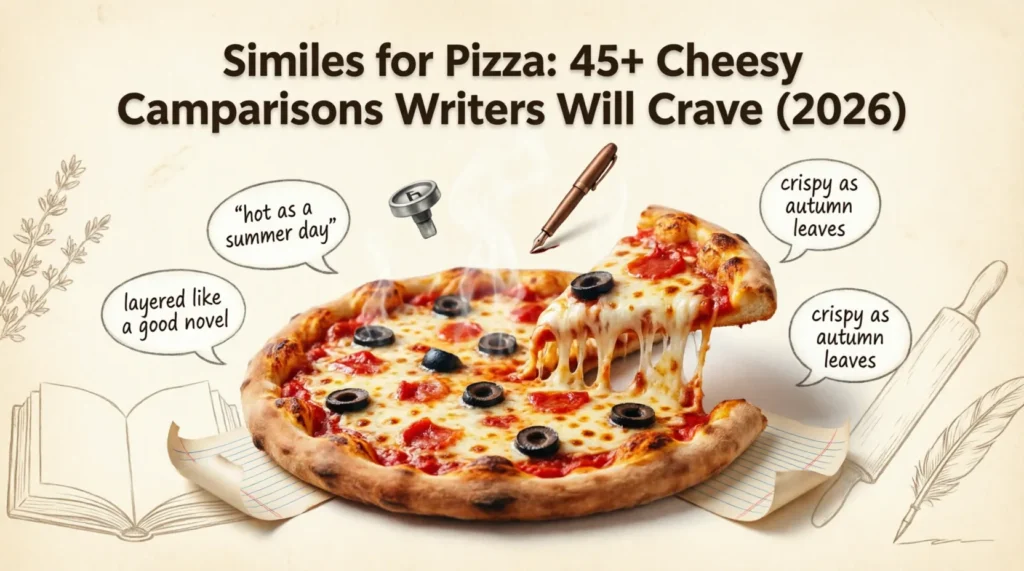
In short, similes for pizza are creative comparisons that help you describe pizza’s taste, smell, texture, or appearance in a more vivid and fun way. Whether you are writing a story, poem, school assignment, or funny caption, these examples can make your writing feel more alive and memorable. Keep reading to discover playful, descriptive, and student-friendly similes you can use right away.
What Are Similes for Pizza? (And Why They Matter)
Picture this: you are staring at a blank homework page while trying to describe a hot slice of pizza in your story. You know it tastes amazing, but the words just will not come out right. That happens to almost every student at some point.
Similes for pizza are comparisons that use the words “like” or “as” to describe pizza in a creative way. They help readers imagine the cheesy stretch, crispy crust, spicy toppings, or delicious smell more clearly.
Writers use similes because they make ordinary sentences more exciting. Instead of saying “the pizza was good,” you can say “the pizza was as comforting as a warm blanket on a rainy day.” Suddenly, your reader can almost feel the experience.
Language arts educators and literacy researchers often encourage students to practice similes because figurative language strengthens storytelling, reading comprehension, and descriptive writing skills. Once you learn how to use similes for pizza, you can apply the same technique to almost anything you write.
Now that you know what they are, let’s jump into the most fun part — the examples.
The Best Examples of Similes for Pizza
[IMAGE: A student writing creative pizza similes in a notebook beside a pizza slice]
The melted cheese stretched like golden rubber bands.
The pizza smelled like heaven drifting through the kitchen.
The crust was as crunchy as autumn leaves under your shoes.
The pepperoni curled like tiny red bowls in the oven.
The pizza disappeared like magic at a birthday party.
The hot cheese burned my tongue like fiery lava.
The pizza was as comforting as a cozy blanket on a cold night.
The sauce spread across the crust like red paint on a canvas.
The pizza slice drooped like a sleepy puppy’s ear.
The toppings sparkled like colorful jewels under the lights.
The crust cracked like thin ice when I bit into it.
The pizza tasted like a celebration in every bite.
The cheese melted like snow under the sun.
The giant slice was as big as a textbook.
The smell floated through the house like a delicious cloud.
The mushrooms sat on top like tiny umbrellas.
The pizza was as cheesy as a joke from your uncle.
The crust was tough like old leather after sitting out too long.
The pizza was as warm as fresh cookies from the oven.
The pepper flakes burned like tiny sparks of fire.
The pizza looked like a colorful work of art.
The mozzarella stretched like gooey strings of glue.
The pizza vanished like popcorn during a movie night.
The crispy edges crunched like potato chips.
The sauce tasted as sweet as summer tomatoes.
The pizza box opened like a treasure chest.
The smell hit me like a wave the second I walked inside.
The toppings crowded together like people on a busy bus.
The cheese bubbled like a tiny volcano in the oven.
The pizza was as satisfying as finishing a hard exam.
The crust was light as air around the edges.
The pizza slice folded like a soft piece of paper.
The spicy sausage tasted like fireworks in my mouth.
The cheese clung to the slice like sticky tape.
The pizza party was loud like a football stadium.
The crust felt rough like sandpaper after overbaking.
The pizza was as colorful as a carnival ride.
The cheese pull stretched like melted marshmallows.
The pizza smelled like happiness after school.
The slice was floppy like a wet towel.
The toppings scattered across the pizza like confetti.
The crust snapped like a cracker when I bit it.
The pizza looked as inviting as a glowing campfire.
The first bite felt like winning a prize.
The pizza was as irresistible as candy to a little kid.
What makes these similes effective is the strong imagery they create. You can almost taste the pizza, hear the crunch, or smell the melted cheese just by reading the comparisons.
Creative writing teachers often remind students that the best similes connect food to feelings, sounds, textures, and familiar experiences. That is exactly what makes these pizza similes memorable and fun.
How to Use Similes for Pizza in Your Writing
Once you have examples in your head, the next step is learning how to use them naturally in your own writing. The good news is that you do not need to sound fancy to write well.
Focus on one sense at a time Think about what you notice first about the pizza. Is it the smell, taste, heat, or texture? Choosing one detail helps your simile feel stronger.
Compare pizza to something familiar The best similes use objects or experiences your reader already understands. Saying “the crust cracked like a potato chip” works because most people know that sound.
Avoid overloading every sentence You do not need a simile in every line. One or two strong comparisons usually make a bigger impact than ten weak ones.
Match the mood of your writing Funny stories can use silly similes, while poems may use softer or more emotional comparisons.
Example sentence: “Ali grabbed a slice of pizza, and the melted cheese stretched like long ropes as everyone laughed around the table.”
As you practice, you will start noticing similes naturally in books, songs, and even restaurant ads.
More Similes for Pizza by Tone and Context
🌿 Natural & Descriptive
“Like a golden sunset resting on a hillside” — Captures the warm colors of a freshly baked pizza and works well in vivid descriptions.
“As inviting as a meadow covered in summer flowers” — Emphasizes how appealing and welcoming a pizza can look.
“Like a patchwork field seen from above” — Highlights the mix of toppings spread across the surface.
“As rich as soil after a spring rain” — Suggests deep flavor and satisfying texture in descriptive writing.
“Like a harvest basket filled to the brim” — Conveys abundance and variety, especially for pizzas loaded with toppings.
💛 Warm & Emotional
“Like a hug on a chilly evening” — Shows the comfort and happiness that pizza often brings.
“As comforting as a familiar song” — Works well when describing favorite meals and fond memories.
“Like a welcome home after a long day” — Expresses relief, warmth, and satisfaction.
“As cheerful as laughter around a dinner table” — Highlights the social joy of sharing pizza with others.
“Like a treasured tradition passed through generations” — Reflects family gatherings and meaningful experiences.
✨ Poetic & Romantic
“Like a circle of stars gathered on a golden sky” — Creates a dreamy image of toppings scattered across a pizza.
“As enchanting as moonlight on calm water” — Suggests beauty and elegance in poetic writing.
“Like a love letter written in melted cheese” — Adds a playful romantic touch to descriptions.
“As magical as a wish whispered at midnight” — Gives pizza a whimsical and imaginative feeling.
“Like a melody drifting through the evening air” — Focuses on the pleasant anticipation of enjoying a meal.
😄 Playful & Fun
“Like a party packed into a cardboard box” — Perfect for showing excitement and energy.
“As unstoppable as a kid running toward dessert” — Emphasizes eagerness to grab a slice.
“Like treasure hidden beneath a blanket of cheese” — Highlights surprise toppings and delicious discoveries.
“As exciting as opening a mystery gift” — Captures the anticipation of seeing and tasting the pizza.
“Like a champion winning the snack Olympics” — Adds humor and exaggeration for casual writing.
These tone-grouped similes for pizza give you options for every kind of writing — whether you need something soft and poetic or bold and fun. Try picking one from each group and using them in a short paragraph to see how different the same topic can feel.
Using Pizza in Real Writing Contexts
In a Descriptive Essay
Students may describe pizza when writing about a favorite food, a family gathering, or a memorable meal. A simile helps readers picture the pizza more clearly and experience it through vivid details. Example: The pizza sat on the table like a golden sunset resting on a hillside, glowing with melted cheese and colorful toppings.
In a Poem
Similes for pizza can create mood and make ordinary moments feel more expressive. They help add imagery and emotion to a poem. Example: The pizza shimmered like a circle of stars upon the night, / Filling the room with warmth and gentle delight.
In a Story or Creative Scene
In stories, similes can show how characters react to pizza or describe the atmosphere around them. They make scenes feel more lively and engaging. Example: After the exhausting soccer game, Ethan rushed to the kitchen, and the pizza looked like a welcome home after a long day.
In a Social Media Caption or Message
Short similes work well in captions because they quickly communicate excitement and personality. They can make simple posts more memorable. Example: Friday night win! This pizza is like a party packed into a cardboard box! 🍕🎉
The more you practice placing similes for pizza into real sentences, the more natural your writing will sound — and the more your reader will feel exactly what you want them to feel.
Similes for Pizza in Poems and Stories
[IMAGE: Kids sharing pizza while writing poems and stories together]
Writers often use food imagery because it connects instantly with readers. Pizza, especially, can symbolize comfort, fun, friendship, or celebration.
Here are a few short creative examples you can learn from.
Maya’s poem:
“The cheese stretched like golden thread, The spicy smell filled up my head, Each crunchy bite was warm and bright, Like laughter glowing through the night.”
Jamal’s story sentence:
“The pizza box opened like a treasure chest, and every kid at the sleepover rushed toward it.”
Sofia’s notebook entry:
“The pepperoni curled like tiny roses while the cheese bubbled like lava in the oven.”
Poets and authors use similes for pizza because food descriptions create strong sensory imagery. Readers can imagine the smell, heat, and flavor, which helps stories feel more real and emotional.
Once you see how naturally similes fit into stories, you may start wanting to create your own comparisons too.
Common Mistakes Students Make With Similes for Pizza
Everyone makes mistakes while learning figurative language. The important thing is knowing how to improve.
Using comparisons that do not make sense Sometimes students compare pizza to random objects that do not connect clearly. Your simile should help readers picture the pizza more easily, not confuse them.
Forgetting to use “like” or “as” A simile needs comparison words. Without them, your sentence may accidentally become a metaphor instead.
Overusing cheesy expressions Yes, pizza similes can be funny, but using too many jokes can weaken your writing. Mix humorous and descriptive comparisons together.
Making every simile extremely dramatic Not every pizza needs to taste “like fire exploding in the universe.” Smaller, believable details often sound stronger.
Repeating the same idea again and again If every simile talks only about melted cheese, your writing may feel repetitive. Try describing the crust, sauce, toppings, smell, or atmosphere too.
Creative writing teachers often remind students that variety is one of the secrets to vivid description.
Fun Activities to Practice Similes for Pizza
[IMAGE: Classroom pizza-themed figurative language activity]
Create a Pizza Simile Challenge Grab a pencil and set a timer for five minutes. Try writing as many pizza similes as you can without repeating ideas.
Draw and Describe Sketch your dream pizza, then write five similes describing different parts of it. You could compare the cheese, crust, toppings, and smell.
Play “Finish the Simile” In a group, one person starts a sentence like “The pizza smelled like…” and everyone else finishes it creatively.
Turn a Plain Sentence Into a Vivid One Take a boring sentence such as “The pizza tasted good” and improve it with a simile. You might write, “The pizza tasted like comfort after a long school day.”
Read Food Descriptions in Books Look for similes in novels, poems, or menus. Literacy educators often suggest learning by noticing how published writers describe food.
Make a Pizza Poetry Page Create a short poem using at least three similes for pizza. Add drawings, colors, or comic-style speech bubbles to make it more fun.
Practicing this way helps you build creativity without making writing feel stressful or boring.
What NOT to Do With Similes for Pizza
Do not force a simile into every sentence Too many comparisons can make your writing feel crowded instead of creative.
Do not copy the same similes everyone uses online Readers enjoy fresh descriptions more than overused phrases like “pizza is like heaven” repeated again and again.
Do not ignore sensory details Good pizza similes describe smell, taste, sound, texture, or appearance. Focusing on only one detail limits your writing.
Do not make the comparison too confusing If your reader has to stop and figure out what you mean, the simile may not be working clearly enough.
Frequently Asked Questions About Similes for Pizza
What is a simile for pizza?
A simile for pizza is a comparison that uses “like” or “as” to describe pizza creatively. For example, you might say, “The cheese stretched like rubber bands.” These comparisons help readers imagine the pizza more clearly.
How do you use similes for pizza in a sentence?
You can place the simile directly into your description. For example: “The crust cracked like a crunchy potato chip when Noah took a bite.” The comparison adds detail and makes the sentence more vivid.
Why do writers use similes for pizza?
Writers use similes for pizza because food descriptions create strong imagery and emotion. Readers can picture the scene more easily when they imagine melted cheese, crispy crust, or spicy toppings through comparisons.
What is the difference between a pizza simile and a pizza metaphor?
A simile uses “like” or “as,” while a metaphor makes a direct comparison. Saying “The pizza was like a warm hug” is a simile. Saying “The pizza was a warm hug” is a metaphor.
Are similes for pizza good for middle school students?
Yes, they are excellent for middle school students because pizza is familiar and fun to describe. Language arts educators often use food-based figurative language activities to help students practice creative writing in an engaging way.
Final Thoughts on Similes for Pizza
Learning how to use similes for pizza can make your writing more colorful, expressive, and memorable. Instead of using plain descriptions, you now have dozens of creative ways to describe cheesy slices, crunchy crusts, spicy toppings, and delicious smells.
You also learned how similes help readers connect emotionally with your writing. Whether you are working on a poem, short story, school assignment, or fun journal entry, strong comparisons can make your ideas stand out.
Remember, you do not have to write perfect similes right away. Even experienced writers experiment with different comparisons until they find the one that feels just right.
The more you practice describing everyday things like pizza, the more confident and creative your writing will become — and that is a skill you can carry into every story you tell.
Frequently Asked Questions
What are similes for pizza and why should I use them?▼
Similes for pizza are creative comparisons that describe its taste, smell, texture, or appearance using ‘like’ or ‘as.’ They enhance your writing by making it more vivid and engaging, allowing readers to better imagine the experience of enjoying pizza.
Can you provide examples of similes for pizza?▼
Sure! Some examples include ‘the melted cheese stretched like golden rubber bands’ and ‘the pizza smelled like heaven drifting through the kitchen.’ These comparisons can make your descriptions more lively and memorable.
How can similes improve my writing skills?▼
Using similes can strengthen your descriptive writing and storytelling abilities. Language arts educators encourage practicing figurative language like similes because they help improve reading comprehension and make ordinary sentences more exciting.
In what types of writing can I use similes for pizza?▼
Similes for pizza can be used in various forms of writing, including stories, poems, school assignments, and even funny captions. They are versatile tools that can add flavor to any piece of writing.
What is an example of a simile that conveys the comfort of pizza?▼
An example would be, ‘the pizza was as comforting as a cozy blanket on a cold night.’ This simile evokes feelings of warmth and comfort, enhancing the reader’s connection to the experience.
How can I come up with my own similes for pizza?▼
To create your own similes, think about how different aspects of pizza relate to other familiar experiences or objects. Consider the taste, smell, texture, or appearance and use comparisons that evoke strong imagery.
Why do similes matter in writing about food like pizza?▼
Similes matter because they help convey sensory experiences vividly. When writing about food, such as pizza, similes make descriptions more relatable and enticing, allowing readers to imagine the flavors and textures more clearly.
Sara Liu holds a Master’s degree in English Education from the University of Washington and has been an educator for over 15 years. She specializes in curriculum development for elementary and middle school students, with a particular focus on figurative language. Sara’s love for similes and metaphors blossomed when she discovered their power to spark imagination and convey emotion. At SimilePedia, Sara creates engaging worksheets and reference guides that help young learners grasp the nuances of figurative language. Her favorite part of writing content is developing resources that make complex concepts accessible to children. She is passionate about nurturing a love for words and creativity in her students, and her contributions are shaped by this commitment.