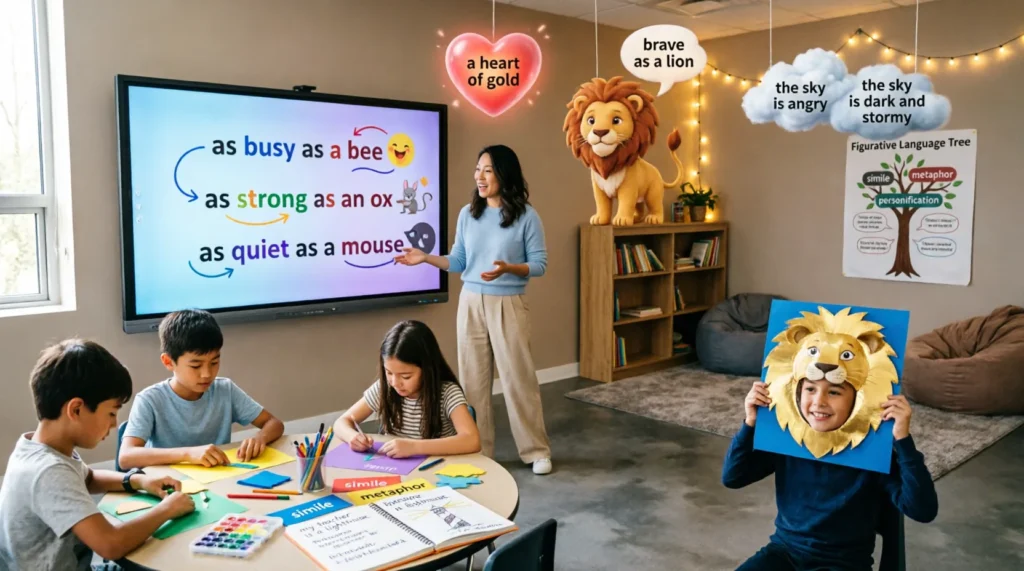
In short, activities for similes and metaphors are engaging exercises that help you understand and practice comparing ideas in creative ways. They turn abstract language skills into fun, hands-on learning through games, writing challenges, and storytelling tasks. In this article, you’ll discover exciting ways you can master figurative language and make your writing more vivid and expressive.
If you’ve ever struggled to make your writing more interesting, these ideas will change the way you think about words forever.
What Are Activities for Similes and Metaphors? (And Why They Matter)
Imagine sitting in a classroom, staring at a blank page, and your teacher asks you to “make your writing more creative.” You know what you want to say—but the words feel flat. This is exactly where activities for similes and metaphors come in to save the day.
In simple terms, these activities are practice tasks that teach you how to compare things in creative ways using similes (using like or as) and metaphors (direct comparisons without like or as). Instead of memorizing definitions, you actually use language in fun ways.
Language arts educators often emphasize that figurative language builds stronger reading comprehension and storytelling skills. When you practice regularly, you don’t just improve essays—you improve imagination, expression, and even confidence in speaking and writing.
These activities matter because they help you stop writing in a plain way and start painting pictures with words. Now, let’s explore how creative and fun this learning can become.
The Best Examples of Activities for Similes and Metaphors
Here are some exciting, classroom-tested activities for similes and metaphors you can try right away. Each one helps you think creatively and practice comparing ideas in fun ways.
Simile Speed Challenge: Write as many similes as you can in 2 minutes using “as” or “like.”
Metaphor Maker Game: Turn everyday objects into metaphors, like “The classroom is a zoo.”
Mystery Object Description: Describe an object without naming it using only similes and metaphors.
Emotion Comparison Journal: Compare feelings like happiness or anger to objects in nature.
Simile Story Starters: Start a story using a simile such as “As quiet as a sleeping cat…”
Metaphor Matching Cards: Match objects with creative metaphor descriptions.
Classroom Scavenger Similes: Find items around you and write similes about them.
Draw and Compare Activity: Draw an object and write similes/metaphors to describe it.
Music Metaphor Writing: Listen to a song and describe its mood using metaphors.
“You Are Like…” Partner Game: Describe your friend using similes only.
Metaphor Diary Entry: Write a diary entry using at least 5 metaphors.
Simile Chain Game: One student writes a simile, and the next continues it creatively.
Object Transformation Writing: Turn an object into something completely different using metaphor.
Weather Description Challenge: Describe weather using creative comparisons.
Classroom Story Relay: Each student adds a sentence using a simile or metaphor.
These activities for similes and metaphors work because they push you to think beyond literal meaning. They help you build mental images, connect emotions, and make your writing more expressive and memorable.
How to Use Activities for Similes and Metaphors in Your Writing
If you want to actually improve your writing, you need to practice these skills in a smart way. Here’s how you can use activities for similes and metaphors effectively:
Start small and simple. Don’t try to write perfect sentences—focus on creativity first.
Practice daily with short exercises like describing your room or your mood.
Mix similes and metaphors in one paragraph to see how they change your writing style.
Review your work and ask yourself: “Does this help my reader see what I mean?”
For example, you could write: “The classroom was like a buzzing beehive, full of energy and noise.” This shows how your writing becomes more vivid when you apply what you’ve practiced.
Activities for Similes and Metaphors in Poems and Stories
Poets and authors love figurative language because it adds emotion and depth. When you use activities for similes and metaphors, you start thinking like a real writer.
Here are some creative mini-examples:
“The night was a blanket of stars wrapping the sleeping world.”
“Her laughter was like bubbles rising in sparkling soda.”
“Ali’s thoughts were storm clouds rolling through his mind.”
In short poems or stories, these comparisons help readers feel the scene instead of just reading it. Writers use this technique to create rhythm, emotion, and strong mental images that stay with you long after reading.
When you practice regularly, you’ll notice your own stories becoming more expressive and powerful.
More Activities for Similes and Metaphors by Tone and Context
🌿 Natural & Descriptive
“As steady as a river finding its way to the sea” — Captures consistent effort and works well when describing learning activities that build skills over time.
“Like leaves dancing in a gentle breeze” — Suggests movement and creativity, making it useful for lively classroom discussions.
“As colorful as a meadow in spring” — Highlights variety and imagination, perfect for describing a range of figurative language exercises.
“Like sunlight spreading across a field” — Shows ideas growing and becoming clearer during writing activities.
“As rich as soil after fresh rain” — Emphasizes depth and growth, ideal for explaining meaningful learning experiences.
💛 Warm & Emotional
“Like a friendly hand guiding the way” — Reflects support and encouragement during group activities.
“As comforting as a favorite story before bed” — Works well when describing enjoyable language lessons.
“Like laughter shared among good friends” — Captures the joy and connection that can come from creative writing tasks.
“As welcoming as an open door” — Suggests inclusiveness and participation in classroom activities.
“Like a warm blanket on a cool evening” — Expresses the sense of confidence students gain through practice.
✨ Poetic & Romantic
“As graceful as moonlight on quiet water” — Creates a gentle, artistic mood suited to reflective writing.
“Like stars stitched across the night sky” — Highlights beauty and imagination in figurative language exercises.
“As delicate as a whispered secret” — Conveys subtle meaning and careful word choice.
“Like a melody floating through the air” — Suggests smooth, expressive writing and creative thinking.
“As timeless as the sunrise returning each day” — Emphasizes the lasting value of learning similes and metaphors.
😄 Playful & Fun
“Like a popcorn kernel ready to pop” — Shows excitement and energy during fast-paced activities.
“As bouncy as a ball in a playground game” — Captures enthusiasm and active participation.
“Like a squirrel chasing shiny treasures” — Describes curious students searching for creative comparisons.
“As busy as a bee at a school fair” — Works well for energetic group projects and brainstorming sessions.
“Like confetti swirling through a celebration” — Suggests colorful, joyful creativity in writing activities.
These tone-grouped similes for activities for similes and metaphors give you options for every kind of writing — whether you need something soft and poetic or bold and fun. Try picking one from each group and using them in a short paragraph to see how different the same topic can feel.
More Activities for Similes and Metaphors: Creative Classroom Ideas That Make Figurative Language Fun (2026) by Tone and Context
“The simile relay race moved like a flowing river.” — Captures smooth teamwork and is perfect for describing cooperative classroom activities.
“Students matched metaphors as quickly as leaves dancing in the wind.” — Shows fast thinking and works well in classroom reflections.
“The lesson grew like a young tree reaching toward sunlight.” — Expresses steady learning and fits educational writing.
“Ideas spread through the room like sunlight across a meadow.” — Highlights creativity and is ideal for descriptive classroom scenes.
“The class worked as steadily as rain filling a quiet lake.” — Emphasizes patience and consistent effort during learning activities.
💛 Warm & Emotional (for personal stories, letters, heartfelt writing)
“Sharing similes felt like passing around a warm blanket.” — Shows kindness and creates a welcoming classroom feeling.
“The group encouraged one another like friends cheering at the finish line.” — Expresses teamwork and positive support.
“Each compliment was as comforting as a favorite bedtime story.” — Works well when describing encouraging classroom moments.
“Learning metaphors together felt like building a bridge between friends.” — Highlights connection and cooperation.
“Every correct answer shined like a smile shared across the room.” — Shows happiness and confidence after learning something new.
✨ Poetic & Romantic (for poems, song lyrics, love writing)
“Creative ideas floated like silver feathers beneath the moon.” — Creates a gentle, dreamy mood for poetic writing.
“A well-crafted metaphor glowed like a lantern in the evening.” — Shows how figurative language can illuminate meaning.
“The classroom buzzed as softly as stars whispering to the night.” — Adds a magical atmosphere to descriptions.
“Each simile bloomed like a flower opening at sunrise.” — Represents creativity unfolding naturally.
“The students’ imagination soared like birds greeting the dawn.” — Expresses hope, freedom, and creative thinking.
😄 Playful & Fun (for casual use, social media captions, humor)
“The metaphor challenge was like a treasure hunt for clever ideas.” — Makes learning sound exciting and adventurous.
“The classroom laughed as loudly as popcorn popping.” — Perfect for describing energetic learning games.
“Finding the perfect simile felt like scoring the winning goal.” — Shows excitement after solving a language challenge.
“The word cards bounced around the room like playful puppies.” — Creates a fun image of active classroom participation.
“Our figurative language game was as exciting as opening a mystery gift.” — Captures curiosity and enthusiasm during learning activities.
These tone-grouped similes for Activities for Similes and Metaphors: Creative Classroom Ideas That Make Figurative Language Fun (2026) give you options for every kind of writing — whether you need something soft and poetic or bold and fun. Try picking one from each group and using them in a short paragraph to see how different the same keyword can feel.
Using Activities for Similes and Metaphors: Creative Classroom Ideas That Make Figurative Language Fun (2026) in Real Writing Contexts
In a Descriptive Essay
When writing about an English class or a favorite lesson, comparing classroom activities with a simile helps readers picture the experience more clearly. It turns an ordinary description into one that feels lively and memorable. The simile activity flowed like a gentle river, carrying every student from simple comparisons to creative ideas.
In a Poem
Similes used during figurative language activities can inspire poetic images and help create mood. A thoughtful comparison gives poems a richer emotional feeling. Our words drifted like feathers through the quiet room, and every metaphor bloomed into a dream.
In a Story or Creative Scene
In a story, similes can show how students react, solve problems, or work together during classroom activities. They make scenes more vivid and engaging. As the teacher revealed the final challenge, the class rushed into the game like explorers discovering a hidden map.
In a Social Media Caption or Message
A short simile can make a classroom update or message more fun and memorable. It quickly shares excitement while adding a creative touch. Today’s simile challenge was like a creativity workout—our imaginations definitely earned an A!
The more you practice placing similes for Activities for Similes and Metaphors: Creative Classroom Ideas That Make Figurative Language Fun (2026) into real sentences, the more natural your writing will sound — and the more your reader will feel exactly what you want them to feel.
Using Activities for Similes and Metaphors in Real Writing Contexts
In a Descriptive Essay
A student might write about a classroom lesson, workshop, or creative project involving figurative language. Adding a simile helps the reader picture the experience more clearly and feel its atmosphere. For example: The simile activity was as colorful as a meadow in spring, filling the classroom with creative ideas and vivid comparisons.
In a Poem
Similes for activities for similes and metaphors can create mood and add imagery to a poem. They help turn ordinary learning experiences into memorable scenes. For example: Our words drifted like stars stitched across the night sky, / shining with meaning as the lesson flowed by.
In a Story or Creative Scene
In a story, similes can show how a character feels during a learning activity or describe the setting around them. They make scenes more engaging and expressive. For example: As Maya searched for the perfect comparison, her thoughts bounced around like a popcorn kernel ready to pop, and she could hardly stay in her seat.
In a Social Media Caption or Message
Short similes work well in casual writing because they quickly add personality and emotion. They can make even a simple update more interesting to read. For example: Today’s simile challenge was like confetti swirling through a celebration—creative, colorful, and full of surprises!
The more you practice placing similes for activities for similes and metaphors into real sentences, the more natural your writing will sound — and the more your reader will feel exactly what you want them to feel.
Common Mistakes Students Make With Activities for Similes and Metaphors
Learning figurative language is fun, but students often make a few mistakes along the way. Don’t worry—this is completely normal when you’re practicing activities for similes and metaphors.
Using weak comparisons: Saying “as good as nice” doesn’t create a clear image. Try more specific ideas.
Mixing up similes and metaphors: Remember, similes use “like” or “as,” metaphors do not.
Overusing comparisons: Too many similes can make writing confusing instead of creative.
Being too literal: Comparing things that don’t connect in meaning can confuse readers.
Forgetting the purpose: Every comparison should help the reader imagine something clearly.
Once you recognize these mistakes, you can quickly improve your writing and make your ideas stronger and clearer.
Fun Activities to Practice Activities for Similes and Metaphors
Here are some enjoyable ways you can keep practicing at home or in class. These activities for similes and metaphors are designed to make learning feel like play.
Simile Jar Challenge: Write random objects on paper, pick one, and create a simile on the spot.
Metaphor Drawing Game: Draw a simple object and label it with a creative metaphor.
Daily Comparison Journal: Each day, write one simile and one metaphor about your day.
Group Story Building: Each student adds a sentence using a simile or metaphor to build a story together.
Nature Walk Writing: Walk outside and describe what you see using creative comparisons.
Emoji to Metaphor Translation: Turn emojis into metaphor sentences (e.g., “heart emoji = love is a glowing fire”).
These activities help you think quickly, write creatively, and enjoy learning instead of memorizing rules.
What NOT to Do With Activities for Similes and Metaphors
Even creative writing has a few traps. Avoid these common habits when working with activities for similes and metaphors:
Don’t force comparisons that don’t make sense just to sound “poetic.”
Don’t copy the same similes everyone else uses—try to be original.
Don’t ignore clarity; your reader should still understand your idea.
Don’t confuse similes and metaphors when writing quickly.
When you avoid these mistakes, your writing becomes cleaner, clearer, and more powerful.
Frequently Asked Questions About Activities for Similes and Metaphors
What are activities for similes and metaphors in simple words?
They are fun exercises that help you practice making comparisons in creative writing. Instead of just learning definitions, you actually use similes and metaphors in games, writing tasks, and storytelling.
Why are activities for similes and metaphors important for students?
They help you improve imagination, writing skills, and reading comprehension. Teachers often use them because they make language learning more engaging and memorable.
Can beginners easily learn through these activities?
Yes, absolutely. Most activities start with simple comparisons, so even beginners can participate and gradually improve their skills with practice.
How do these activities improve storytelling?
They help you create vivid descriptions that make your stories more interesting. Readers can “see” and “feel” what you’re describing.
Are activities for similes and metaphors useful for exams?
Yes, they are very helpful. Many exams test your ability to recognize and use figurative language correctly in writing and comprehension sections.
Final Thoughts on Activities for Similes and Metaphors
Learning figurative language doesn’t have to feel difficult or boring. With the right activities for similes and metaphors, you can turn writing practice into something creative, playful, and exciting.
You’ve seen how these activities help you think differently, describe ideas more clearly, and express emotions in powerful ways. You also learned how to avoid common mistakes and use comparisons naturally in stories and poems.
Keep practicing a little every day, and you’ll notice your writing becoming richer and more expressive over time. Most importantly, trust your imagination—it’s the best tool you have for learning figurative language.
Your words can paint pictures, and now you know how to make them truly come alive.
Frequently Asked Questions
What are some engaging activities for practicing similes and metaphors in the classroom?▼
Some engaging activities include the Simile Speed Challenge, where students write as many similes as possible in 2 minutes, and the Metaphor Maker Game, which encourages turning everyday objects into metaphors. These activities not only enhance creativity but also reinforce the understanding of figurative language.
How do similes and metaphors improve writing skills?▼
Similes and metaphors enhance writing by encouraging writers to think beyond literal meanings, creating mental images and emotional connections. Regular practice with these figures of speech builds stronger reading comprehension, storytelling skills, and overall expressiveness in writing.
Can you provide an example of a classroom activity that combines both similes and metaphors?▼
The Draw and Compare Activity is a great example, where students draw an object and then write both similes and metaphors to describe it. This exercise allows them to explore their creativity and apply both forms of figurative language in a cohesive manner.
What is the purpose of the Emotion Comparison Journal activity?▼
The Emotion Comparison Journal activity helps students compare feelings like happiness or anger to objects in nature, enhancing their ability to express complex emotions through descriptive language. This activity fosters creativity and can lead to deeper emotional understanding in writing.
How can I effectively incorporate these activities into my writing practice?▼
To effectively incorporate these activities into your writing, start small with daily exercises, such as describing your surroundings or moods using similes and metaphors. Mixing both forms of figurative language in a single paragraph can also illustrate their impact on your writing style.
What is the benefit of using the Mystery Object Description activity?▼
The Mystery Object Description activity encourages students to describe an object without naming it, using only similes and metaphors. This practice sharpens their descriptive skills and challenges them to think creatively about how they convey meaning.
Why are activities for similes and metaphors important for language arts education?▼
These activities are crucial because they transform abstract language concepts into engaging, hands-on learning experiences. They not only improve writing quality but also build imagination, confidence, and expressive skills among students.
Liam is a language enthusiast and lead writer at Similepedia.com, where he focuses on creating clear, creative, and easy-to-use similes for everyday writing. He specializes in turning simple ideas into vivid comparisons that make sentences more engaging, expressive, and memorable.
Instead of overcomplicating language with technical jargon, Liam approaches similes as practical tools for better communication. He breaks down how comparisons work, when to use them, and how to make them sound natural — not forced or awkward.
He pays close attention to tone, context, and clarity, ensuring every simile fits smoothly into real sentences. From fun and playful comparisons to more descriptive and expressive ones, Liam helps readers improve how they write, speak, and express ideas.
At Similepedia.com, his mission is simple: make language more colorful and effective without making it complicated. He doesn’t just list similes — he helps readers understand how to use them confidently in real situations.