In short, similes for grade 3 are simple comparisons that help students describe things in a more exciting way by using words like “as” or “like.” In this guide, you’ll find easy examples, writing tips, fun activities, and common mistakes to avoid so you can use similes with confidence in school and creative writing.
What Are Similes for Grade 3? (And Why They Matter)
Have you ever stared at your worksheet and thought, “How do I make this sentence sound better?” Maybe your teacher asked you to describe a storm, a puppy, or your best friend, and every sentence felt plain. That’s where similes can help.
Similes for grade 3 are simple comparisons that use the words “like” or “as.” They help you describe something by comparing it to something else in a fun and colorful way.
For example, instead of saying “The baby is quiet,” you could say, “The baby is as quiet as a mouse.” Suddenly, your sentence feels more alive and interesting.
Language arts educators often encourage young students to practice similes because they improve storytelling, reading comprehension, and creative thinking. Literacy researchers also note that figurative language helps children picture scenes more clearly when they read and write.
Once you start noticing similes, you’ll find them everywhere — in books, poems, songs, and even cartoons. That’s why learning them early can make your writing stronger and more enjoyable.
The Best Examples of Similes for Grade 3
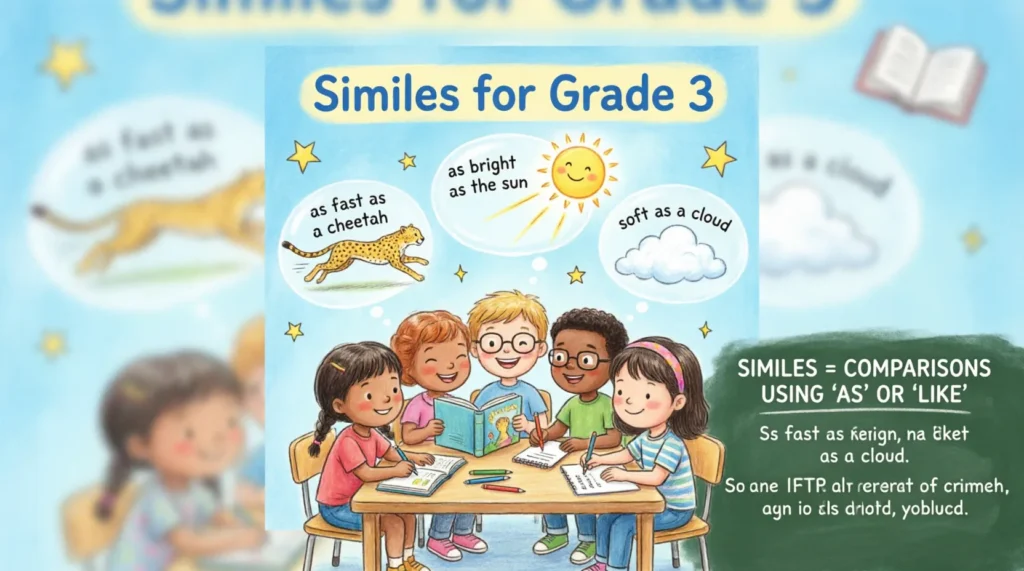
[IMAGE: A cheerful classroom poster showing colorful simile examples for kids]
Here are some easy and fun similes for grade 3 students to learn and use:
The puppy was as fluffy as a cloud.
Her smile was as bright as the sun.
The boy ran like a cheetah.
The ice cream melted like snow in summer.
The classroom was as quiet as a library.
My backpack felt as heavy as a rock.
The baby slept like a log.
The stars sparkled like diamonds.
The kitten was as soft as cotton.
He was as busy as a bee.
The rain fell like tiny drums on the roof.
The girl danced like a butterfly.
Grandpa’s voice was as deep as thunder.
The pancakes were as flat as paper.
My little brother ate like a hungry bear.
The water was as clear as glass.
The turtle moved as slow as a snail.
The joke spread through the class like wildfire.
Her cheeks were as red as apples.
The popcorn popped like fireworks.
The soccer ball flew like a rocket.
The blanket felt as warm as toast.
His hands were as cold as ice.
The students lined up like ducks in a row.
The bird sang as sweetly as music.
These examples work well because they create strong pictures in your mind. Good similes use familiar things — animals, weather, food, or objects — so you can quickly imagine what the writer means.
Creative writing teachers often remind students that the best similes connect to the senses. When you can almost hear, see, taste, or feel the comparison, your writing becomes much more memorable.
Now that you’ve seen some examples, you might be wondering how to create your own. The next section will help you do exactly that.
How to Use Similes for Grade 3 in Your Writing
Using similes in your own writing can feel easy once you know a few simple steps.
Think about what you want to describe.
Ask yourself what the object, person, or feeling is really like. Is it fast, loud, soft, bright, or cold?
Compare it to something familiar.
Pick something your readers already know. For example, if something is very fast, you might compare it to a race car or a cheetah.
Use the words “like” or “as.”
These words help show the comparison clearly. For example: “The wind howled like a wolf.”
Keep your similes simple and clear.
You do not need giant vocabulary words to make a good simile. Easy comparisons are often the most powerful for young readers.
Here’s one example used naturally in a sentence:
“Mina held the tiny kitten carefully because it was as soft as a pillow.”
When you practice regularly, you’ll start adding similes to stories, journal entries, and homework without even thinking about it.
Similes for Grade 3 in Poems and Stories
[IMAGE: A child writing poetry in a notebook beside colorful crayons]
Poets and authors love similes because they make writing sound more emotional and vivid. They also add rhythm and imagination to stories and poems.
Here are a few short creative examples you can learn from:
“Ayaan’s laughter rang through the hall like bells dancing in the wind.”
“Sofia tiptoed across the room as quietly as a sneaky cat.”
“The playground buzzed like a busy beehive while children raced across the grass.”
You can also use similes in stories:
“Lina clutched her flashlight tightly as the thunder boomed like giant drums outside her window.”
Writers use similes to help readers picture scenes more clearly. Creative writing teachers often encourage students to experiment with figurative language because it helps emotions feel stronger and descriptions sound more exciting.
As you practice, you’ll begin noticing which comparisons make your writing feel lively and fun.
🌿 Natural & Descriptive
“As bright as a sunflower facing the morning sun” — Captures cheerfulness and positivity in descriptive writing.
“Like a stream skipping over smooth stones” — Shows steady movement and energy in a vivid way.
“As gentle as a breeze through tall grass” — Works well when describing calm actions or peaceful scenes.
“Like a cloud drifting across a summer sky” — Suggests slow, relaxed movement and ease.
“As colorful as a garden after spring rain” — Highlights variety, beauty, and freshness in a description.
💛 Warm & Emotional
“As comforting as a favorite bedtime story” — Expresses feelings of safety and familiarity.
“Like a hug on a chilly morning” — Conveys warmth, kindness, and affection.
“As welcoming as an open front door” — Useful for describing friendly people or places.
“Like a smile shared between old friends” — Reflects trust, happiness, and connection.
“As reassuring as a parent’s encouraging words” — Shows support and confidence during difficult moments.
✨ Poetic & Romantic
“As graceful as moonlight on a quiet lake” — Creates a calm and elegant image.
“Like a melody floating through the evening air” — Suggests beauty, softness, and charm.
“As dreamy as stars scattered across velvet skies” — Works well in imaginative or poetic writing.
“Like a lantern glowing in the twilight” — Symbolizes hope, warmth, or guidance.
“As delicate as morning mist over a meadow” — Emphasizes softness and gentle beauty.
😄 Playful & Fun
“As bouncy as a ball in a playground game” — Describes excitement and endless energy.
“Like popcorn popping in a hot pan” — Perfect for showing quick movement or enthusiasm.
“As silly as a monkey wearing sunglasses” — Adds humor and a lighthearted tone.
“Like a puppy chasing its own tail” — Shows playful, energetic behavior.
“As busy as a squirrel gathering snacks” — Captures activity and determination in a fun way.
These tone-grouped similes for grade 3 give you options for every kind of writing — whether you need something soft and poetic or bold and fun. Try picking one from each group and using them in a short paragraph to see how different the same topic can feel.
Using Similes for Grade 3 in Real Writing Contexts
In a Descriptive Essay
When writing a descriptive essay, students often need to make people, places, or experiences easier for readers to picture. A simile can turn a simple description into something more memorable and vivid. For example: The school garden was as colorful as a garden after spring rain, filled with flowers of every shade.
In a Poem
Similes for grade 3 can help create mood and bring imagery to life in poetry. They allow readers to see and feel the scene through comparisons. For example: Your laughter drifted like a melody floating through the evening air, soft and sweet beneath the stars.
In a Story or Creative Scene
In stories, similes can reveal a character’s emotions, actions, or surroundings in a creative way. They help readers connect more deeply with what is happening. For example: As Mia stepped onto the stage, her heart bounced like popcorn popping in a hot pan, and she struggled to stand still.
In a Social Media Caption or Message
Short similes can make captions and messages more expressive and fun. They quickly add personality without needing many words. For example: Today was as bright as a sunflower facing the morning sun 🌻.
The more you practice placing similes for grade 3 into real sentences, the more natural your writing will sound — and the more your reader will feel exactly what you want them to feel.
More Similes for Grade 3: Fun and Easy Examples Young Writers Will Love (2026) by Tone and Context
“As bright as the morning sun” — Shows something cheerful and full of light, making descriptions feel lively and positive.
“Like a butterfly floating through a garden” — Captures gentle, graceful movement and works well in nature writing.
“As fresh as the first spring flower” — Describes something new, colorful, or full of life in an engaging way.
“Like a gentle breeze on a warm afternoon” — Expresses calmness and comfort, making peaceful scenes more vivid.
“As clear as a quiet mountain stream” — Highlights cleanliness, honesty, or easy understanding in descriptive writing.
💛 Warm & Emotional (for personal stories, letters, heartfelt writing)
“Like a warm blanket on a cold day” — Describes kindness, comfort, or a feeling of safety in personal writing.
“As welcoming as an old friend” — Shows friendliness and trust, making characters or places feel inviting.
“Like a hug from someone you love” — Expresses affection and emotional warmth in heartfelt stories.
“As comforting as a bedtime story” — Describes peaceful moments that help readers feel calm and secure.
“Like sunshine after a rainy day” — Shows hope and happiness returning after a difficult moment.
✨ Poetic & Romantic (for poems, song lyrics, love writing)
“Like a star shining through the night” — Suggests beauty, hope, or inspiration in poetry.
“As soft as a whispered dream” — Creates a peaceful and imaginative mood for creative writing.
“Like moonlight dancing across a lake” — Paints an elegant, magical picture in poems or descriptive passages.
“As timeless as the changing seasons” — Describes something lasting and meaningful with a poetic touch.
“Like a melody carried by the wind” — Gives writing a gentle rhythm and dreamy feeling.
😄 Playful & Fun (for casual use, social media captions, humor)
“As busy as a squirrel gathering acorns” — Perfect for describing someone who has lots of energy and tasks.
“Like popcorn popping in a pan” — Shows excitement, fast movement, or cheerful energy.
“As bouncy as a rubber ball” — Describes playful actions and endless enthusiasm.
“Like a puppy discovering a new toy” — Captures curiosity and joyful excitement.
“As cheerful as a clown at a birthday party” — Adds humor and fun to lighthearted writing.
These tone-grouped similes for Similes for Grade 3: Fun and Easy Examples Young Writers Will Love (2026) give you options for every kind of writing — whether you need something soft and poetic or bold and fun. Try picking one from each group and using them in a short paragraph to see how different the same keyword can feel.
Using Similes for Grade 3: Fun and Easy Examples Young Writers Will Love (2026) in Real Writing Contexts
In a Descriptive Essay
When writing a descriptive essay, students can use similes to help readers picture people, places, or objects more clearly. A simple comparison adds color and makes ordinary details more memorable. Example:The playground was as lively as a beehive, with children laughing and running in every direction.
In a Poem
Similes can create strong feelings and help poems sound more imaginative. They allow young writers to paint pictures with words while building mood and rhythm. Example:My hopes rose like bright balloons, floating higher with every dream I chased.
In a Story or Creative Scene
In stories, similes help readers understand a character’s emotions or imagine the setting more clearly. They make action scenes and quiet moments feel more realistic and engaging. Example:Emma gripped her backpack as tightly as a sailor holding a rope while she stepped nervously into her new classroom.
In a Social Media Caption or Message
Short similes make captions and messages more fun, expressive, and memorable. A creative comparison can quickly show excitement or happiness without using many words. Example:Today was as sweet as a scoop of ice cream—couldn’t stop smiling! 😊
The more you practice placing similes for Similes for Grade 3: Fun and Easy Examples Young Writers Will Love (2026) into real sentences, the more natural your writing will sound — and the more your reader will feel exactly what you want them to feel.
Common Mistakes Students Make With Similes for Grade 3
Making mistakes with similes is completely normal when you are learning. Here are some common problems students face and how you can fix them.
Forgetting to use “like” or “as”
A simile usually needs these comparison words. Without them, your sentence may become a metaphor instead.
Using comparisons that do not make sense
If you say, “The cookie was like a backpack,” readers may feel confused. Try comparing things that share a clear quality.
Making similes too complicated
You do not need difficult words to impress anyone. Simple similes often work best for grade 3 writing.
Repeating the same simile too many times
Using “as fast as a cheetah” again and again can make your writing feel repetitive. Challenge yourself to invent fresh comparisons.
Comparing things that grade 3 readers may not understand
For example, comparing something to a complicated machine or advanced science idea may confuse younger students. Choose familiar objects, animals, or experiences instead.
Language arts educators remind students that practice matters more than perfection. Every time you write, your similes will improve little by little.
Fun Activities to Practice Similes for Grade 3
[IMAGE: Students playing a classroom simile matching game]
Learning similes becomes much more exciting when you turn practice into a game or creative activity.
Simile Drawing Challenge
Grab a pencil and draw a simile. If your sentence says “The moon was like a silver coin,” draw both the moon and the coin side by side.
Finish-the-Simile Game
Ask a friend, parent, or teacher to start a simile and let you finish it. For example: “The puppy was as playful as…” You can invent funny answers together.
Simile Hunt While Reading
While reading a storybook or poem, search for similes. Keep a notebook and write down your favorites.
Classroom Matching Cards
Create cards with descriptions on one side and matching comparisons on the other. Then try to pair them correctly as quickly as possible.
Create Your Own Simile Worksheet
Write five plain sentences and rewrite them using similes. For example, change “The soup was hot” into “The soup was as hot as fire.”
Story Starter Challenge
Write a short story using at least three similes. Try to describe weather, feelings, and characters in creative ways.
These activities help you practice naturally while making language arts feel more playful and less stressful.
What NOT to Do With Similes for Grade 3
Some ideas about similes can confuse students, so it helps to clear them up early.
Do not think every sentence needs a simile
Too many similes can make your writing crowded. Use them when they truly improve your description.
Do not copy the same similes from everyone else
Classic similes are helpful, but your own creative ideas can make your writing stand out even more.
Do not confuse similes with metaphors
A simile uses “like” or “as.” A metaphor compares things without those words.
Do not force silly comparisons that distract the reader
Funny similes can be great, but they should still make sense and match the story or assignment.
Understanding what to avoid can make your similes sound smoother and more natural.
Frequently Asked Questions About Similes for Grade 3
What is a simple simile for grade 3 students?
A simple simile for grade 3 is a comparison that uses “like” or “as” in an easy-to-understand way. For example, “The pillow was as soft as cotton” is clear, visual, and perfect for young writers.
How do you teach similes to grade 3 students?
You can teach similes by starting with familiar comparisons and fun examples. Reading poems, playing matching games, and rewriting plain sentences with similes also helps students understand them quickly.
What is the difference between a simile and a metaphor for grade 3?
A simile compares two things using “like” or “as,” while a metaphor compares them directly. For example, “The boy ran like lightning” is a simile, but “The boy was lightning” is a metaphor.
Why are similes important for grade 3 writing?
Similes help students describe ideas more clearly and creatively. They make stories, poems, and classroom assignments more interesting for readers.
Can grade 3 students write their own similes?
Absolutely. Grade 3 students can create wonderful similes by thinking about everyday experiences, animals, foods, weather, and feelings. The more you practice, the easier it becomes to invent original comparisons.
Final Thoughts on Similes for Grade 3
Learning similes for grade 3 can make writing feel much more exciting. Instead of plain sentences, you can create colorful descriptions that help readers imagine exactly what you mean.
You’ve now seen fun examples, writing tips, creative story ideas, and practice activities that can help you improve your language arts skills. Even small similes can make a huge difference in the way your stories and poems sound.
Remember, every strong writer starts by practicing simple ideas again and again. Literacy educators often encourage students to experiment, make mistakes, and try new comparisons because creativity grows through practice.
So grab your notebook, try a few new similes today, and enjoy making your writing shine like a bright summer sun.
Frequently Asked Questions
What are similes and why are they important for grade 3 students?▼
Similes are simple comparisons that use the words ‘like’ or ‘as’ to describe something in a more colorful way. They are important for grade 3 students because they enhance storytelling and help improve reading comprehension by allowing children to visualize the scenes they read or write about.
Can you provide examples of similes suitable for grade 3?▼
Certainly! Some fun examples include ‘The puppy was as fluffy as a cloud’ and ‘Her smile was as bright as the sun.’ These examples use familiar concepts that help young writers create vivid images in their readers’ minds.
How can I create my own similes for my writing?▼
To create your own similes, start by thinking about what you want to describe and what it feels like. Then, compare that thing to something familiar that your readers can easily visualize, such as ‘The water was as clear as glass’.
What are some common mistakes to avoid when using similes?▼
Common mistakes include using vague or overly complex comparisons that your readers may not understand. It’s also important to ensure that the comparison enhances the description rather than confusing it, so stick to familiar concepts.
How do similes help with creative thinking in writing?▼
Similes stimulate creative thinking by encouraging young writers to explore comparisons that make their writing more engaging. By using vivid imagery, students can express their thoughts and feelings in a way that resonates more deeply with their audience.
Why should I practice similes in my writing assignments?▼
Practicing similes can make your writing more interesting and lively, which is often what teachers look for in assignments. Similes also help you develop a better understanding of figurative language, making your overall writing skills stronger.
Where can I find similes in everyday life?▼
You can find similes everywhere, including in books, poems, songs, and even cartoons. Once you start looking for them, you’ll notice how frequently they are used to create colorful and engaging descriptions.
Liam Nguyen is a passionate educator and writer with a deep love for figurative language. He holds a master’s degree in Creative Writing and has spent eight years teaching at various educational settings, focusing on language enrichment programs for children from grades 2-6. His expertise in crafting metaphorical language and similes into captivating content stems from his belief that storytelling is the heartbeat of learning. Liam’s contributions to SimilePedia span from emotion-driven examples to color-inspired narrative tools. He is committed to fostering a creative environment where students can explore and find joy in their unique expressions.