In short, similes for sneaking are comparisons that help you describe someone moving quietly and secretly by using “like” or “as.” In this article, you will find vivid examples, easy explanations, and fun writing tips so you can make your stories more exciting and expressive. Get ready to level up your descriptive writing skills.
What Are Similes for Sneaking? (And Why They Matter)
Imagine you’re writing a story. Your character is tiptoeing down a dark hallway, but your mind goes blank—how do you describe that silent movement in a creative way? Many students face this exact moment when trying to use similes for sneaking in their writing.
Similes for sneaking are simple comparisons that show how quietly, carefully, or secretly someone moves. They use words like like or as to connect sneaky movement to familiar images from real life.
For example, instead of saying “he walked quietly,” you might say “he moved like a shadow on the wall.” That makes your writing more vivid and interesting.
Language arts educators often explain that similes help your brain create pictures while reading. When you use similes for sneaking, you are not just telling the reader what happens—you are helping them see it, feel it, and imagine it.
These comparisons are important for storytelling, creative writing, exams, and even everyday descriptions. They help you sound more confident and expressive as a writer.
Now that you understand the idea, let’s explore powerful examples you can actually use in your writing.
The Best Examples of Similes for Sneaking
Here are vivid, creative, and student-friendly similes for sneaking you can use in stories, poems, and descriptions:
He moved like a shadow slipping through moonlight.
She crept as quietly as a cat stalking its prey.
He walked like a thief in a silent museum.
She slipped through the room like smoke through a crack in the door.
He sneaked in as softly as falling snow.
She moved like a whisper floating through the air.
He crept like a mouse crossing a wooden floor.
She slipped away like a secret nobody was meant to hear.
He walked as silently as a ninja in training.
She moved like fog rolling across an empty field.
He crept like ink spreading in still water.
She sneaked in like a breeze through an open window.
He walked as quietly as a dream passing through sleep.
She slipped like a ghost through an old abandoned house.
He moved like a panther in the dark jungle.
She crept as softly as feathers falling to the ground.
He sneaked like a shadow hiding behind curtains.
She walked like a secret tiptoeing across the room.
He moved as silently as midnight itself.
She crept like a spider weaving a quiet web.
He slipped through the hallway like a whisper in a library.
She sneaked in as quietly as rain touching dry leaves.
These similes for sneaking are effective because they connect movement with familiar images like animals, nature, and silence. They help you build strong mental pictures that make your writing more powerful and emotional.
Now let’s learn how you can actually use them in your own writing.
How to Use Similes for Sneaking in Your Writing
Using similes for sneaking in your writing is easier than you think. You just need a little practice and creativity.
First, think about the action. Ask yourself: How is the character moving? Slowly? Quietly? Carefully? This helps you understand the mood you want to create.
Next, choose a comparison from real life. Think of animals, weather, or objects that are silent or smooth. For example, cats, shadows, or falling snow work really well.
Then build your simile using “like” or “as.” Example: He moved like a shadow slipping across the wall.
Finally, read your sentence aloud. If it sounds smooth and creates a picture in your mind, it’s working!
Here is a simple example in context:
The thief moved like a whisper through the empty house, careful not to wake anyone.
When you practice this skill, your writing becomes more detailed and engaging without needing complicated words.
Similes for Sneaking in Poems and Stories
Writers and poets love using similes for sneaking because they create mystery, suspense, and mood.
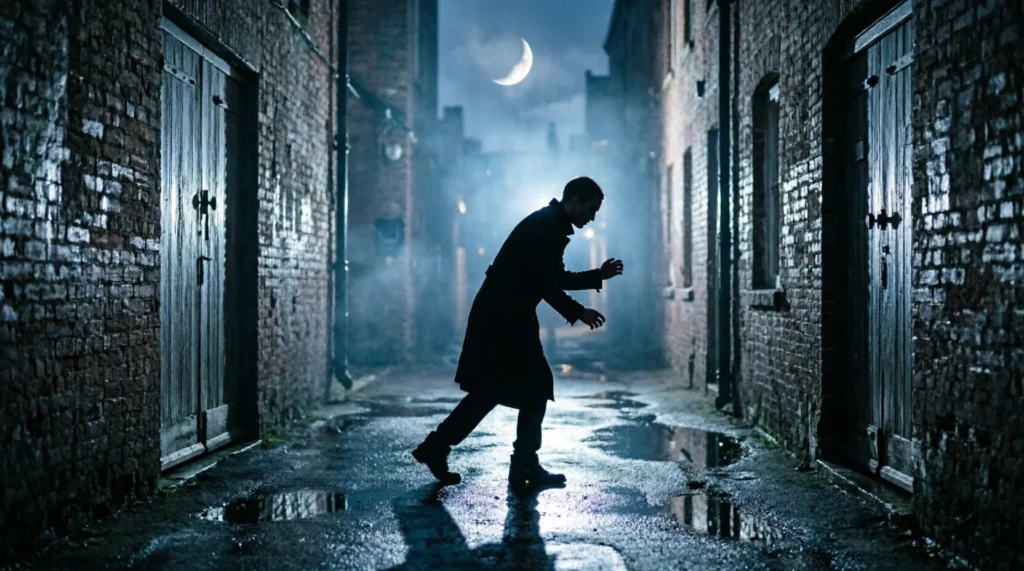
[IMAGE: dark hallway with shadow moving quietly]
Here are some creative examples:
The night was still, He moved like a shadow on the wall, No sound at all.
In another story example:
Ali crept like a cat through the garden, careful not to step on dry leaves that might crack under his feet.
And another:
Maria slipped through the classroom like a secret no one was meant to notice.
Poets use similes because they add rhythm and emotion. Story writers use them to build tension and make readers curious. When you use similes for sneaking, you make your writing feel alive and cinematic.
“Like mist slipping through the trees” — Captures quiet, smooth movement that blends naturally into the surroundings.
“As silent as a drifting leaf” — Shows gentle, almost invisible motion, making it perfect for calm descriptions.
“Like a stream finding its way between rocks” — Suggests careful movement through tight spaces without drawing attention.
“As light as pollen on the breeze” — Highlights soft, delicate steps that barely disturb anything nearby.
“Like ivy creeping along an old wall” — Describes slow, steady sneaking that happens almost unnoticed over time.
💛 Warm & Emotional (for personal stories, letters, heartfelt writing)
“Like a child sneaking a surprise gift into a room” — Conveys excitement mixed with careful, loving intentions.
“As quiet as a whispered promise” — Expresses gentle secrecy without sounding negative or suspicious.
“Like a friend tiptoeing in with good news” — Creates a warm image of thoughtful, respectful movement.
“As careful as someone protecting a sleeping puppy” — Emphasizes kindness and extra care while moving quietly.
“Like a sibling sneaking in to decorate for a birthday” — Shows playful secrecy with a positive purpose.
✨ Poetic & Romantic (for poems, song lyrics, love writing)
“Like moonlight slipping across the floor” — Creates a graceful, dreamy image of silent movement.
“As gentle as the evening breeze through flowers” — Brings a peaceful, romantic feeling to quiet actions.
“Like a secret carried by the stars” — Suggests mystery and beauty in hidden movement.
“As soft as the first snowfall at dawn” — Paints sneaking as delicate, peaceful, and nearly invisible.
“Like a dream wandering through the night” — Gives the action a magical, poetic quality.
😄 Playful & Fun (for casual use, social media captions, humor)
“Like a cat hunting a toy mouse” — Shows playful focus while moving quietly.
“As sneaky as a kid reaching for the last cookie” — Adds humor to a harmless, relatable situation.
“Like socks sliding across a polished floor” — Describes smooth, quiet movement in a funny way.
“As quiet as someone avoiding chores” — Makes readers smile while showing careful sneaking.
“Like a gamer trying not to wake the whole house” — Connects the simile to everyday life with a modern, humorous twist.
These tone-grouped similes for similes for sneaking give you options for every kind of writing — whether you need something soft and poetic or bold and fun. Try picking one from each group and using them in a short paragraph to see how different the same keyword can feel.
Using similes for sneaking in Real Writing Contexts
In a Descriptive Essay
When writing a descriptive essay, you might explain how a person or animal moves without being noticed. A well-chosen simile makes that movement easier for readers to picture. For example: The fox moved through the tall grass like mist slipping through the trees, leaving hardly a sound behind.
In a Poem
Similes for sneaking can help create a peaceful, mysterious, or magical mood in poetry. They add strong images without using many words. For example: You came like moonlight slipping across the floor, and the silent night welcomed every gentle step.
In a Story or Creative Scene
In a story, a simile can reveal how carefully a character moves during an exciting or suspenseful moment. It helps readers imagine the scene more clearly. For example: Ella crept toward the old attic door as soft as the first snowfall at dawn, hoping the creaky floorboards would stay silent.
In a Social Media Caption or Message
A short, funny simile makes casual writing more memorable and entertaining. It quickly paints a picture your friends can relate to. For example: Late-night snack mission: I was as sneaky as a kid reaching for the last cookie! 😂
The more you practice placing similes for sneaking into real sentences, the more natural your writing will sound — and the more your reader will feel exactly what you want them to feel.
Common Mistakes Students Make With Similes for Sneaking
It’s normal to make mistakes when learning similes for sneaking. Here are a few common ones and how you can fix them:
Using boring comparisons Some students write “he moved like a person.” That doesn’t create a clear image. Try something more specific like “a shadow” or “a whisper.”
Forgetting the purpose A simile should show how something moves, not just decorate the sentence. Always focus on meaning.
Overusing the same idea If every simile is about shadows, your writing becomes repetitive. Try animals, weather, and sounds too.
Making the comparison confusing If your reader can’t picture it, simplify it. Clear images are better than complicated ones.
Using similes without context Always place your simile in a full sentence so it makes sense in your story.
With practice, you will naturally improve and avoid these issues.
Fun Activities to Practice Similes for Sneaking
Try these fun activities to improve your skill with similes for sneaking:
Sneaky Story Challenge Write a short story about a character sneaking into a place. Include at least 5 similes.
Animal Comparison Game Pick 5 animals and write how each one could represent sneaking behavior.
Silent Scene Drawing Draw a sneaky scene and then write 3 similes describing the movement inside it.
Fill-in-the-Blank Practice “He moved like _______ through the room.” Challenge yourself to create 10 versions.
Partner Guessing Game Write similes for sneaking and let a friend guess what is being described.
Poem Creation Write a 4-line poem using at least two similes for sneaking.
These activities help you think creatively and improve your writing speed and imagination.
What NOT to Do With Similes for Sneaking
Avoid these common mistakes when using similes for sneaking:
Don’t use unclear comparisons If your reader can’t visualize it, the simile loses its power.
Don’t overstuff your writing with similes Too many similes can make your writing confusing instead of beautiful.
Don’t copy the same comparison repeatedly Repetition makes your writing feel dull and predictable.
Don’t ignore the action Always connect the simile to actual sneaking movement, not unrelated ideas.
Being aware of these mistakes helps you write more confidently and clearly.
Frequently Asked Questions About Similes for Sneaking
What are some simple similes for sneaking for beginners?
Simple similes for sneaking include phrases like “like a cat,” “like a shadow,” or “as quiet as snow.” These are easy to understand and perfect for beginners who are just learning descriptive writing.
How do similes for sneaking improve storytelling?
They make your story more vivid by helping readers picture silent movement clearly. Instead of just saying “he walked quietly,” you can create stronger emotional and visual impact.
Can I use similes for sneaking in poems?
Yes, absolutely. Poets often use similes for sneaking to create mood and mystery. They help make poems feel softer, quieter, and more expressive.
What makes a good simile for sneaking?
A good simile connects sneaky movement to something silent, smooth, or stealthy like shadows, animals, or wind. The clearer the image, the better your writing becomes.
Why do teachers ask students to learn similes for sneaking?
Teachers use them to help students build imagination and improve descriptive writing skills. It’s a fun way for you to learn how language creates strong mental pictures.
Final Thoughts on Similes for Sneaking
Learning similes for sneaking helps you turn simple sentences into powerful, imaginative descriptions. Instead of plain writing, you now have creative tools that make your stories more exciting and memorable.
As you practice, you will notice your writing becoming smoother, more expressive, and more enjoyable to read. Every example you try builds your confidence as a writer.
Keep experimenting with new comparisons, trust your imagination, and remember—great writing grows step by step. You already have the creativity; now you just need to use it. Your next story can be your best one yet.
Frequently Asked Questions
What are similes for sneaking and why are they important in writing?▼
Similes for sneaking are comparisons that describe quiet, stealthy movements using ‘like’ or ‘as.’ They enhance storytelling by creating vivid mental images, making the writing more expressive and engaging for readers.
Can you provide some examples of similes for sneaking?▼
Certainly! Examples include ‘He moved like a shadow slipping through moonlight’ and ‘She crept as quietly as a cat stalking its prey.’ These comparisons help illustrate the subtlety of sneaky movements in a creative way.
How can I effectively use similes for sneaking in my writing?▼
To use similes for sneaking effectively, first consider how your character is moving—quietly, slowly, or carefully. Then, think of real-life comparisons, like animals or natural elements, that embody those qualities to create strong imagery.
What types of real-life comparisons work best for similes related to sneaking?▼
Effective comparisons for similes about sneaking often involve animals, nature, or silent actions. For example, referencing cats, shadows, or even elements like fog and snow can create a strong visual connection to stealthy movement.
How do similes help improve descriptive writing skills?▼
Similes help improve descriptive writing by allowing readers to visualize actions and emotions more vividly. By using comparisons, writers can evoke feelings and create immersive experiences that draw readers into the narrative.
Why do language arts educators emphasize the use of similes in writing?▼
Language arts educators emphasize similes because they enhance comprehension and imagery in writing. Similes enable students to create mental pictures that deepen readers’ understanding and emotional connection to the story.
Is it necessary to use similes for sneaking in every piece of writing?▼
While similes for sneaking are powerful tools, they are not necessary for every piece of writing. Use them judiciously to enhance specific moments where descriptive detail can elevate the narrative.
Liam is a language enthusiast and lead writer at Similepedia.com, where he focuses on creating clear, creative, and easy-to-use similes for everyday writing. He specializes in turning simple ideas into vivid comparisons that make sentences more engaging, expressive, and memorable.
Instead of overcomplicating language with technical jargon, Liam approaches similes as practical tools for better communication. He breaks down how comparisons work, when to use them, and how to make them sound natural — not forced or awkward.
He pays close attention to tone, context, and clarity, ensuring every simile fits smoothly into real sentences. From fun and playful comparisons to more descriptive and expressive ones, Liam helps readers improve how they write, speak, and express ideas.
At Similepedia.com, his mission is simple: make language more colorful and effective without making it complicated. He doesn’t just list similes — he helps readers understand how to use them confidently in real situations.