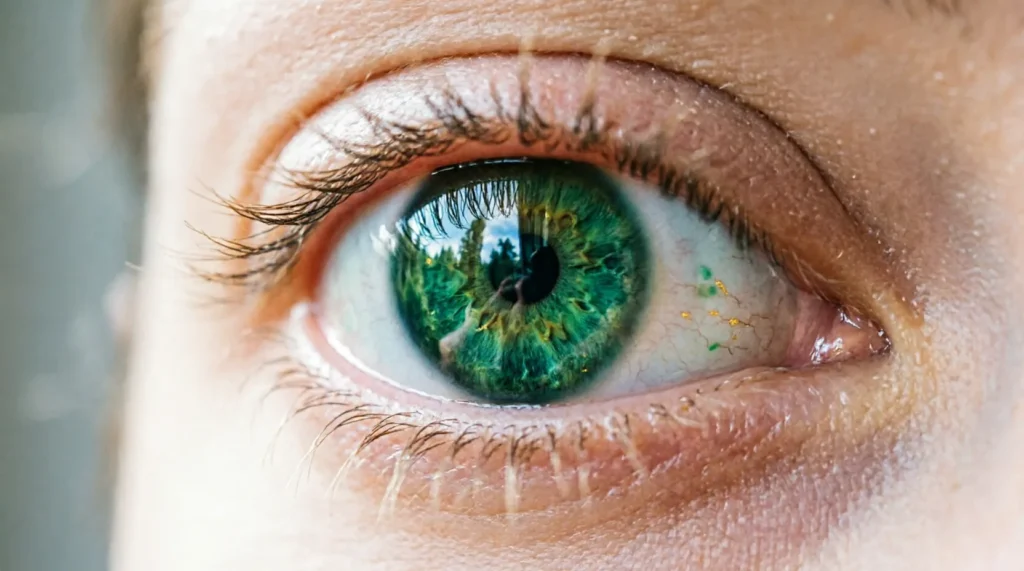
In short, similes for green eyes are creative comparisons that help you describe the color, depth, and emotion behind green-colored eyes using “like” or “as.” They make your writing more vivid by connecting green eyes to familiar images such as nature, gemstones, or light. In this guide, you’ll find powerful examples and easy ways to use them in your own writing to make descriptions come alive.
What Are Similes for Green Eyes? (And Why They Matter)
Imagine you’re sitting in class, staring at a blank page, trying to describe someone’s striking green eyes—but all you can think of is “green eyes.” That’s where similes for green eyes come in and save the day. They help you turn a simple description into something colorful and expressive.
Similes for green eyes are comparisons that use “like” or “as” to describe the shade, sparkle, or feeling of green eyes. Instead of just saying “green eyes,” you might say “green eyes like emeralds in sunlight.”
Literacy educators often explain that figurative language helps readers see what the writer is imagining. It builds stronger mental images and makes storytelling more engaging.
These similes matter because they improve your writing in stories, poems, and even exams. When you use them, your writing becomes more emotional, more detailed, and much more interesting to read. And once you learn them, you’ll notice them everywhere in literature.
Now that you understand the basics, let’s explore the most beautiful and creative examples you can use right away.
The Best Examples of Similes for Green Eyes
Here are vivid, creative, and student-friendly similes for green eyes you can use in your writing:
Her green eyes were like emeralds glowing under morning sunlight.
His green eyes shone like fresh leaves after rain.
Their green eyes were as bright as glass bottles filled with sunlight.
Her eyes were like green forests hiding secrets in the dark.
His green eyes sparkled like jade stones in a treasure chest.
Her green eyes were as soft as spring grass swaying in the wind.
His gaze was like moss growing quietly on ancient stones.
Her eyes were like glowing olives under a warm kitchen light.
His green eyes shined like sea glass washed onto the shore.
Her eyes were as vivid as rainforest leaves after a storm.
His green eyes were like lime candy sparkling in sunlight.
Her gaze was like emerald fire hidden behind calm waters.
His eyes were as deep as a green lake at dusk.
Her green eyes shimmered like crystals in a forest cave.
His eyes were like new leaves opening in spring.
Her gaze was as bright as glowing jade under moonlight.
His green eyes were like polished stones in a riverbed.
Her eyes sparkled like nature itself had been captured inside them.
His green eyes were as fresh as dew on morning grass.
Her gaze was like a forest waking up at sunrise.
His eyes were like green marbles rolling in light.
Her green eyes were as magical as hidden woodland paths.
His gaze was like glowing moss in a shaded forest corner.
These similes work well because they connect green eyes to nature, light, and precious objects. They help readers feel the beauty instead of just reading about it.
Now that you’ve seen strong examples, let’s learn how you can actually use similes for green eyes in your own writing.
How to Use Similes for Green Eyes in Your Writing
Using similes for green eyes is easier than you think. You just need a little creativity and practice.
First, observe the shade and mood of the green eyes you want to describe. Are they bright, dark, soft, or glowing?
Next, think of something similar in nature or everyday life—like plants, gems, or light.
Then connect them using “like” or “as” to build your simile.
Finally, place your simile into a full sentence so it feels natural in your writing.
For example: Her green eyes were like emeralds glowing in the afternoon sun as she smiled at the crowd.
When you practice this, you’ll notice your writing becomes more vivid and expressive, and your readers will picture your descriptions more clearly.
Similes for Green Eyes in Poems and Stories
Writers and poets love using similes for green eyes because they instantly add emotion and imagery. Instead of plain description, they create mood and meaning.
Here are a few creative examples:
Aisha wrote: Her green eyes were like forest light, soft and endless in the evening sky.
Liam described: His green eyes were as sharp as glass leaves, cutting through the silence of the room.
Mina imagined: Green eyes like hidden gardens, blooming behind every glance she gave.
Poets use these comparisons because they help readers feel the character’s personality and emotional depth. Green eyes often symbolize mystery, nature, or calm energy, and similes make those ideas stronger.
When you write your own stories, try adding similes for green eyes to give your characters more life and personality.
More similes for green eyes by Tone and Context
🌿 Natural & Descriptive “Her green eyes were like fresh moss after a spring rain.” — This captures a calm, earthy beauty and works well in nature descriptions. “As green as young leaves in early spring.” — Use this to highlight brightness and freshness in essays or vivid scenes. “His green eyes were like a hidden forest pond.” — This simile suggests depth and mystery in descriptive writing. “As clear as dew resting on green grass.” — It creates a clean and peaceful image that suits detailed descriptions. “Her green eyes shimmered like seaweed beneath clear water.” — This works well when describing movement and natural color.
💛 Warm & Emotional “Her green eyes were like a cozy meadow at sunset.” — This simile creates a feeling of comfort and warmth in personal writing. “As gentle as green hills beneath the morning sky.” — Use it to show kindness and calm emotions. “His green eyes were like soft ivy wrapping around old memories.” — This gives a nostalgic and caring feeling. “Like a peaceful garden in full bloom, her green eyes made everyone feel welcome.” — It fits heartfelt stories and letters. “As comforting as a shady tree on a hot day.” — This simile expresses safety and affection.
✨ Poetic & Romantic “Her green eyes glowed like moonlight dancing through emerald leaves.” — This creates a dreamy mood for poems and romantic scenes. “As enchanting as a secret valley touched by dawn.” — Use it to add mystery and beauty to love writing. “His green eyes were like stars reflected in a quiet lake.” — This simile gives a soft and magical feeling. “Like a hidden garden in a fairy tale, her green eyes seemed impossible to forget.” — It works beautifully in lyrical writing. “As lovely as spring vines climbing toward the sun.” — This adds a gentle romantic touch.
😄 Playful & Fun “Her green eyes were like gummy candies in the candy aisle.” — This creates a cheerful and lighthearted image. “As bright as a cartoon frog’s favorite sweater.” — Use it in funny stories or playful captions. “His green eyes sparkled like marbles at recess.” — This captures energy and excitement. “Like a pair of tiny green lanterns, her eyes lit up every room.” — It adds fun and personality to casual writing. “As lively as a parrot in a pet shop.” — This simile works well when describing someone energetic and cheerful.
These tone-grouped similes for green eyes give you options for every kind of writing — whether you need something soft and poetic or bold and fun. Try picking one from each group and using them in a short paragraph to see how different the same green eyes can feel.
Using similes for green eyes in Real Writing Contexts
In a Descriptive Essay Students often describe a person’s appearance when writing about a family member, friend, or favorite character. Adding a simile makes the description more vivid and memorable. For example, My grandmother’s green eyes were like fresh moss after a spring rain, giving her a peaceful and gentle look.
In a Poem Similes for green eyes can help create mood and add emotion to a poem. They make images feel softer and more expressive. Her green eyes glowed like moonlight dancing through emerald leaves, and silence wrapped the evening sky.
In a Story or Creative Scene Writers can use similes for green eyes to show feelings or make a character stand out in a scene. A well-placed comparison adds personality and atmosphere. As Maya stepped into the lantern light, her green eyes shone like tiny green lanterns, making everyone pause and smile.
In a Social Media Caption or Message Short similes work well in captions and messages because they are fun and easy to remember. They add personality without sounding too formal. Can’t stop admiring those green eyes—they’re like gummy candies in the candy aisle! 💚✨
The more you practice placing similes for green eyes into real sentences, the more natural your writing will sound — and the more your reader will feel exactly what you want them to feel.
Common Mistakes Students Make With Similes for Green Eyes
Learning similes takes practice, and it’s normal to make mistakes. Here are a few common ones and how you can fix them:
Using overly simple comparisons Many students just say “green eyes like green.” This doesn’t create a strong image. Try using something more specific like nature or gemstones.
Repeating the same idea If every simile mentions “emeralds,” your writing becomes repetitive. Mix it up with forests, light, or water.
Making unclear comparisons Sometimes the reader can’t understand the connection. Always make sure your simile clearly shows the similarity.
Overloading your writing Using too many similes in one paragraph can feel heavy. Use them naturally, not constantly.
Forgetting emotional meaning Green eyes are not just color—they can show calmness, mystery, or warmth. Try to include emotion in your comparisons.
Fun Activities to Practice Similes for Green Eyes
Try a “nature match” game Look outside and match anything green—plants, grass, leaves—with ways to describe green eyes.
Write five similes in one minute Challenge yourself to quickly create different similes for green eyes without stopping to overthink.
Draw and describe Draw a face with green eyes and write three similes underneath it.
Story builder challenge Write a short story about a character with green eyes and include at least three similes.
Simile swap game Take a boring sentence like “She has green eyes” and rewrite it using a simile.
Group creativity exercise Work with friends and compare similes for green eyes. See who creates the most creative one.
What NOT to Do With Similes for Green Eyes
Don’t use clichés too often Phrases like “green eyes like emeralds” are common. They’re fine sometimes, but try to be original too.
Don’t confuse similes with metaphors Similes use “like” or “as.” Without them, it becomes a metaphor, which is different.
Don’t force comparisons If your simile feels unnatural, it will confuse readers instead of helping them visualize.
Don’t ignore meaning A good simile for green eyes should add emotion, not just decoration.
Frequently Asked Questions About Similes for Green Eyes
What is a simple example of a simile for green eyes?
A simple example is “green eyes like fresh spring leaves.” It connects eye color with something natural and easy to imagine. This helps readers quickly picture the shade and brightness.
Why do writers use similes for green eyes?
Writers use them to make descriptions more vivid and emotional. Instead of plain color, similes help readers see beauty, mood, and personality through comparison.
Can I use similes for green eyes in school essays?
Yes, you can absolutely use them in essays and creative writing. They make your writing more engaging and can help you score higher in descriptive tasks.
What makes a good simile for green eyes?
A good simile is clear, creative, and easy to imagine. It should connect green eyes to something familiar like nature, light, or gemstones.
How can I improve my similes for green eyes?
Practice observing the world around you and think creatively. The more you write, the easier it becomes to create original and meaningful comparisons.
Final Thoughts on Similes for Green Eyes
Similes for green eyes are a powerful way to turn simple descriptions into rich, colorful writing. They help you express beauty, emotion, and imagination in a way that plain words cannot.
When you practice using them, your storytelling becomes more engaging and your readers can easily picture what you’re describing. Whether you’re writing poems, stories, or essays, these similes give your words more life and depth.
Keep experimenting, keep observing, and keep writing—you’ll get better every time you try. And soon, describing something as beautiful as green eyes will feel natural and even fun.
Frequently Asked Questions
What are some examples of similes for green eyes provided in the article?▼
The article lists several vivid similes such as ‘Her green eyes were like emeralds glowing under morning sunlight’ and ‘His gaze was like moss growing quietly on ancient stones.’ These comparisons connect the color and beauty of green eyes to familiar images in nature and precious objects.
Why are similes important in writing about green eyes?▼
Similes enhance descriptions by creating stronger mental images and engaging the reader’s emotions. They allow writers to convey the depth and sparkle of green eyes in a more colorful and expressive way.
How can I incorporate similes for green eyes into my own writing?▼
To use similes for green eyes, start by observing the specific shade and mood of the eyes you want to describe. Then, think of familiar images from nature or objects that relate to that color and feeling, and use ‘like’ or ‘as’ to create your simile.
What role does figurative language play in describing green eyes?▼
Figurative language, like similes, helps readers visualize and feel the emotions associated with descriptions. It transforms simple phrases into powerful imagery that makes storytelling more engaging and relatable.
Can similes for green eyes be used in different types of writing?▼
Absolutely! Similes for green eyes can enhance various forms of writing, including stories, poems, and even essays. They add emotional depth and vivid detail, making your writing more interesting and memorable.
How does the article suggest similes affect reader engagement?▼
The article emphasizes that similes create stronger mental images, which help readers connect emotionally to the text. By using creative comparisons, writers can make their descriptions come alive, thus enhancing the overall reading experience.
What are some themes highlighted in the similes for green eyes?▼
The similes often reflect themes of nature, light, and preciousness, connecting green eyes to vibrant images such as forests, gemstones, and sunlight. This thematic richness deepens the reader’s appreciation for the beauty of green eyes.
Sara Liu holds a Master’s degree in English Education from the University of Washington and has been an educator for over 15 years. She specializes in curriculum development for elementary and middle school students, with a particular focus on figurative language. Sara’s love for similes and metaphors blossomed when she discovered their power to spark imagination and convey emotion. At SimilePedia, Sara creates engaging worksheets and reference guides that help young learners grasp the nuances of figurative language. Her favorite part of writing content is developing resources that make complex concepts accessible to children. She is passionate about nurturing a love for words and creativity in her students, and her contributions are shaped by this commitment.