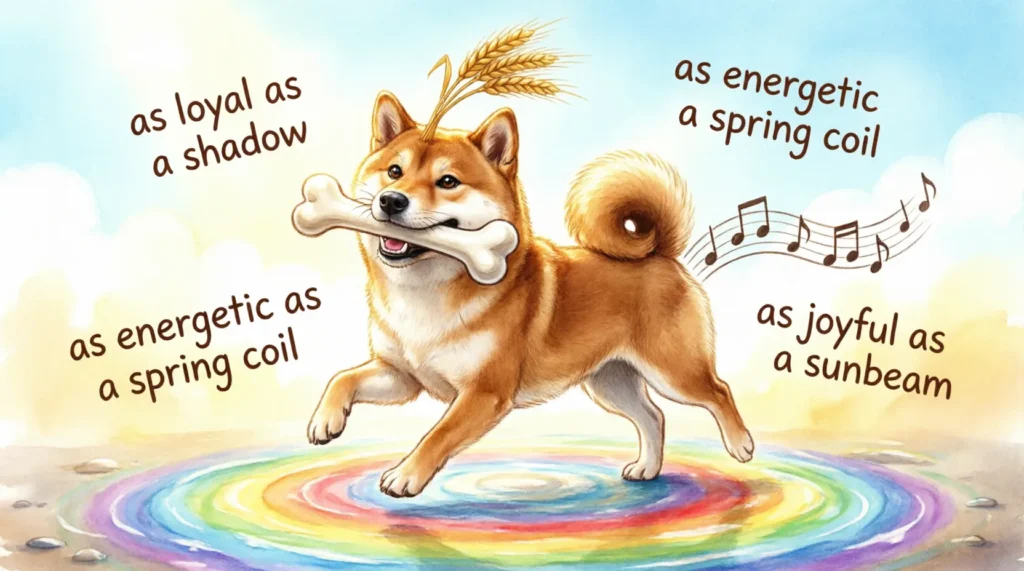
In short, similes for dog are comparisons that use words like “as” or “like” to describe a dog’s appearance, behavior, personality, or actions. They help you create stronger mental pictures in your writing and make descriptions more interesting. Keep reading to discover vivid examples, writing tips, and fun practice activities you can use right away.
[IMAGE: Happy dog running through a grassy field]
What Are Similes for Dog? (And Why They Matter)
Have you ever been writing a story and reached a point where you needed to describe a dog, but all you could think of was “the dog was fast” or “the dog was friendly”? Many students face this challenge when trying to make their writing more exciting.
Similes for dog are comparisons that use the words “like” or “as” to help readers imagine a dog more clearly. Instead of saying a dog is fast, you might say, “The dog raced across the yard like a rocket.”
These comparisons matter because they make your writing more vivid and memorable. Whether you are writing a story, poem, book report, or classroom assignment, similes help your readers see, hear, and feel what you are describing.
Language arts educators and literacy researchers often encourage students to use figurative language because it strengthens descriptive writing and improves reading comprehension. When you understand similes, you become a more confident reader and writer.
Now that you know what similes are, let’s explore some of the best examples you can use in your own writing.
The Best Examples of Similes for Dog
The dog ran like a streak of lightning across the field.
The puppy bounced around like a rubber ball.
The dog was as loyal as a shadow following its owner.
The old dog slept like a baby beside the fireplace.
The puppy’s tail wagged like a windshield wiper.
The dog barked like a trumpet echoing through the yard.
The dog was as brave as a knight protecting a castle.
The puppy was as curious as a scientist in a laboratory.
The dog sprinted like the wind on a stormy day.
The puppy followed me like glue.
The dog guarded the house like a watchful soldier.
The puppy’s ears flopped like soft flags in the breeze.
The dog was as gentle as a feather drifting through the air.
The excited puppy jumped like popcorn popping in a pan.
The dog was as playful as a child on the first day of summer vacation.
The puppy’s eyes sparkled like stars in the night sky.
The dog growled like distant thunder.
The dog waited as patiently as a statue.
The puppy raced through the park like a race car.
The dog was as dependable as the sunrise.
The puppy cuddled up like a warm blanket.
The dog sniffed around like a detective searching for clues.
The puppy was as energetic as a bouncing basketball.
The dog stood proudly like a king surveying his kingdom.
The puppy splashed through puddles like a child playing in the rain.
These examples work well because they create strong imagery. When you read them, you can easily picture the dog’s actions, emotions, or appearance.
Good similes also connect a dog’s behavior to familiar objects or experiences. This helps your reader understand exactly what you mean without needing a long explanation.
Next, let’s look at how you can create and use your own similes for dog descriptions.
How to Use Similes for Dog in Your Writing
Choose one specific quality you want to describe. Think about whether your dog is fast, friendly, noisy, brave, sleepy, or playful. Focusing on one trait helps you create a stronger comparison.
Find something that shares that quality. If the dog is fast, compare it to lightning, the wind, or a race car. If the dog is loyal, compare it to a shadow or a trusted friend.
Use “like” or “as” naturally. Similes sound best when they fit smoothly into your sentence rather than feeling forced.
Keep the comparison clear. Your reader should immediately understand why you chose the comparison.
Example:
“The golden retriever raced across the beach like a rocket launched into the sky.”
This sentence helps your reader picture speed and excitement at the same time.
Once you get comfortable using similes, you’ll start noticing them everywhere in stories, poems, and even songs.
Similes for Dog in Poems and Stories
Writers often use similes for dog descriptions because they create emotion, rhythm, and vivid imagery. A simple comparison can bring a character or scene to life.
Here is a short poem example:
“The puppy bounced like popcorn in a pan, Across the yard it raced and ran, Its tail wagged like a spinning fan, The happiest dog in all the land.”
Story example:
Amina opened the gate, and her puppy shot out like a rocket. Within seconds, it was zigzagging through the garden, as energetic as a child on a snow day.
Another story example:
Mateo’s old dog curled beside the fireplace and slept like a baby. The room felt peaceful as the gentle crackle of the fire filled the air.
Creative writing teachers often encourage students to use similes because they help readers connect emotionally with characters and scenes. A well-chosen comparison can make your writing feel more alive and memorable.
Before you start creating your own similes, it helps to know some common mistakes students make.
More similes for dog by Tone and Context
🌿 Natural & Descriptive
“As watchful as a dog guarding a quiet campsite” — Captures alertness and careful attention, making it perfect for outdoor scenes or descriptive essays.
“Like a dog sniffing through autumn leaves” — Suggests curiosity and a love of exploring small details in nature.
“As lively as a dog racing across an open meadow” — Highlights energy and freedom in vivid landscape writing.
“Like a dog following the scent of fresh rain” — Describes determination and curiosity with a natural, refreshing image.
“As steady as a dog walking beside its owner on a forest trail” — Emphasizes loyalty, calmness, and dependable companionship.
💛 Warm & Emotional
“Like a dog waiting patiently at the front door” — Expresses faithful love and hopeful anticipation in personal writing.
“As comforting as a dog resting by your feet” — Conveys warmth, safety, and emotional support.
“Like a dog greeting an old friend after years apart” — Shows heartfelt joy and genuine affection.
“As faithful as a dog through every season” — Highlights lasting loyalty during both happy and difficult times.
“Like a dog staying close during a storm” — Illustrates dependable companionship when someone needs comfort most.
✨ Poetic & Romantic
“Like a dog chasing the golden light of sunset” — Creates a dreamy image of hope, beauty, and simple happiness.
“As gentle as a dog sleeping beneath the stars” — Sets a peaceful and tender mood in poems.
“Like a dog listening to the whisper of the wind” — Suggests quiet reflection and deep awareness of the world.
“As devoted as a dog waiting beneath the moon” — Symbolizes patient love and unwavering devotion.
“Like a dog carrying happiness wherever it wanders” — Brings a soft, uplifting feeling to romantic or reflective writing.
😄 Playful & Fun
“As bouncy as a dog chasing floating bubbles” — Describes excitement and childlike fun in a cheerful way.
“Like a dog discovering a brand-new toy” — Shows surprise, enthusiasm, and joyful curiosity.
“As goofy as a dog wearing oversized sunglasses” — Adds humor to lighthearted stories or social media posts.
“Like a dog spinning in circles before nap time” — Perfect for describing someone who is adorably restless.
“As excited as a dog hearing the treat bag crinkle” — Captures instant excitement and eager anticipation.
These tone-grouped similes for dog give you options for every kind of writing — whether you need something soft and poetic or bold and fun. Try picking one from each group and using them in a short paragraph to see how different the same keyword can feel.
Using similes for dog in Real Writing Contexts
In a Descriptive Essay
When writing about a pet, an animal shelter, or a memorable outdoor experience, a simile can help readers picture a dog’s behavior more clearly. Instead of simply saying the dog was energetic or loyal, compare it to something familiar to make the description more vivid. For example: “The dog ran across the field like a dog chasing the scent of fresh rain, eager to discover every hidden corner.”
In a Poem
Similes for dog can create a gentle, joyful, or peaceful mood in poetry. They help readers connect with emotions through simple but memorable comparisons. For example: “As gentle as a dog sleeping beneath the stars, my dreams drifted softly through the quiet night.”
In a Story or Creative Scene
In stories, similes for dog can bring characters and scenes to life by showing emotion, movement, or loyalty in a fresh way. They make ordinary moments feel more memorable and engaging. For example: “When Maya returned home after months away, her brother rushed toward her like a dog greeting an old friend after years apart, unable to hide his happiness.”
In a Social Media Caption or Message
Short similes work especially well in captions, texts, or messages because they quickly paint a picture while keeping the tone fun and friendly. A creative comparison makes your writing more memorable. For example: “Feeling as excited as a dog hearing the treat bag crinkle—today is going to be amazing!”
The more you practice placing similes for dog into real sentences, the more natural your writing will sound — and the more your reader will feel exactly what you want them to feel.
Common Mistakes Students Make With Similes for Dog
Comparing a dog to something unrelated Sometimes students choose comparisons that do not make sense. Make sure your comparison clearly matches the quality you are describing.
Using too many similes in one paragraph Similes are powerful, but too many can overwhelm your reader. Choose your strongest examples instead.
Forgetting to use “like” or “as” A simile needs one of these comparison words. Without them, you may accidentally create a metaphor instead.
Repeating the same comparison Many students use “fast as lightning” repeatedly. Challenge yourself to create fresh and original comparisons.
Making the comparison too complicated If your reader needs several minutes to understand your simile, it may be too complex. Simplicity often works best.
These mistakes are completely normal when you are learning. With practice, your similes will become stronger and more natural.
Fun Activities to Practice Similes for Dog
Dog Description Challenge Grab a pencil and write five different similes describing a dog. Try focusing on speed, loyalty, playfulness, appearance, and sound.
Draw and Compare Draw a dog doing something funny. Then write three similes that describe what is happening in the picture.
Simile Match Game Work with a friend and match dog traits to possible comparisons. For example, “loyal” could match “a shadow.”
Story Starter Activity Begin a story with the sentence: “The puppy bounced like a rubber ball across the yard.” Then continue writing for five minutes.
Reading Detective Read a children’s story or novel and search for similes about animals. Record your favorites in a notebook.
Create a Simile Worksheet Make a chart with dog traits on one side and possible comparisons on the other. Challenge yourself to fill every space.
These activities help you build creativity while making figurative language feel fun rather than stressful.
What NOT to Do With Similes for Dog
Don’t force a comparison just because you think you need one. A simple sentence is sometimes better than a weak simile.
Don’t copy every simile you find online. Creating your own comparisons helps your writing sound original and personal.
Don’t assume every dog needs the same simile. A tiny puppy and a large guard dog may need very different comparisons.
Don’t focus only on appearance. Some of the strongest similes for dog descriptions focus on actions, emotions, sounds, and personality traits.
Understanding what to avoid can help you create stronger and more effective comparisons.
Frequently Asked Questions About Similes for Dog
What is a simile for a loyal dog?
A common simile is “The dog was as loyal as a shadow.” This comparison works because a shadow stays close to you wherever you go. It helps readers understand the dog’s faithfulness.
How do you use a dog simile in a sentence?
You can place the simile directly into your description. For example: “The puppy bounced through the yard like a rubber ball.” The comparison helps readers picture the dog’s movement.
What are some funny similes for dogs?
Funny examples include “The puppy jumped like popcorn in a pan” or “The dog’s tail wagged like a windshield wiper.” These comparisons create humor while still describing the dog’s behavior clearly.
Are similes for dog appropriate for elementary students?
Yes. Many dog similes are simple and easy for younger students to understand. Comparisons involving everyday objects such as balls, shadows, and stars are especially effective.
Why do writers use similes for dogs?
Writers use similes to create vivid imagery and stronger emotional connections. Instead of simply telling readers what a dog is like, they help readers imagine it through comparison.
Final Thoughts on Similes for Dog
Learning how to use similes for dog descriptions can make your writing more colorful, detailed, and enjoyable to read. Whether you are describing a playful puppy, a brave guard dog, or a sleepy family pet, the right comparison can bring your words to life.
You explored dozens of examples, learned practical writing strategies, and discovered common mistakes to avoid. These tools can help you feel more confident the next time you face a writing assignment.
Remember that great similes do not have to be complicated. The best ones often compare a dog to something familiar that your readers can easily picture.
With practice, creativity, and a little imagination, you can write dog descriptions that readers will remember long after they finish the page. Happy writing!
Frequently Asked Questions
What are similes for dogs and why are they useful in writing?▼
Similes for dogs are comparisons that use ‘like’ or ‘as’ to vividly describe a dog’s characteristics, behaviors, or actions. They enhance your writing by creating stronger mental images and making descriptions more engaging for readers.
Can you give some examples of similes for describing a dog's behavior?▼
Certainly! For instance, you could say, ‘The dog barked like a trumpet echoing through the yard’ or ‘The puppy raced through the park like a race car.’ These examples illustrate how similes can bring a dog’s actions to life.
How do similes improve reading comprehension?▼
Similes help readers visualize and connect with the text, making it easier to understand and remember the content. By using figurative language, writers can enhance their descriptions, allowing readers to experience the story more vividly.
What specific qualities should I focus on when creating similes for a dog?▼
When crafting similes, consider specific traits such as whether your dog is fast, friendly, brave, or playful. Focusing on one quality helps you create a more impactful and relatable comparison.
How can I practice using similes in my writing?▼
You can practice by selecting a few traits of your dog and brainstorming comparisons that relate to familiar experiences or objects. Try writing sentences that incorporate these similes into your stories or descriptions.
Are there any tips for making my similes more effective?▼
To make your similes more effective, aim for comparisons that evoke strong imagery and emotions. Consider using everyday objects or experiences that your audience can easily relate to for better understanding.
Why do educators encourage the use of similes in writing?▼
Educators promote similes because they enrich descriptive writing and enhance students’ ability to express ideas clearly. This figurative language not only makes writing more enjoyable but also fosters creativity and critical thinking.
Using Similes for Dog in Context
He greeted every guest as enthusiastically as a dog hearing the leash jingle.
She was loyal as a dog waiting by the door for its owner to come home.
The puppy zoomed around the yard like a dog that had just discovered squirrels exist.
He slept as soundly as a dog stretched out in a patch of afternoon sun.
The old hound moved slow and steady, calm as a dog who’s seen every trick in the book.
Similes for Dog Behavior and Personality
Beyond appearance, dogs are a rich source of similes for personality traits — loyalty, energy, and affection:
Protective as a dog guarding its favorite toy.
Curious as a dog sniffing a brand-new pair of shoes.
Affectionate as a dog leaning its full weight against your leg.
Liam is a language enthusiast and lead writer at Similepedia.com, where he focuses on creating clear, creative, and easy-to-use similes for everyday writing. He specializes in turning simple ideas into vivid comparisons that make sentences more engaging, expressive, and memorable.
Instead of overcomplicating language with technical jargon, Liam approaches similes as practical tools for better communication. He breaks down how comparisons work, when to use them, and how to make them sound natural — not forced or awkward.
He pays close attention to tone, context, and clarity, ensuring every simile fits smoothly into real sentences. From fun and playful comparisons to more descriptive and expressive ones, Liam helps readers improve how they write, speak, and express ideas.
At Similepedia.com, his mission is simple: make language more colorful and effective without making it complicated. He doesn’t just list similes — he helps readers understand how to use them confidently in real situations.