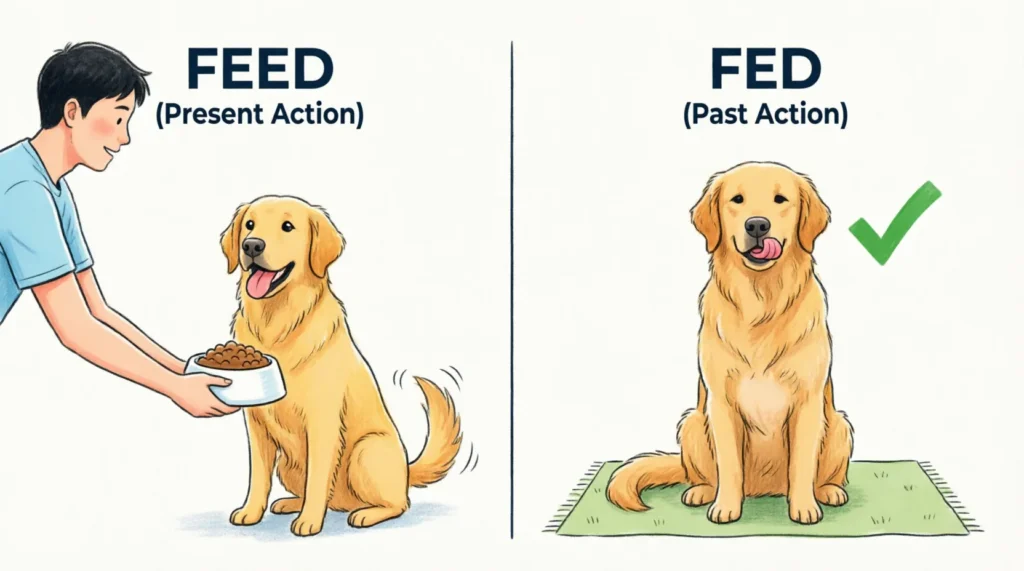
In short, fed vs feed is about understanding the difference between a past-tense verb and its present-tense form. Knowing when to use each word helps you write clearly, speak confidently, and avoid one of the most common English grammar mistakes. Keep reading for simple explanations, examples, and easy practice tips.
What Are the fed vs feed? (And Why They Matter)
Have you ever paused while writing a sentence like, “I ___ the cat this morning,” and wondered whether to write fed or feed? You’re not alone. Many students and even adult writers stop to think about this common grammar question.
The phrase fed vs feed compares two forms of the same verb. Feed is the present-tense and base form of the verb, while fed is the past tense and past participle. The choice depends on when the action happened.
Understanding this difference matters because it helps your writing sound natural and correct. Whether you are answering homework questions, writing stories, or sending messages, choosing the right verb tense makes your meaning clear.
Language arts researchers and literacy educators often point out that mastering common irregular verbs like feed and fed strengthens both reading comprehension and writing skills. Once you understand the pattern, you will notice it everywhere you read.
Before you practice using these words, it helps to see them in real sentences.
The Best Examples of the fed vs feed
[IMAGE: Student learning the difference between “fed” and “feed” with example sentences]
I feed my fish every morning before school.
We feed the ducks only where it is allowed.
They feed their puppy healthy food every day.
You should feed the baby before bedtime.
Please feed the chickens before you leave.
Farmers feed their animals fresh hay during winter.
I will feed my rabbit after homework.
We feed stray cats whenever we can.
She feeds the birds from her garden every weekend.
They feed the horses at sunrise.
I fed my dog before I went to school.
We fed the goats yesterday afternoon.
Mom fed the baby before the trip.
The volunteers fed hungry families after the storm.
He fed the fish before leaving for vacation.
My sister fed our hamster while I was away.
The zookeeper fed the lions early in the morning.
They fed the birds during the snowstorm.
I had already fed the cat when you arrived.
She has fed every animal in the shelter today.
These examples work well because they show how the action changes with time. When you pay attention to words like yesterday, every day, or already, you can quickly decide whether you should use feed or fed. Good writers use these time clues to help readers understand exactly when something happened.
How to Use fed vs feed in Your Writing
Once you know the difference, using these words becomes much easier. Follow these simple steps whenever you write.
Think about when the action happened. If it is happening now or happens regularly, use feed. If it already happened, use fed.
Look for time words. Words like today, every morning, or tomorrow often go with feed, while yesterday, last night, or earlier usually go with fed.
Check the helping verbs. After words like has, have, or had, you usually use fed because it is the past participle.
Read your sentence aloud. If it sounds awkward, check whether the verb tense matches the rest of your sentence.
Example:
“I fed my kitten before school, but I feed my fish every evening.”
The more you notice verb tenses, the more naturally you will choose the correct word in your own writing.
fed vs feed in Poems and Stories
Creative writing becomes more believable when the verb tense stays consistent. Poems and stories often use feed and fed to describe everyday moments with emotion and detail.
Aisha smiled as she whispered, “I feed the birds each dawn. Their songs make every morning bright.”
Mateo looked at the empty bowl. “He fed the puppy before the rain began, so it could sleep peacefully.”
Mei wrote in her journal, “We fed the tiny lamb together. It followed us like an old friend.”
Poets and authors choose the correct verb tense because it helps readers picture events clearly. Creative writing teachers encourage students to pay attention to tense so every scene feels smooth and easy to follow.
Common Mistakes Students Make With fed vs feed
Using feed for something that already happened. This is very common. If the action happened yesterday or earlier, fed is usually the correct choice.
Using fed for a daily routine. If you are describing something you do regularly, use feed instead.
Forgetting about helping verbs. After has, have, or had, you should usually use fed, not feed.
Ignoring time clues. Words like last week, today, or every morning give you helpful hints about which form to choose.
Mixing tenses in one sentence. This can confuse your reader. Make sure the rest of your sentence matches the tense you choose.
These mistakes are completely normal, and every writer improves with practice. The good news is that you can catch most of them simply by rereading your work.
Fun Activities to Practice fed vs feed
Grab a pencil and write ten sentences. Use feed in five sentences and fed in the other five.
Play a tense challenge with a friend. One person says a present-tense sentence, and the other changes it into the past tense.
Create a comic strip about taking care of a pet. Write speech bubbles using both feed and fed correctly.
Read a short story and circle every form of the verb feed. Then explain why each form was used.
Make your own worksheet. Write sentences with missing verbs and challenge yourself or a classmate to choose between feed and fed.
These activities help you notice grammar naturally while making learning enjoyable.
What NOT to Do With fed vs feed
Don’t assume fed and feed mean different actions. They describe the same action. The difference is simply when the action happened.
Don’t use feed after has, have, or had. In these cases, fed is usually the correct form.
Don’t ignore the sentence’s time words. Clues like yesterday or every day often tell you the correct answer.
Don’t memorize examples without understanding verb tense. Learning why each form is used will help you apply the rule in new situations.
Frequently Asked Questions About fed vs feed
What is the difference between fed and feed?
The biggest difference is verb tense. Feed is the base form and present tense, while fed is the past tense and past participle. The action is the same, but the time changes.
How do you use fed in a sentence?
Use fed when the action already happened. For example: “I fed the dog before school.” You can also use it after helping verbs like has or had.
How do you use feed in a sentence?
Use feed for present actions, habits, or future situations. For example: “I feed my rabbit every morning.” It is also used after words like will.
Is fed an irregular verb?
Yes. The verb feed is an irregular verb because its past tense is fed, not feeded. Learning irregular verbs helps you become a stronger writer.
Why do students confuse fed and feed?
Many students focus on the meaning instead of the tense. Once you learn to look for time words and helping verbs, choosing between fed and feed becomes much easier.
Final Thoughts on fed vs feed
Understanding fed vs feed is an important step toward writing clearer, more accurate English. Even though the two words look similar, each one has a specific job based on time.
You have learned that feed is used for present actions and routines, while fed describes actions that already happened. Looking for time clues and helping verbs makes the choice much easier.
Literacy researchers and language arts educators encourage students to practice common irregular verbs because they appear often in books, conversations, and school assignments. Every time you notice these words while reading, your grammar skills grow a little stronger.
Keep practicing, trust what you have learned, and remember that every great writer improves one sentence at a time. You’ve got this, and your next piece of writing will be even better.
Liam Nguyen is a passionate educator and writer with a deep love for figurative language. He holds a master’s degree in Creative Writing and has spent eight years teaching at various educational settings, focusing on language enrichment programs for children from grades 2-6. His expertise in crafting metaphorical language and similes into captivating content stems from his belief that storytelling is the heartbeat of learning. Liam’s contributions to SimilePedia span from emotion-driven examples to color-inspired narrative tools. He is committed to fostering a creative environment where students can explore and find joy in their unique expressions.