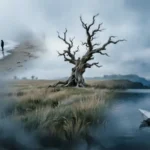
In short, metaphors for feeling trapped turn an abstract emotional state into something physical and visual — a cage, a maze, quicksand — making the feeling of confinement immediate and relatable for the reader.
Why Physical Confinement Metaphors Work So Well
Feeling trapped is fundamentally about lost agency, and physical images of confinement (cages, walls, mazes) translate that abstract emotional loss into something the reader can visualize instantly, which is why they’re among the most reached-for metaphors in creative writing.
Strong Examples
“She was a bird in a cage of her own making.” “His job had become a maze with no exit signs.” “The relationship was quicksand — the more she struggled, the deeper she sank.” “He felt like a fly caught in a web he never saw being spun.”
Nature-Based Trapped Metaphors
“A tree with roots grown too deep to move.” “A river forced into a concrete channel.” “A moth circling the same porch light every night, unable to leave.”
Using These in Your Own Writing
The strongest trapped metaphors pair the image with a specific detail about HOW the trap works — not just “a cage,” but a cage with a particular quality (rusted, gilded, too small) that mirrors the specific nature of the character’s confinement.
Frequently Asked Questions
What’s the difference between a metaphor and simile for feeling trapped? A metaphor states the comparison directly (“she was a bird in a cage”), while a simile uses “like” or “as” (“she felt like a bird in a cage”).
Can these metaphors work in poetry as well as prose? Yes — trapped metaphors are especially common in poetry, where the compressed, visual nature of metaphor fits naturally.