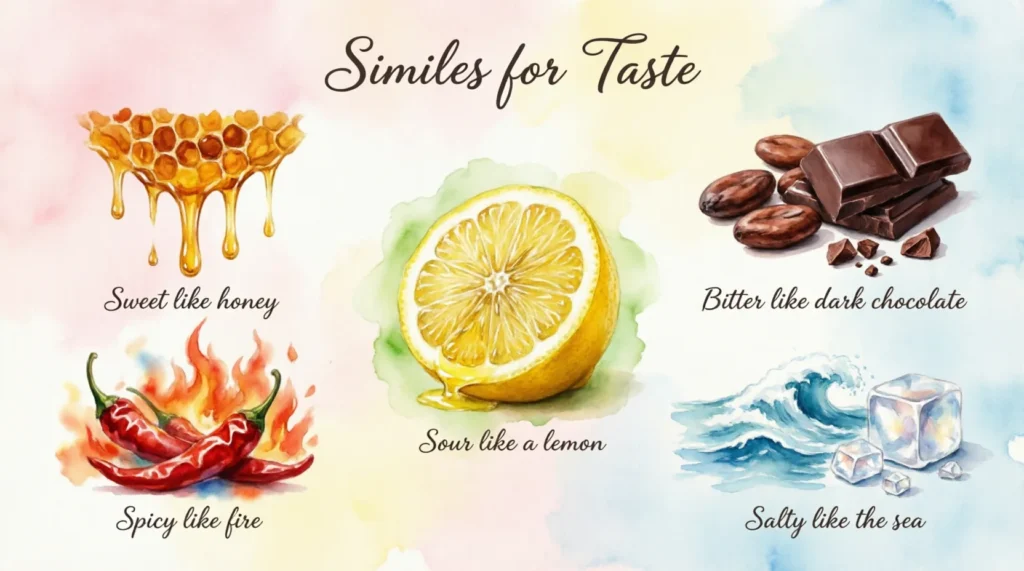
In short, similes for taste compare flavors to familiar things using words like “as” or “like,” making food descriptions more vivid and memorable. Whether you’re writing a story, poem, or school assignment, these examples will help you describe flavors in a way your readers can almost taste.
[IMAGE: A student writing descriptive food similes in a notebook beside colorful fruits and desserts]
What Are Similes for Taste? (And Why They Matter)
Have you ever been asked to describe your favorite food, but all you could think of was saying, “It tasted good”? Many students face this challenge when they want their writing to sound more interesting.
Similes for taste compare one flavor to something else using the words “like” or “as.” They help your reader imagine exactly how sweet, sour, bitter, salty, spicy, or delicious something tastes.
Using similes makes your writing stronger because readers can picture and almost experience the flavor themselves. Language arts researchers and literacy educators often encourage students to use sensory details because they make stories and essays more engaging.
The more you practice using similes for taste, the easier it becomes to create vivid descriptions that stand out in class assignments, creative writing, and reading responses. Let’s explore some of the best examples you can use.
The Best Examples of Similes for Taste
[IMAGE: Different foods representing sweet, sour, salty, bitter, and spicy flavors]
The lemonade was as sour as a fresh lemon.
The chocolate cake was as sweet as honey.
The soup tasted like a warm hug on a cold day.
The pepper was as hot as fire.
The mint candy was as cool as winter air.
The apple pie tasted like sunshine on a summer afternoon.
The dark chocolate was as bitter as black coffee.
The popcorn was as salty as ocean water.
The ripe mango was as sweet as ripe peaches.
The salsa was like fireworks dancing on my tongue.
The ice cream was as smooth as silk.
The fresh strawberries tasted like drops of summer.
The orange was as tangy as citrus zest.
The cinnamon roll tasted like a cozy morning.
The candy was as sugary as a candy cloud.
The yogurt was as creamy as whipped cream.
The pickle was as sharp as vinegar.
The fresh bread tasted like comfort after a long day.
The chili was as spicy as a dragon’s breath.
The coconut milk was as gentle as soft rain.
The barbecue sauce tasted like smoky campfire memories.
The blueberries were as fresh as morning dew.
The cheese was as rich as melted butter.
The peach tasted like sweet summer sunshine.
The green tea was as refreshing as a cool breeze.
These examples work well because they connect flavors to familiar experiences. Good similes create strong sensory images, helping your reader imagine the taste instead of simply reading about it. Creative writing teachers often recommend choosing comparisons that your audience can easily recognize.
Now that you have plenty of examples, let’s look at how you can create your own.
How to Use Similes for Taste in Your Writing
Think about the exact flavor. Before you write, decide whether the food is sweet, sour, spicy, bitter, salty, or mild. Your comparison should match that feeling.
Compare it to something familiar. Your reader will understand your description better if you compare the taste to something they already know.
Use “like” or “as.” These words signal that you’re writing a simile instead of a literal statement.
Keep it natural. Don’t force unusual comparisons if they don’t fit the food or your story.
Example:
“The homemade cookies were as sweet as honey, making everyone smile after the first bite.”
As you practice, you’ll discover that similes for taste fit naturally into many different kinds of writing.
Similes for Taste in Poems and Stories
Poets and authors often use taste similes to create emotion and vivid imagery. They help readers connect with a scene through one of the strongest human senses.
Poem Example
Aisha smiled with joyful grace, “The peaches were as sweet as spring,” she’d say, Their flavor filled the sunny day.
Story Example
Mateo took one bite of Grandma’s soup. It tasted like a warm hug, and suddenly the rainy afternoon felt brighter.
Story Example
Priya sampled the spicy noodles. They were as hot as fire, yet she couldn’t stop asking for another bite.
These examples show how similes can make poems more musical and stories more memorable. When you use sensory language, your readers feel closer to the characters and settings.
Common Mistakes Students Make With Similes for Taste
Using very general words Saying something “tastes good” doesn’t paint a clear picture. Try describing exactly how it tastes.
Choosing comparisons that don’t match A sour food shouldn’t be compared to honey unless you’re creating a special effect. Make sure your comparison fits the flavor.
Forgetting “like” or “as” Without these words, your sentence may become a metaphor instead of a simile.
Using too many similes together One or two strong comparisons are usually more effective than filling every sentence with similes.
Ignoring the food’s unique flavor Every dish has its own taste. Think carefully about what makes it special before choosing your comparison.
Making these mistakes is completely normal. Every great writer improves by practicing and revising.
Fun Activities to Practice Similes for Taste
Taste Test Challenge Grab a pencil and taste different fruits or snacks. Write one new simile for each flavor you experience.
Flavor Drawing Activity Draw your favorite food, then write three similes around the picture describing its taste.
Group Guessing Game One student reads a taste simile while everyone else guesses the food being described.
Reading Detective Find similes for taste in novels, poems, or recipes. Discuss why the writer chose those comparisons.
Worksheet Practice Create two columns. In one, list foods. In the other, invent matching similes. Challenge yourself to avoid repeating the same comparisons.
These activities help you build confidence while making descriptive writing enjoyable.
What NOT to Do With Similes for Taste
Don’t compare every food to candy. Not every sweet flavor is exactly like candy. Variety makes your writing more interesting.
Don’t choose confusing comparisons. If your reader cannot imagine the comparison, the simile loses its impact.
Don’t forget your audience. Choose comparisons that classmates, teachers, or readers can easily understand.
Don’t think every sentence needs a simile. Strong writing balances figurative language with clear, simple descriptions.
With these tips in mind, you’re ready to answer some common questions about similes for taste.
Frequently Asked Questions About Similes for Taste
What is a good simile for taste?
A good simile for taste compares a flavor to something familiar. For example, “The cake was as sweet as honey” or “The lemonade was as sour as a lemon.” The best comparisons help readers imagine the flavor instantly.
How do you use similes for taste in a sentence?
Place the simile naturally in your description. For example: “The hot chocolate tasted like a warm hug after playing in the snow.” This helps your reader experience the moment more vividly.
What is the difference between a simile and a metaphor for taste?
A simile uses the words “like” or “as” to make a comparison. A metaphor says one thing is another without using those words. Both create vivid descriptions, but similes make the comparison more direct.
Are similes for taste appropriate for middle school students?
Yes. They are excellent for Grades 6–8 because they improve descriptive writing and help students practice sensory language. Literacy researchers also note that sensory details strengthen reading comprehension and creative expression.
Why do writers use similes for taste?
Writers use similes for taste because flavor is difficult to describe with ordinary words alone. A creative comparison makes the experience easier to imagine and more enjoyable to read.
Fresh Similes for Taste to Try
The soup was as bland as boiled cardboard.
Her lemonade tasted as sharp as a wasp sting.
The stew was as rich as a velvet blanket.
The candy was as sweet as a first kiss.
The chili burned like a struck match on the tongue.
The bread was as buttery as a warm summer memory.
Similes for Taste: Quick FAQ
Q: What’s a simile for a bad taste? “It tasted as bitter as burnt coffee grounds.”
Q: What’s a simile for a sweet taste? “It was as sweet as honey drizzled on warm bread.”
Learning similes for taste is a simple way to make your writing more colorful and memorable. Instead of telling readers that food tasted “good,” you can show them exactly how it felt through creative comparisons.
You now have dozens of examples, practical writing tips, common mistakes to avoid, and fun activities to strengthen your skills. Each time you write, you’ll become more confident using sensory details.
Remember that every great writer started by practicing one sentence at a time. Your descriptions will become richer the more you observe the world around you and experiment with new comparisons.
Keep exploring flavors, keep creating vivid similes, and most of all, enjoy making your writing come alive—one delicious sentence at a time.
Sara Liu holds a Master’s degree in English Education from the University of Washington and has been an educator for over 15 years. She specializes in curriculum development for elementary and middle school students, with a particular focus on figurative language. Sara’s love for similes and metaphors blossomed when she discovered their power to spark imagination and convey emotion. At SimilePedia, Sara creates engaging worksheets and reference guides that help young learners grasp the nuances of figurative language. Her favorite part of writing content is developing resources that make complex concepts accessible to children. She is passionate about nurturing a love for words and creativity in her students, and her contributions are shaped by this commitment.