In short, similes for horses help you describe a horse’s speed, strength, beauty, grace, or personality by comparing it to something else using the words “like” or “as.” Whether you’re writing a story, poem, or school assignment, you’ll find plenty of creative examples and practical tips below to bring your writing to life.
What Are similes for horses? (And Why They Matter)
Have you ever stared at your notebook during a writing assignment, knowing you wanted to describe a horse but not knowing the right words? Maybe your teacher asked you to “paint a picture with words,” but every sentence sounded plain. You’re not alone—many students face the same challenge.
Similes for horses are comparisons that use the words “like” or “as” to describe a horse’s appearance, movement, behavior, or emotions. They help readers imagine the horse more clearly without using long descriptions.
Language arts educators and literacy researchers encourage students to use similes because they make writing more vivid and memorable. Whether you’re writing a fantasy adventure, a nature report, or a poem, these comparisons help your ideas stand out.
Once you understand how similes work, you’ll notice them everywhere—in books, poems, and even songs. Let’s explore some of the best examples you can use in your own writing.
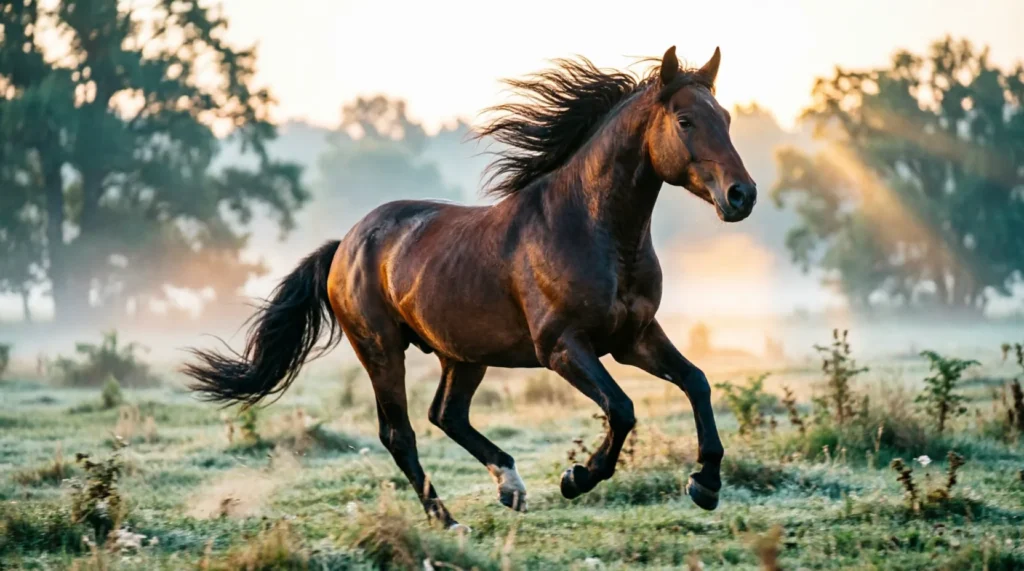
[IMAGE: A beautiful horse running across a green field while a student writes descriptive sentences.]
The Best Examples of similes for horses
Here are some creative and student-friendly similes for horses you can use in stories, essays, and poems.
The horse raced like the wind across the meadow.
The stallion stood as proud as a king before the crowd.
The mare moved like flowing water through the field.
The pony bounced like a rubber ball with excitement.
The horse’s mane shimmered like golden silk in the sunlight.
The black horse was as dark as midnight.
The horse leaped like a deer over the fence.
The foal followed its mother like a faithful shadow.
The horse’s hooves thundered like rolling drums.
The stallion charged like a storm across the plain.
The horse remained as calm as a quiet lake.
The pony was as playful as a puppy.
The horse’s eyes sparkled like polished jewels.
The mare was as gentle as a spring breeze.
The horse galloped like lightning across the countryside.
The old horse was as wise as an owl.
The horse’s tail swayed like a waving flag.
The foal slept like a baby beneath the tree.
The horse climbed the hill like a mountain goat.
The white horse shone like fresh snow.
The horse stood as still as a statue while waiting.
The chestnut horse gleamed like polished copper.
The horse was as strong as an ox.
The horse danced like a performer on stage.
The wild horse ran like freedom itself.
These examples work well because they create clear mental pictures. Good similes use familiar images that help your reader imagine movement, sound, color, or emotion without confusion.
Now that you’ve seen strong examples, let’s learn how you can create your own with confidence.
How to Use similes for horses in Your Writing
You don’t need to be a professional author to write great similes. If you follow a few simple steps, your descriptions will become much stronger.
Think about one feature of the horse you want to describe. Is it fast, gentle, powerful, or beautiful?
Compare that feature to something your reader already knows. Choose something familiar that shares the same quality.
Use the word “like” or “as” naturally in your sentence. Don’t force the comparison if it doesn’t sound smooth.
Read your sentence aloud. If it creates a clear picture in your mind, you’ve probably written an effective simile.
Example:
“The chestnut horse raced like lightning, leaving a trail of dust behind.”
As you practice, you’ll discover that your writing becomes more colorful and easier for your readers to imagine.
similes for horses in Poems and Stories
Poets and story writers often use horse similes to create movement, emotion, and vivid imagery. Creative writing teachers encourage students to experiment with comparisons because they help readers feel connected to the scene.
Aisha wrote:
“The horse ran like the morning breeze, Free beneath the whispering trees.”
Miguel described his adventure story:
“The white horse leaped like a shooting star, carrying Mia safely across the river.”
Arjun ended his poem with:
“The old horse stood as steady as an ancient oak, watching the sunset without fear.”
These short examples show how similes can make poems more musical and stories more exciting. You can use them whenever you want your reader to picture a horse more clearly.
Common Mistakes Students Make With similes for horses
Everyone makes mistakes while learning figurative language. The good news is that each one is easy to fix with practice.
Choosing unrelated comparisons Comparing a horse to something that doesn’t share the same quality can confuse readers. Make sure your comparison fits the trait you’re describing.
Using too many similes in one paragraph A few strong similes are more effective than filling every sentence with comparisons.
Mixing up similes and metaphors Remember that similes use “like” or “as.” Metaphors compare things directly without those words.
Repeating the same comparison Writing “like the wind” over and over becomes repetitive. Try fresh ideas that match your story.
Ignoring the horse’s unique characteristics Horses can be graceful, powerful, gentle, nervous, or loyal. Match your simile to the specific horse in your writing instead of using a random comparison.
With these common mistakes in mind, you’re ready to have even more fun practicing.
Fun Activities to Practice similes for horses
Horse Picture Challenge Grab a pencil and look at different horse pictures. Write three original similes that describe each horse’s appearance or movement.
Story Starter Race Begin a short story with the sentence, “The horse ran like…” and challenge yourself to finish the story in ten sentences.
Classroom Matching Game Work with a friend to match horses with creative comparisons. Discuss why each simile works best.
Draw and Describe Draw your own horse, then write five similes describing its mane, speed, color, and personality.
Reading Detective While reading a novel or poem, look for horsesimiles. Write them down and explain why the author chose each comparison.
These activities help you practice naturally while making creative writing more enjoyable.
What NOT to Do With similes for horses
Don’t compare everything to speed. Horses are known for more than running fast. Think about their kindness, courage, beauty, or strength too.
Don’t copy every famous simile you find online. Original comparisons often make your writing much more interesting.
Don’t make comparisons your readers won’t understand. Choose images your audience can easily picture.
Don’t forget your story. A simile should improve your writing, not interrupt it. Keep the focus on the scene you’re describing.
Now that you’ve learned what works and what doesn’t, let’s answer a few common questions students often ask.
Frequently Asked Questions About similes for horses
What is a good simile for a horse?
A good simile depends on what you want to describe. If the horse is fast, you might write, “The horse ran like lightning.” If it is gentle, you could say, “The mare was as gentle as a spring breeze.”
How do you use similes for horses in a sentence?
Place the comparison naturally within your description. For example: “The horse stood as proud as a king while everyone admired its beauty.”
What is the difference between a simile and a metaphor for horses?
A simile uses “like” or “as,” while a metaphor makes a direct comparison. “The horse ran like the wind” is a simile, while “The horse was the wind” is a metaphor.
Are similes for horses suitable for elementary and middle school students?
Yes. Younger students can use simple comparisons such as “as gentle as a lamb,” while older students can create more imaginative and detailed similes for stories and essays.
Why do writers use similes for horses?
Writers use them to create vivid imagery, build emotion, and help readers picture the horse more clearly. They also make descriptions more memorable and engaging.
Final Thoughts on similes for horses
Learning similes for horses gives you a simple way to make your writing more exciting. Instead of saying a horse was “fast” or “pretty,” you can create comparisons that paint a picture in your reader’s mind.
Throughout this guide, you’ve explored more than forty creative examples, learned how to build your own similes, discovered common mistakes to avoid, and practiced with fun activities. These skills will help you in stories, poems, classroom assignments, and creative writing projects.
Remember that every great writer improves through practice. The more you observe horses—or even imagine them—the easier it becomes to create original comparisons that sound natural and meaningful.
Keep experimenting with your ideas, trust your imagination, and enjoy the journey. Every sentence you write is another chance to let your creativity gallop.
Liam Nguyen is a passionate educator and writer with a deep love for figurative language. He holds a master’s degree in Creative Writing and has spent eight years teaching at various educational settings, focusing on language enrichment programs for children from grades 2-6. His expertise in crafting metaphorical language and similes into captivating content stems from his belief that storytelling is the heartbeat of learning. Liam’s contributions to SimilePedia span from emotion-driven examples to color-inspired narrative tools. He is committed to fostering a creative environment where students can explore and find joy in their unique expressions.