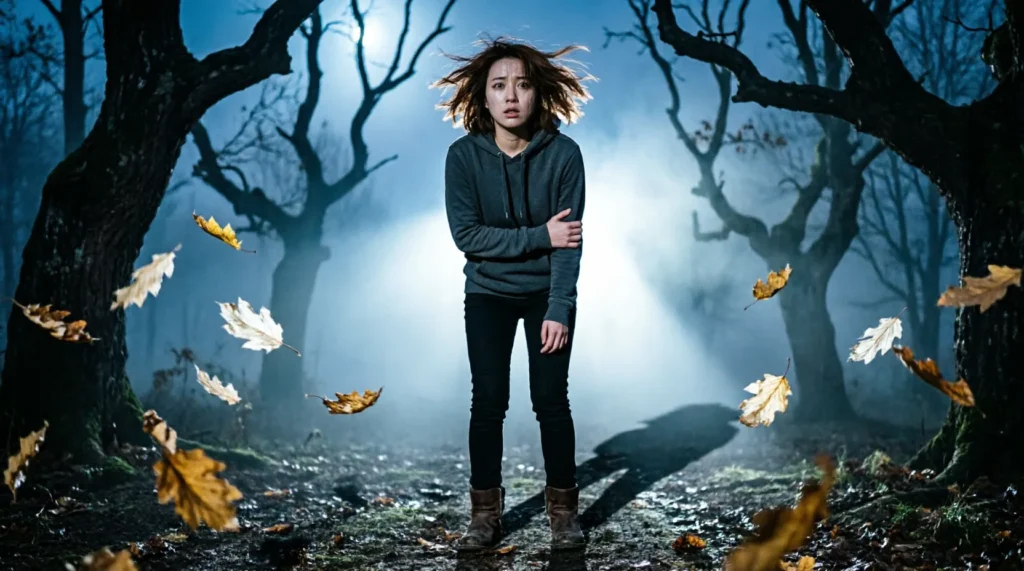
In short, good similes for scared help you compare fear to something familiar, making emotions easier to imagine and understand. Whether you’re writing a story, poem, or school assignment, these examples will help you describe fear in vivid and creative ways that readers will remember.
[IMAGE: A student writing in a notebook while imagining creative similes about fear.]
What Are Good Similes for Scared? (And Why They Matter)
Have you ever been writing a story when your teacher asks you to describe a frightened character, but all you can think of is “He was scared”? It happens to almost everyone. Finding the right words can feel difficult when you want your writing to stand out.
Good similes for scared are comparisons that use the words “like” or “as” to describe someone’s fear. Instead of simply saying a person was scared, you compare that feeling to something your reader can easily picture.
For example, instead of writing, “Emma was scared,” you could write, “Emma was as nervous as a rabbit hearing footsteps.” The second sentence creates a much stronger image in your reader’s mind.
Language arts researchers and literacy educators often encourage students to use similes because they improve descriptive writing, reading comprehension, and storytelling. When you use vivid comparisons, your readers don’t just understand the emotion—they can almost feel it themselves.
The best part is that you don’t have to be a professional writer. Once you learn a few strong examples, you’ll begin creating your own naturally.
Now let’s explore some of the best good similes for scared that you can use in school, creative writing, or even everyday conversation.
The Best Examples of Good Similes for Scared
Below are some of the strongest and most creative good similes for scared. Some are serious, some are playful, and all of them help paint a clear picture of fear.
As scared as a mouse hiding from a hungry cat.
Like a deer frozen in bright headlights.
As nervous as a rabbit crossing an open field.
Like a leaf trembling in the wind.
As frightened as a bird caught in a storm.
Like a child hearing thunder for the first time.
As shaky as jelly on a plate.
Like a candle flickering in a strong breeze.
As scared as a kitten meeting a large dog.
Like someone walking through a haunted house alone.
As pale as a ghost after seeing something frightening.
Like an ice cube melting under the hot sun.
As jumpy as popcorn popping in a pan.
Like a squirrel surprised by a barking dog.
As quiet as a mouse trying not to be noticed.
Like a balloon ready to burst.
As tense as a stretched rubber band.
Like a fish suddenly pulled from the water.
As uneasy as a traveler lost in a dark forest.
Like a snowflake caught in a whirlwind.
As startled as a sleeping cat hearing a loud bang.
Like a sailor facing giant waves.
As fearful as a lamb separated from its flock.
Like a student waiting outside the principal’s office.
As worried as someone hearing footsteps behind them at night.
Like a tiny boat floating through a fierce storm.
As scared as a puppy during fireworks.
Like a shadow disappearing in bright sunlight.
As frozen as a statue after hearing a strange noise.
Like a person standing on the edge of a very high cliff.
As anxious as a contestant waiting for the results.
Like a bird trapped inside a room.
As frightened as a fox surrounded by hunters.
Like someone opening a mysterious old door.
As shaky as autumn leaves during a windy day.
Like a candle in the middle of a thunderstorm.
As nervous as a new student entering a classroom.
Like a swimmer spotting a shark’s fin nearby.
As scared as a baby hearing an unfamiliar sound.
Like a hiker hearing wolves howl in the distance.
As uneasy as a cat near a bathtub.
Like a soldier hearing unexpected footsteps behind him.
As frightened as a butterfly caught in a spider’s web.
Like someone hearing glass break in an empty house.
As terrified as a person waking from a nightmare.
These similes work well because they create clear mental pictures. Instead of simply telling your reader that someone is afraid, you help them imagine exactly what that fear feels like through imagery, movement, and familiar experiences.
Some similes are dramatic, while others are lighthearted and suitable for younger students. Choosing the right comparison depends on your audience and the mood of your writing.
Once you know several examples, you can also invent your own by thinking about animals, weather, everyday situations, or objects that naturally remind you of fear.
In Part 2, you’ll learn how to use these similes effectively in your own writing, see examples in poems and stories, avoid common mistakes, practice with fun activities, read FAQs, and get complete SEO metadata.
How to Use Good Similes for Scared in Your Writing
Knowing many good similes for scared is helpful, but using them naturally is even more important. A well-placed simile can make your writing memorable without sounding forced.
Here are a few simple steps you can follow whenever you write.
Choose a comparison that matches the situation. Think about what kind of fear your character is feeling. Is it a small worry, sudden surprise, or complete terror? Pick a simile that matches the emotion.
Keep your reader in mind. If you’re writing for school, choose comparisons that most people will understand. Familiar animals, weather, and everyday experiences often work best.
Don’t overuse similes. One or two strong similes in a paragraph usually have more impact than filling every sentence with comparisons.
Show the emotion through action. A simile becomes stronger when you pair it with what the character is doing.
Example:
Lina clutched her backpack, as nervous as a rabbit hearing footsteps, and slowly pushed open the creaky classroom door.
Notice how the simile helps you picture both Lina’s fear and her actions.
As you practice, you’ll discover which good similes for scared fit your own writing style best.
Good Similes for Scared in Poems and Stories
Poets and authors often use similes because they help readers feel emotions instead of simply reading about them. Creative writing teachers encourage students to use figurative language because it adds rhythm, imagery, and emotion.
Here are a few examples.
Example 1
Aisha stood beneath the trees,
Like a leaf trembling in the breeze.
The moon was bright, the night was still,
Yet fear climbed slowly up the hill.
Example 2
Miguel stepped inside the old house.
He was as frozen as a deer in headlights when the floorboards suddenly creaked beneath his feet.
Example 3
Priya held the flashlight tightly.
She felt like a tiny boat lost in a storm, unsure which way to turn.
These examples show how similes make scenes more vivid. Instead of saying someone was scared, you allow your readers to experience the feeling alongside the character.
[IMAGE: A child reading a spooky story while imagining vivid scenes.]
Common Mistakes Students Make With Good Similes for Scared
Everyone makes mistakes while learning figurative language. The good news is that they’re easy to fix with practice.
Using the same simile over and over Writing “like a deer in headlights” in every story can become repetitive. Try different comparisons to keep your writing fresh.
Choosing a comparison that doesn’t match fear Some students compare fear to things that aren’t actually frightening. Make sure your simile clearly connects to being scared.
Making similes too long A simile should help your writing, not confuse your reader. Short, clear comparisons are usually the strongest.
Forgetting to use “like” or “as” A simile always compares using “like” or “as.” Without those words, you may accidentally write a metaphor instead.
Using dramatic similes for small moments If a character is only a little nervous, avoid comparing them to someone facing a giant monster. Match the comparison to the level of fear.
Don’t worry if you make these mistakes at first. Every writer improves through practice.
Fun Activities to Practice Good Similes for Scared
Learning becomes easier when you turn it into a game. Try these activities at home or in the classroom.
Finish the Simile Challenge Grab a pencil and complete sentences like “She was as scared as…” with five different endings.
Emotion Picture Match Look at pictures of people showing fear. Write one original simile that matches each expression.
Story Swap Write a short spooky story with three different similes. Exchange stories with a friend and see which comparisons they liked best.
Draw and Describe Draw an animal that reminds you of fear, then write three similes using your drawing as inspiration.
Reading Detective While reading a novel or short story, highlight every simile that describes fear. Think about why the author chose each one.
Worksheet Challenge Create two columns. In one column, list scary situations. In the other, write matching similes. This is an excellent homework or classroom exercise.
What NOT to Do With Good Similes for Scared
Avoid these common myths and habits when writing.
Don’t think bigger always means better. A simple, believable simile is often stronger than an exaggerated one.
Don’t copy the same examples from every website. Try creating original comparisons that fit your own story.
Don’t force a simile into every paragraph. Too many comparisons can distract your reader instead of helping them.
Don’t confuse similes with metaphors. Remember that similes use “like” or “as,” while metaphors compare things directly.
Frequently Asked Questions About Good Similes for Scared
What is a good simile for scared?
One good example is “as scared as a mouse hiding from a cat.” It creates a clear image that most readers understand. Other strong examples compare fear to nervous animals, storms, or dangerous situations.
How do you use good similes for scared in a sentence?
Simply compare someone’s fear using “like” or “as.”
Example: He stood like a leaf trembling in the wind as the thunder echoed across the sky.
What is the difference between a simile and a metaphor for fear?
A simile uses the words “like” or “as” to make a comparison. A metaphor says one thing is another without using those words.
Are good similes for scared suitable for middle school students?
Yes. Most of these examples are easy to understand and work well for Grades 5–8. They also help students improve descriptive writing and creative storytelling.
Why do writers use good similes for scared?
Writers use similes to make emotions feel real. Instead of simply saying a character is afraid, they help readers picture and experience that fear through vivid comparisons.
Final Thoughts on Good Similes for Scared
Learning good similes for scared gives you a powerful way to make your writing more descriptive and engaging. Whether you’re writing a short story, poem, journal entry, or classroom assignment, the right comparison can turn an ordinary sentence into one readers remember.
You have explored dozens of examples, learned how to use them naturally, discovered common mistakes to avoid, and practiced with fun activities. These skills will help you become a more confident writer every time you pick up a pencil or open your laptop.
Literacy researchers and creative writing teachers agree that figurative language helps students express emotions more clearly and connect with readers. The more you practice, the easier it becomes to create your own original similes.
Keep experimenting, keep reading, and keep writing. Every great writer started with simple comparisons, and your next simile could be your best one yet.
Jamal Rodriguez is a poet and author who has been writing professionally for over a decade. With a Bachelor’s degree in Creative Writing, Jamal’s expertise lies in the use of vivid imagery and emotional depth in poetic language. Fascinated by the limitless possibilities of similes and metaphors, he joined SimilePedia to share his knowledge with budding writers. Jamal focuses on creating content for creative writers and poets, helping them understand the emotional resonance that figurative language can evoke. Through his work, he aims to inspire others to explore their own creative boundaries and embrace the beauty of language as an art form. His contributions include a range of exercises that stimulate imagination across all grade levels.