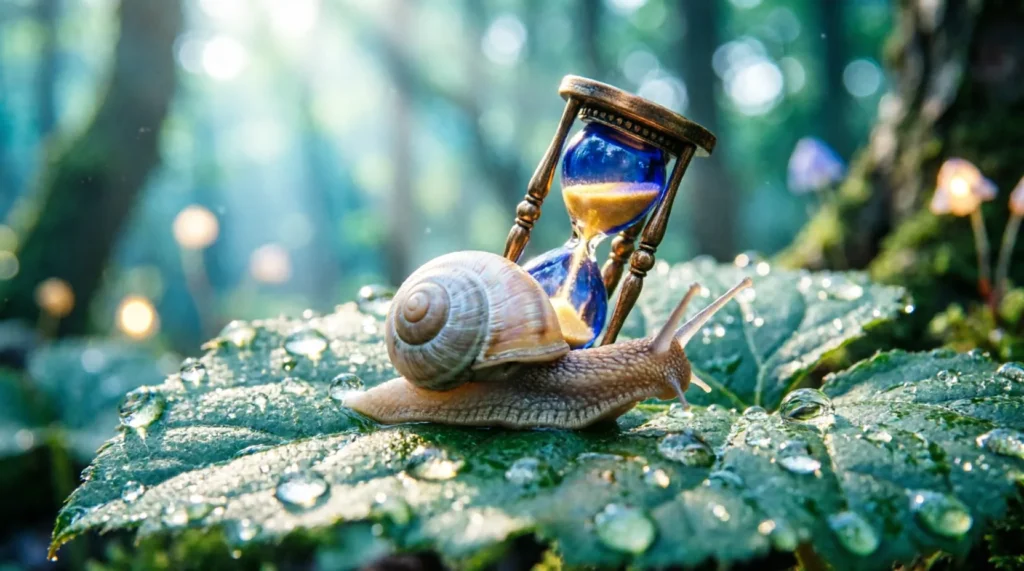
In short, similes for slowly are comparisons that help readers picture something moving, happening, or changing at a gradual pace. They make your writing more vivid and interesting by turning a simple word like “slowly” into a memorable image. Keep reading to discover creative examples, writing tips, and fun ways to practice using them.
What Are Similes for Slowly? (And Why They Matter)
Have you ever stared at a blank page and wanted to describe something moving slowly, but all you could think of was the word “slowly” again and again? Many students run into this problem when writing stories, poems, or school assignments.
Similes for slowly compare a slow action to something else using words such as “like” or “as.” These comparisons help your readers imagine exactly how gradual, gentle, or unhurried something feels.
For example, instead of saying, “The turtle moved slowly,” you could write, “The turtle moved as slowly as a drifting cloud.” The second sentence creates a stronger picture in your reader’s mind.
Language arts researchers and literacy educators often encourage students to use similes because they improve descriptive writing, reading comprehension, and creative expression. When you use vivid comparisons, your writing becomes easier to visualize and more enjoyable to read.
Now that you know what they are, let’s explore some of the best examples you can use right away.
The Best Examples of Similes for Slowly
The turtle crawled as slowly as a clock with tired hands.
She walked as slowly as a leaf floating down from a tree.
The line moved like a snail crossing a sidewalk.
The old train rolled forward as slowly as melting ice.
Time passed as slowly as paint drying on a wall.
He turned the page as slowly as a feather drifting through the air.
The boat drifted like a cloud crossing the sky.
The caterpillar moved as slowly as a shadow at sunset.
The traffic crept along like a sleepy turtle.
She spoke as slowly as honey pouring from a jar.
The river flowed as slowly as a lazy summer afternoon.
The elevator climbed like a snail on a steep hill.
He raised his hand as slowly as a balloon rising into the air.
The fog spread as slowly as milk mixing into tea.
The vines grew like a patient artist creating a masterpiece.
She opened the gift as slowly as a child savoring a favorite treat.
The sun sank as slowly as a candle burning down.
The crowd moved like turtles on a long journey.
The cat stretched as slowly as dawn arriving in the morning.
He walked home as slowly as a drifting autumn leaf.
The computer loaded as slowly as a sleepy bear waking from hibernation.
The glacier moved as slowly as history unfolding.
The paintbrush slid across the canvas like a calm river flowing downstream.
The moon rose as slowly as a secret being revealed.
The gardener trimmed the hedge as slowly as a sculptor shaping stone.
These examples work because they create clear mental pictures. Instead of simply telling your reader that something happened slowly, they show what that slowness feels like.
Good similes often connect to things your readers already know, such as snails, honey, clouds, or leaves. That familiarity makes your writing stronger and more memorable.
Now let’s look at how you can create and use your own similes for slowly.
How to Use Similes for Slowly in Your Writing
You do not need to be a professional writer to use similes effectively. You can start with a few simple steps.
Think about what is moving or changing slowly. Ask yourself what action you want your reader to imagine. Is it walking, growing, speaking, or waiting?
Find something else that is naturally slow. Snails, glaciers, drifting clouds, and flowing honey are common examples that many readers understand.
Connect the two ideas with “like” or “as.” This creates the simile. For example: “The boat moved as slowly as a drifting cloud.”
Make sure the comparison fits the mood. A funny story might compare slowness to a sleepy turtle, while a poem might compare it to a sunset.
Example sentence:
“The fog crept across the field as slowly as milk swirling into tea.”
When you practice these steps, you will find it much easier to add detail and personality to your writing.
Let’s see how authors and poets use these comparisons in creative works.
Similes for Slowly in Poems and Stories
Poets and storytellers often use similes to help readers feel the pace of a scene. A well-chosen comparison can make a quiet moment feel peaceful, suspenseful, or even funny.
Aisha wrote:
“Morning arrived as slowly as a feather in the breeze, Softly touching rooftops and sleepy trees.”
Miguel wrote:
“The moon climbed the sky like a careful painter, Adding silver strokes one by one.”
Priya’s story included:
“Grandpa opened the old treasure chest as slowly as honey pouring from a jar. Every creak made the children lean closer.”
Writers use these comparisons because they create imagery and emotion. Creative writing teachers often encourage students to experiment with similes when they want readers to slow down and notice important details.
As you write your own stories and poems, remember that even a simple simile can make a scene much more engaging.
Common Mistakes Students Make With Similes for Slowly
Using a comparison that is not actually slow Sometimes students compare slow movement to something fast. Make sure your comparison clearly suggests a gradual pace.
Repeating the same simile over and over Using “as slow as a snail” repeatedly can become predictable. Try exploring different images and ideas.
Making the simile too complicated If your reader needs several minutes to understand the comparison, it may not be effective. Simple and clear usually works best.
Forgetting the context A comparison should fit the scene. A humorous simile might not work well in a serious story.
Using similes in every sentence Similes are powerful because they stand out. If you use too many, your writing can feel crowded.
These mistakes are very common, especially when you are learning. The good news is that they are easy to fix with practice.
Let’s make that practice fun.
Fun Activities to Practice Similes for Slowly
Slow Motion Challenge Grab a pencil and list ten things that move slowly. Then create a simile for each one.
Simile Match Game Write slow actions on one set of cards and slow objects on another. Mix them up and create unique combinations.
Draw and Describe Draw a turtle, cloud, glacier, or drifting leaf. Then write three similes inspired by your drawing.
Reading Detective While reading a book, look for similes that describe slow movement. Record your favorites in a notebook.
Group Story Building In a classroom or with friends, take turns adding one sentence to a story. Each sentence must include a simile for slowly.
Worksheet Race Create a worksheet with plain sentences such as “The river moved slowly.” Challenge yourself to rewrite each sentence using a creative simile.
The more you practice, the more naturally these comparisons will come to you.
What NOT to Do With Similes for Slowly
Don’t assume every slow comparison must involve a snail. Snails are useful, but many other images can be just as effective and more original.
Don’t force a simile into every paragraph. Use them when they genuinely improve your description.
Don’t choose confusing comparisons. If readers cannot picture the image, the simile may not help your writing.
Don’t forget your audience. Choose comparisons your readers can easily understand and relate to.
By avoiding these habits, you can make your similes clearer and more enjoyable.
Frequently Asked Questions About Similes for Slowly
What is a simile for slowly?
A simile for slowly compares a slow action to something else using “like” or “as.” For example, “The turtle moved as slowly as a drifting cloud.” This helps readers visualize the pace more clearly.
How do you use similes for slowly in a sentence?
You can replace the word “slowly” with a descriptive comparison. For example: “The train rolled forward like melting ice.” This creates a stronger image than simply saying it moved slowly.
What is the difference between a simile and a metaphor for slowly?
A simile uses words such as “like” or “as” to make a comparison. A metaphor makes the comparison directly. For example, “He moved like a snail” is a simile, while “He was a snail on the sidewalk” is a metaphor.
Are similes for slowly appropriate for students?
Yes. Students of many grade levels can use these comparisons to improve descriptive writing. You can make them simple or more advanced depending on your age and writing goals.
Why do writers use similes for slowly?
Writers use them to help readers picture movement, time, and change more clearly. They add imagery, emotion, and personality to stories, poems, and essays.
Final Thoughts on Similes for Slowly
Learning similes for slowly gives you a powerful way to make your writing more vivid and engaging. Instead of repeating the same word, you can create pictures that stay in your reader’s mind.
You discovered what these similes are, explored creative examples, learned how to use them, and practiced avoiding common mistakes. Each new comparison adds another tool to your writing toolbox.
Remember that the best similes come from observation and imagination. The more you notice the world around you, the more creative your comparisons will become.
Keep experimenting, keep writing, and enjoy discovering new ways to bring your words to life—one sentence at a time.
Jamal Rodriguez is a poet and author who has been writing professionally for over a decade. With a Bachelor’s degree in Creative Writing, Jamal’s expertise lies in the use of vivid imagery and emotional depth in poetic language. Fascinated by the limitless possibilities of similes and metaphors, he joined SimilePedia to share his knowledge with budding writers. Jamal focuses on creating content for creative writers and poets, helping them understand the emotional resonance that figurative language can evoke. Through his work, he aims to inspire others to explore their own creative boundaries and embrace the beauty of language as an art form. His contributions include a range of exercises that stimulate imagination across all grade levels.