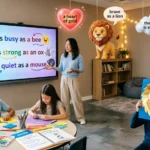
In short, similes for playful are comparisons that help you describe cheerful, energetic, teasing, or fun-loving behavior in vivid ways. They make stories, poems, and school assignments more interesting and easier to imagine. Keep reading to discover colorful examples and easy ways to use them in your own writing.
What Are the Similes for Playful? (And Why They Matter)
[IMAGE: Children laughing and playing while writing creative stories]
Have you ever stared at a blank page and wondered how to describe someone who is cheerful and full of fun? Maybe your teacher asked you to add more details, but “happy” or “funny” just didn’t feel exciting enough.
Similes for playful are comparisons that use words like “as” or “like” to show playful behavior in a creative way. They help readers picture laughter, games, jokes, and lively personalities.
These comparisons matter because they make your writing feel alive. Whether you are writing a story, poem, journal entry, or preparing for an exam, vivid descriptions help your ideas stand out.
According to literacy educators and language arts researchers, figurative language strengthens reading comprehension and encourages creative expression. When you learn to use similes, you give your writing more personality.
Now that you know why these comparisons matter, let’s explore some fun examples you can use right away.
The Best Examples of the Similes for Playful
[IMAGE: Notebook filled with colorful creative writing ideas]
Here are some vivid and age-appropriate examples of similes for playful:
She was as playful as a puppy chasing its tail.
He laughed like a child discovering snow for the first time.
Her jokes bounced around like popcorn in a hot pan.
The twins were as playful as kittens wrestling with yarn.
He skipped across the yard like a rabbit in springtime.
She teased her brother like a squirrel darting through trees.
Their laughter spread like bubbles floating in the air.
He was as playful as dolphins leaping through waves.
The little girl twirled like a leaf dancing in the wind.
They giggled like birds singing at sunrise.
His smile flashed like sunshine after a rainy day.
She was as playful as a monkey swinging from branch to branch.
The puppy jumped around like popcorn popping.
Their game continued like waves rolling onto the beach.
He grinned like a fox planning a harmless trick.
She skipped like a butterfly drifting among flowers.
The children raced around like bees buzzing in spring.
He was as playful as a lamb in a meadow.
Her energy bounced like a rubber ball.
They laughed together like friends at a carnival.
She moved like a breeze playing with the leaves.
His eyes sparkled like stars during a celebration.
The baby clapped like a seal performing tricks.
They chased one another like puppies in a park.
She danced like a feather floating through the sky.
These examples work well because they create strong images in your mind. You can almost see the movement, hear the laughter, and feel the joyful energy.
Good similes often connect playful actions with animals, nature, or familiar experiences. That makes your writing easier for readers to imagine.
Once you have examples, the next step is learning how to use them naturally.
How to Use the Similes for Playful in Your Writing
You don’t need to be a professional author to use similes for playful well. You can follow these simple steps:
Choose a playful action you want to describe. Think about laughing, running, teasing, dancing, or joking.
Find something that reminds you of that behavior. Animals, weather, toys, and nature are great sources of ideas.
Use “like” or “as” to build the comparison. Example: “Maya skipped across the playground like a butterfly drifting among flowers.”
Keep the image simple and easy to picture. Your readers should immediately understand what you mean.
For example:
“Ali ran around the backyard as playful as a puppy chasing a ball.”
When you use these comparisons naturally, your stories become much more exciting.
Similes for Playful in Poems and Stories
Poets and authors often use similes for playful because they create rhythm, emotion, and vivid imagery.
Here are a few examples:
Story Example
Amina darted around the room like a squirrel gathering acorns. Her laughter bounced off the walls, and everyone smiled.
Poem Example
“Leo laughed like bubbles in the rain,
His happy songs danced down the lane.”
Short Poem Example
“Priya twirled like a butterfly at play,
Spreading joy throughout the day.”
Creative writing teachers encourage students to use figurative language because it helps readers connect with emotions and pictures in their minds.
As you practice, you’ll begin noticing playful comparisons in books and poems around you.
Common Mistakes Students Make With the Similes for Playful
Making mistakes is normal. Here are some common ones and how you can fix them.
Using comparisons that don’t match playful behavior. Comparing a playful child to a rock doesn’t create the right image. Choose something lively instead.
Forgetting to use “like” or “as.” Without those words, your sentence may become a metaphor rather than a simile.
Repeating the same example too often. If you always write “as playful as a puppy,” your writing may sound repetitive. Try different images.
Making comparisons too confusing. Readers should understand your meaning quickly. Keep your similes clear and simple.
Choosing serious or sad images. Since playful behavior is cheerful, use positive and energetic comparisons that fit the mood.
Learning from these mistakes will help you become a stronger writer.
Fun Activities to Practice the Similes for Playful
You can make learning similes for playful enjoyable with these activities.
Create Your Own Animal Similes Grab a pencil and list five animals. Challenge yourself to connect each one to playful behavior.
Draw and Write Draw a playful scene and write three similes that describe it.
Story Challenge Write a short paragraph using four different playful similes.
Group Guessing Game One student reads a simile aloud while others guess the animal or object being compared.
Reading Hunt Try finding similes in books or poems you already enjoy. Keep a notebook of your favorites.
Worksheet Race Create a worksheet with unfinished similes and see how many creative endings you can invent.
Practicing in different ways helps you remember what you learn and makes writing more fun.
What NOT to Do With the Similes for Playful
Don’t think every playful simile must involve puppies. Animals are useful, but nature, weather, and toys can work too.
Don’t make comparisons overly complicated. Simple images are often the most powerful.
Don’t force a simile into every sentence. Too many comparisons can make your writing feel crowded.
Don’t confuse playful with silly all the time. Playfulness can also mean cheerful, curious, teasing, or energetic.
Understanding these myths helps you use figurative language more effectively.
Bonus: More Playful Similes to Use
Want a few extra options for a lighthearted scene or character? These bonus similes for playful moods keep the energy fun and vivid. If you liked these, check out our similes for happy for even more comparisons.
She was playful as a kitten chasing a laser dot across the floor.
He teased like a little brother who knows exactly which buttons to push.
The puppy bounced around playful as a kid on a sugar rush.
She joked around, playful as a class clown testing a new teacher.
They chased each other, playful as toddlers in a splash pad.
Frequently Asked Questions About the Similes for Playful
What is a simile for playful behavior?
One example is “as playful as a puppy chasing its tail.” This comparison creates an image of energy and happiness. You can also compare playful behavior to kittens, dolphins, or butterflies.
How do you use similes for playful in a sentence?
You can write, “Emma skipped through the garden like a butterfly dancing in the breeze.” The comparison helps readers picture her cheerful mood.
What is the difference between a simile and a metaphor for playful behavior?
A simile uses “like” or “as” to compare two things. A metaphor makes the comparison directly without those words. Both create vivid descriptions, but similes are easier for many students to recognize.
Are similes for playful suitable for school assignments?
Yes. They are useful for stories, poems, journals, and descriptive essays. Language arts educators often encourage students to use them to add imagery and creativity.
Why do writers use similes for playful descriptions?
Writers use them because they help readers imagine emotions and actions more clearly. They also make stories feel lively and memorable.
Final Thoughts on the Similes for Playful
Learning similes for playful gives you new ways to describe joy, laughter, and energy. Instead of using plain words, you can paint colorful pictures with your sentences.
You discovered dozens of examples, learned how to create your own comparisons, and explored ways to practice them through games and activities.
Remember, creative writing is a skill that grows with practice. Even small changes can make your stories and poems more vivid and enjoyable.
Keep experimenting with playful comparisons, trust your imagination, and have fun bringing your words to life—because great writing starts with curiosity and creativity.
Sara Liu holds a Master’s degree in English Education from the University of Washington and has been an educator for over 15 years. She specializes in curriculum development for elementary and middle school students, with a particular focus on figurative language. Sara’s love for similes and metaphors blossomed when she discovered their power to spark imagination and convey emotion. At SimilePedia, Sara creates engaging worksheets and reference guides that help young learners grasp the nuances of figurative language. Her favorite part of writing content is developing resources that make complex concepts accessible to children. She is passionate about nurturing a love for words and creativity in her students, and her contributions are shaped by this commitment.