In short, similes for slippery help you compare something slick, smooth, or hard to hold using the words “like” or “as.” They make your writing more vivid and help readers clearly imagine a slippery surface, object, or situation. Keep reading to discover examples, writing tips, and fun ways to practice using them.
What Are Similes for Slippery? (And Why They Matter)
Have you ever stared at a blank page while trying to describe an icy sidewalk, a wet fish, or a bar of soap that keeps slipping from your hands? Finding the right words can feel surprisingly difficult.
Similes for slippery are comparisons that help describe something slick, smooth, or difficult to grip. They usually use the words “like” or “as” to compare one thing to another.
These comparisons make your writing more interesting and easier to picture. Instead of saying, “The rock was slippery,” you can say, “The rock was as slippery as ice.” Suddenly, your reader has a much clearer image.
Literacy educators and language arts researchers often encourage students to use similes because they improve descriptive writing, reading comprehension, and creative thinking. When you learn how to use similes well, your stories, poems, and essays become much more engaging.
Now that you know what they are, let’s explore some of the best examples you can use right away.
The Best Examples of Similes for Slippery
[IMAGE: Child carefully holding a slippery fish near a river]
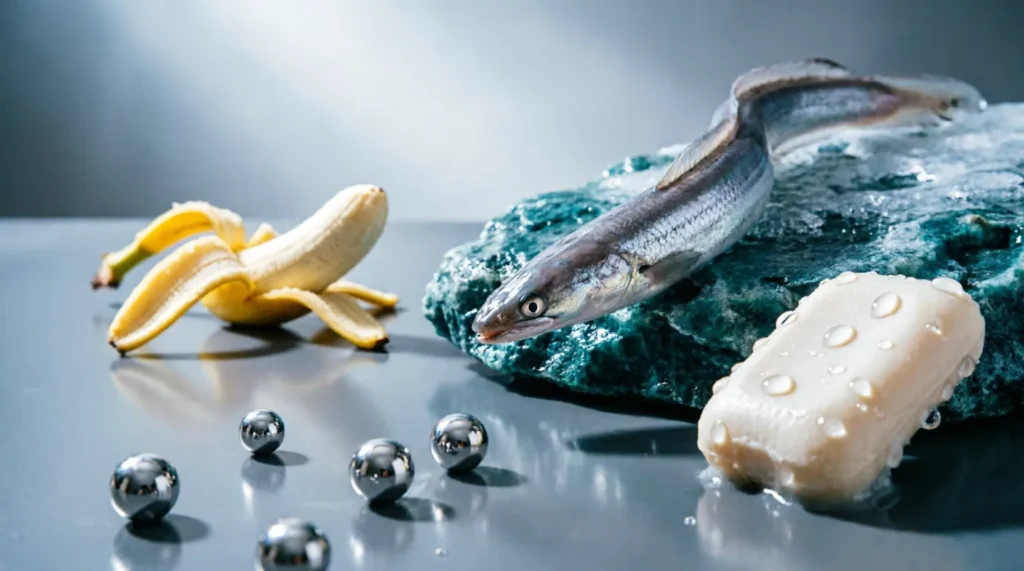
As slippery as ice on a winter morning.
As slippery as a fish jumping from a net.
Like a bar of soap in a bathtub.
As slippery as a banana peel on a sidewalk.
Like an eel wriggling through water.
As slippery as wet marble after rain.
Like butter melting on a hot pan.
As slippery as oil on a garage floor.
Like a penguin sliding across ice.
As slippery as a freshly waxed floor.
Like a greased pig at a county fair.
As slippery as seaweed on a rocky shore.
Like a wet watermelon seed squeezed between fingers.
As slippery as a frozen handrail.
Like a water slide after a splash of water.
As slippery as a hockey rink before a game.
Like a smooth stone in a rushing stream.
As slippery as a wet leaf after rainfall.
Like a snake gliding through tall grass.
As slippery as glass covered in rain.
Like a fish scale coated with water.
As slippery as fresh paint before it dries.
Like silk sliding through your fingers.
As slippery as mud after a storm.
Like a seal diving into the ocean.
The floor was as slick as a fish just pulled from the water.
The trail slid beneath our boots like wet soap on tile.
The eel twisted from her grip like grease off a hot pan.
The icy steps felt as treacherous as a tightrope over glass.
The road turned as slippery as a skating rink after rain.
The soap shot out of his hands like a fish escaping a net.
These examples work well because they create strong mental pictures. Many also appeal to your senses, helping you imagine how something feels under your hand or beneath your feet.
When you use imagery that readers already understand, your descriptions become more memorable and effective.
How to Use Similes for Slippery in Your Writing
Knowing examples is helpful, but learning how to use them naturally is even better.
Pick a comparison your readers recognize. If your audience knows what ice, soap, or a fish feels like, your simile will be easier to understand.
Match the simile to the situation. A wet fish might work in a nature story, while a waxed floor could fit a school setting.
Avoid using too many similes at once. One strong comparison often creates a bigger impact than several crowded together.
Focus on the feeling you want to create. Ask yourself whether you want your reader to imagine danger, humor, surprise, or frustration.
Example sentence:
“The muddy trail was as slippery as a freshly waxed floor, forcing Maya to take careful steps.”
As you practice, you’ll discover that the best similes fit naturally into your sentences rather than feeling forced.
Similes for Slippery in Poems and Stories
Writers often use similes for slippery to add movement, texture, and emotion to their work. They help readers feel as if they are experiencing the scene themselves.
Here are a few examples.
A short poem:
“Rain danced on the road below, As slippery as glass in the moonlit glow, Cars crept slowly through the night, Their headlights shining soft and bright.”
Story example:
“Aisha reached for the fish, but it slipped away like a bar of soap in a bathtub. Everyone on the dock burst into laughter.”
Another story example:
“Mateo stepped onto the wet stone. It was as slippery as ice, and he quickly grabbed a nearby branch to keep his balance.”
Poets and authors use these comparisons because they create vivid imagery and rhythm. They help readers connect emotionally with what a character sees, feels, or experiences.
Once you’ve seen similes in action, it’s helpful to know some common mistakes that many students make.
Common Mistakes Students Make With Similes for Slippery
Using comparisons that don’t clearly suggest slipperiness. A simile should instantly help readers picture something slick or hard to grip. If the comparison doesn’t connect to slipperiness, it may confuse readers.
Forgetting to use “like” or “as.” Similes require comparison words. Without them, you may accidentally create a metaphor instead.
Repeating the same simile too often. Using “as slippery as ice” in every paragraph can make your writing feel repetitive. Try different comparisons when appropriate.
Choosing comparisons your audience won’t understand. If readers don’t know what the comparison refers to, the image may lose its impact.
Exaggerating beyond the situation. Describing a slightly damp floor as “as slippery as an ice rink covered in oil” may feel unrealistic. Match the simile to the actual level of slipperiness.
These mistakes are completely normal when you’re learning. The good news is that they become easier to avoid with practice.
More Similes for Slippery by Tone and Context
🌿 Natural & Descriptive
“As slippery as a rain-soaked pebble” — Captures the slick feeling of something wet and smooth, making it perfect for nature descriptions.
“Like dew on a fresh leaf” — Suggests a light, delicate slipperiness that fits peaceful outdoor scenes.
“As slippery as seaweed on the shore” — Highlights an unexpectedly slick surface, ideal for beach or coastal writing.
“Like a fish gliding through clear water” — Describes smooth, effortless movement with a natural touch.
“As slippery as melting frost on a sidewalk” — Creates a vivid picture of changing weather and tricky footing.
💛 Warm & Emotional
“Like a promise slipping through open hands” — Expresses the feeling of something difficult to hold onto in emotional writing.
“As slippery as a fading memory” — Shows how memories can be hard to keep, making it useful in reflective stories.
“Like laughter that slips away too soon” — Conveys the gentle sadness of a happy moment ending quickly.
“As slippery as hope in a storm” — Suggests uncertainty while still carrying an emotional message.
“Like a dream disappearing at sunrise” — Works well when describing feelings that are beautiful but hard to keep.
✨ Poetic & Romantic
“As slippery as moonlight on a quiet river” — Creates a graceful and dreamy image for poems and romantic scenes.
“Like silver silk drifting through the wind” — Emphasizes elegance and smooth movement with poetic language.
“As slippery as a whispered secret” — Suggests mystery and something that is difficult to catch or understand.
“Like stardust slipping through gentle fingers” — Adds a magical feeling that suits imaginative writing.
“As slippery as a cloud crossing the evening sky” — Describes something that moves softly and cannot be held.
😄 Playful & Fun
“Like a banana peel in a cartoon” — Brings humor to descriptions of something comically slick.
“As slippery as butter on a hot pancake” — Creates a funny, easy-to-picture comparison for everyday writing.
“Like a bar of soap escaping the bathtub” — Perfect for describing something that keeps slipping away.
“As slippery as a penguin on an icy slide” — Adds a playful image that children and students can easily imagine.
“Like jelly wobbling off a spoon” — Gives a lighthearted comparison for something difficult to keep hold of.
These tone-grouped similes for similes for slippery give you options for every kind of writing — whether you need something soft and poetic or bold and fun. Try picking one from each group and using them in a short paragraph to see how different the same keyword can feel.
Using Similes for Slippery in Real Writing Contexts
In a Descriptive Essay
When describing a road, rock, floor, or object that is difficult to hold or walk on, a simile helps readers picture the surface more clearly. Instead of simply saying something was slippery, compare it to something familiar. Example:The trail after the rain was as slippery as seaweed on the shore, forcing every hiker to step with extra care.
In a Poem
Similes for slippery can create a gentle, mysterious, or emotional mood in poetry. They help readers imagine movement and change in a more memorable way. Example:The night slipped by like moonlight on a quiet river, leaving only silent stars behind.
In a Story or Creative Scene
In a story, similes for slippery can make action scenes and character experiences feel more vivid. They help readers understand how difficult it is to grip, stand, or even keep hold of an idea. Example:Maya reached for the glowing stone, but it was like a bar of soap escaping the bathtub, sliding from her hands before she could catch it.
In a Social Media Caption or Message
A short simile makes a casual post more fun and expressive. It quickly paints a picture without needing many words. Example:Today’s hiking trail was as slippery as a rain-soaked pebble—made it down without falling, somehow! 😅
The more you practice placing similes for slippery into real sentences, the more natural your writing will sound — and the more your reader will feel exactly what you want them to feel.
Create a Simile Challenge Grab a pencil and list ten slippery objects. Then write a unique simile for each one without repeating any comparisons.
Draw and Describe Draw a slippery scene, such as a rainy sidewalk or icy hill. Write three similes that help explain what the surface feels like.
Simile Match-Up Game Work with friends or classmates. One person names a slippery object, and the others race to create the most creative simile.
Reading Detective While reading a story or poem, look for similes. See if you can find examples that describe slippery surfaces or smooth movement.
Finish the Sentence Worksheet Complete prompts such as “The fish was as slippery as _____” or “The sidewalk felt like _____.” This is a simple way to build confidence.
Story Expansion Activity Write a short paragraph about a rainy day and challenge yourself to include at least three different similes for slippery.
Practicing in different ways helps you build creativity and makes figurative language feel natural.
What NOT to Do With Similes for Slippery
Don’t force a simile into every sentence. Strong writing mixes different techniques. Too many similes can distract readers.
Don’t choose random comparisons. The comparison should actually relate to being slippery, not just sound interesting.
Don’t assume bigger means better. A simple simile like “as slippery as ice” can be more effective than a long, complicated comparison.
Don’t confuse smooth with slippery. Something can be smooth without being slippery. Make sure your comparison truly fits the idea you want to express.
Understanding what to avoid can make your similes clearer and stronger.
Frequently Asked Questions About Similes for Slippery
What is a simile for slippery?
A simile for slippery compares a slick or hard-to-grip object to something familiar using “like” or “as.” For example, “as slippery as a fish” and “like a bar of soap” are common examples.
How do you use similes for slippery in a sentence?
You can place the simile directly into your description. For example: “The wet rock was as slippery as ice, making the hike more challenging.”
What is the difference between a slippery simile and a slippery metaphor?
A simile uses comparison words such as “like” or “as.” A metaphor makes a direct comparison without those words. “The sidewalk was ice” is a metaphor, while “The sidewalk was as slippery as ice” is a simile.
Are similes for slippery appropriate for elementary and middle school students?
Yes. Many similes for slippery are easy for younger students to understand, while older students can create more detailed and imaginative comparisons. They are useful across many grade levels.
Why do writers use similes for slippery?
Writers use them to create stronger imagery and help readers visualize a scene. A good simile can make a simple description more memorable and engaging.
Final Thoughts on Similes for Slippery
Learning similes for slippery gives you a powerful way to make your writing more vivid and expressive. Whether you’re describing an icy road, a wet fish, a muddy trail, or a slick floor, the right comparison can bring your words to life.
You explored more than twenty examples, learned how to use them effectively, and discovered common mistakes to avoid. You also saw how these similes can strengthen poems, stories, and everyday writing assignments.
Creative writing teachers and literacy educators often encourage students to practice descriptive language because it helps readers connect with what they are reading. The more you experiment with similes, the more natural they will become.
Keep practicing, keep observing the world around you, and remember that every great writer starts by learning one vivid comparison at a time.
Frequently Asked Questions
What are similes for slippery and why are they important?▼
Similes for slippery are comparisons that help describe something slick, smooth, or hard to grip using ‘like’ or ‘as.’ They enhance descriptive writing by creating vivid imagery, allowing readers to easily visualize slippery surfaces or objects.
Can you give me some examples of similes for slippery?▼
Sure! Some examples include ‘as slippery as ice on a winter morning’ and ‘like a bar of soap in a bathtub.’ These comparisons create strong mental images that make descriptions more engaging.
How can I effectively use similes for slippery in my writing?▼
To use similes effectively, choose comparisons that your audience can easily recognize, such as ice or soap. Additionally, match the simile to the context of your writing and avoid overcrowding your text with too many comparisons.
Why do educators encourage the use of similes in writing?▼
Educators promote the use of similes because they improve descriptive writing, enhance reading comprehension, and foster creative thinking. Using similes helps students express their ideas more vividly, making their stories and essays more engaging.
What should I consider when choosing a simile for slippery?▼
When selecting a simile, consider the familiarity of the comparison to your audience and how well it fits the situation you’re describing. Additionally, think about the feeling you want to evoke, whether it’s humor, danger, or surprise.
How do similes for slippery enhance a reader's experience?▼
Similes for slippery enhance a reader’s experience by providing relatable imagery that appeals to their senses. This helps them better imagine the described objects or situations, making the writing more memorable and impactful.
What is the impact of using too many similes in a piece of writing?▼
Using too many similes can overwhelm the reader and dilute the impact of your comparisons. A single, strong simile often leaves a more lasting impression than multiple crowded together.
More Slippery Similes to Use
The floor was as slick as a skating rink freshly resurfaced.
His excuse slid away like an eel through wet fingers.
The trail felt as treacherous as a soap-covered staircase.
The deal slipped through their hands like a fish fighting the net.
Her grip on the topic was as slippery as ice on a car windshield.
Jamal Rodriguez is a poet and author who has been writing professionally for over a decade. With a Bachelor’s degree in Creative Writing, Jamal’s expertise lies in the use of vivid imagery and emotional depth in poetic language. Fascinated by the limitless possibilities of similes and metaphors, he joined SimilePedia to share his knowledge with budding writers. Jamal focuses on creating content for creative writers and poets, helping them understand the emotional resonance that figurative language can evoke. Through his work, he aims to inspire others to explore their own creative boundaries and embrace the beauty of language as an art form. His contributions include a range of exercises that stimulate imagination across all grade levels.