In short, similes for orange are comparisons that help you describe the color orange in a vivid and memorable way. They can make your stories, poems, and school assignments more colorful by comparing orange to familiar objects, foods, sunsets, and more. Keep reading to discover creative examples and easy ways to use them in your own writing.
What Are the Similes for Orange? (And Why They Matter)
Have you ever stared at a writing assignment and known something was orange, but couldn’t think of an interesting way to describe it? Maybe your teacher asked for vivid details, or you wanted your story to sound more exciting.
Similes for orange are comparisons that use the words “like” or “as” to describe something orange by comparing it to another object. They help readers picture the color more clearly in their minds.
For example, instead of saying, “The sky was orange,” you could write, “The sky was orange like a glowing pumpkin.” The second sentence creates a stronger image.
Literacy educators and language arts researchers often encourage students to use similes because they improve descriptive writing, reading comprehension, and creative thinking. When you learn how to use similes well, your writing becomes more engaging and memorable.
Now that you know what similes are, let’s explore some colorful examples you can use right away.
The Best Examples of the Similes for Orange
[IMAGE: Bright orange objects including pumpkins, sunsets, oranges, and autumn leaves]
The sunset glowed orange like a burning campfire.
Her scarf was as orange as a ripe pumpkin.
The autumn leaves were orange like flickering flames.
The basketball shone as orange as a fresh tangerine.
The evening sky stretched orange like melted copper.
His jacket was as orange as a traffic cone.
The cat’s fur glowed orange like a harvest moon.
The flowers were as orange as a juicy mango.
The clouds turned orange like glowing embers.
The fish sparkled as orange as a gold coin in sunlight.
The lantern glowed orange like a tiny sunset.
The fox’s coat was as orange as autumn leaves.
The soda fizzed orange like liquid sunshine.
The pumpkin patch looked orange like a sea of jack-o’-lanterns.
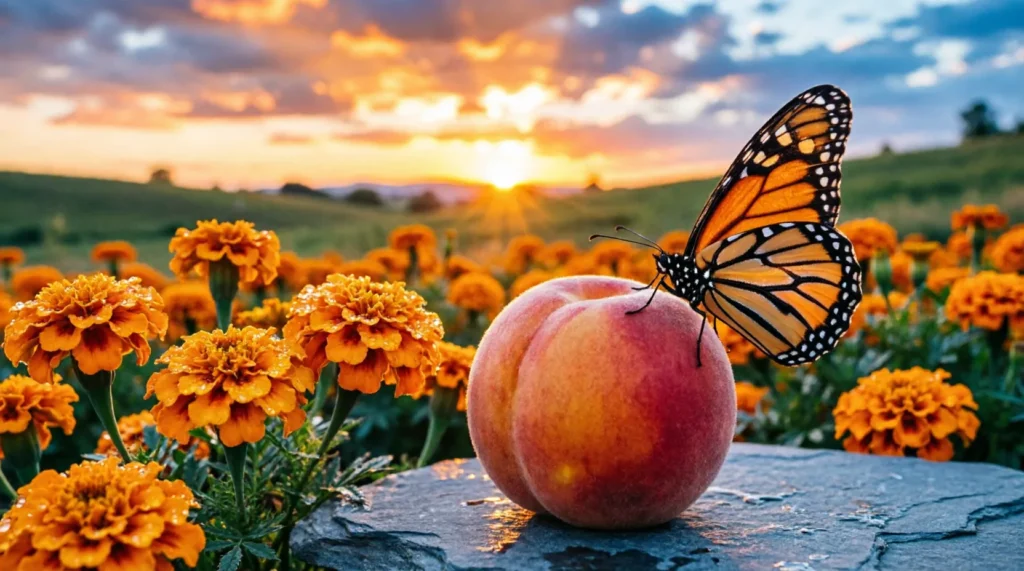
The butterfly’s wings were as orange as a tropical sunset.
The paint splashed across the page like bright orange fire.
The carrot was as orange as a Halloween pumpkin.
The horizon blazed orange like a dragon’s breath.
The kite floated overhead, orange like a glowing ember.
The candy wrapper shined as orange as polished amber.
The sunrise appeared orange like a giant glowing peach.
The tiger’s fur was as orange as a field of marigolds.
The streetlight reflected orange like warm honey in a jar.
The balloon floated by, orange like a ripe apricot.
The fall forest looked orange like a giant patchwork quilt.
These examples work well because they connect the color orange to things readers already recognize. Strong similes use imagery that helps you see, feel, or imagine the scene more clearly.
The best similes for orange create vivid mental pictures while staying easy to understand. That’s why many of these examples use familiar objects such as pumpkins, sunsets, and autumn leaves.
How to Use the Similes for Orange in Your Writing
Once you know several similes, the next step is learning how to use them naturally.
Choose something readers can easily picture. Compare orange objects to familiar things like pumpkins, carrots, sunsets, or flames.
Match the mood of your writing. A sunset comparison may feel peaceful, while a fire comparison may feel energetic or dramatic.
Avoid repeating the same comparison. If you’ve already used “orange as a pumpkin,” try a different image later in your writing.
Make the simile fit the scene. Think about what the object looks and feels like in that specific moment.
Example:
“The clouds drifted across the evening sky, orange like glowing embers fading into the night.”
When you choose thoughtful comparisons, your descriptions become much more interesting for readers.
Similes for Orange in Poems and Stories
Poets and authors often use color similes to create mood, imagery, and emotion. Orange is especially useful because it can suggest warmth, energy, autumn, adventure, or even mystery.
Here’s a short poem example:
Aisha watched the sunset glow, Orange like a campfire bright, Painting golden dreams above, Before it slipped into the night.
Story example:
Mateo kicked through leaves that were orange like tiny flames. Each step made the park feel alive with autumn color.
Another poem snippet:
Lina’s kite danced in the breeze, Orange like a mango sweet, Floating high above the trees, Where earth and sky would meet.
These examples show how naturally similes for orange can fit into creative writing. They help readers see scenes more clearly and feel more connected to the story.
Common Mistakes Students Make With the Similes for Orange
Everyone makes mistakes when learning figurative language. The good news is that they’re easy to fix.
Using comparisons that don’t clearly relate to orange If readers can’t immediately picture the color, the simile may feel confusing. Choose recognizable orange objects.
Making similes too complicated Long comparisons can distract readers. Simple images are often more powerful.
Repeating the same simile many times Writing “as orange as a pumpkin” over and over becomes boring. Try different comparisons.
Forgetting to use “like” or “as” A simile usually includes one of these words. Without them, you may accidentally create a metaphor instead.
Choosing an image that doesn’t match the mood Comparing a peaceful sunset to a dangerous fire may create the wrong feeling. Think about the tone you want.
These mistakes are normal, and practice will help you avoid them over time.
Fun Activities to Practice the Similes for Orange
Learning figurative language is much more enjoyable when you turn it into a game or creative challenge.
Orange Object Hunt Walk around your classroom or home and find five orange objects. Write a unique simile for each one.
Sunset Description Challenge Grab a pencil and describe a sunset using three different similes for orange without repeating any comparisons.
Drawing and Writing Activity Draw an orange object and write three similes underneath it. See which one creates the strongest image.
Simile Match Game Play with friends by matching orange objects to creative comparisons. Vote on the most imaginative combination.
Reading Detective Look for similes in books, poems, or songs. When you find one about orange or warm colors, write it down in a notebook.
Create Your Own Worksheet Make a list of orange items and challenge yourself to invent new similes for each. Try to avoid common answers like pumpkins and carrots.
These activities help you build creativity while making descriptive writing feel less like work.
What NOT to Do With the Similes for Orange
Don’t think every orange simile must involve pumpkins. Pumpkins are useful, but there are many other orange objects you can compare things to.
Don’t use random comparisons just to sound creative. A simile should help readers understand the color better, not confuse them.
Don’t force a simile into every sentence. Too many similes can make your writing feel crowded and distracting.
Don’t assume longer similes are better. Often, a short and clear comparison creates the strongest effect.
When you avoid these habits, your similes will sound more natural and effective.
Frequently Asked Questions About the Similes for Orange
What is a simile for orange?
A simile for orange compares something orange to another familiar object using “like” or “as.” For example, “The pumpkin was as orange as a glowing sunset.”
How do you use similes for orange in a sentence?
You can place the simile wherever it fits naturally. For example, “The fox darted through the forest, orange like a flickering flame.”
What is the difference between a simile and a metaphor for orange?
A simile uses words such as “like” or “as” to make a comparison. A metaphor makes the comparison directly without using those words.
Are similes for orange good for students?
Yes. They help students improve descriptive writing, expand vocabulary, and create stronger mental images for readers.
Why do writers use similes for orange?
Writers use them to make descriptions more vivid and memorable. They help readers picture colors more clearly and add emotion to scenes.
Final Thoughts on the Similes for Orange
Learning similes for orange is a simple but powerful way to make your writing more colorful. Whether you’re describing a sunset, a pumpkin, autumn leaves, or a bright piece of clothing, the right comparison can bring your words to life.
You discovered what similes are, explored more than twenty creative examples, learned how to use them effectively, and practiced spotting common mistakes. These skills can help you become a stronger writer in school and beyond.
Remember that great similes don’t have to be complicated. The best ones help readers instantly picture what you’re describing and feel connected to your words.
Keep practicing, stay curious, and enjoy experimenting with language—your writing can become brighter and more expressive with every simile you create.
Jamal Rodriguez is a poet and author who has been writing professionally for over a decade. With a Bachelor’s degree in Creative Writing, Jamal’s expertise lies in the use of vivid imagery and emotional depth in poetic language. Fascinated by the limitless possibilities of similes and metaphors, he joined SimilePedia to share his knowledge with budding writers. Jamal focuses on creating content for creative writers and poets, helping them understand the emotional resonance that figurative language can evoke. Through his work, he aims to inspire others to explore their own creative boundaries and embrace the beauty of language as an art form. His contributions include a range of exercises that stimulate imagination across all grade levels.