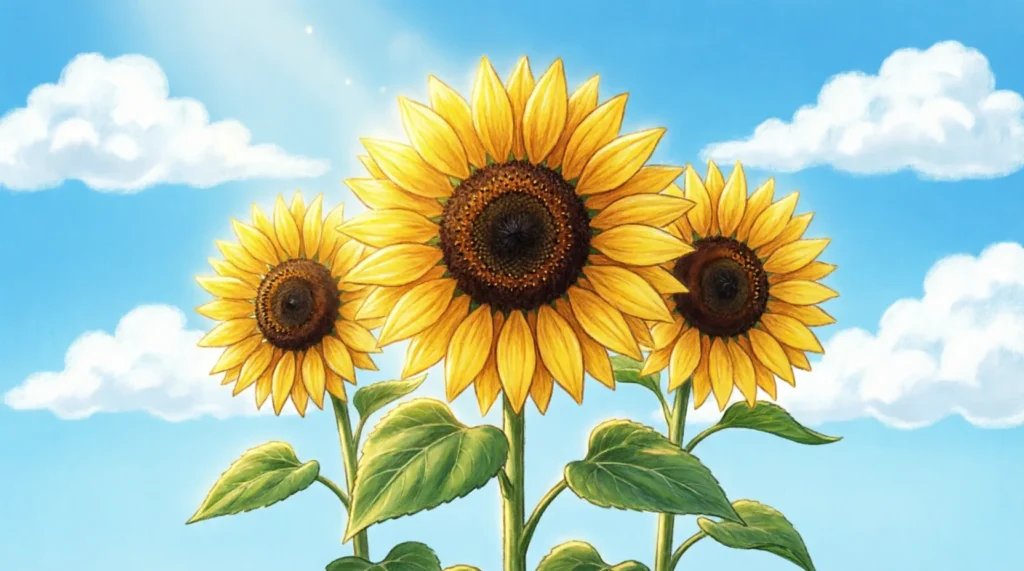
In short, similes for sunflowers are comparisons that help readers picture the beauty, color, size, or cheerful nature of sunflowers by comparing them to something else using words like “as” or “like.” In this guide, you’ll find vivid examples, writing tips, common mistakes, and fun activities to help you use sunflower similes with confidence.
What Are Similes for Sunflowers? (And Why They Matter)
Have you ever stared at a writing assignment and known exactly what you wanted to describe, but couldn’t find the right words? Maybe your teacher asked you to write about a garden, and “the sunflower was pretty” just didn’t feel interesting enough.
Similes for sunflowers are comparisons that help you describe sunflowers more clearly and creatively. A simile usually uses the words “like” or “as” to compare one thing to another.
For example, instead of saying “The sunflower was bright,” you could write, “The sunflower was as bright as a golden lantern.” That simple comparison creates a much stronger picture in your reader’s mind.
Literacy educators and language arts researchers often encourage students to use figurative language because it improves descriptive writing, strengthens reading comprehension, and helps ideas become more memorable. When you learn how to use similes for sunflowers, you give your writing more color and personality.
Now that you know what they are, let’s explore some of the best examples you can use in your own writing.
The Best Examples of Similes for Sunflowers
The sunflower stood tall like a golden lighthouse in the field.
The sunflower was as bright as the morning sun.
The sunflower opened like a smiling face greeting the day.
The sunflower shone like a coin made of gold.
The sunflower was as cheerful as a child on the last day of school.
The sunflower stood like a proud soldier in the garden.
The petals spread out like rays from the sun.
The sunflower looked as golden as freshly baked bread.
The flower swayed like a dancer moving to soft music.
The sunflower was as warm-looking as a summer afternoon.
The blossom glowed like a tiny sun planted in the soil.
The sunflower stood as straight as a flagpole.
The petals were like golden feathers arranged in a circle.
The sunflower looked as happy as a friend waving hello.
The field of sunflowers stretched like a sea of gold.
The sunflower’s face followed the sunlight like a curious student following a teacher.
The flower stood tall like a tower above the garden.
The sunflower was as bright as a shining crown.
The petals curled like ribbons blowing in the breeze.
The sunflower looked like a giant golden wheel.
The blossom glimmered like sunlight reflected on water.
The sunflower stood as confidently as a champion on a stage.
The petals spread like fireworks frozen in time.
The sunflower was as welcoming as an open door.
The flower looked like a golden clock pointing toward the sky.
The sunflower swayed like a boat rocking gently on a lake.
The petals shone like strands of yellow silk.
The sunflower stood like a guardian watching over the garden.
The blossom was as bright as a spotlight.
The sunflower looked like a smiling sun wearing petals.
The flower rose above the grass like a tall giraffe.
The sunflower was as radiant as a summer sunrise.
The petals spread like the spokes of a bicycle wheel.
The sunflower looked as golden as treasure.
The flower stood like a beacon in a green ocean of leaves.
The sunflower was as lively as a playground at recess.
The blossom shone like a polished golden medal.
The sunflower stood as proudly as a king on a throne.
The petals fluttered like tiny yellow butterflies.
The flower looked like a burst of sunshine on a stem.
The sunflower was as bright as a classroom full of ideas.
The blossom glowed like a lantern at dusk.
The sunflower stood like a torch lighting the garden.
The petals spread like the rays of a star.
The sunflower looked as joyful as laughter on a summer day.
These examples work well because they create strong mental pictures. Some focus on color, others on height, movement, warmth, or happiness. The best similes for sunflowers help your reader see, feel, and imagine the flower more clearly.
As you read these examples, notice how each comparison highlights a different quality of the sunflower. That’s a useful skill to practice in your own writing.
How to Use Similes for Sunflowers in Your Writing
Choose one feature to describe. Think about what stands out most. Is it the sunflower’s height, color, shape, or cheerful appearance? Focus on one quality before creating your comparison.
Compare it to something familiar. Your reader should easily understand the image. Comparing a sunflower to a lighthouse or a golden coin creates a clear picture.
Match the mood of your writing. If you’re writing a poem, choose imaginative comparisons. If you’re writing a school essay, pick simpler and more direct similes.
Use similes naturally. Don’t place a simile in every sentence. One strong comparison often works better than several weak ones.
Example:
“The sunflower stood tall like a golden lighthouse, guiding the eye across the garden.”
When you use similes thoughtfully, your descriptions become more vivid and enjoyable to read.
Similes for Sunflowers in Poems and Stories
Poets and authors often use similes to create imagery, emotion, and rhythm. A well-placed sunflower simile can instantly bring a scene to life.
Aisha wrote in her poem:
“The sunflower smiled like the morning sun, Greeting the day when it had just begun.”
Mateo described a garden scene:
“The sunflowers stood like golden guards along the path, watching every visitor who passed.”
Priya included this line in a story:
“The flower swayed like a dancer, moving gracefully whenever the wind whispered through the field.”
Creative writing teachers often encourage students to experiment with similes because they help readers experience a scene rather than simply read about it. When you use similes for sunflowers effectively, your writing feels more colorful and memorable.
Before you start creating your own comparisons, it helps to know a few common mistakes to avoid.
Common Mistakes Students Make With Similes for Sunflowers
Using comparisons that don’t fit the sunflower A sunflower is bright, tall, and cheerful. Comparing it to something dark or unrelated can confuse readers.
Overusing similes It’s tempting to add a simile to every sentence. Usually, a few strong comparisons make a bigger impact.
Choosing complicated comparisons If your reader has to stop and figure out what you mean, the simile may be too difficult. Clear images work best.
Repeating the same idea Writing that a sunflower is “like the sun” several times can become repetitive. Try comparing different qualities instead.
Forgetting the purpose of the comparison Every simile should help the reader picture something specific. If the comparison doesn’t add meaning, it may not be needed.
These mistakes are very common, especially when you’re learning figurative language. The good news is that practice quickly improves your skills.
Fun Activities to Practice Similes for Sunflowers
Create a Sunflower Simile Challenge Grab a pencil and see how many sunflower similes you can write in five minutes. Challenge yourself to avoid repeating ideas.
Draw and Describe Draw a large sunflower, then write five similes around it describing its color, shape, height, and movement.
Read and Hunt Find a poem, story, or article about flowers. Look for figurative language and discuss how it helps create imagery.
Group Simile Game In a classroom or family group, one person says “The sunflower was like…” and others take turns finishing the sentence.
Build a Story Write a short story that includes at least three similes for sunflowers. Try using different comparisons for each one.
Worksheet Practice Create a simple worksheet with sunflower pictures and blank lines. Fill in creative similes beneath each image and compare answers with friends or classmates.
Activities like these help you move from reading similes to creating your own original examples.
What NOT to Do With Similes for Sunflowers
Don’t assume every sunflower simile must compare the flower to the sun. That’s a common choice, but many other comparisons can be just as effective and more original.
Don’t use random comparisons just to sound creative. A simile should help readers visualize the flower, not leave them puzzled.
Don’t copy examples without adapting them. Use sample similes as inspiration, then create versions that fit your own writing.
Don’t force a simile into every paragraph. Strong writing uses figurative language purposefully, not constantly.
Understanding what to avoid can make your similes stronger and more natural.
Frequently Asked Questions About Similes for Sunflowers
What is a simile for a sunflower?
A simile for a sunflower compares the flower to something else using “like” or “as.” For example, “The sunflower was as bright as the morning sun” or “The sunflower stood like a golden lighthouse.”
How do you use similes for sunflowers in a sentence?
You can use a simile to highlight a sunflower’s appearance, height, color, or movement. For example: “The sunflower swayed like a dancer in the breeze.” The comparison helps readers picture the scene more clearly.
Why are sunflowers often compared to the sun?
Sunflowers have large, round centers surrounded by bright yellow petals, which resemble the sun’s shape and color. Their sunny appearance makes this comparison popular in poetry and descriptive writing.
Are similes for sunflowers suitable for elementary students?
Yes. Many sunflower similes are easy for younger students to understand because they use familiar objects and experiences. Teachers often use flower-themed similes to introduce figurative language in a fun way.
What is the difference between a sunflower simile and a sunflower metaphor?
A simile uses words such as “like” or “as” to make a comparison. A metaphor makes a direct comparison without those words. For example, “The sunflower was like a lantern” is a simile, while “The sunflower was a lantern” is a metaphor.
Final Thoughts on Similes for Sunflowers
Similes for sunflowers are a wonderful way to make your writing brighter, more descriptive, and more memorable. They help readers picture the flower’s beauty, height, color, and cheerful personality.
In this guide, you explored dozens of examples, learned how to use them effectively, discovered common mistakes, and found fun ways to practice. Each of these skills can help you become a stronger writer.
Remember that the best similes come from careful observation. When you look closely at a sunflower, you’ll notice details that inspire original and creative comparisons.
Keep experimenting, keep writing, and keep having fun with figurative language—your next great simile may be blooming already.
Jamal Rodriguez is a poet and author who has been writing professionally for over a decade. With a Bachelor’s degree in Creative Writing, Jamal’s expertise lies in the use of vivid imagery and emotional depth in poetic language. Fascinated by the limitless possibilities of similes and metaphors, he joined SimilePedia to share his knowledge with budding writers. Jamal focuses on creating content for creative writers and poets, helping them understand the emotional resonance that figurative language can evoke. Through his work, he aims to inspire others to explore their own creative boundaries and embrace the beauty of language as an art form. His contributions include a range of exercises that stimulate imagination across all grade levels.