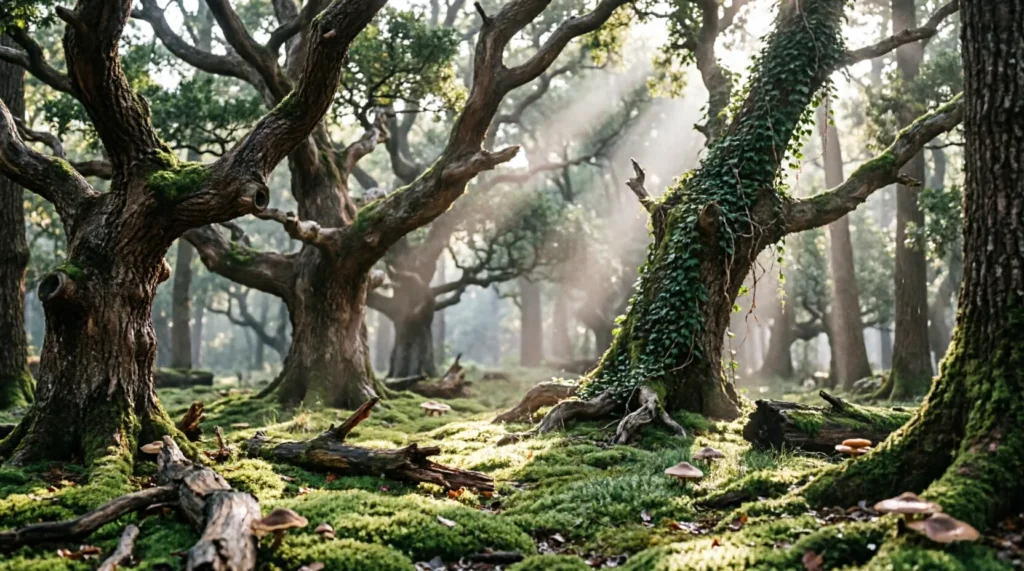
Step into the trees, and “the forest was quiet” just won’t cut it. Similes for a forest compare the trees, light, and sounds around you to something readers already know — using “as” or “like” to make the scene breathe. Whether you’re writing a story, poem, or school assignment, the examples and tips below will help you create stronger forest imagery.
What Are Similes for a Forest? (And Why They Matter)
Have you ever stared at a blank page while trying to describe a forest? Maybe your teacher asked for more detail, but all you could think of was, “The forest was big.” If that sounds familiar, you’re not alone.
Similes for a forest are comparisons that help readers picture a forest more clearly. They usually use the words “like” or “as” to connect a forest with something familiar.
A good simile can turn a simple description into something readers can see, hear, and feel. Instead of saying a forest is quiet, you might say it is “as silent as a sleeping library.”
Literacy educators and language arts researchers often encourage students to use figurative language because it strengthens descriptive writing, improves reading comprehension, and helps ideas stick in the reader’s mind. When you learn how to use similes well, your writing becomes more colorful and engaging.
Now that you know what similes for a forest are, let’s explore some of the most effective examples you can use right away.
The Best Examples of Similes for a Forest
The forest was as quiet as a sleeping library.
The forest stretched like a green ocean across the hills.
The forest stood as tall as a city of giants.
The forest was like a maze with no end in sight.
The forest shimmered like an emerald blanket in the sunlight.
The forest was as mysterious as a locked treasure chest.
The forest swayed like dancers moving to silent music.
The forest was as dark as a moonless night.
The forest spread like a giant green carpet over the earth.
The forest was as peaceful as a dream.
The forest rustled like whispers passing through a crowd.
The forest stood like a wall protecting the valley.
The forest was as lively as a busy playground.
The forest glowed like a sea of green jewels.
The forest was as ancient as forgotten legends.
The forest tangled like a giant ball of yarn.
The forest was as welcoming as an old friend’s hug.
The forest stretched like a blanket covering the mountains.
The forest was as crowded as a packed stadium of trees.
The forest echoed like a giant natural cathedral.
The forest was as magical as a fairy tale kingdom.
The forest stood like soldiers guarding a secret kingdom.
The forest was as cool as a shaded room on a hot day.
The forest sparkled like green glass after the rain.
The forest was as deep as an endless mystery.
These examples work because they create strong mental pictures. Many also connect the forest to sights, sounds, feelings, or experiences that readers already understand.
The best similes for a forest help readers step into the scene instead of simply reading about it. Next, let’s look at how you can create and use these comparisons in your own writing.
How to Use Similes for a Forest in Your Writing
Start by noticing one feature of the forest you want to describe. Is it dark, peaceful, crowded, magical, or enormous?
Think of something else that shares the same quality. For example, if the forest feels confusing, you might compare it to a maze.
Use “like” or “as” to build your comparison. Keep it simple and easy to understand.
Read your sentence aloud. If the comparison creates a clear picture in your mind, it will likely help your readers too.
Example:
“The forest stretched like a green ocean beneath the morning sky.”
When you practice creating your own similes for a forest, you’ll discover that even ordinary scenes can become much more interesting.
Similes for a Forest in Poems and Stories
Poets and storytellers often use forest similes to create mood, imagery, and emotion. A single comparison can make a setting feel magical, mysterious, peaceful, or even frightening.
Here are a few examples:
Aisha wrote:
“The forest lay like a green blanket, soft beneath the golden sun.”
Mateo described a journey:
“The forest twisted like a maze, and every path seemed to hide a secret.”*
Priya wrote:
“The forest whispered like old friends, sharing stories with the wind.”*
These examples show how similes can bring writing to life. Creative writing teachers often encourage students to experiment with comparisons because they make poems and stories more memorable.
Before you start adding similes everywhere, it’s helpful to understand a few common mistakes.
Common Mistakes Students Make With Similes for a Forest
Using comparisons that don’t make sense A simile should help readers understand the forest better. If the comparison feels random, readers may become confused.
Repeating the same simile too often Using “like a green carpet” again and again can make your writing feel repetitive. Try different images to keep things fresh.
Making the comparison too complicated Long, confusing similes can distract readers. Simple and vivid comparisons are usually stronger.
Forgetting the forest’s specific qualities A forest can be quiet, dark, crowded, magical, or wild. Choose a comparison that matches the exact feeling you want to create.
Using too many similes in one paragraph Similes are powerful, but using one in every sentence can overwhelm your readers. A few strong comparisons often work better.
The good news is that these mistakes are very common and easy to fix with practice. Let’s explore some fun ways to build your skills.
Fun Activities to Practice Similes for a Forest
Forest Picture Challenge Grab a pencil and find a picture of a forest. Write five different similes that describe what you see, hear, or imagine.
Simile Matching Game Create two lists—forest qualities on one side and comparison ideas on the other. Match them to build original similes.
Draw and Describe Draw your own forest scene, then write at least three similes that describe different parts of your picture.
Story Starter Activity Begin a story with the sentence, “The forest was like…” and challenge yourself to write a full paragraph from there.
Reading Detective Read a poem, short story, or chapter book and search for similes. Notice how authors describe forests and natural settings.
Simile Worksheet Race Create a worksheet with forest-related words such as trees, leaves, shadows, and trails. See how many creative similes you can write in five minutes.
These activities help you build confidence while making figurative language feel more natural and enjoyable.
“Like a green ocean stretching to the horizon” — Shows the forest’s vast size and endless beauty, making it perfect for descriptive essays.
“As peaceful as a quiet woodland at sunrise” — Captures calmness and stillness, ideal for nature writing.
“Like a woven blanket of leaves” — Highlights the thick canopy covering the ground with rich detail.
“As deep as a valley filled with ancient trees” — Emphasizes mystery, age, and the feeling of exploring somewhere untouched.
“Like a maze of towering trunks” — Describes a forest that feels exciting, confusing, or adventurous.
💛 Warm & Emotional (for personal stories, letters, heartfelt writing)
“Like a gentle friend waiting in silence” — Suggests comfort and peace during emotional moments.
“As welcoming as a forest path on a cool morning” — Expresses warmth and the feeling of belonging.
“Like a safe place wrapped in green” — Shows how the forest can represent protection and security.
“As comforting as trees swaying in a soft breeze” — Creates a soothing image that fits reflective writing.
“Like a quiet hug from nature” — Conveys relaxation and emotional healing in a simple, relatable way.
✨ Poetic & Romantic (for poems, song lyrics, love writing)
“Like an emerald dream beneath the sky” — Adds a magical and romantic touch to poetic descriptions.
“As timeless as the whispers of ancient trees” — Suggests lasting beauty and eternal memories.
“Like a secret garden hidden from the world” — Creates a sense of mystery and quiet romance.
“As graceful as sunlight dancing through the branches” — Brings elegance and gentle movement into poems.
“Like a song written by the wind” — Gives the forest a magical, musical quality that suits lyrical writing.
😄 Playful & Fun (for casual use, social media captions, humor)
“Like nature’s biggest playground” — Perfect for fun outdoor adventures and family trips.
“As wild as a squirrel after too much excitement” — Adds humor while showing the forest’s lively energy.
“Like a giant game of hide-and-seek” — Describes winding trails and hidden corners in a playful way.
“As busy as a forest during bird breakfast” — Paints a cheerful picture of wildlife in action.
“Like a green adventure waiting around every tree” — Works well for travel posts, captions, and exciting stories.
These tone-grouped similes for similes for a forest give you options for every kind of writing — whether you need something soft and poetic or bold and fun. Try picking one from each group and using them in a short paragraph to see how different the same keyword can feel.
Using Similes for a Forest in Real Writing Contexts
In a Descriptive Essay
When writing about a landscape or national park, adding one of these similes for a forest helps readers picture the scene more clearly. Instead of simply saying the forest was beautiful, compare it to something familiar for stronger imagery. Example:The forest stretched before us like a green ocean reaching farther than my eyes could see.
In a Poem
Similes for a forest can create peaceful, magical, or mysterious moods in poetry. They help readers connect with the beauty and emotion of nature through vivid comparisons. Example:The forest was like a song written by the wind, while every leaf whispered a forgotten dream.
In a Story or Creative Scene
In stories, similes for a forest can make the setting feel more alive or reveal how a character experiences the environment. A thoughtful comparison can build suspense, wonder, or comfort in just one sentence. Example:As Maya stepped beneath the trees, the forest closed around her like a quiet hug from nature, easing the fear she had carried all morning.
In a Social Media Caption or Message
A short simile makes outdoor captions more memorable and expressive without using many words. It adds personality while helping readers picture your adventure. Example:Today’s hike felt like exploring nature’s biggest playground, and I already can’t wait to go back!
The more you practice placing similes for a forest into real sentences, the more natural your writing will sound — and the more your reader will feel exactly what you want them to feel.
What NOT to Do With Similes for a Forest
Don’t assume every forest must be described as dark or scary. Forests can be peaceful, magical, lively, welcoming, or beautiful depending on the situation.
Don’t use a simile just because it sounds fancy. The best comparisons are clear and meaningful, not complicated.
Don’t copy every simile you find online. Your own original ideas often create stronger and more memorable writing.
Don’t confuse similes with metaphors. A simile uses words such as “like” or “as,” while a metaphor makes a direct comparison without those words.
Understanding these myths can help you use figurative language more effectively and with greater confidence.
Frequently Asked Questions About Similes for a Forest
What is a simile for a forest?
A simile for a forest compares a forest to something else using the words “like” or “as.” For example, “The forest was like a green ocean” helps readers imagine its size and beauty.
How do you use similes for a forest in a sentence?
You can place the comparison directly into your description. For example: “The forest was as quiet as a sleeping library, and not even a bird disturbed the silence.”
What is the difference between a forest simile and a forest metaphor?
A simile uses comparison words such as “like” or “as.” A metaphor makes the comparison directly, such as saying, “The forest was a green ocean.”
Are similes for a forest appropriate for elementary and middle school students?
Yes. Students of many grade levels can use forest similes. Younger students may prefer simple comparisons, while older students can create more detailed and imaginative ones.
Why do writers use similes for a forest?
Writers use them to help readers visualize settings more clearly. They can also create mood, strengthen imagery, and make descriptions more memorable.
Final Thoughts on Similes for a Forest
Learning how to use similes for a forest can transform simple descriptions into vivid scenes that readers remember. A well-chosen comparison helps your audience picture the trees, hear the leaves, and feel the atmosphere.
In this guide, you explored what forest similes are, why they matter, and how to use them effectively. You also discovered dozens of examples, creative writing ideas, and practice activities.
Remember that strong figurative language comes from observation and imagination. The more you notice details around you, the easier it becomes to create comparisons that feel fresh and meaningful.
Whether you’re writing a poem, a story, or a classroom assignment, you can use these similes for a forest to add color, depth, and creativity to your work. Keep practicing, keep experimenting, and enjoy bringing your ideas to life through words.
Frequently Asked Questions
What are similes for a forest and how do they enhance writing?▼
Similes for a forest are comparisons that use ‘as’ or ‘like’ to connect a forest with something familiar. They enhance writing by making descriptions more vivid and engaging, helping readers to visualize and feel the scene more deeply.
Can you provide examples of effective similes for a forest?▼
Certainly! Some effective examples include ‘The forest was as quiet as a sleeping library’ and ‘The forest stretched like a green ocean across the hills.’ These comparisons create strong mental images and connect the forest to familiar experiences.
Why is figurative language like similes important in descriptive writing?▼
Figurative language, such as similes, strengthens descriptive writing by making it more colorful and memorable. It improves reading comprehension and helps ideas stick in the reader’s mind, allowing them to better connect with the text.
How can I create my own similes for a forest?▼
To create your own similes, start by identifying a specific feature of the forest you want to describe, like its darkness or peacefulness. Then, think of something that shares that quality and use ‘like’ or ‘as’ to form your comparison.
What are some tips for using similes effectively in writing?▼
When using similes, keep your comparisons simple and relatable to ensure clarity. Focus on strong imagery that connects the forest to sights, sounds, or feelings that your readers can easily understand.
How do similes help readers engage with the text?▼
Similes help readers engage with the text by creating vivid mental pictures that allow them to step into the scene. By connecting the forest to familiar experiences, readers can better visualize and emotionally relate to the descriptions.
What role do similes play in educational settings?▼
Literacy educators often encourage the use of similes because they improve descriptive writing skills and enhance reading comprehension. They help students learn to express ideas more vividly, making their writing more engaging.
Extra Forest Similes to Try
The canopy closed overhead like a green cathedral roof.
Fog drifted between the trunks like ghosts on a slow walk.
The forest floor crunched like a bowl of stale cereal underfoot.
Sunlight speckled the path like coins scattered by a careless hand.
The silence felt as thick as a held breath in an empty church.
Liam is a language enthusiast and lead writer at Similepedia.com, where he focuses on creating clear, creative, and easy-to-use similes for everyday writing. He specializes in turning simple ideas into vivid comparisons that make sentences more engaging, expressive, and memorable.
Instead of overcomplicating language with technical jargon, Liam approaches similes as practical tools for better communication. He breaks down how comparisons work, when to use them, and how to make them sound natural — not forced or awkward.
He pays close attention to tone, context, and clarity, ensuring every simile fits smoothly into real sentences. From fun and playful comparisons to more descriptive and expressive ones, Liam helps readers improve how they write, speak, and express ideas.
At Similepedia.com, his mission is simple: make language more colorful and effective without making it complicated. He doesn’t just list similes — he helps readers understand how to use them confidently in real situations.