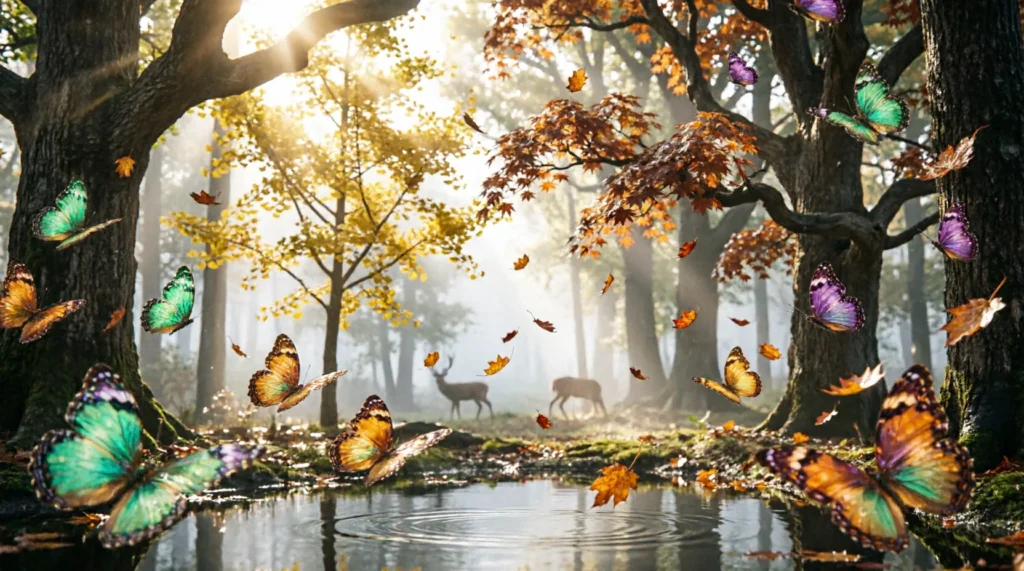
In short, similes for leaves are creative comparisons that help you describe leaves in vivid and memorable ways. Whether you’re writing a poem, a story, or a school assignment, these examples can make your descriptions more colorful and engaging. Keep reading to discover inspiring similes, writing tips, and fun practice activities.
What Are Similes for Leaves? (And Why They Matter)
Have you ever stared at a blank page while trying to describe a tree in autumn? Maybe your teacher asked for a simile, and all you could think of was “the leaves were green.” If that sounds familiar, you’re not alone.
Similes for leaves are comparisons that use words like “as” or “like” to help readers picture leaves more clearly. Instead of saying leaves fell from a tree, you might say they fell “like tiny parachutes drifting through the sky.”
These comparisons matter because they make your writing more interesting and easier to imagine. When you use strong similes, your readers can see, hear, and even feel what you’re describing.
Language arts researchers and literacy educators often encourage students to use similes because they strengthen descriptive writing, reading comprehension, and creative thinking. A good simile can turn an ordinary sentence into something memorable.
Now that you know why similes for leaves are useful, let’s explore some of the best examples you can use in your own writing.
The Best Examples of Similes for Leaves
The leaves fluttered like butterflies dancing in the breeze.
The autumn leaves drifted like colorful confetti after a celebration.
The leaves sparkled like tiny emeralds in the morning sunlight.
The leaves fell like feathers floating gently to the ground.
The golden leaves shone like coins scattered across the forest floor.
The leaves rustled like whispers in a crowded room.
The leaves swayed like dancers moving to soft music.
The red leaves glowed like embers from a campfire.
The leaves trembled like nervous hands before a speech.
The green leaves stretched like open umbrellas in the rain.
The leaves scattered like puzzle pieces across the yard.
The leaves twinkled like stars caught in the branches.
The leaves floated like boats on a quiet stream.
The leaves hung like ornaments on a holiday tree.
The leaves curled like ribbons left in the sun.
The leaves spun like tiny helicopters as they fell.
The leaves drifted like snowflakes on a calm winter day.
The leaves covered the ground like a colorful blanket.
The leaves shimmered like silk in the wind.
The leaves clung to the branches like children holding their parents’ hands.
The leaves bounced across the sidewalk like playful puppies.
The leaves flashed like green mirrors under the sunlight.
The leaves gathered like crowds at a festival.
The leaves danced like performers on a stage.
The leaves floated past the window like pages from a storybook.
The leaves spun down like coins tossed into the wind.
Leaves clung to the branch like stubborn memories refusing to fade.
The leaves rustled like whispered secrets passed down the row of trees.
Leaves piled up like soft golden blankets across the yard.
A leaf drifted down as slowly as a feather losing its lift.
The leaves scattered like a deck of cards thrown into the breeze.
These examples work well because they create strong imagery. You can easily picture the movement, color, or texture of the leaves. Many of these similes also connect to familiar experiences, making your writing more relatable and memorable.
Once you start noticing these comparisons, you’ll find inspiration for your own creative descriptions everywhere.
How to Use Similes for Leaves in Your Writing
Using similes effectively is easier than you might think. Here are a few simple steps you can follow.
Observe the leaves carefully. Look at their color, shape, movement, or texture. Ask yourself what they remind you of.
Compare them to something familiar. Think about everyday objects, animals, weather, or experiences that share similar qualities.
Use “like” or “as” naturally. Your comparison should sound smooth and easy to understand rather than forced.
Match the mood of your writing. A funny story might compare leaves to playful puppies, while a poem might compare them to butterflies or feathers.
Here’s an example:
“The yellow leaves floated from the oak tree like tiny golden boats sailing through the air.”
Notice how the simile helps you picture the leaves more clearly. With practice, you’ll begin creating your own unique similes for leaves with confidence.
Similes for Leaves in Poems and Stories
Poets and storytellers often use similes to create emotion, rhythm, and vivid imagery. Similes for leaves can help your readers feel as though they are standing right inside the scene.
Here’s a short poem example:
“Leaves drifted like feathers in the cool autumn air, Dancing through sunlight without a care.”
Another example:
Amina watched the maple leaves tumble like colorful confetti. They spun across the playground and gathered near her shoes.
Here’s one more:
Mateo listened as the leaves rustled like secret whispers. The sound followed him along the forest path as evening arrived.
Writers use these comparisons because they make scenes feel alive. Instead of simply telling readers about leaves, you help them experience the movement, color, and atmosphere for themselves.
As you read poems and stories, you’ll start spotting similes everywhere—and that can inspire your own writing.
Common Mistakes Students Make With Similes for Leaves
Using comparisons that don’t make sense. If the comparison doesn’t share a clear similarity with leaves, readers may become confused. Always ask yourself whether the image fits.
Overusing similes in every sentence. Similes are powerful, but too many can make your writing feel crowded. Choose your best comparisons carefully.
Repeating the same simile again and again. Using “like feathers” every time can become predictable. Challenge yourself to create fresh images.
Focusing only on color. Leaves have movement, texture, sound, and shape too. Try describing more than just what you see.
Making comparisons that are too complicated. Sometimes students create similes that are difficult to understand. Simple and clear comparisons are often the most effective.
These mistakes are completely normal, especially when you’re learning. The good news is that every writing assignment gives you another chance to improve.
Fun Activities to Practice Similes for Leaves
Leaf Observation Challenge Grab a pencil and study a real leaf. Write five different similes based on its color, shape, texture, or movement.
Simile Scavenger Hunt Go outside and collect examples of leaves. Challenge yourself to compare each one to a different object or animal.
Drawing and Writing Activity Draw a tree and add labels with your favorite similes for leaves. This combines art and language learning.
Group Simile Game In a classroom or family group, one person says “The leaves are like…” and others finish the sentence with creative ideas.
Poetry Creation Challenge Write a four-line poem using at least two similes for leaves. Try to create a specific mood, such as peaceful, exciting, or mysterious.
Reading Detective Activity Read a nature poem or story and look for similes. See how other writers describe leaves and gather ideas for your own work.
These activities help you practice in enjoyable ways while building your descriptive writing skills.
What NOT to Do With Similes for Leaves
Don’t choose comparisons simply because they sound fancy. A clear and meaningful simile is usually stronger than a complicated one.
Don’t force a simile into every description. Sometimes a simple sentence works best. Use similes where they add value.
Don’t copy the exact same similes everyone else uses. Popular comparisons can be helpful, but your own observations often create the most memorable writing.
Don’t assume leaves only belong in autumn similes. Leaves can be green, fresh, shiny, wet, or windblown throughout the year. Explore different seasons and settings.
Avoiding these habits will help your writing sound more natural and creative.
“Like tiny sails drifting on the wind” — This simile highlights the graceful movement of leaves blowing through the air.
“As delicate as pressed flowers” — Use this to describe thin, fragile leaves with a gentle, detailed touch.
“Like green feathers resting on branches” — This creates a soft image of leaves covering trees in spring or summer.
“As scattered as puzzle pieces” — Perfect for describing fallen leaves spread across the ground in autumn.
“Like little fans waving in the breeze” — This captures the steady, rhythmic motion of leaves on a windy day.
💛 Warm & Emotional (for personal stories, letters, heartfelt writing)
“Like old friends gathered beneath a tree” — Use this simile to create a feeling of comfort, belonging, and togetherness.
“As comforting as leaves shading a quiet bench” — This expresses peace and safety during a calm moment outdoors.
“Like memories tucked between the pages of a book” — A thoughtful comparison that connects leaves with treasured moments.
“As gentle as leaves brushing your shoulder” — This works well when describing kindness, reassurance, or quiet affection.
“Like a blanket of leaves covering the earth” — Use this to suggest warmth, protection, or the changing seasons.
✨ Poetic & Romantic (for poems, song lyrics, love writing)
“Like emerald whispers floating through the trees” — This gives leaves a magical, mysterious quality in poetic writing.
“As graceful as leaves dancing beneath the moon” — A romantic image that creates a dreamy nighttime scene.
“Like tiny letters written by the wind” — This suggests that nature is quietly sharing stories or secrets.
“As bright as leaves kissed by morning sunlight” — Perfect for describing beauty, hope, or a fresh beginning.
“Like soft echoes caught in the forest air” — This creates a peaceful, reflective mood for poems and lyrical writing.
😄 Playful & Fun (for casual use, social media captions, humor)
“Like confetti thrown by the trees” — Great for describing colorful autumn leaves in a cheerful way.
“As busy as leaves chasing each other down the street” — Use this to show lively movement on a windy day.
“Like tiny dancers spinning in circles” — This adds energy and fun to descriptions of swirling leaves.
“As unpredictable as leaves in a gust of wind” — A humorous comparison for something that never stays still.
“Like nature’s paper airplanes” — This playful simile imagines leaves gliding through the air with childlike fun.
These tone-grouped similes for similes for leaves give you options for every kind of writing — whether you need something soft and poetic or bold and fun. Try picking one from each group and using them in a short paragraph to see how different the same keyword can feel.
Using similes for leaves in Real Writing Contexts
In a Descriptive Essay
When writing about a forest, a park, or the changing seasons, similes for leaves help readers picture the scene more clearly. Instead of simply saying the leaves moved, compare them to something familiar to make the description come alive. The autumn leaves drifted like tiny sails across the playground, covering the grass with bright shades of gold and red.
In a Poem
Similes for leaves can create a peaceful, joyful, or even mysterious mood in poetry. A simple comparison helps readers imagine the beauty of nature while adding rhythm to your writing. The leaves were like emerald whispers in the breeze, singing softly beneath the silver moon.
In a Story or Creative Scene
In stories, similes for leaves can make the setting feel more vivid and help readers experience the moment alongside the characters. They work especially well during outdoor adventures or emotional scenes. As Maya stepped into the quiet forest, the leaves swirled around her like confetti thrown by the trees, making the path feel magical.
In a Social Media Caption or Message
A short simile can make an everyday caption more creative and memorable. It adds personality without making the message too long. Today’s leaves are flying around like nature’s paper airplanes, and I’m loving every minute of fall! 🍂
The more you practice placing similes for leaves into real sentences, the more natural your writing will sound — and the more your reader will feel exactly what you want them to feel.
Frequently Asked Questions About Similes for Leaves
What is a good simile for leaves?
A good simile for leaves creates a clear image in the reader’s mind. For example, “The leaves floated like feathers in the wind” helps readers picture gentle movement. The best similes are simple, vivid, and easy to understand.
How do you use similes for leaves in a sentence?
You can compare leaves to something familiar using “like” or “as.” For example: “The leaves danced like butterflies above the garden.” This makes the sentence more descriptive and engaging.
Why do writers use similes for leaves?
Writers use similes for leaves to create stronger imagery and emotional impact. Instead of giving plain descriptions, they help readers imagine colors, sounds, and movement more clearly.
Are similes for leaves appropriate for elementary students?
Yes. Many similes for leaves are easy for younger students to understand and create. Comparisons such as leaves floating like feathers or dancing like butterflies are both simple and imaginative.
What is the difference between a simile and a metaphor for leaves?
A simile uses words like “like” or “as” to make a comparison. A metaphor makes the comparison directly. For example, “The leaves were like confetti” is a simile, while “The leaves were confetti falling from the sky” is a metaphor.
A few additional similes for leaves to round out your collection:
The leaves rattled like paper caught in a fan every time the wind picked up.
Autumn leaves drifted down like confetti after a parade nobody planned.
The young leaves unfurled like tiny green flags welcoming spring.
Dry leaves crumbled like stale crackers underfoot.
The canopy of leaves swayed like dancers moving to a slow song.
Want more nature-inspired comparisons? Browse our guide to similes for river for similar imagery drawn from the natural world.
Final Thoughts on Similes for Leaves
Learning similes for leaves is a great way to make your writing more colorful and expressive. Whether you’re describing autumn colors, a windy day, or a peaceful forest, the right simile can bring your ideas to life.
In this guide, you explored more than 25 examples, learned how to use them effectively, and discovered fun ways to practice. You also saw how similes for leaves can appear naturally in poems, stories, and descriptive paragraphs.
The more you observe nature, the easier it becomes to create your own comparisons. Every leaf, tree, and season offers new inspiration for your writing.
Keep experimenting, keep imagining, and remember that strong descriptive writing is a skill you can build one sentence at a time.
Frequently Asked Questions
What are some examples of similes for leaves mentioned in the article?▼
The article provides several vivid examples, such as ‘the leaves fluttered like butterflies dancing in the breeze’ and ‘the autumn leaves drifted like colorful confetti after a celebration.’ These comparisons help create strong imagery in your writing.
Why are similes for leaves important in writing?▼
Similes for leaves enhance descriptive writing by making comparisons that help readers visualize and connect with the content. They can transform ordinary descriptions into memorable imagery, making your writing more engaging.
How can I create my own similes for leaves?▼
To create your own similes, observe leaves closely and think about what they remind you of in everyday life. Use comparisons with familiar objects or experiences and incorporate ‘like’ or ‘as’ for a natural flow.
What writing tips does the article provide for using similes?▼
The article suggests observing the leaves carefully to note their color, shape, and movement. It also advises comparing them to familiar experiences, which makes the similes relatable and impactful.
How can similes improve my reading comprehension and creative thinking?▼
Using similes helps to strengthen descriptive writing, which in turn enhances reading comprehension by allowing readers to visualize concepts better. This practice also fosters creative thinking as it encourages you to make unique connections in your writing.
What activities does the article suggest for practicing similes?▼
While the article mentions fun practice activities, it encourages readers to notice similes in their surroundings and to create their own comparisons. Engaging in these activities can enhance your descriptive language skills.
Are similes only useful for poetry, or can they be used in other types of writing?▼
Similes are versatile and can be used in various types of writing, including stories, essays, and school assignments. They help make descriptions more colorful and engaging, regardless of the genre.
Do similes for leaves change with the seasons?▼
Yes. Spring similes often compare leaves to new life — "unfurling like tiny green flags" — while autumn similes lean toward change and letting go, such as "falling like coins tossed into the wind." Matching the simile to the season makes the imagery feel more authentic.
Jamal Rodriguez is a poet and author who has been writing professionally for over a decade. With a Bachelor’s degree in Creative Writing, Jamal’s expertise lies in the use of vivid imagery and emotional depth in poetic language. Fascinated by the limitless possibilities of similes and metaphors, he joined SimilePedia to share his knowledge with budding writers. Jamal focuses on creating content for creative writers and poets, helping them understand the emotional resonance that figurative language can evoke. Through his work, he aims to inspire others to explore their own creative boundaries and embrace the beauty of language as an art form. His contributions include a range of exercises that stimulate imagination across all grade levels.